

Key takeaways
- One toddler with books or soft toys: about 10–12 square feet.
- One preschooler with a few toys: about 12–16 square feet.
- Two young children: about 18–24 square feet.
- An older child who wants to lie down: at least 20 square feet, preferably with a 50-inch or greater interior height.
Best Play Tents for Indoor and Outdoor Fun
The best play tents are chosen by floor space, ventilation, fabric strength, setup time, and the child’s age—not by appearance alone: a lightweight pop-up tent suits occasional indoor play, while a larger cotton-canvas or coated-polyester tent is the better choice for frequent use and supervised outdoor sessions.
For most families, a tent with a floor area of about 36 to 48 inches square offers the best balance. It gives one or two young children room to sit and play without taking over a bedroom or patio. Toddlers need open access and soft, stable walls; older children usually need at least 50 inches of interior height and enough floor space to sit cross-legged, read, or play with toys.
Our top picks
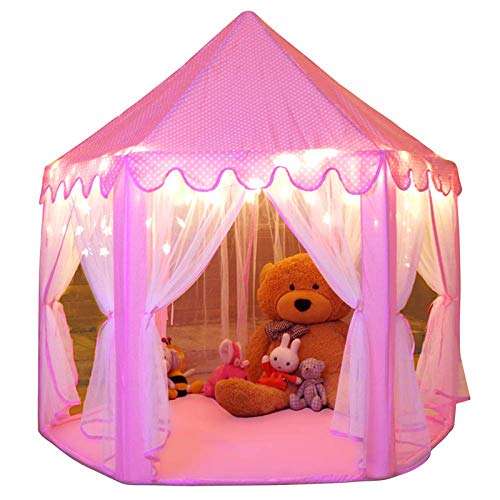


As an Amazon Associate we earn from qualifying purchases at no extra cost to you. Ratings are shown as listed on Amazon.
Quick comparison of the main play-tent types
| Play-tent type | Typical floor dimensions | Setup time | Typical weight | Fabric and durability | Ventilation | Best for |
|---|---|---|---|---|---|---|
| Pop-up cube or tunnel tent | 35–45 in × 35–45 in | Under 1 minute | 2–4 lb | Thin polyester; seams and mesh can wear first | Usually good through mesh panels | Fast indoor play, travel, and storage in small homes |
| Fabric teepee | 40–50 in × 40–50 in | 5–10 minutes | 4–8 lb | Cotton or cotton-polyester; poles and corner stitching matter | Variable; often relies on an open doorway | Reading corners and daily indoor use |
| Large playhouse tent | 50–65 in × 45–60 in | 5–15 minutes | 6–12 lb | Heavier polyester or canvas; better resistance to repeated handling | Good if it has two openings or mesh windows | Two children, pretend play, and longer sessions |
| Outdoor canopy play tent | 50–72 in × 50–72 in | 10–20 minutes | 8–18 lb | Coated polyester; poles, floor, and water-resistant seams are critical | Best when sides are partly open or mesh-backed | Shade and supervised garden or campsite play |
These are representative market ranges rather than specifications for one particular model. A product’s packed dimensions can be more important than its assembled size if the tent must fit in a closet, car, or camping box.
Best play tents by situation
Best for small rooms: a pop-up tent with a removable floor
Choose a compact pop-up model when the tent will be folded away after each use or shared with other toys. A 40-inch square floor is large enough for one child and a few books, but it is not comfortable for an adult to enter or for two older children to play actively. Look for a carrying bag, a flexible folding frame, and at least one mesh window.
The trade-off is durability. Thin polyester keeps the tent light, but repeated folding can crease the frame sleeve and stress the stitching around doors. Avoid dragging it across carpet or allowing children to hang from the doorway.
Best for everyday reading and pretend play: a fabric teepee
A teepee is often the most attractive choice for a permanent indoor play corner. Models around 45 to 50 inches wide provide useful sitting room, and a pole height of 55 to 65 inches makes the space feel less cramped for preschoolers. Cotton fabric is pleasant indoors and tends to look better after routine use, but it may wrinkle, absorb spills, and dry slowly.
Prioritize a broad, stable base and a doorway that can remain fully open. A decorative teepee with only a small opening may be fine for quiet play, but it is less suitable for energetic children or for any situation where an adult needs to reach in quickly.
Best for two children: a large playhouse tent with two openings
For siblings or playdates, floor dimensions matter more than peak height. A 60-by-50-inch floor gives two young children room to sit with toys, while a 50-by-50-inch floor can feel crowded once cushions and pretend-play accessories are added. Two doors or a door plus a large mesh window improve access and cross-ventilation.
Check the stated age guidance carefully. A tall interior does not automatically make a tent appropriate for older children: lightweight poles, low doorways, and limited floor area can still make it a toddler-oriented product.
Best for outdoor use: a canopy with coated fabric and mesh
For a yard, patio, or campsite, select a model with a water-resistant coated-polyester shell, a sewn-in or attached floor, and mesh panels that can be covered when needed. “Water-resistant” does not mean waterproof, and most play tents are not designed for heavy rain, strong wind, or overnight sleeping.
Outdoor use also demands anchoring. Use the supplied stakes where suitable, position the tent on level ground, and take it down before wind, storms, or unsupervised play. Never treat a lightweight play tent as a shelter for severe weather.
How much interior space does your child need?
Use the floor dimensions, not the product’s exterior height, to estimate usable space. A simple planning method is:
- One toddler with books or soft toys: about 10–12 square feet.
- One preschooler with a few toys: about 12–16 square feet.
- Two young children: about 18–24 square feet.
- An older child who wants to lie down: at least 20 square feet, preferably with a 50-inch or greater interior height.
For example, a 48-by-48-inch floor measures 16 square feet. That is comfortable for one child and workable for two small children sitting quietly, but it will feel crowded with a play kitchen, cushions, and a storage bin. If you want two children to move around, a 60-by-50-inch floor provides about 20.8 square feet—roughly 30 percent more usable floor area.
What to inspect before buying
- Ventilation: Look for mesh windows, a second opening, or a doorway that rolls completely aside. Do not rely on a tiny decorative window for airflow.
- Frame safety: Flexible fiberglass or steel poles should be enclosed in sleeves or fitted with protected ends. The tent should not collapse when a child lightly brushes against it.
- Floor construction: A separate groundsheet is adequate indoors; outdoor models benefit from a floor that rises slightly at the edges to reduce splash and dirt entry.
- Fabric weight: Heavier fabric usually handles daily opening, crawling, and handling better, but it also increases packed size and drying time.
- Fasteners: Zippers, hook-and-loop tabs, and elastic ties are common failure points. Check that a child can open the main entrance without straining the fabric.
- Cleaning: Removable, machine-washable fabric is valuable for indoor tents. For coated outdoor fabric, wiping and air-drying are usually safer than aggressive washing.
Setup, cleaning, and storage that extend tent life
Set the tent on a level surface and spread the floor fully before inserting or locking the poles. This prevents diagonal stress on the seams. For pop-up designs, fold only along the manufacturer’s intended loops or hinges; forcing a different fold is a common cause of bent frames.
After indoor use, shake out crumbs and vacuum the floor rather than dragging the tent. Treat spills promptly with mild soap and cool water. Avoid bleach, harsh solvents, and high-heat drying unless the care label specifically permits them. Cotton can shrink, while coated polyester can lose its finish if scrubbed aggressively.
After outdoor use, remove soil while it is dry, then wipe the fabric and let every panel dry completely before packing. Storing a damp tent is the fastest route to mildew odors and fabric damage. Keep poles loosely bundled and avoid placing heavy boxes on the packed tent.
Decision matrix: which play tent fits your household?
| Your situation | Recommended specification | Why |
|---|---|---|
| Limited budget and occasional use | 35–45 in pop-up, 2–4 lb, mesh window | Low purchase and storage cost with quick setup |
| Daily indoor use | 40–55 in fabric tent, reinforced corners, washable cover | Better comfort and less wear from repeated play |
| Two children or regular playdates | At least 18 sq ft of floor area, two openings | More room and easier supervision |
| Frequent garden or campsite use | Coated polyester, attached floor, mesh, stakes, 8–18 lb | Improved resistance to dirt and light moisture |
| Small apartment or frequent travel | Collapsible frame, carry bag, packed length under 30 in | Less storage friction and easier transport |
Final buying advice
Choose a compact pop-up if convenience and storage are the priority, a teepee if the tent will remain indoors as a reading nook, and a larger coated-polyester canopy if two children will use it outdoors under supervision. The best play tents combine enough floor area for the intended age, genuine airflow, protected frame parts, and fabric that can be cleaned without special treatment. A slightly larger, sturdier tent is usually better value than a novelty-sized model once the child begins inviting friends, adding toys, or using it several times a week.




Write Your Review
No reviews yet. Be the first to share your experience!