

Key takeaways
- Seams and zippers wear first. Seam-seal factory tape that peels and lubricate zippers with a dedicated stick.
- Dry the tent fully before storage. Mildew grows within days on damp fabric and ruins coatings.
- Use a footprint. A groundsheet protects the floor from abrasion and adds a moisture barrier.
- Stake properly. Most wind failures come from loose stakes, not weak poles.
- Avoid long UV exposure. Sunlight weakens nylon and polyester coatings over time, so take the fly down when you are not using it.
The best family camping tent for most households in 2026 is the REI Co-op Base Camp 6 for stormy, all-season trips, the NEMO Aurora Highrise 6 for roomy comfort with near-vertical walls, and the Kelty Wireless 6 as the value pick that sets up quickly. Whatever you choose, buy a tent rated for two or more people than will actually sleep in it, because rated capacity assumes sleepers lie shoulder to shoulder with no gear. This guide compares real family tents by floor area, headroom, weather performance and setup effort.
Our top picks



As an Amazon Associate we earn from qualifying purchases at no extra cost to you.
Quick Comparison of the Best Family Camping Tents
| Pick | Best for | Capacity (rated) | Peak height | Price tier |
|---|---|---|---|---|
| REI Co-op Base Camp 6 | Best overall, windy and wet weather | 6 person | About 6 ft | Upper mid-range |
| NEMO Aurora Highrise 6 | Best for headroom and comfort | 6 person | 76 in (about 6.3 ft) | Upper mid-range |
| The North Face Wawona 6 | Best premium, big vestibule | 6 person, also 4 and 8 sizes | 76 in | Premium |
| REI Co-op Westward 6 | Best balance of space and weather protection | 6 person | Standing headroom | Upper mid-range |
| Kelty Wireless 6 | Best value, quick setup | 6 person | About 6 ft | Mid-range |
| Coleman Skydome Darkroom 6 | Best budget with darkened sleeping area | 6 person, also 4 and 8 sizes | Dome style | Budget |
| CORE 6 Person Instant Cabin | Best for fast setup | 6 person | Cabin style | Budget |
Figures such as floor area and peak height come from maker spec sheets and independent roundups; confirm the exact dimensions for your version before ordering, since they change between model years.
Best Overall: REI Co-op Base Camp 6
The Base Camp 6 is a dome-style tent built around a robust pole structure and a full-coverage rainfly. It is widely described as a tent that does it all, and reviewers have highlighted its stability in strong wind. That makes it a good fit for families who camp in unpredictable mountain or coastal weather.
The trade-off is that it prioritizes strength over living space. The dome shape means slightly sloping walls, and some cabin-style tents offer more usable standing area near the edges.
Best for Headroom: NEMO Aurora Highrise 6
The Aurora Highrise 6 uses steep walls and a 76-inch peak so adults can stand and move around in most of the tent. Color-coded poles speed up pitching, and the large vestibule gives you covered storage for muddy shoes. Wilderness reviewers frequently name it the best six-person tent for families.
The trade-off is cost and pack size. It is bulkier than backpacking tents and less compact than a basic dome.
Best Premium: The North Face Wawona 6
The Wawona 6 offers near-vertical walls, roughly 86 square feet of floor area according to Switchback Travel’s listing, and a large vestibule. It is available in 4, 6 and 8 person versions, which helps families choose a size that matches their group. The rainfly is designed for multi-day storms.
The trade-off is the price, which is among the highest in this guide, and the heft of a large cabin-style frame.
Best Space and Weather Balance: REI Co-op Westward 6
New for 2026 according to outdoor reviewers, the Westward 6 aims to combine standing headroom, living space and weather resistance in a family-sized package. It is a good middle path if you find the Base Camp too domed and the Aurora too costly.
The trade-off is that, as a newer design, it has less long-term owner history than established models.
Best Value: Kelty Wireless 6
The Wireless 6 is a dome design with a weatherproof fly and a setup time often quoted at around five minutes with two people. It is a sensible choice for families who camp a handful of weekends a year and want reliable gear without paying premium prices.
The trade-off is thinner fabric and lower headroom than cabin tents, so it feels smaller when the weather keeps everyone inside.
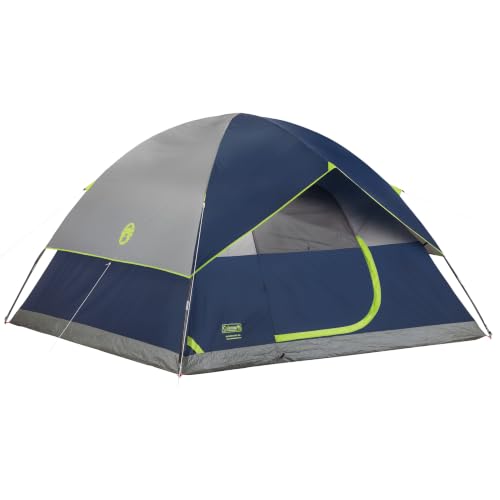
Best Budget: Coleman Skydome Darkroom 6
Coleman’s Darkroom fabric reduces the light inside the sleeping area, which helps children nap and helps parents sleep past sunrise. The Skydome line comes in 4, 6 and 8 person sizes and uses a simple pole system.
The trade-off is weather performance. Budget fabrics and seams handle light rain but may need extra seam sealing for heavy storms, and wind resistance is lower than the premium domes.
Best for Fast Setup: CORE 6 Person Instant Cabin
An instant cabin tent has poles pre-attached to the tent body, so you unfold it and extend the frame. Setup is reported at about two minutes, which is a win for tired parents arriving at camp after dark.
The trade-off is weight and a bulkier packed size. Pre-attached poles also mean more stress on joints in high wind, so stake and guy it out carefully.
How to Choose a Family Camping Tent
1. Size up from the rated capacity
A 6-person tent often sleeps about three or four people comfortably once you add air mattresses and bags. A good rule is to choose a tent rated for two people more than your group. A family of four should look at 6-person models, and a family of five or six should consider 8-person sizes.
2. Check floor area per person
Aim for at least 20 square feet (about 1.9 square meters) per person for comfortable family camping. A tent with 86 square feet of floor space therefore suits four people with room to spare, not six.
3. Look at headroom and wall shape
Near-vertical walls give more usable space than a dome of the same footprint. A peak height of about 72 to 76 inches lets most adults stand upright in the center.
4. Match the weather rating to your season
Most family tents are three-season shelters. If you camp in snow or serious wind, look for stiffer poles, a full-coverage rainfly and guy-out points. Rain protection depends on the fabric’s waterproof rating, often given in millimeters; around 1,500 mm is a common minimum for sustained rain.
5. Consider ventilation and privacy
Mesh panels and adjustable vents reduce condensation. Room dividers and darkened fabrics give kids and adults separate space and better sleep.
Worked Example: Sizing for a Family of Five
A family of five using three air mattresses (two double and one single) needs roughly 80 square feet for beds alone. Add 25 percent for walking space and a gear corner, and the target is about 100 square feet. An 8-person tent in the Wawona or Skydome line typically offers the needed area, while a 6-person tent at about 86 square feet would feel cramped. If you camp in a hot climate, you can instead pair a 6-person tent with a separate screen house for daytime living.
Durability and Ownership Realities
- Seams and zippers wear first. Seam-seal factory tape that peels and lubricate zippers with a dedicated stick.
- Dry the tent fully before storage. Mildew grows within days on damp fabric and ruins coatings.
- Use a footprint. A groundsheet protects the floor from abrasion and adds a moisture barrier.
- Stake properly. Most wind failures come from loose stakes, not weak poles.
- Avoid long UV exposure. Sunlight weakens nylon and polyester coatings over time, so take the fly down when you are not using it.
Frequently Asked Questions
How big of a tent do I need for a family of four?
A 6-person tent is the standard recommendation. It gives enough floor area for air mattresses or cots plus bags and clothing. If you plan to use cots or want extra room for rainy days, consider an 8-person model.
Are cabin tents better than dome tents for families?
Cabin tents offer more headroom and living space thanks to steep walls. Domes handle wind better and are usually lighter and cheaper. Hybrid designs such as the NEMO Aurora Highrise try to deliver both.
Do I need a footprint for a family tent?
It is strongly recommended. A footprint protects the tent floor from rocks and sticks and helps keep moisture out. It is cheaper to replace a footprint than a damaged tent floor.
How do I keep a tent dry in heavy rain?
Pitch on slightly raised ground, stake the rainfly taut so it does not touch the inner tent, and seal any exposed seams. Open vents slightly to reduce condensation even in wet weather.
Is an instant tent worth it?
If you value fast setup and camp mainly in settled weather, yes. They are heavier and bulkier, and the pre-attached frame is less flexible in strong wind than a traditional dome.



Write Your Review
No reviews yet. Be the first to share your experience!