

Key takeaways
- Compare hand lapping sticks and a drill attachment by cup size and compound needs, and learn when lapping helps a seat and when cutting is required.
As an Amazon Associate we earn from qualifying purchases.
Affiliate Disclosure: This article contains affiliate links. If you buy through a link, we may earn a commission at no extra cost to you.
Valve lapping is the final hand-finishing step in cylinder head work. With the head off, the valves out and the faces and seats cleaned, a thin film of abrasive compound is worked between the valve face and its seat while the valve is rotated back and forth under light pressure. Done correctly, the two surfaces wear into a matched, even contact band that seals compression and keeps hot exhaust gas from leaking past a closed valve. The tools themselves are simple: most are wooden or composite sticks tipped with rubber suction cups that grip the valve head, and one pick below replaces hand motion with a drill-driven attachment that oscillates the valve for you.
One limit needs stating before any pick. Lapping polishes a serviceable seat; it does not rescue a burnt valve, a deeply pitted face, a bent stem or a seat that has sunk or cracked. Those faults need seat cutting, refacing or replacement parts at a machine shop. Lapping also cannot correct a worn guide, because a valve that wobbles in its guide will never lap into a concentric band. Treat the tools here as finishing tools for sound parts, and check seat width and contact position against the engine service manual as the work progresses.
The five picks cover the useful spread of the class. The Lisle small lapper is the single-stick choice for small valves, the SWANLAKE and BILITOOLS sets pair two sticks with four cup sizes each, the Thsakzo set covers the same ground in a compact package, and the QWORK kit is the drill-powered option for builders working through a full multi-valve head.
1. Lisle 21200 Small Valve Lapper — Single Stick for Small Valves

Lisle is the established name in this class, and the 21200 is its small-valve stick. The design is the classic one Lisle patented for the job: a thick handle that is easy to roll between the palms, with a rubber suction cup locked to each end by a tab so the cup cannot twist off mid-stroke. The two cup sizes suit the smaller valve heads found on motorcycles, small engines and many import automotive heads, which makes this the natural pick when a single, well-made hand stick is all the job calls for.
Because the cups are fixed to the stick rather than interchangeable plates, there is nothing to swap or lose, and the locking tab addresses the most common failure of budget lappers, a cup that lets go and drops compound down the port. Compound is not included, so plan on a separate tube of valve grinding compound, starting coarse only if the seat needs it and finishing fine.
Specs
- Type: Hand lapping stick, double-ended
- Brand and model: Lisle 21200
- Suction cups: 5/8 inch and 13/16 inch, one at each end, locking-tab retention
- Handle: Thick palm-rolling handle, composite construction
- Compound included: No
- Intended valves: Small valves — small engines, motorcycles, compact automotive heads
2. SWANLAKE Valve Lapper Set with 4 Suction Plates — Two Sticks, Four Cup Sizes

The SWANLAKE set is the straightforward two-stick hand kit. It pairs an 8-inch and a 9-inch wooden-handled stick with four synthetic rubber suction cups covering the span from small-engine valves up to larger automotive valves, so one set handles both the mower engine on the bench and the car head beside it. The cups are described as resistant to oil and ultraviolet exposure, which matters because lapping compound is an oily abrasive slurry that degrades soft rubber over time.
The manual for the set is clear that compound is a separate purchase, and it recommends having both fine and coarse grades on hand. That is sound practice: a coarse grade cuts a marked seat back to a continuous band faster, while the fine grade produces the smooth final finish that seals. Keep the two grades in separate, labelled containers and clean the valve and seat completely between grades, or stray coarse grit will keep cutting during the finishing pass.
Specs
- Type: Hand lapping sticks, 2 pieces
- Brand and model: SWANLAKE GARDEN TOOLS SW-66062
- Stick lengths: 8 inches and 9 inches (approximately), wooden handles
- Suction cups: 4 — 5/8 inch, 13/16 inch, 1-1/8 inch and 1-3/8 inch, synthetic rubber
- Item weight: 4.2 ounces for the set
- Compound included: No — fine and coarse grades recommended separately
3. BILITOOLS 2PCS Valve Lapping Kit — Wide Cup Range in Four Sizes

The BILITOOLS kit follows the same two-stick pattern with its own sizing. Two solid wood handles carry rubber suction plates in four sizes that run from small valves up to the larger heads on truck and older automotive engines, and the listing supplies spare plates, which is practical: suction cups are wear items that harden and lose grip, and a spare in the right size keeps a job moving instead of stalling on a cup that will no longer hold vacuum on the valve face.
Grip depends on the valve face being clean, flat and lightly moistened or oiled at the cup, so degrease each valve head before starting and re-seat the cup whenever the stick begins to slip rather than forcing the stroke. As with the other hand sets, no compound is bundled, so the grit choice stays with the builder: coarse only for a seat that shows broken contact, fine for a final polish on a seat that already laps in evenly.
Specs
- Type: Hand lapping sticks, 2 pieces
- Brand and model: BILITOOLS B1Q92654
- Handle material: Solid wood
- Cup material: Rubber suction plates
- Suction cup sizes: 4 sizes — 0.6 inch, 0.8 inch, 1.1 inch and 1.4 inch, with spare plates included
- Fit type: Universal fit
- Compound included: No
4. Thsakzo 2PCS Valve Lapping Tool Set — Compact Double-Ended Kit
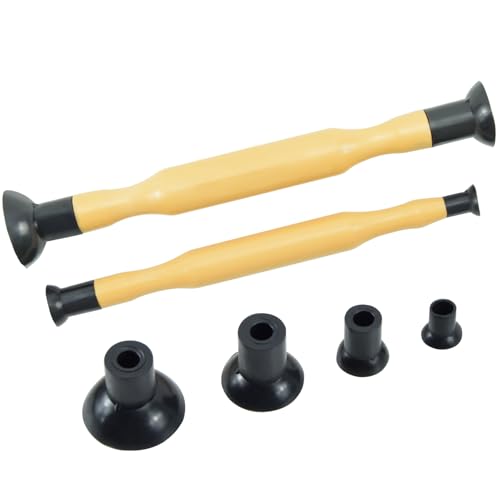
The Thsakzo set is another two-stick, four-plate hand kit, sized and weighted for builders who want the full cup range in a small package that fits a crowded toolbox drawer. Both sticks are double-ended, the lift type is manual, and the four suction plates cover the same practical ground as the other sets here, from small-engine valves to mid-size automotive valves.
There is little to separate hand kits of this pattern on mechanism, because there is no mechanism: the differences are cup sizing, handle feel and how well the cups hold up to compound. This set’s published dimensions and weight make it the lightest, most compact option in the lineup, which suits occasional head work rather than daily shop use. Compound is again a separate purchase, and the same two-grade approach applies.
Specs
- Type: Hand lapping sticks, 2 pieces, double-ended
- Brand and model: Thsakzo ZC-2004
- Suction plates: 4 included
- Lift type: Manual
- Item weight: 4.6 ounces
- Package dimensions: 9.45 x 2.24 x 1.85 inches
- Compound included: No
5. QWORK Valve Lapping Tool Kit — Drill-Powered Attachment for Full Heads

The QWORK kit replaces palm-rolling with a drill. The attachment chucks into a standard drill and converts its rotation into the oscillating, back-and-forth motion lapping requires, driving a suction plate that grips the valve head. Attachments of this pattern are specified for a working speed band around 1,000 to 1,250 rpm at the tool, with the drill run accordingly, and they exist for one reason: a modern four-valve-per-cylinder head can mean sixteen or more valves, and hand-lapping every one is slow, tiring work that gets less consistent as hands tire.
Power brings its own discipline. The oscillating action removes material faster than hand strokes, so check the contact band more often, use light pressure, lift the valve and redistribute compound frequently, and finish the last passes gently so the band stays narrow and even rather than widening past the manual’s specification. Keep compound out of the valve guide at all times, and never let the tool spin a valve continuously in one direction, which grooves instead of laps. The listing’s published specification detail is thinner than the hand sets above, so confirm the included plate sizes against the product page before ordering for a specific head.
Specs
- Type: Drill-powered lapping attachment
- Brand: QWORK
- Drive: Chucks into a standard drill; oscillating output motion
- Working speed: Attachment class specified around 1,000 to 1,250 rpm — run the drill to suit and check progress often
- Grip: Suction plates that fit over the valve head
- Compound included: No
- Intended use: Multi-valve automotive and small-engine heads where hand lapping every valve is impractical
How to Choose a Valve Lapping Tool
Start with cup size, because a cup that does not match the valve head will not hold. Measure the valve head diameter and choose a cup slightly smaller than the face so the cup grips the head without overhanging the sealing surface. Small-engine and motorcycle valves need the small end of the range, around 5/8 inch; most automotive valves fall in the 1-1/8 to 1-3/8 inch band. A two-stick set with four sizes covers both, which is why the sets above are the default recommendation for a mixed workshop.
Choose hand or powered by volume and by feel. Hand sticks give the most feedback: the change in resistance and sound as the compound breaks down tells an experienced builder when a seat has lapped in, and they are the safer choice for a single head, a valuable vintage casting or a first attempt. A drill attachment earns its place on high valve counts and routine work, provided the builder stops and inspects frequently instead of trusting the tool to finish on its own.
Compound choice matters as much as the stick. Use coarse compound only to restore a broken or marked contact band, then clean everything and switch to fine for the finish. Some builders lap with fine compound only, accepting a slower job in exchange for removing the least material. Either way, cleanliness decides the result: wash every trace of compound from the valve, seat, port and guide before assembly, because leftover abrasive left in an engine will keep cutting parts that were never meant to be lapped.
How Lapping Works, and When to Stop
Seat the valve in its guide with a light spring or finger pressure from below, apply a thin ring of compound to the valve face, press the cup onto the head and roll the stick between the palms in short back-and-forth strokes, lifting and rotating the valve a quarter turn every few strokes so the wear spreads evenly. The compound starts gritty and loud, then breaks down finer and quieter. Stop, clean both surfaces and inspect: a finished seat shows a continuous, even, matte grey band on both the valve face and the seat, unbroken all the way around.
Stop there. More lapping past a clean band only widens the seat and sinks the valve, which changes installed height and can hurt flow and sealing. If the band will not come continuous, sits at the very edge of the face, or pitting remains after reasonable effort, the honest answer is machine work: a seat cutter or a trip to a shop. That boundary separates lapping as a finishing step from lapping as a shortcut, and these tools are built for the finishing step.
Frequently Asked Questions
Does lapping fix a leaking valve?
It fixes leaks caused by minor face and seat irregularities, carbon marking or slight mismatch on otherwise sound parts. It does not fix a burnt, bent or cracked valve or a damaged seat; those need replacement parts and machining.
Which compound grit should a beginner start with?
Fine compound is the safer start. It removes material slowly, which makes it hard to overdo, and many serviceable seats need nothing more. Move to coarse only when a fine pass shows the contact band is still broken or heavily marked, and always finish with fine afterwards.
Can the drill attachment damage a seat?
Yes, if it is run fast, pressed hard or left working without inspection. The attachment removes material more quickly than hand strokes, so use light pressure, keep to the tool’s specified speed range, redistribute compound often and check the band after every few passes.
Why does the suction cup keep letting go?
Usually because the valve face is oily, the cup is the wrong size, or the rubber has hardened. Clean and dry the valve head, confirm the cup is slightly smaller than the head, press it on firmly before adding compound, and replace cups that no longer feel supple.
Should keepers, seals and springs be replaced during the same job?
Valve stem seals are inexpensive and already accessible with the head apart, so replacing them during head work is standard practice. Inspect springs, keepers and retainers against the manual and replace anything worn; lapping only addresses the face-to-seat seal.
More from Amazon
Programs that pair well with the guide above. Offers and eligibility are set by Amazon and may change.
Free shipping on eligible items, Prime Video and more. Eligible new members can start with a free trial.
Start a Prime free trialA Prime membership for ages 18-24 with a trial period. Eligibility is set by Amazon.
See Prime for Young AdultsAudiobooks and podcasts to listen to on the go. Eligible new members can start with a free trial.
Try Audible freeAd-free music streaming. Eligible new subscribers can start with a free trial.
Try Music Unlimited freeAs an Amazon Associate we earn from qualifying purchases.


Write Your Review
No reviews yet. Be the first to share your experience!