

Key takeaways
- Medicated or non-medicated? Compare five chick starter feeds on protein, crumble form and stage window, matched to your chicks vaccination status.
As an Amazon Associate we earn from qualifying purchases.
A chick starter is the only food a baby chick needs for its first weeks of life, and the decision that matters most is printed in small type on the tag: whether the feed is medicated. Everything else — protein percentage, crumble size, bag weight — is secondary to that one fork, because the right answer depends on a fact about your chicks that has nothing to do with the feed itself: whether they were vaccinated against coccidiosis at the hatchery. The five feeds below are all genuine, complete starter or starter-grower rations for chicks, spanning both sides of the medicated divide, judged on what their makers publish: the guaranteed analysis, the medication statement, the form and the feeding window on the tag.
Affiliate Disclosure: This article contains affiliate links. If you buy through a link on this page, the site may earn a commission at no additional cost to you. Products are selected on their published specifications and labelling, and claims are reported as their makers state them.
The medicated fork: match the feed to the vaccine, not the other way round
Coccidiosis is an intestinal disease caused by coccidia, protozoan parasites that live in soil, litter and droppings almost everywhere chickens are kept. Young chicks are the most vulnerable class of bird, and a coccidiosis outbreak in a brooder can kill quickly. There are two standard defences, and they work against each other.
The first defence is medicated feed. In North America that almost always means amprolium, included at a preventive level — the Purina tag below lists it at 0.0125 percent. Amprolium is a coccidiostat, not an antibiotic: it does not kill bacteria and it is not part of any antibiotic-resistance debate. It works by mimicking thiamine (vitamin B1), which the coccidia need to multiply, and so holds the parasite population down while the chick gradually builds its own immunity through controlled exposure. It is a preventive, fed continuously from hatch; it is not a treatment for a chick that is already sick.
The second defence is the coccidiosis vaccine, sprayed or administered at the hatchery on the day of hatch. Vaccinated chicks are deliberately exposed to controlled live coccidia so their immune systems learn to handle the parasite. That learning process requires the coccidia to cycle through the chick — and amprolium in the feed interrupts exactly that cycle. Feeding medicated starter to vaccinated chicks can negate the vaccine they already received.
The pairing rule is therefore simple and worth stating before any product is considered. Chicks vaccinated for coccidiosis get non-medicated starter. Chicks that were not vaccinated — or whose vaccination status you do not know, which is common with feed-store and many small-hatchery chicks — get medicated starter, or non-medicated starter only with rigorous litter management and close watching. Purina prints the same rule in its own directions: if your birds have not been vaccinated, or you are unsure of their status, feed the medicated version. If chicks were started on medicated feed, Purina also directs that they stay on it until the first egg rather than switching partway.
Protein, form and the shape of the first weeks
Starter feeds cluster tightly on protein. Layer-type starters for future laying hens sit at about 18 percent, which supports steady frame and feather growth without pushing pullets into early lay condition. Higher-protein starters exist — the organic pick below is 20.5 percent — and meat-bird starters run higher still, at levels intended for broilers on a fast finishing schedule; those are labelled as meat-bird feeds and are a different purchase. None of the five picks here is a meat-bird ration.
Form matters as much as formula in week one. A day-old chick cannot crack a pellet, so every pick below is a crumble or, in the organic case, a fine whole-grain crumble — feed that has been pelleted for uniform nutrition and then broken down to chick size. Mash that has never been pelleted invites selective feeding, because chicks pick out visible grains and leave the powdered fraction, which is where much of the vitamin and mineral premix sits.
Two boundary rules complete the picture. First, starter is a sole ration: a chick eating only crumbles needs no grit, because there is nothing in the feeder that requires grinding. Chick grit becomes necessary only when treats, scratch grains or whole foods enter the diet — it is a separate, inexpensive purchase, not part of this one. Second, never feed chicks a layer ration: layer feed carries roughly four times the calcium of starter, and sustained excess calcium damages growing kidneys. Calcium is the one line on the tag where more is actively worse for a young bird.
Stage windows: starter, starter-grower, and when to switch
Makers label the window differently, and the differences are real. Some starters are positioned for the first six to eight weeks, after which birds move to a separate grower feed. Others — most of the picks below — are starter-grower feeds designed to run from hatch all the way to the onset of lay, around 16 to 20 weeks depending on the maker, at which point the flock switches to layer feed. Neither structure is wrong; the starter-grower route simply means one bag from brooder to first egg, while the short-window starter assumes a second feed purchase. Whichever route you take, switch feeds gradually over several days by mixing increasing proportions of the new feed into the old.
1. Purina Start & Grow Medicated, 25 lb — the unvaccinated-chick benchmark
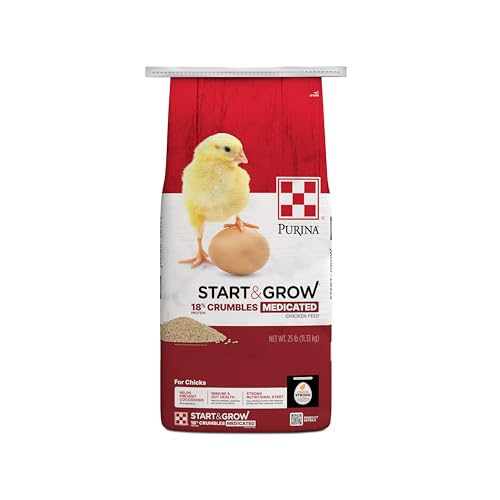
Purina’s Start & Grow is the reference chick starter in North America, and the medicated version is the default recommendation for the most common real-world case: chicks whose coccidiosis vaccination status is unknown. The tag guarantees 18 percent crude protein with lysine and methionine specified, and the active drug ingredient is amprolium at 0.0125 percent — the standard preventive level, present to aid in the prevention of coccidiosis while chicks develop active immunity of their own.
Purina positions Start & Grow as a complete ration from hatch to laying age, 18 to 20 weeks, so a flock started on this bag does not need a separate grower feed, and the formula carries prebiotics and probiotics for digestive and immune support plus marigold extract for beak and shank colour. The 25 lb bag listed here is the practical size for a typical backyard batch of chicks; the same feed is sold in smaller and larger bags. For unvaccinated or unknown-status chicks, this is the straightforward pick.
Specs
- Form: Crumbles
- Bag size as listed: 25 lb
- Crude protein: 18.00% minimum
- Medicated: Yes — amprolium 0.0125% (113.5 g/ton), a coccidiostat for the prevention of coccidiosis; not an antibiotic
- Feeding window as stated: Feed continuously as the sole ration from hatch until laying age (18–20 weeks)
- Other published figures: Lysine 0.90% minimum, methionine 0.34% minimum, crude fat 3.00% minimum, crude fibre 5.00% maximum, calcium 0.75% minimum to 1.25% maximum; contains prebiotics and probiotics
2. Manna Pro Medicated Chick Starter Grower, 5 lb — medicated protection in a small bag

Manna Pro’s medicated starter covers the same ground as the Purina above — 18 percent protein crumbles with amprolium at the same preventive level — in a 5 lb bag sized for a handful of chicks rather than a full brooder. For a keeper raising three or four pullets, that matters: feed loses vitamin potency in storage, and a small bag finished fresh is worth more than a large bag ageing in the bin.
The maker describes the feed as formulated for the development of active immunity against coccidiosis, which is the correct framing of what a coccidiostat does, and directs it from hatching until about 16 weeks of age, when birds transition to a layer feed. The label also carries the pairing rule from the other side: do not feed amprolium-medicated feed to chicks that have been vaccinated for coccidiosis, and use it as the sole source of amprolium. Note the maker’s caution that the feed contains supplemental copper and should not be fed to sheep or other copper-sensitive species — relevant on mixed smallholdings where feed bags migrate between pens.
Specs
- Form: Crumbles
- Bag size as listed: 5 lb
- Crude protein: 18.00% minimum
- Medicated: Yes — amprolium 113.5 g/ton (0.0125%), for the prevention of coccidiosis where immunity is not desired; not an antibiotic
- Feeding window as stated: Feed to young chickens from hatching until about 16 weeks of age, then transition to a layer feed
- Other published figures: Lysine 0.85% minimum, methionine 0.30% minimum, crude fat 2.50% minimum, crude fibre 7.00% maximum, vitamin A 3,500 IU/lb minimum, vitamin E 20 IU/lb minimum; contains supplemental copper — do not feed to sheep
3. Manna Pro Chick Starter Feed, Non-Medicated, 5 lb — the vaccinated-chick staple

This is the non-medicated counterpart in Manna Pro’s line and the correct shelf-mate for the medicated bag above: the same 18 percent protein crumble platform, the same vitamin and mineral fortification, with no coccidiostat in the bag. It is the pick for chicks that arrived vaccinated against coccidiosis, where medicated feed would work against the vaccine, and for keepers running a verified unvaccinated flock under strict litter management by deliberate choice.
Manna Pro directs this feed from hatching to 16 weeks, which again makes it a starter-grower rather than a six-week starter. The listing describes the crumbles as sized for baby chicks from day one and the formula as complete, requiring no supplements alongside it. As with its medicated sibling, the small bag suits small batches and keeps the feed fresh through the feeding window; keepers raising a dozen or more chicks will go through several.
Specs
- Form: Crumbles
- Bag size as listed: 5 lb
- Crude protein: 18.00% minimum
- Medicated: No — non-medicated; the appropriate choice for coccidiosis-vaccinated chicks
- Feeding window as stated: Formulated for chicks from hatching to 16 weeks
- Other published figures: Lysine 0.85% minimum, methionine 0.25% minimum, crude fat 2.50% minimum, crude fibre 7.00% maximum, calcium 0.75% minimum to 1.25% maximum, vitamin A 3,500 IU/lb minimum, vitamin E 20 IU/lb minimum
4. Manna Pro Chick Starter and Grower, Non-GMO, 10 lb — non-medicated with a non-GMO ingredient list

Manna Pro’s Non-GMO line takes a different ingredient route from the two conventional bags above: the published ingredient list leads with corn and field peas, includes fish meal and canola meal as protein sources, adds dehydrated alfalfa and dried kelp, and finishes with a probiotic package of dried Lactobacillus and Bifidobacterium fermentation products plus yeast culture. The feed is certified non-GMO and contains no artificial flavours and no medications — it is a non-medicated starter, so the vaccinated-chick pairing rule applies to it exactly as it does to the pick above.
Protein is published at 18 percent, in line with the rest of the layer-type starters here. The 10 lb bag splits the difference between the small trial bags and the bulk sacks, and the formula’s fish meal and peas give it a more varied protein base than a corn-and-soy ration. What the non-GMO certification does and does not mean is worth keeping straight: it governs how the ingredients were produced, not the nutrient levels, which are the same class of figures as the conventional feeds — judge it on both, separately.
Specs
- Form: Crumbles
- Bag size as listed: 10 lb
- Crude protein: 18% as published
- Medicated: No — non-medicated, no artificial flavours or medications; appropriate for coccidiosis-vaccinated chicks
- Feeding window as stated: Starter and grower feed for young chickens, fed from hatch through the growing period before lay
- Other published details: Non-GMO certified; ingredients include corn, field peas, fish meal, canola meal, dehydrated alfalfa meal and dried kelp; contains probiotics (dried Lactobacillus acidophilus, Lactobacillus casei, Bifidobacterium thermophilum and Enterococcus faecium fermentation products), antioxidants and marigold (Tagetes) meal
5. Scratch and Peck Feeds Whole Grain Starter Crumbles, 25 lb — the certified-organic, high-protein option

Scratch and Peck’s starter is the outlier in this group on almost every axis. It is certified organic and Non-GMO Project Verified, built without corn or soy, and it carries the highest protein in the lineup at 20.5 percent, with part of that protein coming from grub protein — black soldier fly larvae — alongside whole grains, peas and fish meal. It is non-medicated, so it belongs on the vaccinated side of the fork, or with keepers who manage coccidiosis exposure through litter and stocking density.
The maker’s window is the shortest here: this is a true starter, directed at the first eight weeks, after which birds move to the same maker’s grower feed. That two-stage structure, plus the 25 lb bag, suits keepers committed to an organic program rather than a single-bag brooder-to-lay routine. The crumbles are formulated for both chicks and ducklings, a useful overlap for mixed waterfowl-and-chicken brooders — and one of the few starters that says so on the label.
Specs
- Form: Whole grain crumbles
- Bag size as listed: 25 lb
- Crude protein: 20.5% as published
- Medicated: No — non-medicated; appropriate for coccidiosis-vaccinated chicks
- Feeding window as stated: Starter stage, from hatch to about 8 weeks, followed by a grower feed
- Other published details: Certified organic and Non-GMO Project Verified; corn-free and soy-free; formulated with grub protein (black soldier fly larvae), whole grains and fish meal; labelled for chicks and ducklings
Freshness, lot tags and storage
Whichever bag you choose, treat feed as perishable. Vitamins degrade from the day of milling, faster in heat and humidity, so buy the quantity your chicks will finish within a few weeks, store it sealed, cool and dry, off the ground, and never feed anything mouldy or pest-infested. Every bag carries a lot code and mill date, usually on the tag or the strip sewn across the bottom; that code is how recalls are identified, and feed recalls in this category are historically single-lot events — a 2020 Purina recall, for example, covered specified lots of a different chick starter brand and rabbit and turkey feeds, not the Start & Grow line. Keeping the tag until the bag is finished costs nothing and makes any lot check a ten-second job.
The last discipline is proportion. A starter ration only delivers its tag nutrition if it is essentially all the chick eats. Keep treats and scratch out of the brooder diet in the first weeks; once anything beyond crumbles is offered, add chick-size grit in a separate dish so the gizzard can grind it. Fresh, clean water, available constantly, does more for growth than any supplement added to a complete feed.
More from Amazon
Programs that pair well with the guide above. Offers and eligibility are set by Amazon and may change.
Free shipping on eligible items, Prime Video and more. Eligible new members can start with a free trial.
Start a Prime free trialA Prime membership for ages 18-24 with a trial period. Eligibility is set by Amazon.
See Prime for Young AdultsAudiobooks and podcasts to listen to on the go. Eligible new members can start with a free trial.
Try Audible freeAd-free music streaming. Eligible new subscribers can start with a free trial.
Try Music Unlimited freeAs an Amazon Associate we earn from qualifying purchases.










Write Your Review
No reviews yet. Be the first to share your experience!