

Key takeaways
- Compare the best mini pig food for potbelly pigs by life stage, protein and fibre, with honest feeding rates that keep pet pigs lean, sound and content.
As an Amazon Associate we earn from qualifying purchases.
The single most important fact about feeding a pet mini pig is that obesity, not underfeeding, is the health problem that defines this species in captivity. A mini pig ration is not meant to grow an animal as fast as possible — that is the job of hog feed, which is formulated for animals being raised for market and is the wrong product for a pet. A proper mini pig food is a measured, fibre-forward pellet designed to keep a pig feeling full on controlled calories. This guide compares five rations genuinely formulated and marketed for miniature and potbelly pet pigs, matched by life stage, and explains how to read their labels and feeding directions honestly.
One myth needs to be disposed of first, because it still causes real harm. There is no such thing as a permanently tiny “teacup” pig. Miniature pigs — potbellies, Julianas, and the other miniature breeds — are small only by comparison with farm hogs. A healthy adult mini pig commonly reaches well over one hundred pounds and keeps growing for several years. Sellers who promise a pig that stays lap-sized are describing a young animal, and the only way to keep a pig artificially small is to underfeed it. Deliberately feeding a pig less than it needs to stay small is starvation, not size management, and it damages bones, organs, and temperament. Choose a food for the pig you actually have, feed the amount its body condition requires, and expect a substantial adult animal.
Affiliate Disclosure: This article contains affiliate links. If you buy through a link on this page, we may earn a commission at no extra cost to you.
How to Read a Mini Pig Food Label
Life stage comes first, because protein needs fall as a pig matures. Piglets and young growing pigs need the richest ration — youth and grower formulas run higher in protein to build frame, muscle, and organs. Growing and active adults sit in the middle. Mature and less active pigs need the leanest formula: lower protein, lower energy, and the highest fibre, so the pig can eat a satisfying volume without taking in surplus calories. Feeding a rich grower ration to a sedentary five-year-old is a reliable way to produce an overweight pig, and feeding a lean maintenance ration to a weanling is the opposite mistake.
Fibre is the second number to check. Fibre is what makes a small measured portion feel like a meal. Maintenance diets for mature pigs push fibre highest for exactly this reason, using ingredients such as soybean hulls, alfalfa meal, oat hulls, and beet pulp. Fat percentage matters too: a maintenance pig does not need a high-fat ration, and added fats belong in the diet mainly where a formula is using them deliberately, such as flaxseed for skin and coat.
Skin, coat, and hooves are the useful secondary checks. Pet pigs are prone to dry, flaky skin, and the labels worth trusting address it with named nutrients rather than vague promises: omega-3 fatty acids from flaxseed, biotin, and zinc all support skin and hoof quality, and a guaranteed analysis that prints minimum levels for them is a better sign than a marketing claim. Hoof growth rides on the same nutrients, along with adequate — not excessive — protein.
The last label lesson is the most important one: the feeding rate matters more than the brand. Every reputable mini pig ration is fed by body weight, typically in the range of one to two percent of body weight per day, split into at least two meals. That measured base of pellets is the diet. Vegetables, grazing, and a little fruit are the variety around it, not replacements for it, and rich treats should be rare. A pig that roots in pasture all day is eating more than the bowl suggests, and the pellet portion should shrink to match. Weigh the food, watch the pig’s body condition — you should be able to feel ribs under a modest fat cover, and see a waist from above — and adjust in small steps.
Two safety notes belong in any feeding guide. First, pigs are unusually sensitive to salt when water is restricted, so fresh water must be available at all times and salty table scraps should stay out of the pen. Second, never feed a pet pig a ration blended for market hogs or show pigs: those feeds are built to push growth and finish, which is precisely what a pet pig does not need.
The Five Picks
1. Mazuri Mini Pig Active Adult Food, 25 lb Bag (Pack of 2)

Mazuri is the name veterinary and zoo nutritionists reach for most often in this category, and its Active Adult formula is the middle rung of a three-stage system. It is built for growing and active adult mini pigs from about four months of age: a moderate-energy, high-fibre pellet with sixteen percent protein, so it supports a still-developing frame without the richness of a piglet starter. The skin-and-coat support is printed in the guaranteed analysis rather than left to implication — guaranteed omega-3 fatty acids, biotin, and zinc, plus live probiotics. This listing is the two-bag pack of the standard twenty-five-pound sack, which suits households that go through feed steadily. For breeding females, the maker directs a blend with the youth formula rather than simply feeding more of this one.
Specs
- Life stage as labelled: Growing and active adult mini pigs, 4 months and older
- Bag size as listed: 25 lb bag, pack of 2
- Form: Pellet, 5/32 inch diameter
- Crude protein: Not less than 16.0%
- Crude fat: Not less than 4.0%
- Crude fibre: Not less than 7.0%, not more than 10.0%
- Skin and hoof nutrients: Omega-3 fatty acids not less than 0.75%; biotin not less than 0.8 mg/lb; zinc not less than 250 ppm
- Feeding rate as stated: 1 to 2% of body weight daily, split into two meals
2. Mazuri Mini Pig Mature Maintenance Food, 25 lb Bag

The third rung of the same Mazuri system, and the right default for the typical pet pig: an adult that lives indoors, moves at its own pace, and has finished growing. Mature Maintenance is formulated for less active mini pigs from about eighteen months of age, and for all mini pigs over three years that are not breeding or nursing. Protein drops to twelve percent while fibre rises to the highest range in this guide — nine to fifteen percent — built on oatmeal, flaxseed, soybean hulls, and beet pulp, so the daily portion is bulky and filling without being calorific. The same guaranteed skin nutrients carry over from the Active Adult formula. If a pig is gaining weight on an adult ration, this stage step-down, at the same measured feeding rate, is the maker’s intended correction — not simply scooping less of a richer feed.
Specs
- Life stage as labelled: Less active mini pigs 1.5 years and older; all mini pigs over 3 years not reproducing or lactating
- Bag size as listed: 25 lb bag
- Form: Pellet, 5/32 inch diameter
- Crude protein: Not less than 12.0%
- Crude fat: Not less than 4.0%
- Crude fibre: Not less than 9.0%, not more than 15.0%
- Skin and hoof nutrients: Omega-3 fatty acids not less than 0.75%; biotin not less than 0.80 mg/lb; zinc not less than 250 ppm
- Feeding rate as stated: 1 to 2% of body weight daily, split into two meals
3. Nutrena Country Feeds Mini Pig Feed 16% Pellet, 50 lb

Nutrena takes the opposite approach to Mazuri’s staged system: one complete pellet intended to cover a mini pig at every life stage, fed as the sole ration or alongside hay and pasture. The sixteen percent protein level is the joint-highest in this guide, which makes this bag the practical choice for a growing pig or a mixed-age group where separate feeds are unrealistic — and it means the owner of a mature, sedentary pig has to be more disciplined with the scoop, because the ration itself will not lean the diet down. The fifty-pound bag is the bulk format in this lineup, suited to outdoor pigs, multiple pigs, and sanctuaries. The formula includes balanced amino acids and added vitamins and minerals, and the firm pellet is designed to hold together with minimal dust and waste in the bowl.
Specs
- Life stage as labelled: All life stages — growing and adult mini pigs
- Bag size as listed: 50 lb bag
- Form: Pellet
- Crude protein: 16.0% minimum
- Crude fat: 3.0% minimum
- Crude fibre: 12.0% maximum
- Feeding rate as stated: Complete feed — may be fed as the sole ration or with roughage; portion by body weight and condition
4. Wholesome Harvest Non-GMO Soy Free-Corn Free Potbelly & Mini Pig, 40 lb

Ernst Grain & Livestock, a seventh-generation family farm in Maryland, mills this whole-grain mix under its Wholesome Harvest brand for owners who want a non-GMO ration built without the two ingredients most associated with energy-dense feed: the formula excludes both soy and corn specifically to limit the fat and energy in the diet and hold mini pigs and potbellies in an ideal weight range. It is a loose grain blend rather than a pellet, built on grains with probiotics, essential oils, herbs, kelp, and omega-3s added. One honest caveat belongs with this pick: the listing does not publish a full guaranteed analysis panel, so buyers who want to verify protein and fibre figures before committing should read the tag on the bag itself. The maker’s directions are given by body weight, and the same feed is offered free choice when used as a grower — an instruction to follow cautiously with any pig that has finished growing, for the reasons set out above.
Specs
- Life stage as labelled: All life stages; positioned for weight maintenance in mature potbelly and mini pigs
- Bag size as listed: 40 lb bag
- Form: Whole-grain mix (not pelleted)
- Formulation: Non-GMO; made without soy or corn
- Added components as listed: Probiotics, essential oils, herbs, kelp, omega-3s; fortified with vitamins A, D and E and minerals
- Crude protein, fat and fibre: Not published in the listing — check the bag tag
- Feeding rate as stated: Feed by body weight per the maker’s directions; may be fed free choice when used as a grower feed
5. Wholesome Harvest Non-GMO Potbelly & Mini Pig Grower Feed, 10 lb
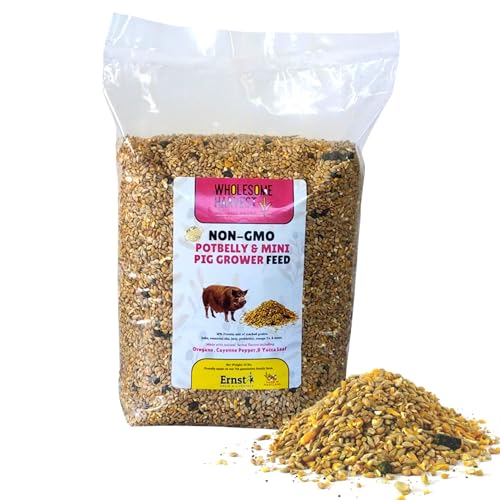
The young-pig entry in this guide comes from the same Maryland mill. This grower feed is designed for pigs under one year old — the stage at which a restricted maintenance ration would do genuine harm, because the frame, organs, and immune system are still being built. It is a whole-grain based feed with no byproducts, and it leans on gut support for the weaning and growing period: multiple species of live probiotics plus prebiotics, essential oils and herbs including oregano, cayenne pepper, and yucca, and flax oil, which the maker includes as a coat and hair conditioner. The ten-pound bag is the smallest in this guide, a sensible size for a single piglet that will graduate to an adult formula within the year. As with its sibling above, the listing does not print a guaranteed analysis, so the bag tag is the document of record for protein and fibre; what the listing does pin down is the stage, and under-one-year is exactly the window a grower ration should cover.
Specs
- Life stage as labelled: Grower — pigs less than 1 year old
- Bag size as listed: 10 lb bag
- Form: Whole-grain based mix
- Formulation: Non-GMO; no byproducts
- Added components as listed: Multiple live probiotic species and prebiotics; essential oils and herbs (oregano, cayenne pepper, yucca); flax oil
- Crude protein, fat and fibre: Not published in the listing — check the bag tag
- Feeding rate as stated: Feed as the grower ration for pigs under 1 year; transition to an adult formula by about 1 year
Feeding the Whole Pig: Amounts, Produce, and Treats
Whichever bag you choose, the routine around it decides the outcome. Feed twice a day at consistent times, weigh or measure the portion instead of scooping by eye, and start from the label’s body-weight percentage — then let the pig’s condition, not its appetite, arbitrate. Pigs are persuasive beggars and will always vote for more; a healthy pig should show a visible waist from above and carry ribs you can feel with a flat hand under light fat cover. Adjust the ration in small steps of about ten percent, and give each step a few weeks before judging it.
Around the pellet base, the rest of the diet should be mostly vegetables. Leafy greens, cucumber, celery, zucchini, squash, peppers, and carrots supply bulk, water, and grazing-style occupation at low calorie cost, and pasture or hay gives the pig something to work at between meals. Fruit is a treat, not a food group — sweet and starchy extras add up quickly in an animal this efficient at storing energy. Keep rich human food and salty scraps out of the pen entirely, keep fresh water in front of the pig at all times, and store feed sealed, dry, and off the floor, checking the lot code and freshness date on each new bag as basic feed hygiene.
Finally, transition foods gradually. When a piglet graduates from a grower ration to an adult pellet, or an adult steps down to a maintenance formula, blend the new feed into the old over a week or more. Abrupt swaps upset pig digestion, and a gradual change also lets you confirm the pig accepts the new ration before the old bag runs out. Matched to the right stage and measured with a scale rather than optimism, any of the five rations above will do its job — the pig’s waistline will tell you the rest.
More from Amazon
Programs that pair well with the guide above. Offers and eligibility are set by Amazon and may change.
Free shipping on eligible items, Prime Video and more. Eligible new members can start with a free trial.
Start a Prime free trialA Prime membership for ages 18-24 with a trial period. Eligibility is set by Amazon.
See Prime for Young AdultsAudiobooks and podcasts to listen to on the go. Eligible new members can start with a free trial.
Try Audible freeAd-free music streaming. Eligible new subscribers can start with a free trial.
Try Music Unlimited freeAs an Amazon Associate we earn from qualifying purchases.










Write Your Review
No reviews yet. Be the first to share your experience!