

Key takeaways
- RV owners ask a different question from tent campers. The question is not "can this charge my phone" but "can this carry a refrigerator.
RV owners ask a different question from tent campers. The question is not “can this charge my phone” but “can this carry a refrigerator, a laptop desk, and a roof-style air conditioner’s worth of startup load without tripping?” Boondocking without hookups pushes you toward a bigger inverter, a bigger battery, and a way to refill from the sun when the campground is a gravel pull-off. Camper-sized solar generators now compete directly with the old routine of a noisy gas generator on the picnic table.
This guide is for travelers who want that quiet alternative. The seven options span 1,024Wh to 3,584Wh, with AC outputs from 1,800W to 3,600W, drawn from specs listed in each product title for 2026 models. Two 300W-class kits that carry RV wording in their titles are left out, because their capacity is too small to serve as a primary RV supply. Where a title says nothing about RV-specific ports, the review says to verify.
Quick Picks
Our top picks



As an Amazon Associate we earn from qualifying purchases at no extra cost to you.
| Product | Best for | Key spec from the title |
|---|---|---|
| Jackery HomePower 3600 Plus | Largest storage, long stays | 3,584Wh, 3,600W AC, expandable to 21kWh |
| Jackery HomePower 3000 | Startup-heavy appliances | 3,072Wh, 3,600W AC, 7,200W surge |
| PECRON F3000LFP | High-output LiFePO4 option | 3,072Wh, 3,600W, expandable capacity |
| BROWEY 1600W Power Station | Smaller rigs, weekend trips | 1,024Wh, 1,600W (3,200W peak), built-in panel |
| EcoFlow Delta 3 Ultra | High capacity with 400W panel | 3,072Wh, 3,600W (7,200W surge) |
| Anker SOLIX C2000 Gen 2 | Quick recharge, mid-large loads | 2,048Wh, 2,400W (4,000W peak), 58-min charge |
| EcoFlow Delta 3 Classic | Compact step-up | 1,024Wh, 1,800W AC (3,600W surge), 220W panel |
How to Choose
Add up RV loads, then check the startup spike
Typical RV loads include a compressor refrigerator, a roof vent fan, lights, a laptop, a coffee maker, and maybe a microwave. A rooftop air conditioner is the outlier: it can draw more than a kilowatt running and several times that at startup. Compare the combined running watts of what you will use together with the continuous AC rating, and the worst startup spike with the surge rating in the title. A 1,800W unit and a 3,600W unit are different tools.
Capacity for the number of nights off-grid
For overnight stops, 1,000Wh can carry lights, a fridge, and electronics. For two or three days of boondocking, 2,000Wh to 3,000Wh is a more comfortable range. Beyond that, expandable systems let you add battery modules. Divide the stored Wh by your average draw and subtract roughly 15 to 20 percent for inverter loss. Treat air-conditioning as a separate budget, since it can empty a battery in hours.
Solar input and charging sources
Solar is the slow lane. A pair of 200W panels or a single 400W panel adds a useful daily top-up in strong sun but will not replace what a heavy night consumes. Fast wall or shore-power charging, such as the 58-minute full charge in the Anker title, matters when you stop at a campground for an afternoon. Check whether the unit accepts alternator or vehicle charging, which the titles here do not state.
RV-specific ports, chemistry, and corners cut
A 30A RV-style outlet simplifies connecting to the trailer’s inlet, but most titles here do not state one, so confirm in the manual. LiFePO4 and LFP chemistries handle many charge cycles, a plus for frequent travel. Budget models cut corners on documented expansion, warranty detail, and wiring accessories. Never run a gas generator beside an open RV window or under an awning, since carbon monoxide can enter the living space. A battery system sidesteps that hazard, though it should still be kept in a ventilated spot away from heat sources.
The 7 Best Options
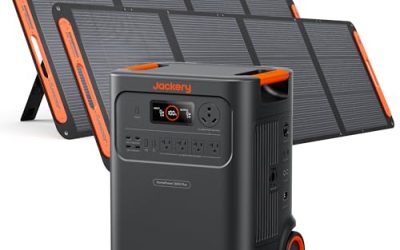
Jackery HomePower 3600 Plus with 2x200W Panels
The title lists 3,584Wh, 3,600W AC, an LFP battery, expansion to 21kWh, and two 200W panels. It is the highest-capacity unit in the group and the one aimed at long stays without hookups.
- Strength: Large capacity and 3,600W output for several appliances at once.
- Strength: Expansion up to 21kWh and bundled panels.
- Trade-off: Size and weight are not stated, so measure your storage bay first.
Skip it if your rig is small and your trips are short, or if your storage bay cannot take a large, heavy box. Owners who tow a trailer with generous cargo space and rarely hook up will get the most from the extra capacity. Buyers who stay a week in one spot and want to avoid fuel runs are the right audience. It also sits in the premium tier, so compare it with the 3,072Wh models first. Remember that more storage also means a longer recharge when you finally reach a hookup, so plan stops accordingly.
Jackery HomePower 3000 with 2x200W Panels
This one lists 3,072Wh, 3,600W AC, a 7,200W surge, an LFP battery, and two 200W panels. The surge number is the selling point for rigs with air-conditioner compressors or a water pump.
- Strength: 7,200W surge for demanding startups.
- Strength: Panel pair included.
- Trade-off: Less capacity than the 3600 Plus, and the title mentions no expansion figure.
Skip it if you want the maximum stored energy per box. Travelers who prioritize startup strength over total capacity will find it compelling, and the surge rating is a spec worth comparing to your AC unit’s startup draw. Neither listing promises that an air conditioner will run for hours, so treat the surge number as permission to start it, not a runtime guarantee.
PECRON F3000LFP
The title lists 3,072Wh, 3,600W, a LiFePO4 battery, fast charging, home backup use, and expandable capacity. It matches the headline numbers of the Jackery 3000 and the EcoFlow Delta 3 Ultra, so the choice comes down to brand preference and accessories.
- Strength: 3,600W output with LiFePO4 chemistry.
- Strength: Expansion is listed, with room to add capacity later.
- Trade-off: No solar panel is named in the title, so budget separately.
Skip it if you want a bundle with panels. It suits people who already own solar gear or plan to buy their preferred panels. The word expandable in the title is encouraging for future growth, though you should confirm which extra batteries the manufacturer sells and what they cost before committing to the platform.
BROWEY 1600W Power Station with Built-in Solar Panel
A 1,024Wh LiFePO4 unit with 1,600W (3,200W peak) AC output, 100W USB-C, and a built-in panel. It is the smallest in the group and the most affordable tier to enter, targeting weekend rigs, vans, and small trailers.
- Strength: 1,600W output handles a fridge, a fan, and a laptop.
- Strength: Built-in panel means one less item to carry.
- Trade-off: 1,024Wh runs out in a day with a heavy load.
Skip it if you plan to run air-conditioning or stay off-grid for several days. The title does not list a separate panel input rating, so the built-in panel is best viewed as a bonus rather than a primary refill. Many owners of small rigs will pair it with shore power or a vehicle port when they can.
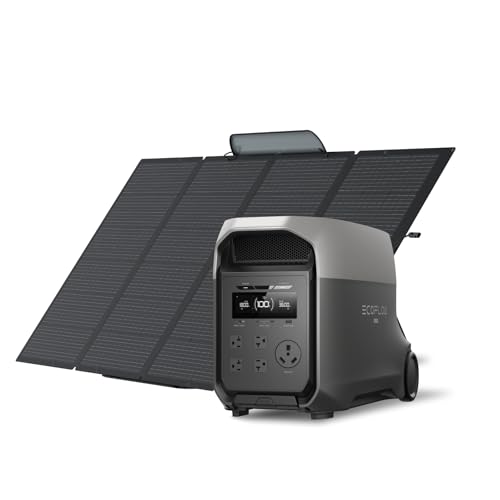
EcoFlow Delta 3 Ultra with 400W Solar Panel
The title lists 3,072Wh, an LFP battery, a 3,600W output with a 7,200W surge, and a bundled 400W solar panel. That equals the combined panel wattage of the Jackery pairs, delivered as a single panel.
- Strength: 400W panel in the bundle and a 7,200W surge.
- Strength: Capacity and output suit a full-featured rig.
- Trade-off: Accessory and port details are not in the title, so verify the connectors.
Skip it if you want a tiny unit. It fits owners who plan long stops where a larger panel can run for hours. Because the panel is bundled, the package is easier to price against the Jackery systems, which also include panels. Verify the cable lengths and connector type if your campsite is shaded and the panel must sit away from the rig.
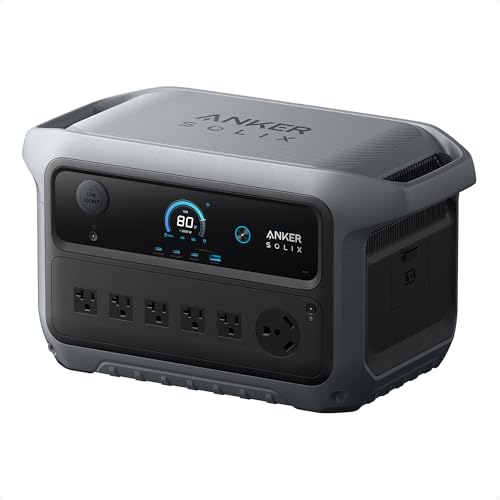
Anker SOLIX C2000 Gen 2
The title lists 2,048Wh, 2,400W (4,000W peak), a LiFePO4 battery, and a full charge in 58 minutes, with camping named as a use. It sits between the 1,024Wh and 3,000Wh tiers.
- Strength: 58-minute full charge shortens campground stops.
- Strength: 2,400W output with a 4,000W peak.
- Trade-off: The title does not mention bundled panels.
Skip it if your rig needs 3,600W continuous output. The listing does not mention a bundled panel, so account for solar separately. Travelers who change campsites often will appreciate the quick recharge more than a very large battery that takes longer to refill. It is also a sensible fit for owners who split time between hookups and dry camping, since fast wall charging makes the most of short plug-in windows.
EcoFlow Delta 3 Classic with 220W Solar Panel
This bundle lists 1,024Wh, 1,800W AC (3,600W surge), 100W USB-C, an LFP battery, and a 220W panel. It is a compact step for vans and small trailers.
- Strength: 220W panel and 1,800W AC at a modest capacity.
- Strength: 3,600W surge helps with motor startups.
- Trade-off: 1,024Wh limits multi-day autonomy.
Skip it if you want to run an air conditioner for any length of time. Owners of vans and short trailers who cook with propane and mostly need refrigeration, lighting, and a laptop are the audience, and the surge figure offers helpful margin for a compressor startup. Buyers who want to expand later should check whether extra batteries exist for this model, because the title does not mention expansion, and a bundled 220W panel gives a reasonable midday top-up when parked in the open.
Which One Fits Your Situation
Weekend van or small trailer
The EcoFlow Delta 3 Classic or the BROWEY gives a fridge and electronics a solid night.
Week of boondocking with a family
The Jackery HomePower 3600 Plus brings capacity and expansion, while the EcoFlow Delta 3 Ultra adds the larger panel.
Rig with a big starting load
The Jackery HomePower 3000 and the PECRON F3000LFP both list 3,600W and are the ones to check against your compressor’s startup draw. The Jackery lists the 7,200W surge explicitly, while the PECRON title gives only the continuous figure, so ask for the surge rating before pairing it with a large compressor.
Frequent campground hops
The Anker SOLIX C2000 Gen 2 recharges in 58 minutes per the title, ideal for afternoon stops.
Common Mistakes
- Ignoring the air conditioner’s startup draw and buying on capacity alone.
- Expecting two panels to refill a 3,000Wh battery in a single day.
- Skipping a check of the unit’s size and weight against the storage bay.
- Running a gas generator near windows or awnings rather than well away from the rig.
- Assuming an RV outlet is included when the title does not mention one, then buying adapters that do not match the trailer inlet.
Specs and Terms Explained
Inverter rating and shore-power circuits
Most travel trailers and motorhomes run on a shore-power circuit far larger than a portable battery inverter can match. Rather than trying to replace the whole panel, power selected outlets or plug appliances in directly. Check the inverter rating against each appliance label, and add up only what will run at the same time.
Starting current
Air-conditioner compressors need a burst of current at startup that can far exceed their running draw. Soft-start kits lower that burst. When a listing says “surge,” confirm it describes a few seconds, not a sustained rating, and compare it to the startup figure on the appliance.
Pure sine wave
This describes a clean AC waveform. Refrigerators, CPAP machines, and laptop chargers generally behave better on it, while modified sine output can make motors hum and run warm.
12V DC outlets and alternator charging
A car-style DC outlet powers fans and 12V fridges without inverter losses. Alternator or DC-to-DC charging refills the battery while you drive, which helps when the sun is scarce.
Sizing and Compatibility Checklist
- List every appliance with its running watts and starting watts from the label, not from memory.
- Confirm the AC plug type on your fridge, microwave, or coffee maker fits the outlets provided.
- Measure the cargo space or bench where the unit will ride, and plan how to strap it down so it cannot slide during travel.
- Decide whether panels will mount on the roof or fold out on the ground at camp, and check the cable length for the second option.
- Look at whether the unit can take shore power or a generator for a top-up on cloudy days.
- Note the weight: a heavy unit is fine on a van floor but awkward for a tongue-mounted storage box.
Who Should Skip These
Full-timers who run a roof air conditioner every afternoon will find that a single portable battery drains quickly and the sun rarely refills it fast enough. A larger lithium bank wired to a proper inverter-charger, or a quiet inverter generator, usually fits that routine better.
Weekenders who need only lights, a phone, and a vent fan can skip big systems like the Jackery HomePower 3600 Plus with 2x200W Panels; the extra capacity sits idle and adds weight. If most trips end at campgrounds with hookups, a battery mainly insures against outages and does not need to be huge. Anyone shopping for a rig with a big starting load should confirm the inverter, not the battery size, is the limiting figure.
Setup and Care Tips
- Secure the unit on a flat surface with a strap before driving, since a sliding battery is a hazard.
- Give the vents several inches of space in a cabinet so heat can escape under load.
- Run a dry test of each appliance at home before the first trip, noting how long the battery lasts.
Related guides
- Battery Powered Generator For Refrigerator
- Portable Power Station For Refrigerator
- Portable Power Station For Camping
Frequently Asked Questions
Can a solar generator run an RV air conditioner?
Only high-output units with a strong surge rating, and only for a limited time. Check the AC unit’s startup draw first, and consider a soft-start accessory if your unit supports one. Even then, air conditioning is the first load to drain a battery, so most owners reserve it for short cooling bursts.
How many panels do I need?
Match panel wattage to the unit’s solar input limit. Two 200W panels or one 400W panel are common bundles in these titles.
Is LiFePO4 worth it for an RV?
Yes, for frequent travel, because it handles many charge cycles and is more tolerant of heat than older lithium types.
Do I need to avoid exhaust fumes with these?
Battery units make none. Gas generators produce carbon monoxide and must never run inside or beside the RV.
Write Your Review
No reviews yet. Be the first to share your experience!