

Key takeaways
- A home backup purchase starts with a list, not a product. Before looking at any solar generator.
A home backup purchase starts with a list, not a product. Before looking at any solar generator, write down what has to keep running when the grid drops: the refrigerator, a few lights, the internet router, phone chargers, maybe a sump pump or a medical device. The wattage and the hours on that list decide whether a 192Wh pack is a sensible stopgap or a 3,584Wh system is the starting point. Buying a camping-sized unit for a household that wants to ride out a day-long outage is the most common mistake in this category.
This guide is for homeowners and renters shopping for a quiet, fume-free alternative to a gas generator. The six options range from small essentials-only units to large systems with expansion batteries and multiple solar panels. Judgments rely on the specifications stated in each 2026 product title. Nothing here claims runtimes that the listings do not state, and the small units are included only as light-duty options for modems, phones, and lamps.
Quick Picks
Our top picks



As an Amazon Associate we earn from qualifying purchases at no extra cost to you.
| Product | Best for | Key spec from the title |
|---|---|---|
| Jackery HomePower 3600 Plus | Largest storage with growth path | 3,584Wh, 3,600W AC, expandable to 21kWh |
| Jackery HomePower 3000 | High surge loads | 3,072Wh, 3,600W AC, 7,200W surge |
| Jackery Solar Generator 300 | Router and phone backup | 292Wh, 300W AC, 40W panel |
| ABOK Ark3600 | RV-style port and big expansion | 3,840Wh, 3,600W, 15 ports, TT-30 RV port |
| Jackery Explorer 2000 v2 | Mid-large essentials | 2,042Wh, 2,200W AC, 20ms UPS |
| DaranEner 300W Power Station | Lowest-demand outage kit | 192Wh, 300W, 30W panel, 2 AC outlets |
How to Choose
Total the watts you must keep running
Start with a short essentials list. A refrigerator often needs several hundred watts while running and more at startup, a router and modem need tens of watts, and a window air conditioner can exceed the 1,000W line. Add the running watts of everything you plan to power simultaneously and compare the total to the continuous AC rating in the title. Then check the surge rating, because compressors spike well above their running draw.
Size storage in kilowatt-hours
Multiply the average draw by the hours you need. A 3,000Wh system gives you roughly a day for a refrigerator, lights, and electronics, depending on the load. Subtract about 15 to 20 percent for conversion losses. Expandable systems such as the HomePower 3600 Plus and the ABOK Ark3600 let you add batteries later, which spreads the cost over time. Small packs under 300Wh are only for communications and lights. Remember too that the stated capacity is a ceiling: running the battery to zero regularly shortens its life, so leave a reserve.
How the system connects to the house
Plugging appliances into the unit with extension cords is the simplest approach. Feeding a home panel is a different job: it needs a licensed electrician, a transfer switch or interlock, and a unit that supports that kind of connection. Titles that mention a 240V or 30A port deserve a closer look at the manual. Never backfeed a house outlet through a standard plug, which is dangerous to utility workers and to you.
Solar, battery chemistry, and where budget models cut corners
LFP and LiFePO4 batteries are favored for home use thanks to long cycle life. Solar input matters if an outage lasts days: two 200W panels give a daily top-up in good weather, but they will not run heavy loads alone. Budget units often skip UPS-style switchover, detailed warranty information, and stated expansion limits. Also remember that gas generators, though cheaper per watt, produce carbon monoxide and must stay outdoors, well away from windows, doors, and garages.
The 6 Best Options
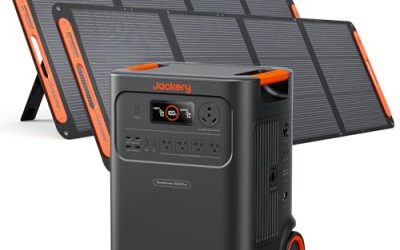
Jackery HomePower 3600 Plus with 2x200W Panels
The title lists 3,584Wh, 3,600W AC output, an LFP battery, expandability to 21kWh, and two 200W solar panels, and it is labeled for essential home backup. This is the highest-capacity single unit in the list with a bundled panel pair. For a household that expects outages lasting more than a day, the combination of large storage and a built-in solar refill option is the main attraction, and the expansion language suggests you can start here and add batteries later.
- Strength: Large capacity with a stated expansion path to 21kWh.
- Strength: Panels included, so solar recharging is possible from day one.
- Trade-off: The 3,600W output may still not start every large appliance together; confirm surge needs.
Skip it if your outages are short and your load is a router and phones. It also sits at a premium tier, so households that only need a refrigerator and lights for a few hours should price a smaller model first.
Jackery HomePower 3000 with 2x200W Panels
This model lists 3,072Wh, 3,600W AC, a 7,200W surge, an LFP battery, and two 200W panels, positioned as essential backup for home use. The surge rating stands out for homes with a well pump or compressor loads. The 3,072Wh capacity also means one full charge covers a long list of essentials before the sun needs to contribute anything.
- Strength: 7,200W surge helps with motor startups.
- Strength: Panels bundled for solar recharging.
- Trade-off: Storage is lower than the 3600 Plus, and the title lists no expansion figure.
Skip it if you want to grow into a multi-battery system later. For a one-box solution that favors startup strength over maximum capacity, it fits well, but compare the two Jackery systems side by side before ordering.
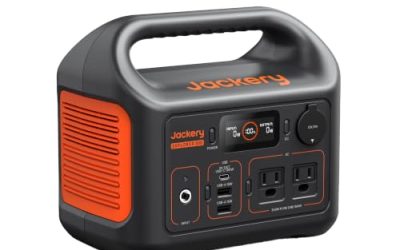
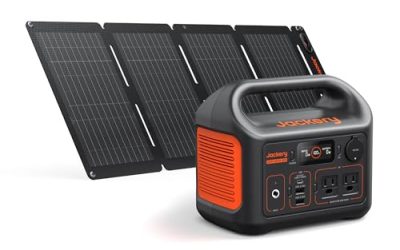
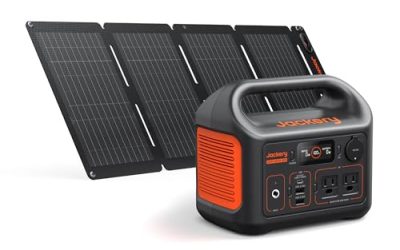
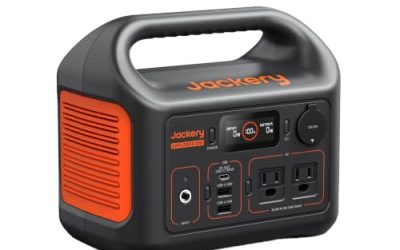
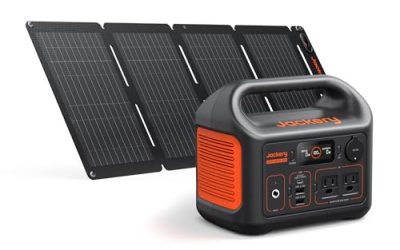
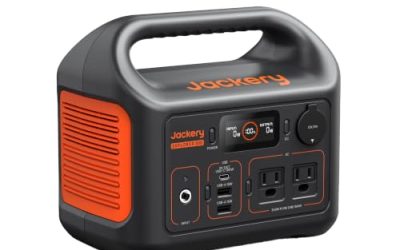
Jackery Solar Generator 300 with 40W Panel
The title shows 292Wh, 300W AC, pure sine wave output, and a 40W panel. For home backup it is a minimalist tool: keep a router, a phone, and a lamp alive during a short outage. The pure sine wave output means a laptop or a medical-adjacent charger can plug in without worry, and the included panel gives a modest daytime top-up.
- Strength: Bundled panel and pure sine wave AC.
- Strength: Compact capacity makes it an easy secondary unit for one room.
- Trade-off: Will not run a refrigerator or heating appliances.
Skip it if the plan is to cover a full household circuit. It works as a secondary unit, perhaps for a bedroom or home office, paired with a larger system elsewhere in the house.
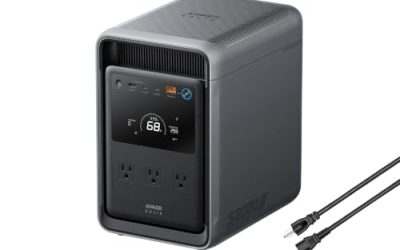
ABOK Ark3600 with 200W Panels
The title lists 3,840Wh, 3,600W, fast charging in about two hours, 15 ports, a TT-30 RV port, and expansion to 11,520Wh, with a 200W solar panel bundle. The port count and RV outlet make it flexible for a house, a trailer, or a shed. The 2H fast charge note means wall recharging between storms is quicker than on units that do not list a charge time.
- Strength: 3,840Wh with expansion to 11,520Wh.
- Strength: 15 ports including a TT-30 outlet.
- Trade-off: Less widely known than the Jackery models, so confirm warranty and support terms.
Skip it if you want the established-brand route. Buyers who like the idea of one system doubling as RV power will find the TT-30 outlet a practical bonus.
Jackery Explorer 2000 v2 with 2x200W Panels
This system lists 2,042Wh, 2,200W AC, a LiFePO4 battery, 20ms UPS, USB-C PD 100W, and two 200W panels. It is the middle step between the small units and the 3,000Wh-plus systems. The UPS-style switchover is the feature that separates it from basic power banks, since computers and networking gear stay up when power drops.
- Strength: 20ms UPS switchover for equipment such as a router or computer.
- Strength: Panels included and 100W USB-C for laptops.
- Trade-off: 2,200W is lower than the 3,600W systems, so large combined loads may overload it.
Skip it if you plan to run several big appliances together, such as a refrigerator and a space heater at once. For a refrigerator, lights, and electronics, it is a reasonable fit, and its solar bundle can extend a longer outage modestly.
DaranEner 300W Power Station with 30W Panel
The title lists 192Wh, 300W, two AC outlets, 2-hour fast charging, a LiFePO4 battery, and a 30W panel, with camping and home named as uses. It is the lightest-capacity option here, and the fast-charge note matters because a small battery is only useful if it is full when the lights go out.
- Strength: LiFePO4 chemistry with fast wall charging.
- Strength: Two AC outlets for a lamp and a charger.
- Trade-off: 192Wh is a very short runtime for anything beyond small electronics.
Skip it if you are protecting a refrigerator or medical equipment. Keep it as a bedside backup for a phone and a lamp, or as a spare for a home office desk where only a modem and a laptop charger need to stay on. Anyone relying on it for more than a few hours should buy a bigger unit, since 192Wh disappears quickly once a second device is added.
Which One Fits Your Situation
Short outages, router and phones only
The Jackery Solar Generator 300 or the DaranEner 300W is enough. Pick the Jackery for the larger battery and pure sine wave output, or the DaranEner if two AC outlets and fast wall charging matter more. Either belongs in a drawer with a charged-battery reminder on the calendar.
Refrigerator, lights, and a computer through a day-long outage
The Jackery Explorer 2000 v2 is the practical match, with UPS switchover for the electronics. Pair it with a plan for what stays unplugged, since 2,200W disappears quickly if a microwave and a space heater join the refrigerator.
Multi-day storm outage with well pump or large appliances
The Jackery HomePower 3000 for its 7,200W surge, or the HomePower 3600 Plus for the biggest storage and its expansion path. Households in storm-prone regions that expect multi-day outages should lean toward the larger of the two and keep the panels where they can be set up quickly.
Household that also owns an RV
The ABOK Ark3600 pairs the TT-30 outlet with 3,840Wh and expansion, so one system can serve both. Confirm that the RV port suits your trailer’s inlet before buying.
Common Mistakes
- Sizing by capacity and ignoring the surge needs of a refrigerator or pump.
- Running a gas generator in a garage or near a window, where carbon monoxide can enter the home.
- Backfeeding a household outlet instead of using a proper transfer switch installed by an electrician.
- Counting on solar alone to refill a large battery after a multi-day outage.
- Forgetting to charge the unit and test it a few times a year, so the first real outage is not the first real test.
Specs and Terms Explained
Continuous watts versus surge watts
Continuous output is what the inverter can supply for hours; surge is a brief allowance for motor startup. A refrigerator compressor or sump pump can pull several times its running wattage for a moment when it kicks on. Compare your largest motor load against the surge figure, then keep the combined running load under the continuous figure.
Pass-through and switchover
Some units feed devices while the wall charges them, and a smaller group switches to battery in a fraction of a second when the grid fails. If a desktop computer or medical equipment is on your list, look for wording such as UPS or EPS mode. Without it, a brief dropout can reboot a computer or interrupt a device.
Solar input window
Every unit lists a maximum panel wattage and a voltage range. Panels outside that range either charge slowly or are ignored. Series connections raise voltage while parallel ones raise current, so match the wiring to the manual rather than guessing.
Usable capacity
Printed watt-hours describe the battery itself. Inverter conversion and standby draw consume a slice of that, so plan on delivering noticeably less than the headline figure to AC appliances, and leave a reserve so the battery is not run to empty every night.
Setup and Care Tips
- Run an extension cord from the unit to the refrigerator during a practice drill, rather than waiting for a storm to discover that a plug does not reach.
- Keep the battery indoors or in a dry, shaded spot; panels belong outside, the battery does not.
- Never back-feed the house by plugging the unit into a wall outlet. Whole-home connection needs a transfer switch or interlock installed by a licensed electrician.
- Store lithium batteries at a partial charge, around half, and top them up every few months if the unit sits unused.
- Avoid charging in freezing temperatures; most lithium chemistries limit or block charging in the cold, so bring the unit inside to warm first.
- Label the cords and write the critical loads on the lid so anyone in the household can run it.
Who Should Skip This Approach
If you depend on equipment that cannot tolerate any interruption, or you need a very large load for days, such as a whole-house heat pump or an electric well pump you cannot shed, a battery-only setup will frustrate you. A permanently installed standby generator or a home battery wired into the panel by an electrician handles that better. Likewise, anyone who needs power for many days in a cloudy region should treat panels as a top-up, not a guarantee.
The smaller options, such as the Jackery Solar Generator 300 with 40W Panel or the DaranEner 300W Power Station with 30W Panel, fit a router and phone chargers, but they are the wrong tool for a refrigerator. Buyers who only face an outage once a year may also find the biggest systems hard to justify, since a battery that sits idle still needs periodic charging.
Related guides
- Battery Powered Generator For Refrigerator
- Portable Power Station For Refrigerator
- Portable Power Station For Camping
Frequently Asked Questions
Can a solar generator run my whole house?
Only large, expandable systems with high AC output and a proper transfer setup can. Most households back up essential circuits rather than everything. A practical way to start is to pick five to eight must-run items, add their watts, and size from there. Anything involving electric heat, such as a dryer or a range, is usually left off the list entirely.
How long will it run my refrigerator?
That depends on the refrigerator’s wattage and duty cycle, which the product titles do not give. Check the appliance label and divide the stated watt-hours by its average draw.
Are these safe to use indoors?
Battery units do not burn fuel and make no exhaust. Gas generators are different: carbon monoxide is deadly, so they must stay outdoors and far from openings.
Do I need the solar panels?
Not for short outages, since wall charging is faster. Panels become valuable when an outage lasts several days, because they let you recover part of each day’s usage without any grid power. Keep in mind that clouds and short winter days cut the output sharply, so treat the panels as a supplement to a full battery, not a guarantee.
Write Your Review
No reviews yet. Be the first to share your experience!