

Key takeaways
- Not every refrigerator problem looks the same. One shopper wants a battery that can ride out a three-day ice storm with a full-size kitchen fridge.
Not every refrigerator problem looks the same. One shopper wants a battery that can ride out a three-day ice storm with a full-size kitchen fridge; another wants to keep a 12-volt portable fridge cold at a campsite; a third just needs a mini fridge running for medicine in a power cut. The phrase “portable power station for refrigerator” covers all three, and the right answer changes with the appliance. Before you compare brands, decide which of those jobs you are hiring the battery for, because a station that is perfect for a camp fridge will stall on a kitchen compressor.
This guide sorts six stations by fridge type. Two are home-backup class, with capacity above 1,800Wh; two are 288Wh compact stations that suit mini or low-draw coolers; one is a 266Wh station built for 12-volt portable fridges; and one is a slim, fridge-focused model with a very low listed self-consumption figure. An accessory cable that appeared in the same search was left out because a cord alone is not a power station. Specs come only from the product titles, so verify details on the manufacturer page in 2026.
Quick Picks
Our top picks



As an Amazon Associate we earn from qualifying purchases at no extra cost to you.
| Product | Best for | Key spec from the title |
|---|---|---|
| BLUETTI FridgePower | Full-size fridge on standby | 2016Wh LFP, 1800W, 3600W surge, 4W self-consumption |
| Anker SOLIX S2000 | Fridge plus lights in a long outage | 2,010Wh LiFePO4, 1,500W |
| BLUETTI Elite 30 V2 | Mini fridge or cooler with a fast refill | 288Wh, 600W, 10ms UPS |
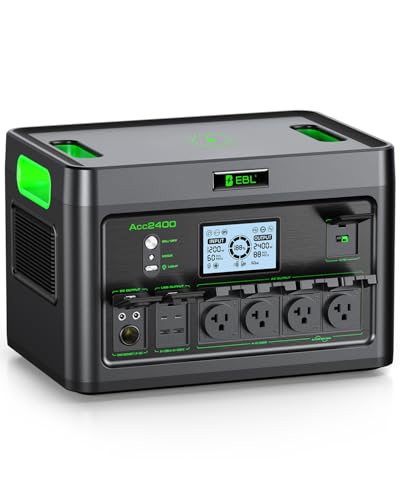
| EBL 2400W Power Station | Fridge plus many small devices | 1843.2Wh, 2400W AC, 12 outlets |
| BougeRV 266Wh | 12-volt portable fridge users | 266Wh, fits CRPRO battery compartment |
| DARAN 288Wh | Small cooler on a tight budget | 288Wh LiFePO4, 350W (600W peak) |
How to Choose
Identify the fridge type first
A full-size kitchen refrigerator, a chest freezer, a dorm-size mini fridge, and a 12-volt car fridge draw very different power. Mini and 12-volt models usually need a few dozen to roughly one hundred watts while running; full-size units need more and spike higher when the compressor starts. Read the nameplate for watts or amps, and note whether the unit is a standard 120-volt appliance or a 12-volt device that plugs into a DC port. That one detail decides whether you need a big inverter or just a DC outlet.
Understand self-consumption and standby loss
A station that stays plugged in to guard a fridge for months wastes some energy just keeping its inverter and display awake. The BLUETTI FridgePower title cites 4W of self-consumption, a figure worth caring about for always-on use. When an outage hits, a low idle draw means more of the stored energy reaches the fridge. Check the spec sheet for how the station behaves in standby, and whether it offers an eco mode that switches off the AC inverter when nothing is plugged in.
Match startup surge to the inverter
Compressors need a short burst to start, often several times their running wattage. A 600W mini station may handle a small fridge, while a full-size unit calls for an inverter in the 1,500 to 2,400W range with plenty of headroom. The FridgePower lists a 3600W surge figure, and the others list continuous ratings that should be compared against the appliance’s label. If the fridge fails to start, the cause is almost always surge, not battery capacity.
Plan for the length of the outage and the fuel alternative
Divide watt-hours by average draw to estimate hours of backup, and plan on about 10 to 15 percent loss to the inverter. Add solar if outages last days. Do not swap in a gas generator as a cheap alternative without respecting the safety rules: gas generators emit carbon monoxide and must run outdoors, far from doors, windows, and vents, never in a garage or basement. A battery station makes no exhaust and can sit near the fridge, which is the biggest practical reason to choose one. Ignore marketing about “peak” watts unless you know the continuous rating covers your load.
The 6 Best Options
BLUETTI FridgePower
The FridgePower is designed around a refrigerator: it lists 2016Wh of LFP capacity, 1800W of output with a 3600W surge, 4W self-consumption, a 75mm ultra-slim body, and a 10ms UPS function. Versions are offered with a screen, and one listing mentions expansion to 4032Wh. The slim profile lets it slide into a kitchen without taking over a corner.
- Strength: a 3600W surge and 1800W output suit a full-size fridge start-up.
- Strength: 4W self-consumption keeps standby waste low.
- Trade-off: it is a home-focused, premium-tier purchase rather than a camp box.
Skip it if you only need to cool a mini fridge or want a station you can carry in a hand. Households with a tight budget should also compare it against plain high-capacity stations, since the fridge-specific design is where much of the premium goes.
Anker SOLIX S2000
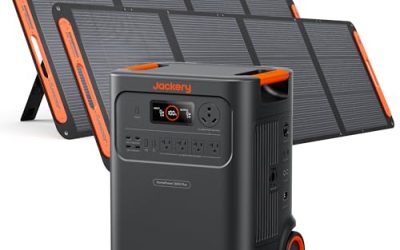
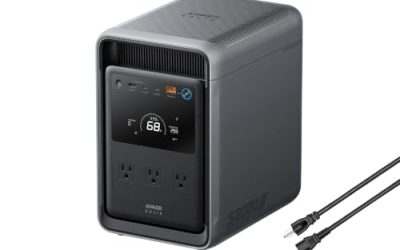
Anker lists 2,010Wh of LiFePO4 capacity and 1,500W of output, framed as a solar generator for home backup, outdoor use, and emergencies. For a single refrigerator and a few lights, that capacity is generous, and the listed output leaves room for a compressor start. It is a balanced pick between portability and a long runtime.
- Strength: 2,010Wh gives a long backup window for one fridge.
- Strength: LiFePO4 suits a battery that mostly sits full.
- Trade-off: 1,500W is lower than the biggest options, so stacking a microwave on top is a stretch.
Skip it if you need a built-in UPS-style switchover, which the title does not list, or if your fridge draws unusually high startup power. Look up the fridge’s nameplate before buying so you know the 1,500W line is comfortably above its needs.
BLUETTI Elite 30 V2
This compact 288Wh LFP station lists 600W output with a lifting mode that reaches 1500W, a 10ms UPS function, and a 45-minute 0-80% fast charge. It is suited to a mini fridge, a small cooler, or short outage coverage rather than a full kitchen refrigerator. The fast charge helps you refill between short blackouts.
- Strength: UPS-style switchover keeps a small fridge running through brief power drops.
- Strength: fast charging refills quickly before the next outage.
- Trade-off: 288Wh is a short runtime for anything beyond a small, low-draw cooler.
Skip it if you own a full-size refrigerator or a chest freezer, where this capacity empties quickly. It is a better fit as a second, portable station that also handles camping and travel, sitting next to a larger home-backup unit.
EBL 2400W Portable Power Station
EBL lists a 1843.2Wh LiFePO4 battery with 2400W of AC output and 12 outlets, plus USB-C PD. The inverter has enough headroom for a refrigerator start, and the many outlets let you spread the fridge, a modem, lamps, and phone chargers across one unit.
- Strength: 2400W output covers fridge startup and other loads together.
- Strength: 12 outlets keep a home setup tidy.
- Trade-off: no UPS function appears in the title, so expect a brief interruption when switching.
Skip it if the fridge must stay powered without a hiccup during a grid drop, or if weight matters for travel. Anyone weighing it against the S2000 should compare the extra outlets and output against the larger battery that the Anker listing offers.
BougeRV 266Wh Portable Power Station
BougeRV targets a very specific user: owners of a 12-volt refrigerator. The title says it fits the CRPRO battery compartment and works as a backup battery for a 12-volt fridge, with USB-C and DC outputs. For overlanders, it extends the time a portable fridge stays cold without running the vehicle.
- Strength: purpose-built for 12-volt portable fridges and their battery compartments.
- Strength: DC and USB-C outputs match the ports a camp fridge expects.
- Trade-off: 266Wh is small, and it is not intended for a household refrigerator.
Skip it if your fridge is a standard 120-volt appliance or you do not own a compatible 12-volt model. Confirm the compartment dimensions and connector on your fridge’s manual first, because the fit claim only helps if your model matches.
DARAN 288Wh Portable Power Station
DARAN lists a 288Wh LiFePO4 battery, 350W of output with a 600W peak, a 7-port design, and a fast-charge time of about 2.1 hours. It is an inexpensive way to keep a mini fridge or cooler running through a short outage while also charging phones, and the seven ports make it easy to share between devices.
- Strength: 7 ports let you charge a fridge and several devices at once.
- Strength: LiFePO4 chemistry and a 600W peak suit small compressor starts.
- Trade-off: 288Wh and 350W confine it to small, low-draw coolers.
Skip it for full-size refrigerators or anything with a high startup draw. Even for a mini fridge, confirm the cooler’s label stays under the 350W continuous line, and expect the runtime to be measured in hours rather than days.
Which One Fits Your Situation
Full-size fridge at home, outage-prone area
The BLUETTI FridgePower is the purpose-built answer, with a high surge rating, low self-consumption, and a slim body that fits near a kitchen.
Balanced capacity without a dedicated fridge unit
The Anker SOLIX S2000 is a flexible backup that also doubles as an outdoor power source, with 2,010Wh to share between the fridge and other needs.
Powering a 12-volt camp or truck fridge
The BougeRV 266Wh is aimed at that exact setup, with its CRPRO compartment fit and DC outputs.
Dorm fridge, medicine cooler, or short outage
The BLUETTI Elite 30 V2 and the DARAN 288Wh both fit small loads; choose the Bluetti for the UPS feature and the Daran for a lower-cost entry.
Common Mistakes
- Treating all refrigerators alike and buying a small station for a full-size unit that needs far more startup power.
- Ignoring standby losses when a station sits plugged in for months waiting for an outage.
- Choosing an AC inverter when the portable fridge runs on 12-volt DC and would be more efficient on a DC port.
- Placing a gas generator in a garage or against the house to save money, which risks carbon monoxide poisoning.
- Never plugging the fridge into the station before an emergency, so the first startup happens in the middle of a crisis.
Sizing and Compatibility Checklist
- Find the nameplate. Look inside the fridge compartment or on the back panel for the listed amperage and watts, then note the voltage. The label is the number to trust, not the box the appliance came in.
- Note the plug and outlet. A standard grounded plug will fit the AC outlets on any station here. Avoid adapters that remove the ground pin, and skip long thin extension cords.
- Check where the fridge lives. If it sits in a garage or a hot room, it will draw more than a fridge in a cool kitchen. Move it, or size up.
- Match the fridge type to the output. A full-size fridge needs an inverter with enough surge headroom. A compact fridge needs far less. A 12V camp or truck fridge can often plug straight into a DC port with the right cable.
- Verify the 12V cable. If you use a DC fridge, confirm the connector style and that the cable gauge suits the current it will carry. Thin cables can cause the fridge to shut off for low voltage.
- Plan the recharge. Decide whether a wall outlet, a car, or a solar panel will refill the unit after an outage and verify that the unit accepts it.
- Leave a margin. Choose a unit whose usable energy exceeds your calculated need, since conversion losses and warm weather both raise draw.
Who Should Skip These
Anyone planning to back up a full-size fridge, a chest freezer, and a sump pump for several days should look beyond the smaller stations here. The BougeRV 266Wh Portable Power Station and the DARAN 288Wh Portable Power Station are sized for a compact fridge or a medication cooler over a short outage, not a kitchen refrigerator. If your area suffers outages that last a week or more, a fuel generator or a whole-home battery system is the more realistic plan, and a portable station becomes a supplement rather than the main answer.
Which One Should You Buy?
| If you… | Choose… |
|---|---|
| want a unit positioned around full-size refrigerator backup | BLUETTI FridgePower |
| want a strong inverter for a full-size fridge and a few extras | Anker SOLIX S2000 |
| want a larger output with room for other loads | EBL 2400W Portable Power Station |
| want a balanced all-purpose unit rather than a fridge-specific one | BLUETTI Elite 30 V2 |
| keep a dorm fridge or medicine cooler cold for a few hours | BougeRV 266Wh Portable Power Station or DARAN 288Wh Portable Power Station |
Related guides
- Battery Powered Generator For Refrigerator
- Portable Power Station For Camping
- Solar Generator For Home Backup
Frequently Asked Questions
How big a power station do I need for a refrigerator?
For a full-size fridge, look at 1,500 to 2,400W of output and at least roughly 1,800Wh of capacity. For a mini or 12-volt fridge, a 288Wh class station can be enough for a short outage.
Will a power station keep food safe during a long outage?
It can, if the fridge stays powered and the door stays closed as much as possible. Check the capacity against the fridge’s average draw and add solar for multi-day events.
What is UPS mode and do I need it?
UPS mode switches to battery in milliseconds when the grid drops. It is useful if the fridge stays plugged in at all times; the BLUETTI models and some others list it.
Is a gas generator cheaper for refrigerator backup?
It may cost less up front, but it needs fuel, makes noise, and releases carbon monoxide, so it can only run outdoors with proper clearance. A battery has none of those drawbacks.
Write Your Review
No reviews yet. Be the first to share your experience!