

Key takeaways
- A refrigerator is the one appliance almost everyone wants to keep alive during a blackout, and it is also one of the trickiest to back up with a battery.
A refrigerator is the one appliance almost everyone wants to keep alive during a blackout, and it is also one of the trickiest to back up with a battery. The compressor draws a modest amount while running but demands a sharp jolt of power each time it starts, and it cycles on and off around the clock. Pick a battery generator that is too small and the inverter trips at the first startup; pick one that is far too large and you have paid for capacity that never gets used. This guide is built around that single question: which stored-energy box carries a fridge through a long outage without a gas engine?
The audience is homeowners who lose power a few times a year, renters who cannot run a fuel generator, and anyone with a spare refrigerator or deep freezer in a garage or cabin. Instead of fuel, noise, and fumes, you get a silent battery that can also take solar input. In 2026 the options range from palm-sized 300-watt boxes that suit a mini fridge, up to 3,600-watt home-backup systems that can carry a fridge, freezer, and lights together. Each pick below is judged only on the specs shown in its title.
Quick Picks
Our top picks


As an Amazon Associate we earn from qualifying purchases at no extra cost to you.
| Product | Best for | Key spec from the title |
|---|---|---|
| Anker SOLIX S2000 | Full-size fridge plus a few extras | 2,010Wh LiFePO4, 1,500W output |
| Jackery Explorer 1000 v2 | A single fridge in a short outage | 1070Wh, 1500W, 1-hour fast charge |
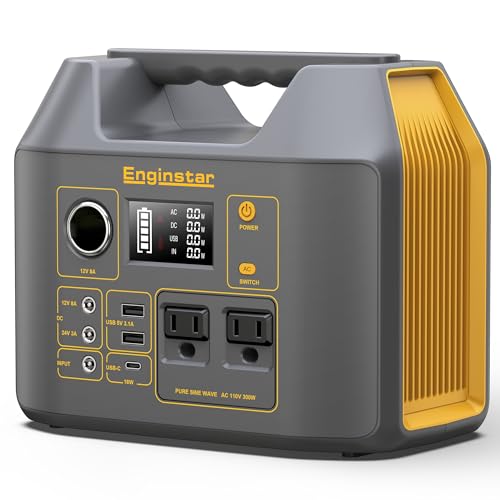
| EnginStar 300W 296Wh | Mini fridge or small cooler only | 300W pure sine wave AC outlet |
| Jackery HomePower 3000 | Fridge, freezer, and sump pump together | 3072Wh, 3600W AC, 7200W surge |
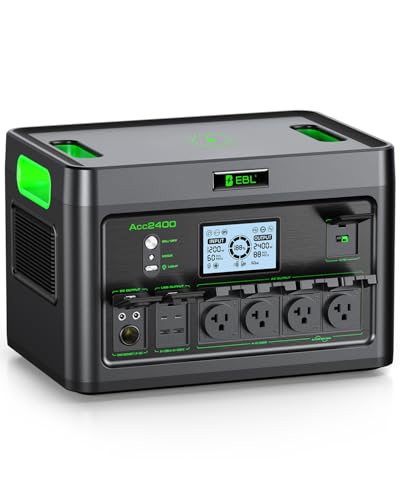
| EBL 2400W Power Station | Multiple appliances on separate outlets | 1843.2Wh, 2400W AC, 12 outlets |
| Jackery Explorer 2000 v2 | Multi-day fridge backup with solar | 2042Wh, 2200W AC, 20ms UPS |
How to Choose
Find the real wattage on the appliance label
Look inside the fridge door or on the back panel for the amperage and voltage, then multiply to get running watts. A modern full-size refrigerator often runs well below 200 watts, but the compressor can pull several times that for a moment at startup, especially in older units. Choose an inverter whose continuous rating covers running watts plus every other device you will add, and whose surge rating clears the startup spike. A chest freezer and an upright fridge need separate checks.
Turn watt-hours into hours of backup
Divide the battery capacity by the average draw, then subtract roughly 10 to 15 percent for inverter losses. Because a fridge cycles, its average draw is lower than its running watts, so real runtime can be much longer than a naive calculation suggests. A 300-watt-hour class battery gives you a short window at best; the 1,000 to 2,000-watt-hour range covers a day or more for one refrigerator; a 3,000-watt-hour battery gives breathing room for a freezer and lights too. Open the door less during an outage and the battery lasts longer.
Look for pure sine wave and a quick UPS switchover
Compressors and electronic controls prefer clean sine-wave power. Pure sine output is listed on the smaller EnginStar, and UPS-style switchover appears on the Jackery Explorer 2000 v2, where the listing shows a 20ms transfer. That matters if you plan to leave the fridge plugged into the station all the time and let it take over when the grid drops. Check each spec sheet for pass-through charging, because some units cannot charge and discharge at once.
Chemistry, solar, and the gas alternative
LiFePO4 batteries are the standard choice here because they tolerate being kept near full for months, which is exactly how a backup battery lives. If the outage stretches past a few days, solar panels keep the fridge alive, so confirm the maximum solar input and connector type. Gas generators can run a fridge indefinitely, but they produce carbon monoxide and must never run in a garage, shed, basement, or near a window or vent. A battery station has no exhaust, which is why it is the better fit for apartments and attached garages. Ignore peak-wattage hype if the continuous rating is below what your appliance needs.
The 6 Best Options
Anker SOLIX S2000
The S2000 pairs 2,010Wh of LiFePO4 capacity with 1,500W of output, and the title pitches it at home backup, outdoor use, and emergencies. That capacity sits in the sweet spot for keeping one full-size fridge cold across a long overnight outage while leaving headroom for lights and phone charging. It is also a solar generator, so panels can extend the runtime.
- Strength: 2,010Wh is enough stored energy for a refrigerator with room to spare.
- Strength: LiFePO4 chemistry suits a battery that sits waiting for months.
- Trade-off: 1,500W of output limits you to one big appliance, not a whole kitchen.
Skip it if you plan to run a microwave or space heater alongside the fridge, or if you need a station small enough to carry to a campsite and back each weekend.
Jackery Explorer 1000 v2
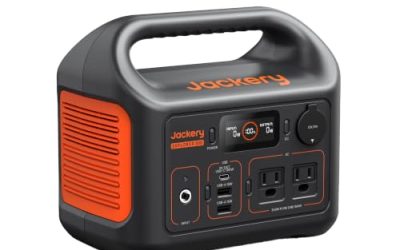
This model lists 1070Wh and 1500W with a one-hour fast charge, a LiFePO4 battery, and a 100W USB-C output. The fast-charge claim is the interesting one for fridge duty: if the grid comes back for a few hours between storms, you can top the station up quickly. It also serves camping and emergency use, which makes it easy to justify as a dual-purpose purchase.
- Strength: quick recharge between outages keeps the fridge covered on short notice.
- Strength: 1500W output handles a standard refrigerator compressor startup.
- Trade-off: 1070Wh runs out sooner than the larger options on this page.
Skip it if you expect outages longer than a day without solar, or if you want to power both a refrigerator and a chest freezer from one battery.
EnginStar 300W 296Wh Solar Generator
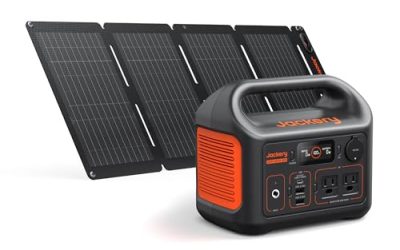
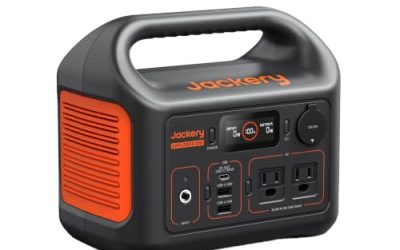
EnginStar lists a 300W pure sine wave AC outlet with a 296Wh battery, positioned for outdoors, travel, and blackouts. It makes sense only for a small load: a dorm-size fridge, a medication cooler, or a mini fridge on a camping trip. A full-size refrigerator will likely exceed the 300W limit when its compressor starts.
- Strength: pure sine wave output is friendly to compressor motors and electronics.
- Strength: compact and light enough to move between rooms or into a car.
- Trade-off: 296Wh and 300W are not enough for a standard household fridge.
Skip it for any full-size refrigerator or freezer. Choose it only for small, low-draw cooling needs, and check the nameplate wattage of the cooler first so you know the load sits comfortably under the 300W line rather than right at the edge of it.
Jackery HomePower 3000
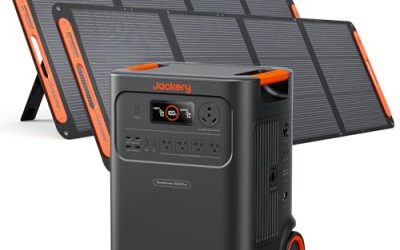
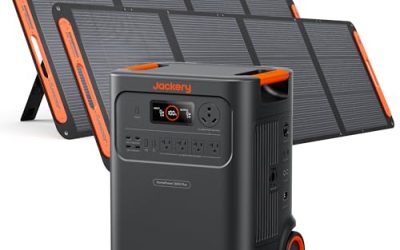
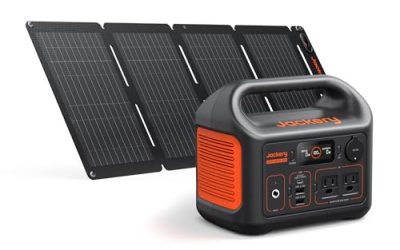
The HomePower 3000 lists 3072Wh, 3600W of AC output, and a 7200W surge figure from an LFP battery, and a bundle with two 200W solar panels is offered. It is the most capable fridge backup on the page. The surge rating comfortably clears compressor startups, and the capacity allows a fridge, a chest freezer, and lights to run together for an extended stretch.
- Strength: 3072Wh stores enough for several appliances over a long outage.
- Strength: 7200W surge covers stubborn startup spikes.
- Trade-off: it is a heavy, premium-tier purchase aimed at home use, not portability.
Skip it if you only own one modest refrigerator, since a smaller station will do the same job for less money and effort. The same goes for renters who may move soon, because a unit this size is a fixed-location investment.
EBL 2400W Portable Power Station
EBL lists 2400W of AC output, a 1843.2Wh LiFePO4 battery, and 12 outlets plus USB-C PD. For fridge duty the outlet count is practical: you can plug in a refrigerator, a modem, a lamp, and a phone charger without extension cords. The 2400W rating gives good startup headroom.
- Strength: 12 outlets reduce the need for power strips.
- Strength: 2400W output has room for fridge startup plus other devices.
- Trade-off: 1843.2Wh will not carry multiple large appliances for days.
Skip it if you are planning for week-long outages with no sun, or want a lighter unit for travel. It also suits someone whose priority is convenience over endurance, such as a household that mostly needs the fridge, internet, and lights covered for an evening.
Jackery Explorer 2000 v2
This listing shows 2042Wh, 2200W AC output, a LiFePO4 battery, a 20ms UPS function, and USB-C PD at 100W, offered as a bundle with two 200W solar panels. The UPS spec is the draw: leave the fridge plugged in, and the station takes over quickly if the grid drops. Paired with panels, it can sustain a refrigerator across several days of decent sun.
- Strength: 20ms UPS switchover suits an always-plugged-in fridge.
- Strength: 2042Wh plus two panels supports multi-day backup in good weather.
- Trade-off: it costs more and weighs more than the 1,000-watt-hour class.
Skip it if your fridge is the only thing you need to power for a few hours, where a smaller station is enough. Buyers who rarely lose power for more than an evening are paying for endurance they will seldom use.
Which One Fits Your Situation
One full-size fridge and a long storm
The Anker SOLIX S2000 offers 2,010Wh and 1,500W, which is enough for a single refrigerator through a long outage with some headroom.
Fridge, freezer, and sump pump together
The Jackery HomePower 3000 has the capacity and the surge rating for several motor loads, so it is the safest bet when more than one compressor must run.
Automatic switchover when the grid fails
Pick the Jackery Explorer 2000 v2 for its listed 20ms UPS function and solar bundle, particularly if the fridge stays plugged in all year.
Mini fridge or medication cooler only
The EnginStar 300W unit is enough for a small, low-wattage cooler, and it is easy to carry. Do not expect it to handle a household refrigerator.
Common Mistakes
- Sizing from the running watts printed on the label and ignoring the compressor startup surge.
- Buying a 300-watt station for a full-size fridge because the label seems low.
- Running a gas generator in a garage or carport to save money, which exposes the household to carbon monoxide.
- Opening the fridge repeatedly during an outage and burning through the battery faster than planned.
- Skipping a trial run: plug the fridge in on a normal day and watch how the station handles it before a storm arrives.
Specs and Terms Explained
Annual kWh on the energy label
Most full-size refrigerators carry a yellow label listing yearly energy use in kilowatt-hours. Multiply that figure by 1,000 and divide by 365 to get watt-hours per day. As an illustration, a label reading 400 kWh per year works out to about 1,100Wh per day. That is an average, and a fridge in a hot kitchen or one that is opened often will use more.
Duty cycle
A compressor does not run nonstop. The share of each hour it spends running is its duty cycle, and it is why a fridge’s real consumption sits well below the wattage printed on its nameplate. When you size a battery, use the daily watt-hour figure above rather than multiplying nameplate watts by 24 hours.
Usable capacity
The watt-hours printed on a battery are not all delivered to your fridge. Some energy is lost converting DC to AC and some feeds the unit’s own electronics and display. Expect noticeably fewer hours of backup than simple division suggests, and leave a margin.
Defrost cycle
Frost-free models periodically run a heater, which briefly raises draw above the usual running level. If your plan is already tight on inverter size, this is another reason to leave headroom.
Setup and Care Tips
Keep the fridge door shut as much as possible once power fails; each opening lets cold air out and forces more compressor running. A full fridge and freezer hold temperature longer than empty ones, so fill gaps with water bottles or frozen packs. Put a simple appliance thermometer inside so you know when food is leaving the safe range, and follow food-safety guidance for anything that warms. Plug the fridge into the station with a short, heavy-gauge cord, and give the unit room to breathe. Charge it fully before storm season and keep it topped off, since a half-empty battery is the usual reason backup falls short.
Who Should Skip These
If outages in your area last many days and you have a chest freezer and a fridge to cover, a battery alone may not stretch far enough. A fuel generator or a larger home battery system fits better, or a battery paired with a plan to move food to coolers. The EnginStar 300W 296Wh Solar Generator is realistic for a mini fridge or a medication cooler, not a kitchen refrigerator. People who live in apartments with no place to charge or store a unit safely should also think twice.
Which One Should You Buy?
| If you… | Choose… |
|---|---|
| need to ride out a long outage with a full-size fridge | Jackery Explorer 2000 v2 |
| want a large battery that can also cover other household loads | Jackery HomePower 3000 |
| want a 2,000-class unit aimed at home backup | Anker SOLIX S2000 |
| run one smaller fridge and want a mid-size unit | Jackery Explorer 1000 v2 |
| need a higher AC output without going to the biggest unit | EBL 2400W Portable Power Station |
| only keep a mini fridge or medicine cooler cold | EnginStar 300W 296Wh Solar Generator |
Related guides
- Portable Power Station For Refrigerator
- Portable Power Station For Camping
- Solar Generator For Home Backup
Frequently Asked Questions
How long will a battery generator run a refrigerator?
Divide the battery watt-hours by the fridge’s average draw and allow for inverter losses. Because compressors cycle, the average is far below the running-watt label, so runtime is usually longer than a first guess.
Do I need pure sine wave for a refrigerator?
It is the safer choice, since compressor motors and control boards run cooler on clean power. Check the spec sheet of any station you are considering.
Can solar panels keep a fridge running indefinitely?
In good sun, panels can offset the fridge’s daily energy use and refill the battery. Cloudy stretches draw the battery down, so size the panels and battery together.
Is a battery safer than a gas generator for a fridge?
A battery produces no exhaust and no carbon monoxide, so it can sit indoors or in a garage. Gas units must be run outdoors, well away from doors, windows, and vents.
Write Your Review
No reviews yet. Be the first to share your experience!