

Key takeaways
- The campsite decision is rarely about the biggest battery. It is about what stays plugged in after dark: a string of lights, two phones.
The campsite decision is rarely about the biggest battery. It is about what stays plugged in after dark: a string of lights, two phones, a camera battery, maybe a fan for the tent, maybe a small cooler. Most people shopping for a power station for camping overbuy capacity and underbuy outputs, then discover that the one thing they needed, a standard AC outlet or a fast USB-C port, was missing or too weak. A shortlist works better when it starts from your nightly load.
This guide is for tent and car campers who want a rechargeable box rather than a loud engine. It covers compact 89.6Wh packs, several 256Wh to 288Wh units that suit weekend trips, and a 1,070Wh model for longer stays or bigger loads. The comparisons rely only on the facts listed in each product title for 2026 listings, so there are no invented runtimes. Where a title is silent, the article says so.
Quick Picks
Our top picks




As an Amazon Associate we earn from qualifying purchases at no extra cost to you.
| Product | Best for | Key spec from the title |
|---|---|---|
| Jackery Explorer 300 | Straightforward weekend kit | 292Wh, LiFePO4 battery |
| BLUETTI Elite 30 V2 | Fast recharge and UPS-style use | 288Wh, 600W, 10ms UPS, 45 min 0-80% |
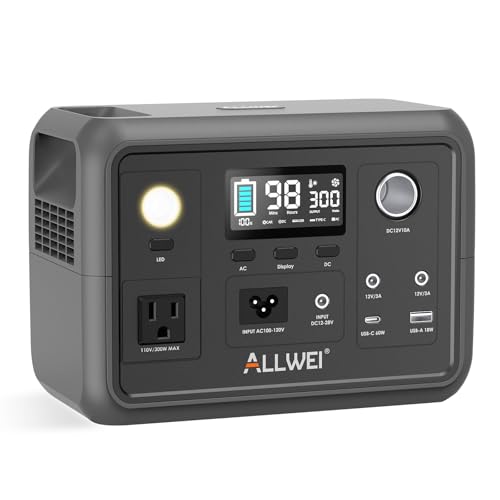
| ALLWEI 300W Power Station | Laptop and phone charging | 256Wh, 300W, PD 60W, pure sine wave |
| Jackery Explorer 1000 v2 | Longer trips, bigger loads | 1,070Wh, 1,500W, 1 hr fast charge |
| Daran 89.6Wh Power Station | Minimal packs, day trips | 89.6Wh, 100W (200W peak), LiFePO4 |
| Anker SOLIX C300 DC | Travel and emergency kit | 288Wh, 300W, LiFePO4 |
| 300W 280Wh Solar Generator Kit | Budget bundle with panel | 280Wh, 300W, 60W panel |
How to Choose
Add up your nightly watt-hours first
Write down each device and its wattage, estimate hours of use, and total the watt-hours. Phones draw roughly 10 to 20Wh for a full charge, a laptop several times that, and a camp light very little. Most weekend loads land between 100Wh and 400Wh. Add a 20 percent cushion for inverter losses. If your total sits near 250Wh, a 288Wh unit has little margin, and you will want to recharge between trips.
Look at port types, not just port counts
A 100W USB-C PD port charges a laptop directly with less loss than going through the AC inverter. A 60W PD port is fine for tablets and many ultrabooks. If you want to run a small fan or a CPAP, confirm a real AC outlet exists and note its continuous wattage. Plenty of compact units advertise multiple outputs while sharing one total power limit.
Battery chemistry and charge speed
LiFePO4 (LFP) packs tolerate more charge cycles than older lithium-ion chemistries, which matters if you plan to cycle the battery most weekends. Fast wall charging is just as useful: the BLUETTI title cites 45 minutes to 80 percent, and the Jackery 1000 v2 title cites a one-hour fast charge, which suits a morning-of-departure top-up. Budget units often leave charge time unstated.
Where cheaper models cut corners
Lower-priced stations tend to skimp on stated cycle life, warranty clarity, and solar input documentation. Ignore marketing extras such as built-in flashlights; weigh the output wattage, pure sine wave claims, and brand support. Also remember that a power station is silent and fumeless, which is a safety advantage over gas generators that emit carbon monoxide and must never be used inside tents, vehicles, or garages.
The 7 Best Options
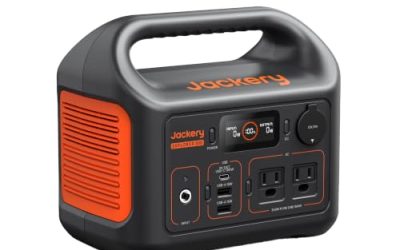
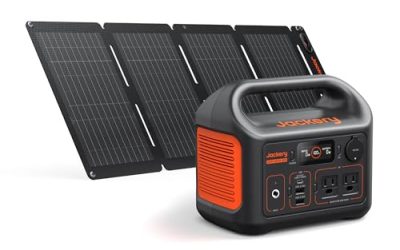
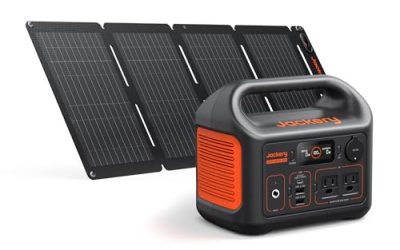
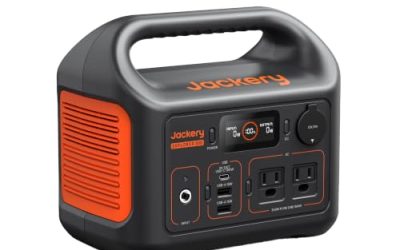
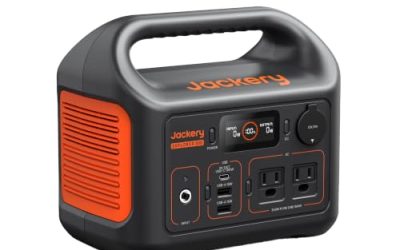
Jackery Explorer 300
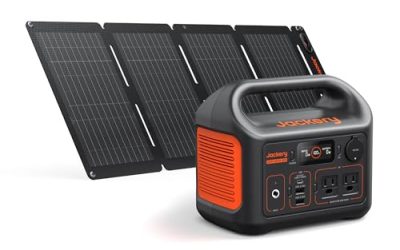
The title lists 292Wh, a LiFePO4 backup battery, and sells it as a solar generator for outdoors, camping, travel, hunting, and blackouts. It is the typical choice for a two-night trip with a couple of phones, a light, and a camera. The solar panel is listed as a separate item.
- Strength: LiFePO4 chemistry and a mainstream camping brand name.
- Strength: Capacity covers a modest weekend of small devices.
- Trade-off: The title does not list an output wattage, so verify AC limits before relying on it for appliances.
Skip it if you plan to run a small cooler, a heater, or a coffee maker. Without panel purchase it also depends on wall or car charging between trips, so factor that in when comparing it with kits that bundle solar. Hunters and travelers who already own a compatible panel are the natural audience, since they can pair it with gear in the garage.
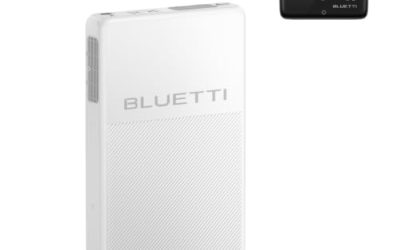
BLUETTI Elite 30 V2
This one lists 288Wh, 600W, an LFP battery, a 1,500W Power Lifting mode, 10ms UPS switchover, and 45 minutes from 0 to 80 percent. The 600W rating gives more headroom than the 300W class, and Power Lifting is aimed at appliances that briefly need more power.
- Strength: 600W output with the Power Lifting feature widens the appliance list.
- Strength: Fast charging from the wall shortens turnaround between trips.
- Trade-off: 288Wh is still small, so a 600W load will drain it quickly.
Skip it if your priority is the most capacity for the least money, or if you need long unattended runtime for one device. Think of it as a fast-turnaround station for people who return home between trips and want it full again quickly, rather than a bank for a week off-grid.
ALLWEI 300W Power Station
The ALLWEI title cites 256Wh, 300W, LiFePO4, pure sine wave AC, PD 60W fast charging, plus MPPT and BMS protection. It is built for people charging laptops, tablets, and phones around camp rather than running appliances.
- Strength: Pure sine wave output with a 60W USB-C port for modern laptops.
- Strength: MPPT and BMS protection are called out for solar charging and battery safety.
- Trade-off: Capacity is the lowest of the mid-size group at 256Wh.
Skip it if you want multi-day autonomy without recharging. Weekenders who can top up between trips will find it fits well, especially if a laptop is the main load. The title’s mention of MPPT means it is meant to pull solar input efficiently, which helps if you add a panel later.
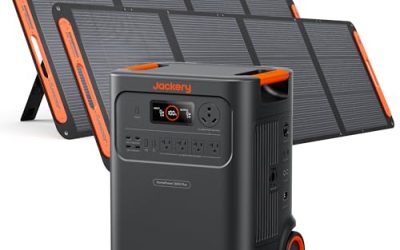
Jackery Explorer 1000 v2
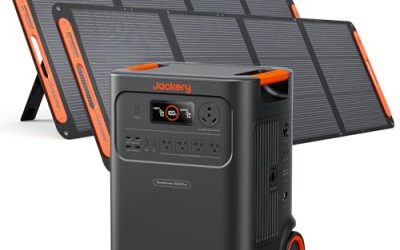
This is the heavy hitter in the list, with 1,070Wh, 1,500W, a one-hour fast charge, a LiFePO4 battery, and a 100W USB-C output. At more than three times the capacity of the 288Wh group, it is the one to look at for four-day trips, family camps, or a small cooler plus devices.
- Strength: Capacity and 1,500W output handle a wider list of camp appliances.
- Strength: One-hour fast charge reduces downtime.
- Trade-off: Larger and heavier than the compact packs; the title gives no dimensions, so check before packing a small car.
Skip it if you only charge phones and a headlamp. It is more capacity than a minimalist needs and is a mid-range to premium commitment. If you do buy it, the 100W USB-C output also means laptops can charge without going through the inverter, which keeps the AC side free for a fan or lamp.
Daran 89.6Wh Power Station
The smallest capacity in this list: 89.6Wh, LiFePO4, 100W with a 200W peak, with AC outlets and PD fast charging. It is billed as a solar power bank and small generator, aimed at day trips and light overnighters.
- Strength: LiFePO4 chemistry in a very small capacity.
- Strength: AC outlet and PD fast charging in a compact form.
- Trade-off: 89.6Wh is only a few phone charges worth of energy beyond a light.
Skip it if you need to power a laptop for several hours or run a fan overnight. It suits backpackers and kayakers more than car campers. Treat it as a charger for emergencies and a lantern companion, not as a base-camp battery. The 200W peak figure leaves a little room for a brief startup, but nothing that runs hard, and the title leaves out a solar panel, so plan on wall or car charging.
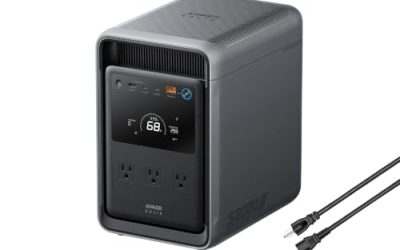
Anker SOLIX C300 DC
The title lists 288Wh, 300W, and a LiFePO4 battery, with outdoor camping, UPS, travel, and emergency uses. The “DC” in the name signals an output-focused design, so confirm the port layout if a wall-style outlet is a must for you.
- Strength: Established electronics brand behind a LiFePO4 288Wh pack.
- Strength: Positioned for both camping and emergency backup use.
- Trade-off: The title does not spell out the AC outlet details, so verify the ports.
Skip it if you are certain you need several AC plugs. Buyers who mainly charge USB and DC devices will have fewer concerns. Because the title highlights UPS use, it can double as a desk-side backup for a router at home between trips.
300W 280Wh Solar Generator Kit with 60W Panel
An unbranded bundle that lists 280Wh, 300W, a 60W panel, a 110V pure sine wave outlet, and USB QC3.0 ports. The appeal is a complete kit that can start charging from sunlight on day one.
- Strength: Panel included, which many separate power stations lack.
- Strength: Pure sine wave AC for sensitive electronics.
- Trade-off: Limited brand and chemistry detail in the title.
Skip it if documented cycle life and a recognized support network matter to you. Shoppers who want the lowest barrier to entry, with a panel in the box and no separate purchase, will find the package appealing, provided they accept the information gaps in the listing.
Looking across the seven, the units split into three tiers. The 89.6Wh pack is a pocket charger, the 256Wh to 288Wh group is the weekend sweet spot, and the 1,070Wh model is the only one with real appliance range. Decide which tier you belong to, then pick within it.
Which One Fits Your Situation
Two-night tent trip with phones and a lantern
The Jackery Explorer 300 or the ALLWEI 300W cover that load easily. Pick the ALLWEI if a 60W USB-C port for a laptop matters.
Family car camp with a small cooler and fans
The Jackery Explorer 1000 v2 has the capacity and 1,500W output to carry that mix. Add a panel if the stay is longer than a long weekend, and keep the unit in the shade, since direct sun raises battery temperature.
Backpacking or kayaking with minimal weight
The Daran 89.6Wh is the pick when every ounce counts and the load is phones plus a headlamp. Pair it with a power bank habit: charge everything at lunch, not at midnight.
Mix of camping and home emergencies
The BLUETTI Elite 30 V2 pairs fast recharge with a UPS-style switchover, and the Anker SOLIX C300 DC targets the same camping-plus-emergency split. Choose the BLUETTI if the 600W rating matters, or the Anker if you prefer that brand’s ecosystem.
Common Mistakes
- Counting USB ports and ignoring the continuous wattage of the AC outlet.
- Assuming the listed capacity is fully usable; inverter losses eat into it.
- Skipping a wall-charge plan and relying on a small panel to refill overnight.
- Running a power station inside a sealed tent or vehicle in extreme heat, where the battery can overheat.
- Buying a tiny pack for a CPAP without checking the device’s wattage and hours.
Specs and Terms Explained
USB-C PD wattage
USB Power Delivery ports list a maximum output such as 60W or 100W. Phones usually need far less, but a laptop charger can ask for more than a weak port provides. Look for a USB-C port whose listed wattage meets or exceeds the charger that came with your laptop.
12V car-style port
This socket powers coolers, inflators, and car-plug fans. Many are limited to about 10 amps, so confirm that the appliance’s listed draw is within what the port offers. A DC output also skips the inverter, which usually makes it more efficient than plugging the same device into an AC outlet.
Pure sine wave
Some inverters create a cleaner waveform than others. Sensitive gear such as CPAP machines and some camera chargers prefers a clean sine wave. If the spec sheet does not say, assume it may not be pure sine and ask the maker before using medical equipment.
Pass-through charging
This lets the unit power devices while it is plugged in. It is handy at a campsite hookup, but check whether the maker allows it, since constant use can wear the battery faster.
Which One Should You Buy?
| If you… | Choose… |
|---|---|
| keep it small for phones and a lantern over two nights | Jackery Explorer 300 |
| want a compact unit with DC outputs for lights and fans | Anker SOLIX C300 DC |
| need a balanced compact choice for a tent trip | BLUETTI Elite 30 V2 |
| bring a small cooler and fans for a family | Jackery Explorer 1000 v2 |
| want a kit with a panel in the box | 300W 280Wh Solar Generator Kit with 60W Panel |
| want a basic 300W-class option | ALLWEI 300W Power Station |
| need the lightest option for backpacking or kayaking | Daran 89.6Wh Power Station |
Setup and Care Tips
Charge the unit fully the day before you leave and pack its own charger, not just the car cable. At camp, set it on a stable, dry surface in shade and keep it away from the stove. Turn on the AC outlet only when you need it, because an idle inverter quietly drains the battery overnight. In cold weather keep it in the vehicle cabin, since lithium cells lose usable capacity when chilled. When the trip ends, dry any condensation, store it somewhere cool and dry, and leave it partly charged rather than empty. Keep a small pouch with the charging cables, a short extension cord, and a spare lantern, so one failed port or a drained battery does not end the trip early.
Related guides
- Battery Powered Generator For Refrigerator
- Portable Power Station For Refrigerator
- Portable Power Station For Camping
Frequently Asked Questions
How many watt-hours do I need for a weekend?
Most campers with phones, lights, and a camera land between 150Wh and 400Wh. Add appliances and the figure climbs fast, so list devices before choosing.
Is LiFePO4 better for camping?
It generally handles more charge cycles and tolerates heat better than older lithium-ion chemistries. That makes it a sensible match for repeated trips.
Can I charge these while using them?
Many units support pass-through charging, but the titles here do not state it, so check the manual before depending on it.
Is a power station safer than a gas generator?
It produces no exhaust, so there is no carbon monoxide risk from the unit itself. Gas generators must stay outdoors and well away from tents and vehicles.
Write Your Review
No reviews yet. Be the first to share your experience!