

Our Short List of 3

- Type: Push (manual, wheel-driven brush)
- Sweeping width: 26 in
- Hopper capacity: 3.6 bushel (about 4.5 cu ft), removable collection bag
- Brushes: Spinning rake-style brush, two brush sections
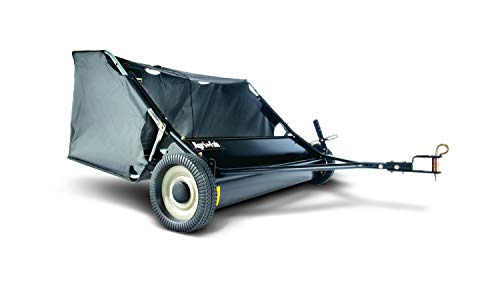
- Type: Tow-behind (lawn tractor or riding mower, hitch pin included)
- Sweeping width: 42 in
- Hopper capacity: 12 cu ft, collapsible bag with dump rope
- Brushes: 4 brushes, forward-drive only (gears release in reverse)

- Type: Tow-behind (lawn tractor or riding mower, multi-height hitch)
- Sweeping width: 42 in
- Hopper capacity: 22 cu ft, collapsible and fully removable for storage
- Brushes: 11 in spiral polypropylene brush (four brush sections on one shaft), 4.5:1 brush-to-wheel ratio
All 4 Picks at a Glance
| Product | Specs | Action |
|---|---|---|
| 2. Scotts LSW70026S — the lightest full-width push sweeper |
| Check price on Amazon |
| 3. Agri-Fab 45-0320 — the mid-size tow-behind for tractor owners |
| Check price on Amazon |
| 4. Ohio Steel 42SWP22 — spiral brush and the biggest hopper here |
| Check price on Amazon |
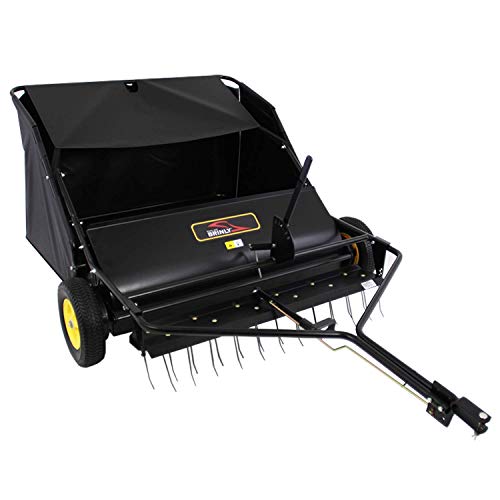 5. Brinly STS-42BHDK-A — tow sweeper with a dethatcher on the front |
| Check price on Amazon |
Key takeaways
- Compare the best lawn sweepers for leaves, grass and yard cleanup: push and tow-behind picks checked for width, hopper size, brush design and weight.
As an Amazon Associate we earn from qualifying purchases.
A lawn sweeper is a wheeled box with a rotating brush underneath and a fabric hopper behind it. As the wheels turn, they drive the brush, and the brush flicks leaves, grass clippings and light debris up and back into the hopper. Push models are walked behind like a mower; tow-behind models hitch to a lawn tractor or riding mower and work at towing speed. Either way, there is no engine and no suction. Everything a sweeper picks up, it picks up mechanically, with bristles — and that single fact explains both what these machines do well and where they fail.
The honest version first. On dry leaves and fresh clippings lying loose on short grass, a sweeper is genuinely fast, and it gathers material into a bag instead of scattering it the way a rake pass can. On wet leaves matted flat to the turf, it mostly skates over the top. Pinecones, sticks and acorns are hit-or-miss at best: small ones may bounce in, larger ones get pushed ahead of the housing or jam against it, and no model in this roundup should be bought expecting it to clear a cone-covered yard. What decides success more than any brand name is brush height. Set the brushes too high and they comb over debris; set them too low and they scrub the turf, wear the bristles down and make the machine hard to push or tow. Brushes are wear parts — a season of sweeping set too deep can round them off, and pickup quietly gets worse until the height is reset or the brushes are replaced.
Two more realities before the picks. Hopper capacity figures are heaped, brim-full volumes measured with loose dry material; a real load of mixed leaves and clippings compacts and fills the bag sooner, so treat every number below as a comparison figure, not a promise. And tow-behind sweepers need more than a tractor: they need a hitch at the right height, room to turn, and a storage footprint roughly the size of the machine itself, while a push sweeper hangs on a shed wall. The five models below cover the sensible spread — two push sweepers for ordinary yards, and three tow-behind machines for properties where walking every pass stops making sense.
Affiliate Disclosure: This article contains affiliate links. If you buy through a link on this page, the site may earn a commission at no extra cost to you. Product details are taken from manufacturer and retailer listings at the time of writing.
1. Agri-Fab 45-0218 — the push sweeper benchmark for small and mid-size yards
The 45-0218 is the reference point for push sweepers: a 26-inch poly housing, four brushes, and a 7-cubic-foot hopper bag that detaches for dumping and collapses flat for storage. The brushes are driven off the wheels at a stepped-up ratio, so they spin several times for every wheel revolution and flick debris up into the bag rather than bulldozing it forward. Brush height adjusts without tools, and the brushes can be set to work about half an inch down into the grass, which is the setting that matters for clippings and settled leaves. At 25 pounds it is easy to carry to the yard, hang up afterwards, and push for a full session without it becoming a workout.
The limits are the limits of the class. The poly housing and plastic wheels keep weight down but are not the parts to abuse on gravel or broken ground, and the hopper is smaller than the headline figure suggests in practice — Agri-Fab’s own manual rates usable capacity at 6.2 cubic feet and recommends mowing first so leaves are chopped and pack tighter. On a small to medium lawn with dry material, though, this is the combination most people actually need: wide enough to finish quickly, light enough to use often, and built by a maker that publishes parts diagrams and sells replacement brushes and bags by model number.
Specs
- Type: Push (manual, wheel-driven brushes)
- Sweeping width: 26 in
- Hopper capacity: 7 cu ft (manufacturer manual rates usable capacity at 6.2 cu ft)
- Brushes: 4 poly brushes, wheel-driven
- Height adjustment: Tool-free; brushes settable about 1/2 in into the grass
- Weight: 25 lb
- ASIN: B00004RANC
- Source: https://www.amazon.com/dp/B00004RANC
2. Scotts LSW70026S — the lightest full-width push sweeper
- Type: Push (manual, wheel-driven brush)
- Sweeping width: 26 in
- Hopper capacity: 3.6 bushel (about 4.5 cu ft), removable collection bag
- Brushes: Spinning rake-style brush, two brush sections
Scotts takes a different mechanical route. Instead of a bank of brushes, the LSW70026S uses a spinning rake-style brush — two brush sections that comb through the grass and toss debris back into a 3.6-bushel collection bag. That works out to roughly 4.5 cubic feet, noticeably less than the Agri-Fab push model above, and it is the honest trade in this design: the Scotts is built for lightness. At 19.3 pounds it is the easiest sweeper here to lift off a wall hook, carry across a yard, and push up a slope, and the five-position height adjustment lets the brushes be set about a quarter inch into the grass for lawn work or raised for patios, sidewalks and driveways, where a sweeper doubles as a quick hard-surface broom.
The compromises follow from the same choices. The smaller bag fills fast in heavy leaf fall, so big autumn cleanups mean many more trips to the pile. The rake-style action is at its best on dry leaves and clippings on level ground; uneven turf and damp, flattened debris leave more behind per pass than the four-brush designs manage. For a modest, flat yard — or a camp or cabin lawn that gets swept often and lightly — the low weight and simple mechanism are worth more than raw capacity.
3. Agri-Fab 45-0320 — the mid-size tow-behind for tractor owners
- Type: Tow-behind (lawn tractor or riding mower, hitch pin included)
- Sweeping width: 42 in
- Hopper capacity: 12 cu ft, collapsible bag with dump rope
- Brushes: 4 brushes, forward-drive only (gears release in reverse)
Step up to a tractor and the sweeping width jumps. The 45-0320 tows behind any lawn tractor on a standard hitch pin, sweeps a 42-inch path, and carries a 12-cubic-foot hopper bag — and a dumping rope lets the operator tip the load out from the seat instead of climbing down and wrestling a full bag. Four brushes do the work, with height adjustment that sets them to penetrate up to half an inch into the grass, and the brushes only engage moving forward; the gearing releases in reverse, which keeps the brush from dragging material back out when you back up to reposition. The hopper collapses for storage, and the unit rides on two 11-inch semi-pneumatic tires.
At 68 pounds this is a real piece of equipment, not a garden toy, and it asks for what all tow-behinds ask for: a tractor with a hitch plate at a workable height, turning room at the ends of each pass, and shed space for a machine over four feet wide. The stamped steel housing is durable but will rust if it is put away wet and caked, and the fabric hopper is a wear item that chafes at its mounting points over seasons of use. For a half-acre to two acres of open lawn, though, this is the size class where sweeping stops being a chore and becomes a single pass after mowing.
4. Ohio Steel 42SWP22 — spiral brush and the biggest hopper here
- Type: Tow-behind (lawn tractor or riding mower, multi-height hitch)
- Sweeping width: 42 in
- Hopper capacity: 22 cu ft, collapsible and fully removable for storage
- Brushes: 11 in spiral polypropylene brush (four brush sections on one shaft), 4.5:1 brush-to-wheel ratio
Ohio Steel’s Professional Grade sweeper is built around one distinctive part: an 11-inch spiral brush. Where straight brush sections flick debris in pulses, the continuous spiral — a patented Ohio Steel design, in polypropylene — keeps bristle contact with the ground through the whole rotation, which the maker credits with more complete pickup per pass and less stress on the drive gears. The brush turns at a 4.5-to-1 ratio against the wheels. Around that brush sits the largest collector in this roundup, a 22-cubic-foot hopper, emptied by rope from the tractor seat and removable altogether so the machine stores more compactly than its working size suggests. Brush height adjusts on a no-slip lever mechanism that holds its setting instead of creeping under vibration.
This is also the heaviest machine here, at about 95 pounds, and the most involved to assemble — plan on a proper session with a wrench and socket, not a ten-minute unboxing. The size cuts both ways in use: the big hopper means fewer dump stops on a large property, but a full 22 cubic feet of damp leaves is a heavy, awkward load hanging off the back of a small tractor, and the wide housing needs gates and shed doors that actually fit it. For two acres and up of open lawn with heavy leaf fall, it is the capacity pick; for anything smaller, it is more machine than the job returns.
5. Brinly STS-42BHDK-A — tow sweeper with a dethatcher on the front
- Type: Tow-behind (lawn tractor or riding mower) with front tine dethatcher
- Sweeping width: 42 in
- Hopper capacity: 20 cu ft hamper with windscreen
- Brushes: 6 high-velocity brushes
The Brinly does two jobs in one pass. Ahead of its brush housing sits a row of dethatcher tines that scratch up the thatch layer — the mat of dead stems and roots that builds up at the soil line — and the six high-velocity brushes behind them sweep the loosened material straight into a 20-cubic-foot hamper. For a lawn that needs both jobs each spring, that combination replaces two separate attachments and two separate afternoons. The hamper carries a windscreen to keep light, dry debris from blowing back out at towing speed, and brush height sets on a twist-lock adjustment. At 68 pounds it matches the Agri-Fab tow model on weight while carrying close to double the hopper volume.
The dethatcher is also the caveat. Tines dragging the ground on every pass are the right thing for a thatchy lawn in spring and the wrong thing for weekly cleanup the rest of the year, when they add drag and wear without adding benefit — check how the tine bar is set, and expect tine and brush wear to arrive sooner than on a sweeper-only machine. The hamper’s fabric and the windscreen are the other consumables to inspect each season. Chosen for the right lawn, though — one that genuinely needs dethatching as part of cleanup — nothing else in this roundup covers as much work per pass.
How to choose a lawn sweeper
Start with the push-versus-tow decision, because it is really a property decision. A push sweeper suits lawns up to roughly half an acre, stores on a wall, needs no other machine, and doubles as a patio and driveway broom on its higher settings. A tow-behind only makes sense if you already own a tractor or riding mower with a rear hitch; it covers ground far faster and carries three to five times the debris per load, but it needs turning room, a gate it fits through, and floor space in storage.
Then think about brush height and brush wear together. Height adjustment is not a convenience feature — it is the mechanism that decides whether the machine works at all, so favor a design you can set precisely and that holds its setting (a lever that locks, a knob that stays put). Whatever you buy, the brushes will wear; check before purchase that replacement brushes and hopper bags are sold for that exact model, because a sweeper with a worn brush set and no available replacements is scrap.
Match hopper size to your dump routine, not your ambition. Every capacity figure in this category is a heaped volume of loose, dry material. Damp leaves and clippings pack down and fill a bag in far fewer passes than the number implies, and a huge hopper is only an advantage if your compost pile or burn pile is positioned so dumping is quick. Finally, be honest about your debris: sweepers are leaf and clipping machines. If your cleanup problem is pinecones, sticks, sweet gum balls or wet matted leaves, a sweeper will help at the margins, but it will not replace a rake, a tarp and some bending down.
Frequently asked questions
Do lawn sweepers pick up pine needles? Short needles lying on short grass, reasonably well — the spiral and multi-brush designs above are the better bets. Long needles woven into tall turf get left behind, and no sweeper pulls needles out of thatch the way a stiff rake can.
Can a tow-behind sweeper be pulled by an ATV or a vehicle? The hitches and brush gearing are designed for lawn tractor speeds and hitch heights. Towing faster than a mower’s working pace bounces the housing, skips debris and accelerates brush wear, so keep to tractor duty.
Why does my sweeper leave a line of leaves behind? Almost always brush height or a full hopper. Brushes set too high comb over debris; brushes worn round do the same at any setting. Lower the brushes in small steps until pickup improves, and empty the bag before it is packed tight.
How long do the brushes and hopper last? Brushes are consumables — expect to inspect them every season and replace them when the bristles look rounded or pickup fades despite correct height. Fabric hoppers last longest when emptied before storage and kept out of weather; a hopper left full of damp leaves can also become a fire risk as the material heats, which is why manufacturers warn against storing a loaded sweeper.
The bottom line
For most yards, the Agri-Fab 45-0218 is the sensible default: a proven four-brush push sweeper, light enough to use weekly and supported with replacement parts. The Scotts LSW70026S trades capacity for the lowest weight here, which suits smaller, flatter lawns and hard surfaces. Once a tractor enters the picture, the Agri-Fab 45-0320 is the straightforward mid-size step up, the Ohio Steel 42SWP22 is the capacity and brush-design pick for large properties, and the Brinly STS-42BHDK-A earns its place on lawns that need dethatching and sweeping done in the same pass. Whichever size you land on, set the brush height carefully, sweep dry material, and treat the published hopper figure as a comparison number — do that, and a sweeper genuinely does turn the worst weekend of autumn into an hour’s work.
More from Amazon
Programs that pair well with the guide above. Offers and eligibility are set by Amazon and may change.
Free shipping on eligible items, Prime Video and more. Eligible new members can start with a free trial.
Start a Prime free trialA Prime membership for ages 18-24 with a trial period. Eligibility is set by Amazon.
See Prime for Young AdultsAudiobooks and podcasts to listen to on the go. Eligible new members can start with a free trial.
Try Audible freeAd-free music streaming. Eligible new subscribers can start with a free trial.
Try Music Unlimited freeAs an Amazon Associate we earn from qualifying purchases.
Write Your Review
No reviews yet. Be the first to share your experience!