

Key takeaways
- Snap pads end the crawl-under-the-rig routine for good. Compare five permanent jack pads by foot size, shape and leveling system to find the set that fits.
As an Amazon Associate we earn from qualifying purchases.
Every RVer with a leveling system knows the routine: pull into the site, climb out, crawl around placing loose pads or blocks under each jack foot, then reverse the process in the mud when it is time to leave. Snap pads end that routine permanently. A snap pad is a molded recycled-rubber pad that presses onto the metal foot of a leveling jack and stays there — driving down the highway, sitting in storage, and dropping onto gravel, grass, or concrete at the next stop. The rig effectively wears shoes, so setup becomes a matter of extending the jacks and letting the system work.

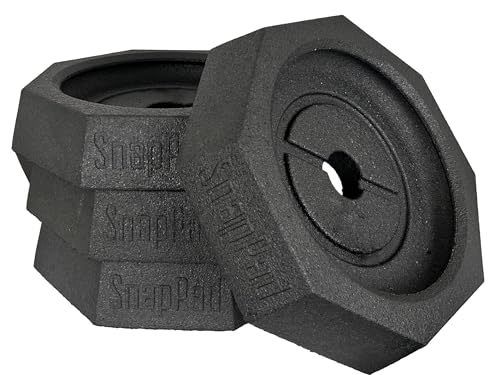
Beyond convenience, a permanently attached pad changes how the rig sits. The wider footprint spreads the load so feet sink less into soft ground, the rubber layer dampens vibrations that travel up steel jacks into the floor, and the grippy surface resists the slow creep bare metal feet can make on smooth concrete. There is one catch that dominates every buying decision in this category: fit is everything. Each pad is molded for one foot diameter and one foot shape, matched to specific leveling systems. A pad built for a 9-inch round foot will not stay on a 10-inch foot, and a round pad cannot grip an octagonal foot. Measure first, order second.
Affiliate Disclosure: This article contains affiliate links. If you buy through links on this page, we may earn a commission at no extra cost to you. This helps support our work and lets us keep producing guides like this one.
How Snap Pads Work
A snap pad is a thick rubber cup molded from recycled tire material bonded with a high-strength resin. The underside of the cup is shaped to match a particular jack foot, and the rim is engineered to flex just enough to slip over the foot’s edge and lock in place when the weight of the rig presses the jack down. Once installed, the pad adds roughly an inch of thickness below the foot and a much larger contact patch against the ground.
Installation is deliberately simple: set the pads on the ground under each jack, apply a little dish soap to the rim as a lubricant, and lower the jacks so the rig’s own weight presses each foot into its pad until it snaps home. From that point the pads travel with the rig, shrugging off UV exposure, water, road grime, heat, and cold, backed by a two-year manufacturer warranty against defects in materials and workmanship.
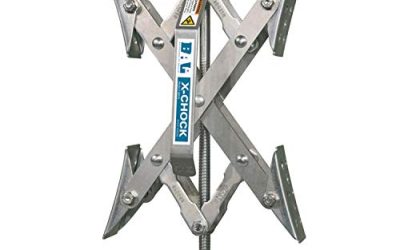
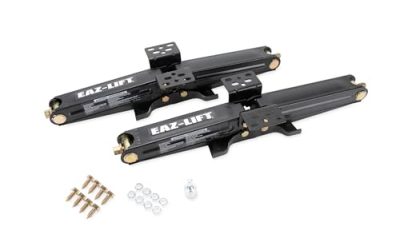
It is worth being clear about what snap pads are not. They are accessories for leveling jacks, not jacks themselves — the scissor stabilizers that stop trailer rocking are a separate category entirely. Snap pads also do not level anything on their own; the leveling system still does the lifting. What the pads add is footprint, grip, vibration control, and never handling a loose pad again.
Fit First: Measure Before You Order
Because these pads are molded rather than universal, the buying process starts under the rig with a tape measure. Work through these four checks before choosing any product below.
1. Measure the foot diameter. Run the tape straight across the widest part of the metal foot. Common sizes in this category are 5.5, 8, 9, 10, and 11.5 inches. Do not round — a 9-inch pad on a 10-inch foot will not seat, and a loose pad can be lost on the road.
2. Note the foot shape. Most leveling feet are round, but some systems use octagonal feet, and a few use square feet. Shape matters as much as size: the pad cavity is molded to the shape, and a round pad physically cannot lock onto an octagon.
3. Check for a concave foot. Some jack feet — notably on Power Gear systems — are dished rather than flat. Those need a pad with a deeper cavity, which is exactly what the Prime line below is built for.
4. Identify the leveling system brand. LCI (Lippert), Power Gear, Kwikee, HWH, and Equalizer Systems feet differ in profile even at the same diameter. Every product below names the systems it is molded for, so match the brand on your control panel or jack legs to the pad line.
Front and rear feet can also differ on the same rig, so measure every foot, not just one. If your rig has mixed sizes, look for a mixed pack rather than forcing one size everywhere.
The 5 Best RV Snap Pads
1. SnapPad Xtra 4-Pack — For 9-Inch Round LCI Feet
The Xtra is the pad that started the category and remains the default choice for the huge number of rigs running LCI leveling systems with 9-inch round feet. That covers the LCI Level Up and Ground Control families found on many fifth wheels, travel trailers, and motorhomes, along with Rieco Titan and E&P Hydraulics systems. Each pad widens the foot to an 11-inch footprint, which the maker calculates as 61 percent more surface area than the bare foot, and the recycled-rubber body adds vibration dampening that takes the edge off footsteps and appliance hum inside the coach. At 5 pounds per pad, a four-pad set adds modest weight low on the rig, exactly where extra weight matters least.
Specs
- Foot fit: 9-inch round jack feet
- Compatible systems: LCI Level Up, LCI Ground Control 3.0, LCI Ground Control TT, Rieco Titan Speedy, E&P Hydraulics
- Pad width: 11 inches
- Weight: 5 lbs per pad
- Surface area gain: 61 percent over the bare foot
- Material: Recycled tire rubber with high-strength resin
- Pack size: 4 pads
2. SnapPad Prime 4-Pack — For 10-Inch Concave Power Gear Feet
Prime is the heavyweight of the range, built for a specific and common problem: the deep concave 10-inch round feet used by Power Gear and Kwikee Level Best systems on Class A motorhomes. A flat-foot pad cannot seat properly on a dished foot, so Prime uses a deeper lip and a much larger body. The finished pad measures 13.25 inches across, adds about an inch of thickness below the foot, and weighs 8.9 pounds per pad — figures that translate to a 316 percent increase in surface area over the bare foot according to the listing. This is the pad for big coaches that punch round dents into soft campsites: the footprint spreads the load widely, and the thick rubber layer conforms to gravel instead of skating on it.
Specs
- Foot fit: 10-inch round jack feet with a deep concave shape
- Compatible systems: Power Gear, Kwikee Level Best
- Pad diameter: 13.25 inches
- Weight: 8.9 lbs per pad
- Added thickness: About 1 inch
- Surface area gain: 316 percent over the bare foot
- Material: Recycled tire rubber with high-strength resin
- Pack size: 4 pads
3. SnapPad HiWay 8 4-Pack — For 8-Inch Round HWH Feet
HWH leveling systems are common on Class A motorhomes, and their feet do not match the LCI or Power Gear profiles — which is why SnapPad built the HiWay line specifically for them. This four-pack fits the 8-inch round HWH feet found on many coaches; the same line also covers 10-inch feet and an 11.5-inch Bus size for the largest HWH installations, so confirm which diameter your coach carries before ordering. Like the rest of the range, the pads are molded in the USA from recycled tires, install once with the soap-and-lower method, and stay on the feet permanently, protecting both the campsite surface and the metal feet themselves from rust and bending.
Specs
- Foot fit: 8-inch round jack feet
- Compatible systems: HWH automatic leveling systems
- Line sizes: Also made in 10-inch and 11.5-inch (Bus) versions
- Material: Recycled tire rubber with high-strength resin
- Installation: Permanent snap-on, stays on while driving
- Pack size: 4 pads
4. SnapPad EQ Octagon 4-Pack — For 10-Inch Octagonal Equalizer Feet

Equalizer Systems landing feet are octagonal rather than round, and that single fact rules out every round pad in this guide. The EQ Octagon is molded with a deep cavity shaped for Equalizer’s 10-inch octagonal feet, giving those rigs the same permanent-pad benefits: a pad measuring 13.25 inches wide and 2.75 inches tall that spreads the load, grips the ground, and quiets the small movements that travel up the jacks. If your rig runs Equalizer hydraulics, this is the line designed around your feet — and the clearest illustration in the whole category of why shape, not just diameter, decides the purchase.
Specs
- Foot fit: 10-inch octagonal jack feet
- Compatible systems: Equalizer Systems leveling systems
- Pad dimensions: 13.25 inches wide, 2.75 inches tall
- Cavity: Deep, molded to the octagonal foot profile
- Material: Recycled tire rubber with high-strength resin
- Pack size: 4 pads
5. SnapPad Mini 5.5 Single — For LCI Tongue Jack Feet
Not every jack foot belongs to a full leveling system. Travel trailer tongue jacks carry a small round foot that spends its life sinking into campsite dirt and gravel, and the Mini line scales the snap pad idea down to that job. This single pad fits 5.5-inch round feet, including the LCI tongue jacks fitted to many travel trailers. It installs the same way as its bigger siblings and stays on permanently, giving the tongue jack a wider, grippier base that resists sinking and keeps the bare metal foot out of the mud. For trailer owners without a powered leveling system, it is the one place in this guide where a single pad solves the whole problem.
Specs
- Foot fit: 5.5-inch round jack feet
- Compatible systems: LCI tongue jacks on travel trailers
- Material: Recycled tire rubber with high-strength resin
- Installation: Permanent snap-on
- Pack size: 1 pad
Choosing the Right Set
With fit verified, the decision is mostly made for you: foot diameter, shape, and system brand point to exactly one product line. The remaining questions are practical. Count your feet — four-point systems need four pads, six-point systems need six, and some lines sell mixed packs for rigs with different front and rear foot sizes. Remember that each pad adds roughly an inch of height under the foot, slightly reducing jack stroke and ground clearance; on low-slung rigs, check that an inch will not cause dragging on steep driveway transitions. Finally, snap pads are not cribbing — for long-term storage on very soft ground, many owners still place a broad board or mat under the pads to spread the load further.
Installation and Care Notes
Installation takes minutes per pad and needs nothing more exotic than dish soap and a helper to run the leveling controls. Set each pad on the ground directly under its foot, soap the rim, and lower the jack slowly until the foot presses in with a snap. Work one jack at a time and confirm each pad is fully seated before moving on. After the first trip, glance at the pads during your walk-around to confirm they are still seated — a correctly fitted pad should not move, and early checks build confidence in the fit.
Care is minimal: hose the pads off with the rest of the rig. Because they are permanent, there is nothing to store and nothing to forget at the last campsite.
Frequently Asked Questions
How do I know which size I need? Measure the diameter of each metal jack foot and note its shape, then match those measurements and your leveling system brand to the fit notes in each product section above. When a measurement falls between sizes, contact the manufacturer with your system details rather than guessing — an incorrectly sized pad will not stay attached.
Do snap pads work with stabilizer jacks? No. Snap pads are molded for the round or octagonal feet of leveling jacks and tongue jacks. Scissor-style stabilizer jacks have small pivoting feet that these pads are not designed to fit.
Will the pads fall off while driving? A correctly fitted pad is designed to stay attached permanently, and the manufacturer tests retention under severe vibration. The key condition is correct fit: pads that are forced onto the wrong foot size or shape are the ones at risk.
Do snap pads replace leveling blocks? They replace loose jack pads and the blocks used purely as jack footings on reasonably firm ground. They do not add leveling range, so blocks may still be useful for gross leveling on very uneven sites.
The Bottom Line
Snap pads are one of the rare RV upgrades that remove a chore instead of adding one. Pick the line that matches your leveling system — Xtra for 9-inch round LCI feet, Prime for 10-inch concave Power Gear feet, HiWay for HWH feet, EQ Octagon for Equalizer’s octagonal feet, or the Mini for a travel trailer tongue jack — verify the diameter and shape of every foot before ordering, and setup day gets faster, cleaner, and quieter from then on.
More from Amazon
Programs that pair well with the guide above. Offers and eligibility are set by Amazon and may change.
Free shipping on eligible items, Prime Video and more. Eligible new members can start with a free trial.
Start a Prime free trialA Prime membership for ages 18-24 with a trial period. Eligibility is set by Amazon.
See Prime for Young AdultsAudiobooks and podcasts to listen to on the go. Eligible new members can start with a free trial.
Try Audible freeAd-free music streaming. Eligible new subscribers can start with a free trial.
Try Music Unlimited freeAs an Amazon Associate we earn from qualifying purchases.
Write Your Review
No reviews yet. Be the first to share your experience!