

Key takeaways
- Five snap caps compared for dry fire practice: machined aluminum, spring-buffered plastic and weighted trainer rounds for pistols, shotguns and rimfire.
As an Amazon Associate we earn from qualifying purchases.
A snap cap is an inert dummy round built to sit in a chamber and take the hit of a firing pin so the gun itself does not have to. Dry firing on an empty chamber lets the firing pin slam forward with nothing to absorb its energy, and on many designs that can peen, crack or break the pin over time. A snap cap gives the pin a cushioned surface to strike, which makes it the basic tool for trigger practice at home, for checking that a repaired action feeds and extracts correctly, and for releasing hammer spring tension before a gun goes into storage.

Snap caps are completely inert — no primer charge, no powder, no projectile — but that fact comes with rules that are not optional. A snap cap must be visually and physically distinct from live ammunition, which is why most are anodized red or blue, molded in bright colors or fitted with an orange body. All live ammunition should be out of the room, not just out of the gun, before any dry fire session begins. Every firearm is treated as loaded at all times, the muzzle stays pointed in a safe direction, and the chamber is checked by eye and by finger before the first cap goes in. A snap cap makes practice safer; it does not suspend the basic rules of handling.
This guide compares five verified options across the main jobs snap caps do: a machined aluminum pistol cap, a spring-buffered plastic pistol cap, an aluminum shotgun cap, a rimfire action-proving set and a weighted trainer pack built for loading drills.
Affiliate Disclosure: This article contains affiliate links. If you buy a product through a link on this page, the site may earn a commission at no extra cost to you.
1. A-Zoom 9mm Luger Precision Snap Cap — 5 Pack
A-Zoom is the name most shooters meet first in this category, and the 9mm Luger Precision Snap Cap shows why. Each cap is CNC-machined from solid aluminum and hard-anodized, so it holds its exact cartridge dimensions through repeated chambering, extraction and ejection. That dimensional accuracy matters more than it might seem: a cap that is slightly off will either refuse to chamber or will train a sloppy cycle, while the A-Zoom feeds through a magazine and ejects the way a live round does.
The working end of the design is the Dead Cap, a polymer insert seated where the primer would be. A-Zoom builds that insert to absorb firing pin strikes repeatedly — the maker rates the caps for thousands of dry fires — and the hard anodizing keeps the rim from being chewed up by the extractor nearly as fast as softer materials. The bright red finish is a safety feature as much as a brand marker: it is instantly distinguishable from brass-cased live ammunition on a bench or in a magazine.
The five-count pack suits the way 9mm pistols are actually trained. Five caps fill most of a magazine drill rotation, let a shooter mix malfunction practice into a session, and leave a spare when one eventually wears. For a striker-fired or hammer-fired 9mm that sees regular dry practice, this is the durable default.
Specs
- Caliber: 9mm Luger
- Pack count: 5
- Model: 15116
- Construction: CNC-machined aluminum, hard anodized
- Primer cushion: Dead Cap polymer insert
- Finish: Red anodized
- Maker: A-Zoom (Lyman Products Corp.)
- Best for: Repeated dry fire practice and function testing in 9mm pistols
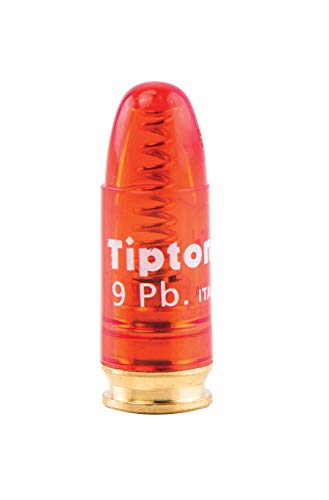
2. Tipton 9mm Luger Pistol Snap Caps — 5 Pack
Tipton takes the opposite material approach to the same 9mm job. These caps are molded plastic in a clear-and-red finish, built around a false primer that is spring-buffered: when the firing pin falls, the primer pocket gives against a spring instead of presenting a solid face. That spring cushion is the mechanism Tipton sells the line on, and it reduces the stress transmitted to the firing pin and the breech face with every strike.
The plastic construction has honest trade-offs worth stating plainly. Polymer is gentler on extractors and chamber edges than metal, and these caps are light and inexpensive-feeling in the hand — but a plastic rim will wear and deform sooner than a machined aluminum one under heavy cycling. Shooters who run high-volume malfunction drills should expect to inspect these more often and treat them as consumables with a shorter service life than the A-Zoom set above.
Tipton’s own listing assigns these caps a wide spread of work: checking and adjusting trigger pull, practicing safe handling, and releasing tension on hammer springs when a pistol is stored. One fit note from the listing deserves attention before ordering — Tipton states these snap caps are not compatible with 1911-style pistols. Owners of other 9mm designs get a straightforward five-pack; 1911 owners should pick a different cap.
Specs
- Caliber: 9mm Luger
- Pack count: 5
- Model: 303958
- Construction: Molded plastic
- Primer cushion: False primer, spring-buffered
- Finish: Clear and red
- Fit note: Not compatible with 1911-style pistols, per the maker
- Maker: Tipton
- Best for: Dry fire practice, trigger pull checks and storage spring release
3. A-Zoom 12 Gauge Snap-Cap — 2 Pack
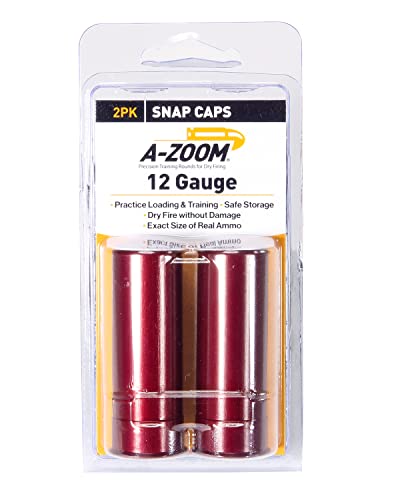
Shotguns put a different load on a snap cap. A 12 gauge firing pin is heavy, break-action guns are routinely stored with their hammers down, and dropping the hammers on empty chambers to relax the springs is exactly the situation where a cushion is needed. A-Zoom’s 12 gauge cap is machined from aluminum with the same hard-anodized red finish as the pistol line, sized to chamber and extract like a standard shotshell.
The two-count pack reflects how shotguns are used: one cap per barrel on a double, or a pair for a pump or semi-auto owner who wants one in the chamber and a spare in the range bag. The aluminum body handles the repeated ejection cycles of practice loading without the hull crushing or rim tearing that plain plastic shotshell dummies can suffer, and the rim stays true enough for extractors and ejectors to do their job during function checks after cleaning or repair.
A-Zoom lists more than a hundred snap cap sizes across rifles, pistols, rimfire and shotshells, and this 12 gauge version follows the same formula as the rest of the line: exact dimensions, a cushioned strike face, and a color that cannot be confused with a live shell at a glance. For a shotgun that is dry fired for practice or stored with springs relaxed, this is the straightforward pick.
Specs
- Gauge: 12 gauge
- Pack count: 2
- Model: 12211
- Construction: Machined aluminum, hard anodized
- Primer cushion: Cushioned strike face
- Finish: Red anodized
- Maker: A-Zoom (Lyman Products Corp.)
- Best for: Dry fire practice, function checks and hammer-spring release for storage
4. A-Zoom 22 LR Action Proving Dummy Rounds — 6 Pack
Rimfire needs its own conversation, because a rimfire firing pin does not strike the center of the case head — it strikes the rim, right at the edge of the chamber. Many rimfire makers warn against dry firing on an empty chamber for exactly this reason: with nothing in place, the pin can strike the chamber edge itself and damage both the pin and the barrel. A-Zoom’s answer is this six-pack of .22 LR rounds in blue hard-anodized aluminum.
The honest framing matters here. A-Zoom sells these as action proving dummy rounds: their job is to let an owner safely check that a .22 rifle or pistol feeds from the magazine, chambers, extracts and ejects correctly after cleaning, repair or a parts swap, and to teach loading and unloading without live ammunition. Because the firing pin lands on the rim itself, repeated dry fire strikes will dent and deform that rim — the rounds are a consumable for function testing, not an unlimited dry fire cushion in the way the centerfire A-Zoom caps are.
Used for that purpose, the set is well judged. Six rounds fill a typical rimfire magazine rotation, the blue finish separates them from brass .22 LR ammunition instantly, and the machined aluminum bodies survive far more cycling than the soft plastic wall-anchor substitutes sometimes pressed into this role. Anyone planning heavy rimfire dry fire should check the firearm maker’s own guidance first and use only products the maker rates for that use.
Specs
- Caliber: .22 LR (rimfire)
- Pack count: 6
- Model: 12208
- Construction: Hard-anodized aluminum
- Finish: Blue anodized
- Intended use: Action proving — feeding, chambering and extraction checks
- Maker: A-Zoom (Lyman Products Corp.)
- Best for: Function testing .22 LR rifles and pistols and safe handling instruction
5. ST Action Pro 12 Gauge Inert Trainer Rounds — 20 Pack
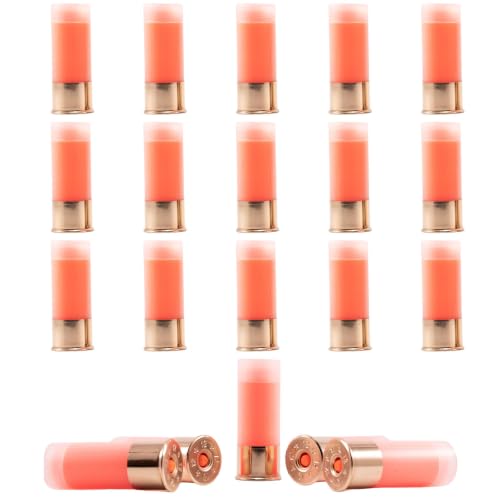
The ST Action Pro trainers solve a different problem from the other four products here. They are built around a real brass case head with a high-visibility orange body, weighted and sized to handle like live 12 gauge shells, and they exist for drills where the round itself is the training tool: loading and unloading a tube magazine at speed, practicing reloads, running malfunction clearances and teaching new shooters handling skills in a classroom or on a line.
That purpose explains the pack count. Twenty rounds let an instructor equip several students at once, or let one shooter load a full tube repeatedly without fishing the same two shells out of a carrier. The orange body is the safety system — these cannot be mistaken for live ammunition across a room, let alone in the hand — and the brass head gives extractors and shell stops the same rim geometry they work against with real shells.
The distinction to keep clear: these are inert trainers, not primer-cushioning snap caps. The listing presents them as safety trainer cartridges for handling and cycling drills, and a shooter whose main goal is thousands of cushioned firing pin strikes should look at the A-Zoom or Tipton designs above. For loading drills, action cycling and instruction, though, a bulk pack of weighted, unmistakable trainers is the right tool, and this is the established one.
Specs
- Gauge: 12 gauge
- Pack count: 20
- Construction: Brass case head with orange polymer body
- Weight and size: Sized to mimic live 12 gauge shells for loading drills
- Primer cushion: None — inert trainer design
- Finish: Orange with brass head
- Maker: ST Action Pro
- Best for: Loading and unloading drills, malfunction practice and classroom training
How to Choose the Right Snap Caps
Start with the chambering, because nothing else compensates for a mismatch. A snap cap is caliber- and gauge-specific: a 9mm Luger cap does nothing for a .45 ACP pistol, and a 12 gauge cap cannot stand in for a 20 gauge gun. Buy the exact chambering stamped on the barrel, and remember that close relatives are not interchangeable — .38 Special and .357 Magnum share a case family, but most other look-alikes do not.
Next, match the material to the workload. Machined aluminum caps like the A-Zoom line hold their dimensions and rims through heavy cycling, which suits frequent dry fire and function testing. Molded plastic caps like the Tipton are softer against extractors and chamber edges and often carry a spring-buffered false primer, but their rims wear faster and they should be inspected more often. Brass-and-polymer trainers like the ST Action Pro are built for handling drills where realistic weight and an unmistakable color matter more than primer cushioning.
Then decide what the cap is actually for. Dry fire practice needs a cushioned strike face — a polymer insert or a spring-buffered false primer — because the pin will land thousands of times. Function testing needs dimensional accuracy above all, since the point is proving the gun feeds and ejects. Loading drills need count and weight. Storage spring release needs only a cushion and a chamber that stays occupied. Some caps cover several of these jobs; none covers all of them equally.
Finally, build inspection into the routine. A worn snap cap with a chewed rim, a cracked body or a primer pocket beaten flat can cause the very malfunctions a shooter is trying to diagnose, and a rimfire dummy with a deformed rim will stop feeding honestly. Rotate caps, check them under good light, and retire any that no longer chamber and eject cleanly. For rimfire guns, follow the firearm maker’s guidance on dry fire before anything else — the designs vary, and the maker’s word governs.
Frequently Asked Questions
Are snap caps and dummy rounds the same thing?
The terms overlap, but they are not identical. A snap cap is designed with a cushioned strike surface so the firing pin can fall on it repeatedly. A plain dummy round may only replicate the size and weight of a cartridge for loading practice or function checks, with no cushion at all. The ST Action Pro set above is a trainer in that second sense, while the A-Zoom and Tipton caps are built for the pin to strike.
Can snap caps be reused indefinitely?
No. Every snap cap is a consumable with a finite life. Aluminum caps last the longest, but rims get chewed by extractors, polymer inserts compress, spring-buffered primers fatigue and plastic bodies crack. Inspect caps regularly and replace any that show a damaged rim, a flattened primer area or a cracked body — a worn cap can cause malfunctions during function testing that get blamed on the gun.
Do snap caps make dry fire completely safe?
No product does that. Snap caps are inert, but safety comes from the handling routine: confirm the firearm is unloaded by sight and touch, remove all live ammunition from the room, keep the muzzle pointed in a safe direction, and use caps that are a clearly different color from live rounds. Treat every firearm as loaded at all times, including during practice.
Why do rimfire guns need extra care when dry firing?
On a rimfire, the firing pin strikes the rim of the cartridge at the edge of the chamber. On an empty chamber, the pin can hit the chamber edge itself, which many makers say can damage the pin or the barrel over time. That is why rimfire owners should follow the firearm maker’s guidance and use products intended for rimfire use, like the action proving rounds above, rather than assuming a centerfire routine transfers over.
How many snap caps should a shooter own?
Enough to run the drills being practiced. A pistol shooter working magazine drills wants at least a full magazine’s worth plus spares; a revolver shooter wants a full cylinder; a shotgun owner usually needs only a pair for chamber checks and storage, unless loading drills are the goal, in which case a bulk trainer pack makes more sense. Worn caps should be replaced, so a small reserve is practical.
Conclusion
The right snap cap depends on the gun and the job. The A-Zoom 9mm set is the durable default for pistol dry fire, the Tipton 9mm caps trade some longevity for a spring-buffered primer and a softer touch on extractors, and the A-Zoom 12 gauge pair covers shotgun practice and storage. Rimfire owners get an honest function-testing tool in the A-Zoom .22 LR action proving rounds, provided they respect what those rounds are for, and anyone running loading drills or teaching new shooters is better served by the weighted, bright orange ST Action Pro trainers. Whichever set ends up in the range bag, the routine around it matters as much as the product: live ammunition out of the room, a verified empty gun, and caps inspected before they are trusted.
More from Amazon
Programs that pair well with the guide above. Offers and eligibility are set by Amazon and may change.
Free shipping on eligible items, Prime Video and more. Eligible new members can start with a free trial.
Start a Prime free trialA Prime membership for ages 18-24 with a trial period. Eligibility is set by Amazon.
See Prime for Young AdultsAudiobooks and podcasts to listen to on the go. Eligible new members can start with a free trial.
Try Audible freeAd-free music streaming. Eligible new subscribers can start with a free trial.
Try Music Unlimited freeAs an Amazon Associate we earn from qualifying purchases.

Write Your Review
No reviews yet. Be the first to share your experience!