

Key takeaways
- Rinse after every saltwater or muddy outing. Use fresh water, especially around zippers, buckles, and adjustment hardware.
- Air-dry in shade. Prolonged sunlight weakens fabric and foam coverings; do not put a PFD in a clothes dryer.
- Inspect the foam and shell. Replace the vest if foam is compressed, torn, waterlogged, or no longer returns to shape.
- Check buckles and stitching. Broken teeth, cracked buckles, frayed webbing, and loose seams are reasons to stop using it.
- Do not store it compressed. Avoid leaving it under heavy gear or tightly folded in a hot vehicle.
- Do not modify it. Cutting foam, adding permanent hardware, or covering reflective or approval markings can compromise performance and certification.
- Do not overfill pockets. Heavy tools can pull the vest forward and interfere with swimming or re-entry.
The best kayak life jackets are low-profile, US Coast Guard-approved recreational or touring PFDs that stay secure while leaving your shoulders and arms free; for most paddlers, a vest with about 15.5–17 lb of inherent buoyancy, multiple adjustment points, breathable back panels, and at least one accessible pocket is the most useful balance.
Our top picks
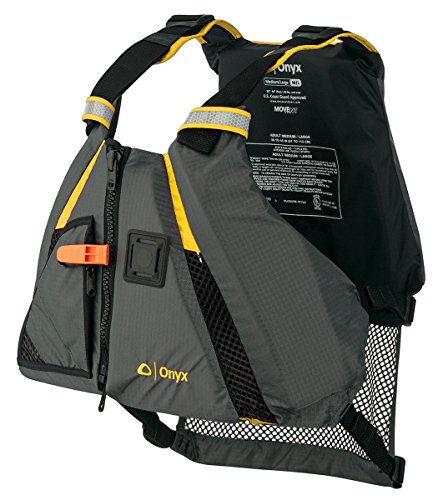

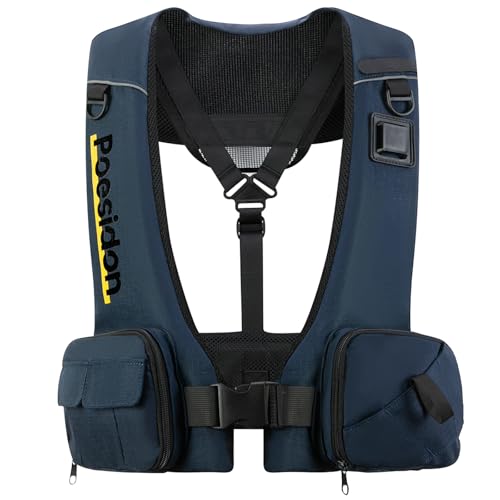

As an Amazon Associate we earn from qualifying purchases at no extra cost to you. Ratings are shown as listed on Amazon.
Best kayak life jackets by paddling situation
| Situation | Best choice | What to prioritize | Typical price range |
|---|---|---|---|
| Occasional recreational paddling | USCG-approved low-profile Type III vest | Simple fit, wide arm openings, breathable mesh, 15.5–17 lb buoyancy | $60–$120 |
| Frequent flat-water kayaking | Ventilated recreational vest | Mesh back, four or more adjustment points, phone-sized storage | $100–$180 |
| Long touring days | Touring PFD with organized pockets | Low ride height, shoulder mobility, large front pocket, durable shell | $150–$300 |
| Fishing from a kayak | Fishing-specific PFD | Reinforced attachment points, tool storage, high-back compatibility | $100–$220 |
| Cold water or rough conditions | Approved vest selected with local safety guidance | Secure fit, unrestricted rescue movement, compatibility with layers | $150–$350 |
Prices are broad 2026 market ranges rather than fixed recommendations. The label inside the vest matters more than the marketing description: look for the approval required in your country and confirm that the PFD is intended for your activity.
Strong options to put on your shortlist
NRS Chinook
The NRS Chinook is a practical choice for anglers and recreational paddlers who want storage without moving to a bulky offshore-style vest. Its fishing-oriented layout typically includes several front pockets, attachment points, and a high-back design that works with many kayak seats. The trade-off is obvious: loaded pockets can make the front feel crowded, and the vest may feel warmer than a minimalist touring model.
Choose it when organization is more important than the lightest possible profile. Keep only essential items in the pockets; a fully loaded PFD can interfere with torso rotation and make re-entry more awkward.
Astral V-Eight
The Astral V-Eight is designed around ventilation and a relatively low-profile paddling cut. Its airflow-focused construction is attractive for warm-weather recreation and touring, especially when a conventional foam vest feels hot across the back. The open or ventilated back design also helps accommodate kayak seats.
It is a better fit for paddlers who carry gear elsewhere rather than needing a large front storage system. Check the exact model label and size chart, since features and approval markings can differ among versions and markets.
Stohlquist Fisherman
The Stohlquist Fisherman suits kayak anglers who want multiple pockets and a stable, adjustable fit. Its layout is more utility-oriented than sleek, giving you places for pliers, line tools, and small tackle. That convenience comes with more fabric and hardware around the chest, so test arm movement with your actual paddle stroke before buying.
Kokatat Leviathan
The Kokatat Leviathan is aimed at touring and fishing users who need substantial storage in a wearable platform. Its larger pocket arrangement can reduce the need for a separate deck bag, but it also increases bulk. This is a sensible choice for expedition-style day trips, provided you can reach the pockets while seated and clipped into your kayak.
How to compare the details that actually matter
Approved buoyancy
Adult inherently buoyant US Coast Guard-approved life jackets commonly provide at least 15.5 lb of flotation, with many kayak vests in the 16–17 lb range. More buoyancy does not automatically make a vest better: foam thickness, cut, and positioning can reduce mobility. A kayak PFD is generally intended to help a conscious wearer stay afloat; it is not a guarantee that an unconscious person will turn face-up in every situation.
Inflatable PFDs can be compact, but they require regular inspection, a charged or unused CO2 cylinder, and correct activation. They are not a universal substitute for foam vests, particularly where regulations, water temperature, swimming ability, or activity rules favor inherently buoyant equipment.
Low-profile cut and arm mobility
Look for foam that is divided or shaped around the ribs rather than extending high into the armpits. Sit in a kayak or chair and make ten forward paddle strokes, ten strong torso rotations, and an overhead reach. The vest should not rub your neck, catch beneath your arms, or ride upward.
A high-back vest can be comfortable with a kayak seat because the foam sits above the seatback. A low-back design may feel less restrictive in other boats but can create pressure points in a molded kayak. Match the vest to the seat, not just to your standing fit.
Ventilation
Mesh panels, perforated foam, and open-back designs reduce heat buildup, but ventilation has limits. A breathable vest still feels warm in humid weather, and mesh may be less resistant to abrasion than a heavily covered shell. If you paddle in cool conditions, prioritize secure coverage and layer compatibility over maximum airflow.
Pocket layout
One large, low front pocket is usually more useful for a compact phone, signaling device, or snack than several tiny pockets. Zippers should be usable with wet hands, and closures should prevent contents from falling out during a capsize. Keep rescue equipment accessible, but do not place hard objects where they can press into your ribs during a fall.
Adjustability and fit
Four adjustment zones—typically shoulders, sides, or waist—provide a more dependable fit than a vest with only two straps. Put the vest on over the clothing you normally paddle in, tighten it firmly, and raise both arms. Have someone pull upward on the shoulder straps. If the vest slides over your chin or face, it is too loose or the wrong size.
Do not size by chest measurement alone. Compare the manufacturer’s chest range, torso shape, and gender-specific or unisex cut where offered. A vest that fits at the maximum edge of its range may become uncomfortable over layers.
Fit and ownership calculations worth doing
Suppose a $150 PFD lasts five seasons and you paddle 30 times per season. The purchase cost works out to:
$150 ÷ (5 × 30) = $1 per outing.
That calculation makes a $40 saving less meaningful if the cheaper vest chafes, overheats, or fails to stay in position. Conversely, paying $250 for storage you never use is poor value. Estimate how often you paddle, then pay for the feature you will use on nearly every trip: ventilation, fit, or pocket access.
Durability, cleaning, and common mistakes
- Rinse after every saltwater or muddy outing. Use fresh water, especially around zippers, buckles, and adjustment hardware.
- Air-dry in shade. Prolonged sunlight weakens fabric and foam coverings; do not put a PFD in a clothes dryer.
- Inspect the foam and shell. Replace the vest if foam is compressed, torn, waterlogged, or no longer returns to shape.
- Check buckles and stitching. Broken teeth, cracked buckles, frayed webbing, and loose seams are reasons to stop using it.
- Do not store it compressed. Avoid leaving it under heavy gear or tightly folded in a hot vehicle.
- Do not modify it. Cutting foam, adding permanent hardware, or covering reflective or approval markings can compromise performance and certification.
- Do not overfill pockets. Heavy tools can pull the vest forward and interfere with swimming or re-entry.
Foam and fabric often show wear before the flotation becomes visibly defective, particularly at shoulder edges, pocket corners, and the lower back where the vest contacts the seat. A five-minute inspection at the start of each season is inexpensive protection against discovering a problem on the water.
Bottom line
For general recreation, choose a ventilated, low-profile Type III vest with roughly 15.5–17 lb of approved buoyancy and enough adjustment to pass the shoulder-lift test. Choose a fishing model such as the NRS Chinook or Stohlquist Fisherman when organized storage is central to your trips. For hot-weather touring, investigate the Astral V-Eight; for storage-heavy touring and fishing, consider the Kokatat Leviathan. Whichever model you select, prioritize a secure fit and unrestricted paddle stroke over extra pockets or the highest buoyancy number.






Write Your Review
No reviews yet. Be the first to share your experience!