

Key takeaways
- Choosing a travel trailer awning comes down to three decisions: whether it mounts to the rig permanently or clamps on temporarily.
Choosing a travel trailer awning comes down to three decisions: whether it mounts to the rig permanently or clamps on temporarily, how much shade the length and projection actually deliver, and how well it copes with wind and rain. Get those three right and the details, such as fabric and lighting, become easy tie-breakers.
An awning turns a strip of parking pad into a usable outdoor room. It also adds a weak point to the trailer, since a large sheet of fabric on a long arm acts like a sail in a gust. The notes below explain the main types, the specs that deserve a close look, and the habits that keep an awning working season after season.
Start With the Type of Awning
Travel trailer awnings fall into a few families, and the right one depends on how the trailer is used and how much installation the owner is willing to do.
Manual Roll-Out Awnings
These attach to a rail on the trailer’s side wall and extend by pulling the fabric out and swinging support arms into place. They are the most common style on towables, relatively simple, and easier to repair. A manual model suits campers who want fewer parts that can fail and do not mind a minute of setup at each stop.
Electric Awnings
Motorized versions extend and retract with a switch or remote. They are convenient, especially for large awnings that are heavy to handle, and they allow quick retraction when a storm approaches. The tradeoffs are a more complex install, a wiring connection to the trailer’s 12-volt system, and a motor that can become a service issue over time. Buyers should confirm that a manual override exists for situations when power fails.
Slide-Out and Window Awnings
Smaller awnings sit over a slide-out room or a single window. They shed rain and keep debris off the room’s roof seal. They are not meant to create a lounge area, so they work as a complement to a main awning rather than a replacement.
Freestanding and Clip-On Shade Options
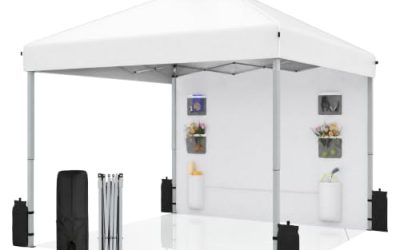
Portable canopies and clamp-on shade panels need no permanent install. They are useful for older trailers with no rail, rentals, or campers who want to stow gear compactly. Their downside is that they are less stable in wind and take longer to set up each day.
Check Compatibility With the Trailer
Most modern trailers already carry a standard awning rail, a C-shaped channel on the side wall that accepts common awning hardware. That rail makes replacement straightforward, because a new awning can slide into the same track. Trailers without a rail need brackets screwed through the siding into the wall framing, which is a more demanding job and should land on structural members rather than thin skin.
Roof height and side wall material also matter. A tall rig with a slide-out may need a longer extension arm or a bracket spacer so the awning clears the slide. Measuring the rail length, the distance from the rail to the ground, and the position of any door, window, or vent gives a reliable starting point before shopping.
Size: Length and Projection
Length should roughly match the side of the trailer where the door and outdoor living area sit, with the awning centered on the entry. A common range for towable rigs runs from about 12 feet up to the full side length of the trailer. Choosing an awning a little shorter than the rail leaves room for roof fittings and avoids overhang at the corners.
Projection, or how far the awning extends outward, is usually between 7 and 10 feet. A deeper projection shades more, but it also catches more wind and puts more stress on the arms. For most campers, a mid-depth awning covers a table and a couple of chairs without becoming unwieldy.
Fabric and Construction
The fabric is what the owner sees and feels, but the frame and hardware keep it standing. Both deserve attention.
- Vinyl fabric: Heavy, waterproof, and easy to wipe clean. It resists mildew when dried properly but can feel hot and stiff, and it can trap condensation if rolled up wet.
- Acrylic fabric: Breathable and softer, with better heat management, but less waterproof. It tends to be used on high-end models and may need a separate waterproofing treatment.
- Fade and UV resistance: Look for a fabric with UV stabilizers so colors hold and the material does not become brittle.
- Arm and roller tube material: Powder-coated or anodized aluminum resists corrosion. Thin, light tubing flexes in wind and is the first part to bend.
- Hardware: Stainless steel or well-coated fasteners last longer near moisture and road salt.
Wind and Rain Performance
Awnings are shade devices, not storm shelters. Manufacturers generally advise retracting them in strong winds, and many models include a tie-down or stabilizing straps for moderate breezes. A lock on the arms that prevents the awning from rolling out in transit is also standard on better models.
Rain brings a different problem: water pooling on the fabric. A pitch adjustment on one end lets one side sit lower so water runs off, and pooling can stretch the fabric and strain the arms. Many campers drop one arm slightly during a shower and extend it again afterward.
Features that help in changing weather include:
- A wind sensor that retracts an electric model automatically.
- Adjustable pitch brackets that let the fabric slope.
- Tie-down kits with stakes or straps anchored to the ground.
- Rafter or support arms with locking collars rather than simple friction joints.
Extras That Make Time Under the Awning Better
Once the core decision is made, add-ons can improve comfort. LED strip lighting along the roller tube gives soft evening illumination. Sun-blocking side panels and a front screen turn the space into a bug-resistant room, and a mat underneath keeps dirt out of the trailer. Some campers attach a clothesline hook or hang a small fan under the fabric. These extras are worth deciding on early, because an awning with a lighting channel or screen attachment points is easier to equip than one without.
Common Mistakes
- Measuring only the awning, not the rail. The fabric length must fit the available channel and the trailer’s roof fittings.
- Buying the biggest option by default. Longer and deeper awnings are heavier, harder to roll, and more vulnerable to gusts.
- Rolling it up wet. Stored damp, fabric can grow mildew and smell. If rain forces an early retraction, extend it later to dry fully.
- Leaving it out overnight in wind or storms. Most damage happens when campers are asleep or away.
- Skipping tie-downs. Even a light breeze can lift an awning arm. Tie-downs are cheap compared with a bent frame.
- Ignoring the installation difficulty. A heavy awning is a two-person job, and an electric one adds wiring.
Budget Tiers Without the Numbers
Entry-level awnings are manual, with lighter arms and basic vinyl fabric, and they fit weekend trips in mild weather. Mid-range models improve the arm hardware, fabric quality, and locking systems, and they are a sound match for families who camp across a season. Premium awnings add electric operation, sensors, thicker fabric, and refined arm design for owners living or traveling in the trailer for long stretches.
Buying Checklist
- Confirm the trailer has a standard rail or plan on mounting brackets to wall framing.
- Measure the usable side length and choose an awning slightly shorter than it.
- Pick manual or electric based on convenience and comfort with wiring.
- Check the fabric type and its UV and mildew resistance.
- Look for locking arms, a pitch adjustment, and tie-down options.
- Plan lighting and screen add-ons before installation.
Related guides
- Battery Powered Generator For Refrigerator
- Portable Power Station For Refrigerator
- Backpacking Stoves For Solo Hikers
Frequently Asked Questions
How long should an awning be for a travel trailer?
It should cover the side of the trailer where the door and outdoor seating sit, usually fitting between the corner fittings with a little room to spare. Many owners choose an awning close to the full side length for maximum shade, while others pick a shorter one for easier handling.
Are electric awnings worth it?
They save effort and let the awning retract fast when the weather changes, which makes them popular on larger rigs. They cost more, add wiring and motor parts, and need a manual override, so many campers find a manual model perfectly adequate.
Can an awning stay out in the wind?
Light breezes are usually fine with tie-downs, but strong gusts can bend arms or tear fabric. It is safest to roll it up when winds build, when leaving the site, and overnight if the forecast is uncertain.
How should an awning fabric be cleaned?
Use mild soap, warm water, and a soft brush, then rinse and let the fabric dry fully before rolling it up. Avoid harsh solvents or abrasive pads, which can damage coatings and shorten the fabric’s life.
More from Amazon
Programs that pair well with the guide above. Offers and eligibility are set by Amazon and may change.
Free shipping on eligible items, Prime Video and more. Eligible new members can start with a free trial.
Start a Prime free trialA Prime membership for ages 18-24 with a trial period. Eligibility is set by Amazon.
See Prime for Young AdultsAudiobooks and podcasts to listen to on the go. Eligible new members can start with a free trial.
Try Audible freeAd-free music streaming. Eligible new subscribers can start with a free trial.
Try Music Unlimited freeAs an Amazon Associate we earn from qualifying purchases.
Write Your Review
No reviews yet. Be the first to share your experience!