

Key takeaways
- Compare the best garden spades for digging, edging and transplanting, with flat, border and Dutch blades, handle types, treads and steels compared.
As an Amazon Associate we earn from qualifying purchases.
A garden spade is a cutting tool first and a digging tool second, and that distinction decides which one belongs in your shed. A spade has a flat, straight-edged blade: pushed vertically into the ground, it slices a clean border along a lawn edge, cuts straight down through turf, divides a perennial clump into sections, and slides under a root ball so a shrub comes out with its roots in one piece. A shovel is built differently — its blade is curved and usually pointed, shaped to scoop and carry loose material. A pointed shovel moves a pile of compost or gravel far faster than any spade, but it tears ragged edges and mangles root balls. Gardeners who do spade work with a shovel end up with wavy borders and shredded plants; gardeners who move loose soil with a spade end up tired. Most established gardens eventually hold both, but if your work is edging, dividing and transplanting, the spade is the one to buy well.
The five spades below cover the full range of that work: a heavy-gauge steel digging spade for everyday beds, a forged spade for clay and stony ground, a long Dutch transplanting spade for deep root balls, a compact stainless border spade for raised beds and smaller users, and an all-steel spade built for landscaping punishment. What separates them is blade steel, blade size, handle design and how the blade joins the shaft — and that joint matters more than any other detail, because the socket where blade meets handle is where spades snap. Almost every failure happens the same way: the blade is levered hard against a buried rock or thick root, and the joint, not the blade, gives way. Prying is the misuse that kills spades, and the honest limit of every tool on this page is that none of them is a pry bar.
Affiliate Disclosure: This article contains affiliate links. If you buy through a link on this page, we may earn a commission at no additional cost to you. This helps support our work. Products are selected independently, based on manufacturer specifications and published product data.
The 5 Best Garden Spades at a Glance
- Fiskars 44-Inch Pro Garden Spade — heavy-gauge steel all-rounder with a sharpened edge and aluminum D-handle
- Spear & Jackson Neverbend Professional Treaded Digging Spade — forged carbon steel for clay, rock and compacted soil
- DeWit Dutch Digging Spade — long boron steel blade for transplanting and dividing perennials
- Spear & Jackson Traditional Stainless Border Spade — compact mirror-polished head for raised beds and tight borders
- Bully Tools 13-Inch All-Steel Spade with D-Grip — 12-gauge closed-back blade on a welded all-steel frame
1. Fiskars 44-Inch Pro Garden Spade
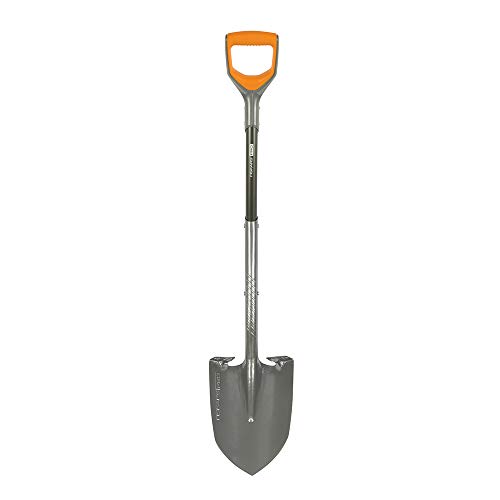
The Fiskars Pro is the spade for general bed work: planting holes, cutting edges, slicing turf and dividing plants in soil that is firm but not brutal. Its blade is flat and square with a sharpened cutting edge, formed from heavy-gauge steel, so it enters the ground as a slice rather than a wedge and leaves a straight wall behind it. Wide foot treads give your boot a stable platform, which matters more than it sounds — most of a spade’s power comes from body weight through the foot, not arm strength, and a narrow blade top punishes the sole of your boot within the hour.
The handle is an aluminum D-handle joined to the blade so the assembly resists separating under load, and the D shape gives control when levering a root ball out of a hole. At 44 inches overall it suits average-height users working at ground level. The trade-off is weight: a heavy-gauge steel head is heavier than a stainless border spade, and that weight helps it bite into firm soil but adds up over a long edging session. Fiskars backs its hand tools with a lifetime warranty — the strongest coverage on this page and a reasonable tiebreaker against a similar stamped-steel spade.
Specs
- Blade shape: Flat, square-edged digging blade with sharpened cutting edge
- Blade steel: Heavy-gauge steel
- Handle: Aluminum D-handle
- Overall length: 44 in
- Foot tread: Wide treads for boot pressure
- Weight: Not stated in the listing data reviewed
- Warranty: Lifetime warranty (manufacturer)
2. Spear & Jackson Neverbend Professional Treaded Digging Spade
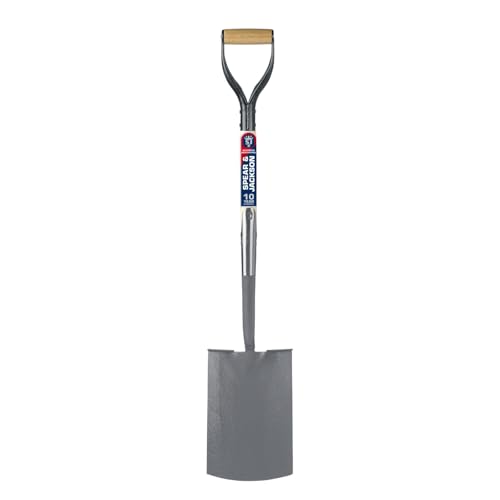
Spear & Jackson has made tools in Sheffield since 1760, and the Neverbend Professional is its answer to ground that breaks lesser spades: heavy clay, stony soil and compacted beds. The head is forged carbon steel — shaped under heat and pressure rather than stamped from sheet — producing a denser blade that resists bending when it meets a stone or a matted root. The blade’s top edge is treaded, giving your boot a grippy, protected platform for full-weight pushes.
The shaft is weatherproofed hardwood, which absorbs shock better than metal and is kinder on the hands across a long day. Carbon steel carries one obligation stainless does not: it rusts if put away dirty and wet. The care routine is simple — scrape, dry, wipe with oil now and then — and in exchange you get an edge that is easy to restore with a file and a blade that shrugs off impacts that would fold a stamped head. In soft, worked beds it is more tool than the job needs; the border spade below is the better match there.
Specs
- Blade shape: Flat digging blade with treaded top edge
- Blade steel: Forged carbon steel
- Handle: Weatherproofed hardwood shaft
- Overall length: Not stated in the listing data reviewed
- Foot tread: Treaded blade top for boot protection and leverage
- Weight: Not stated in the listing data reviewed
- Warranty: Not stated in the listing data reviewed
3. DeWit Dutch Digging Spade

DeWit has forged tools in Holland since 1898, and the Dutch digging spade is a specialist shape other makers rarely copy: a long, slightly curved blade that runs deep, made for sliding down beside a root ball and undercutting it cleanly. For transplanting shrubs, lifting perennials for division, and digging narrow, deep holes in a crowded border where a wide blade would tear up neighboring roots, this geometry is simply better than a standard spade. The blade is heat-treated boron steel, hardened for edge retention, and it slices rather than wedges its way down.
The handle is ash wood with a T-grip, the traditional Dutch arrangement, which lets you push down with the palm and steer the blade precisely at depth. Two honest cautions come with the design. First, the long blade is a transplanting instrument, not a bulk soil mover — turning a whole new bed with it is slow work. Second, the leverage that undercuts a root ball so neatly will bend or snap the tool if you pry rocks with it; work around obstructions and cut roots with the edge instead. Gardeners who move plants every season will find this the most-used spade they own; gardeners who mostly edge lawns should look at the Fiskars or the border spade instead.
Specs
- Blade shape: Long, slightly curved Dutch transplanting blade
- Blade steel: Heat-treated boron steel
- Handle: Ash wood T-handle
- Overall length: Not stated in the listing data reviewed
- Foot tread: Not stated in the listing data reviewed
- Weight: Not stated in the listing data reviewed
- Warranty: Not stated in the listing data reviewed
4. Spear & Jackson Traditional Stainless Border Spade

A border spade is a digging spade scaled down — smaller head, lighter build — for the work a full-size spade does badly: digging between established plants, working inside raised beds, and edging borders where a big blade moves more soil than the job calls for. The Traditional border spade pairs that compact head with mirror-polished stainless steel, and the polish is functional, not cosmetic: wet clay and sticky soil slide off a polished stainless face instead of building up on the blade, and the steel does not rust when the tool is hung up damp.
The handle is ash in the traditional wishbone style, and the tool is light enough to use one-handed at times in loose bed soil. This is also the right pick for smaller users, for gardeners with wrist or shoulder limits, and for anyone whose digging happens in raised beds rather than open ground. Its limit is the mirror image of its strength: the small head moves little soil per stroke, so it is the wrong tool for a new bed, a trench or a tree hole in unbroken ground. Border spades suit beds and raised planters, not full-depth digging — pair this with a full-size spade if your garden asks for both.
Specs
- Blade shape: Compact flat border blade
- Blade steel: Mirror-polished stainless steel
- Handle: Ash wishbone handle
- Overall length: Not stated in the listing data reviewed
- Foot tread: Not stated in the listing data reviewed
- Weight: Not stated in the listing data reviewed
- Warranty: Not stated in the listing data reviewed
5. Bully Tools 13-Inch All-Steel Spade with D-Grip

Bully Tools builds its spades in Ohio out of American steel, and this model removes the weakest part of a traditional spade entirely: there is no wooden shaft to rot or snap, because blade, shaft and D-grip are one welded all-steel construction. The blade is 13 inches of 12-gauge steel with a closed back, which keeps soil from packing into the socket area and adds stiffness along the spine. This is the spade for trenching, landscaping, edging along driveways and digging in rubble-filled ground where you expect to hit things.
The cost of that construction is weight and shock. An all-steel tool is the heaviest pattern here, and steel transmits every impact into your hands and elbows where a hardwood shaft would absorb part of it. For a landscaper or a gardener breaking rough ground a few times a year, durability wins that trade. For daily bed work it is more tool than the job wants, and the Fiskars Pro above is easier to live with. Even in all-steel form, the prying warning applies: levering boulders with any spade is how handles bend and edges chip.
Specs
- Blade shape: Flat 13 in spade blade, closed back
- Blade steel: 12-gauge steel
- Handle: Welded all-steel D-grip
- Overall length: Not stated in the listing data reviewed
- Foot tread: Not stated in the listing data reviewed
- Weight: Not stated in the listing data reviewed
- Warranty: Not stated in the listing data reviewed
How to Choose the Right Garden Spade
Start with the job, not the brand. Edging, dividing and transplanting in worked beds is border-spade or standard-spade work. Breaking new ground in clay or stony soil calls for a forged head. Moving plants with big root balls calls for the long Dutch blade. One spade covers two of those jobs well; no spade covers all three.
Read the blade steel. Forged carbon steel is the toughest and easiest to sharpen, and it rusts without basic care. Stainless steel resists rust and sheds sticky clay, suiting gardeners who would rather not oil tools. Boron steel is hardened for edge retention in a slicing blade. Stamped heavy-gauge steel, like the Fiskars, sits between: strong, simpler in build, and dependent on the quality of its joint.
Inspect the joint. The socket or strap where blade meets shaft is where spades fail. A long socket, a strapped connection or an all-steel weld spread the load; a short tang pushed into a handle loosens first. Whatever you buy, keep the blade out of pry-bar duty against rocks — loosen with a fork or mattock, then cut with the spade.
Match the size to the user. A spade’s handle should let you work standing upright, pushing with body weight on the tread. Smaller users and raised-bed gardeners get more control from a border spade; taller users doing open-ground work get more from a full-size digging spade. An oversized tool does not speed the work up — it makes loads heavier and edges sloppier.
Keeping a Spade Sharp and Sound
A dull spade is the main reason gardeners think their soil is harder than it is. A few passes with a mill file along the bevel, a few times a season, restores the slice; sharpening is ordinary maintenance, not a specialist job. After each use, knock the soil off, dry the blade, and give carbon steel a wipe of oil before storage. Hang the tool indoors; a spade left in a damp corner loses its edge and handle finish in one winter. Check the socket joint each spring — any movement between blade and shaft is the early warning of failure.
The Bottom Line
For most gardens, the Fiskars 44-Inch Pro covers the widest ground: a sharp, flat, heavy-gauge blade, wide treads and a lifetime warranty. Clay and stony soil justify the forged Neverbend; frequent transplanting justifies the DeWit; raised beds and smaller users justify the stainless border spade; rough, heavy work justifies the all-steel Bully Tools. Choose by the digging you actually do, keep the edge filed and the joint out of prying duty, and a good spade will outlast several gardens’ worth of handles around it.
More from Amazon
Programs that pair well with the guide above. Offers and eligibility are set by Amazon and may change.
Free shipping on eligible items, Prime Video and more. Eligible new members can start with a free trial.
Start a Prime free trialA Prime membership for ages 18-24 with a trial period. Eligibility is set by Amazon.
See Prime for Young AdultsAudiobooks and podcasts to listen to on the go. Eligible new members can start with a free trial.
Try Audible freeAd-free music streaming. Eligible new subscribers can start with a free trial.
Try Music Unlimited freeAs an Amazon Associate we earn from qualifying purchases.










Write Your Review
No reviews yet. Be the first to share your experience!