

Key takeaways
- A safari changes the rules for choosing binoculars. Animals stand a hundred yards off in tall grass, dawn drives start before the light is good.
A safari changes the rules for choosing binoculars. Animals stand a hundred yards off in tall grass, dawn drives start before the light is good, and the vehicle itself shakes whenever someone shifts a seat. Binoculars that look fine on a spec sheet can feel useless when a lioness is half hidden in shade and the driver has only a minute at each stop. The real decision is between a bright, full-size pair that gathers light well at sunrise and a pocket-size pair that is easy to carry on a plane, a game drive, and a hike between camps.
This guide is for travelers planning a first or second safari who want one dependable pair rather than a drawer full of optics. It focuses on magnification, objective lens size, weather resistance, and handling, using only what the listed titles state. Several items that surfaced for this search were bulk packs of toy binoculars for party favors or classroom use. Those are left out here, since a trip of this kind needs real optics. The review section covers five single pairs that fit the job. Specs are read from the product titles, so confirm weight, field of view, and eye relief on each listing in 2026 before buying.
Quick Picks
Our top picks



As an Amazon Associate we earn from qualifying purchases at no extra cost to you.
| Product | Best for | Key spec from the title |
|---|---|---|
| Hontry 8×42 | Steady views from a vehicle | 8×42, IPX6 waterproof protection |
| Steiner Safari UltraSharp 10×26 | Travelers packing light | 10×26, compact, waterproof |
| Hontry 10×25 | Budget carry-on pair for adults and kids | 10×25, compact |
| Steiner Safari UltraSharp 10×42 | Dawn and dusk drives | 10×42, compact lightweight |
| M MIXIO 12×42 | Distant wildlife on open plains | 12×42, BAK4 prism, FMC lens, waterproof |
How to Choose
Magnification versus steadiness
Two numbers define every pair: the first is magnification, the second is the objective lens diameter in millimeters. An 8x pair makes an animal appear eight times closer. Higher power sounds better, but hand shake grows with it, and a bouncing safari truck makes that worse. Many buyers find 8x or 10x the practical range for handheld use. A 12x pair rewards a steady rest, such as a bean bag on the window frame or a vehicle roll bar, and can look jittery without one. A simple habit helps at home: hold a pair at arm’s length and read distant signage for thirty seconds. If the image swims, a lower power will serve better on a rutted track, where elbows braced against a door frame or roof hatch do much of the stabilizing.
Lens size and low-light performance
Divide the objective size by the magnification to get the exit pupil in millimeters. An 8×42 pair gives about 5.3, a 10×42 about 4.2, and a 12×42 about 3.5. A 10×25 or 10×26 pair lands near 2.5, which is fine at midday but dim when predators are most active near sunrise and sunset. If early drives matter to the trip, lean toward a 42 millimeter objective. If daytime walking safaris and airline weight limits matter more, a 25 or 26 millimeter body is far easier to live with. Also think about the field of view listed on each page: a wider view makes it simpler to locate an animal that has just moved, which matters when a guide says leopard in the tree at two o’clock and the cat is already shifting.
Weather and dust resistance
Safari means dust, humidity, and the odd downpour. Look for a waterproof claim stated in the title, such as an IPX6 rating, rather than a vague phrase like water resistant. Rubber armor helps with knocks inside a vehicle. Whatever the pair, carry a lens cloth and a soft brush, and avoid wiping dust with a shirt sleeve because grit scratches coatings. Fully multi-coated lenses, abbreviated FMC in some titles, are meant to improve light transmission, and BAK4 prisms are a common choice for a clean, round exit pupil.
Where budget pairs cut corners
Entry-level binoculars tend to economize on eye relief, focus smoothness, and coatings, so edges can look soft and glare can show up at low sun angles. Plastic focus wheels may also feel gritty after a few dusty days, and strap lugs can be flimsy, so a secure neck strap or harness is worth considering for any pair. Eyeglass wearers should look for twist-up eyecups and check eye relief on the listing. Ignore dramatic claims about being able to see the moon in detail on a travel pair. Ignore bulk packs entirely for real wildlife viewing. Spend on lens quality and ruggedness first, then on accessories like straps and cases.
The 5 Best Options
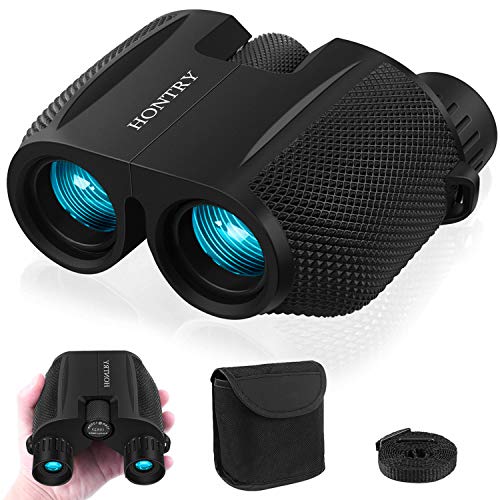
Hontry 8×42 Binoculars
This 8×42 pair is the most vehicle-friendly choice on the list. The lower magnification keeps the image calmer when the truck idles, and the 42 millimeter objective gives the widest exit pupil of the group on paper. The title states IPX6 waterproof protection and lists safari, wildlife viewing, and road trips among its uses.
- Strength: the 8x power pairs naturally with a bouncing platform, so animals are easier to find and hold.
- Strength: IPX6 waterproof protection is stated, a real comfort during rainy-season trips.
- Trade-off: a full-size 42 millimeter body takes more room in a day pack than the compact models.
Skip it if every ounce counts or if reach matters more than a stable field of view. Travelers who plan to stand and glass distant ridges from a fixed lookout may find the power a little modest, and those who want a rugged name-brand finish may prefer the Steiner listings below.
Steiner Safari UltraSharp 10×26
Steiner builds this model specifically around travel and nature viewing. The title calls it compact, robust, and waterproof, and it names travel, hiking, concerts, sports, and nature observation as use cases. The 10x power brings animals in closer than an 8x pair while still fitting a jacket pocket.
- Strength: the compact format slips into a day bag and suits long walks between viewpoints.
- Strength: waterproof and robust construction are both named in the title.
- Trade-off: a 26 millimeter objective is smaller, so dim light at dawn and dusk will look darker than through a 42 millimeter pair.
Skip it if most of the drives happen in poor light, or if a premium-tier brand cost is not justified for a single trip.
Hontry 10×25 Compact Binoculars
This is the entry-level compact option, and the title says it suits adults and kids alike, along with bird watching, cruise ships, theater, and road trips. That makes it easy to share on a family safari, where more than one person wants a look at the same giraffe.
- Strength: 10×25 compact optics are small enough to hand around the vehicle without a fuss.
- Strength: multi-purpose design means the pair keeps working after the trip, at concerts and games.
- Trade-off: the small objective limits low-light brightness, and the title makes no waterproof claim, so keep it dry.
Skip it if the itinerary includes rain-season camps or lots of dawn drives. It is better treated as a shareable spare, or a light pair for casual use, than as the single primary optic for a once-in-a-lifetime trip.
Steiner Safari UltraSharp 10×42
The larger sibling of the 10×26 keeps the Safari name and the compact, lightweight positioning, but adds the 42 millimeter objective. On paper, that gives a brighter image in shade and at twilight, with extra reach over an 8x pair.
- Strength: 10×42 is a popular all-rounder spec for wildlife viewing across open and wooded terrain.
- Strength: the title describes it as compact and lightweight performance outdoor optics from a maker focused on this kind of trip.
- Trade-off: 10x shows more hand shake than 8x, so bracing against a window frame helps.
Skip it if budget is tight, or if the smaller 26 millimeter body better suits airline and hiking limits. Buyers who prefer a calmer handheld image should also compare it with the 8×42 above before deciding.
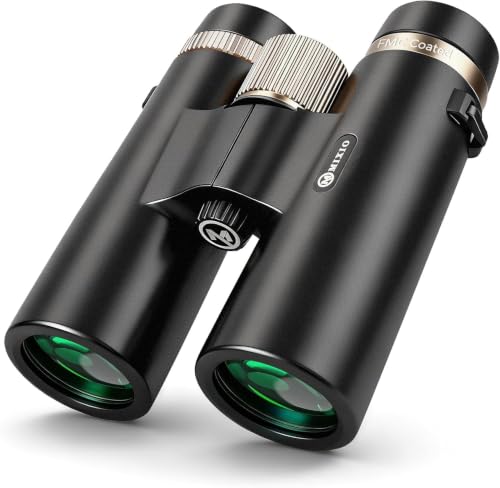
M MIXIO 12×42 Binoculars
This pair leans toward reach. The 12x power and 42 millimeter objective, combined with BAK4 prism and FMC lens coatings named in the title, aim at spotting distant animals across open savanna. A waterproof claim and a large field of view are also listed.
- Strength: 12x magnification pulls far-off herds and raptors noticeably closer.
- Strength: BAK4 prisms, FMC coatings, and waterproof construction are all stated.
- Trade-off: the higher power magnifies every tremor, so handheld use inside a moving vehicle is tiring.
Skip it if the trip is mostly forested terrain or if steady handheld views are the priority. Wearers of eyeglasses should confirm eye relief on the listing, since a long-power pair with short relief can show a cut-off image.
Which One Fits Your Situation
Long game drives in an open vehicle
The Hontry 8×42 is the calmest handheld choice, and its waterproof rating helps when afternoon storms roll in. The wide objective also helps when guides stop in shade, and the pair is easy to pass to a neighbor in the next seat without needing a refocus every time.
Mixed itinerary with hiking and flights
The Steiner Safari UltraSharp 10×26 gives the best balance of reach and portability. It fits a small day bag and survives dust and rain, which suits trips that combine bush flights with walking at camp, where baggage is limited and every item has to earn its space.
Family trip with a child who wants a turn
The Hontry 10×25 is described as suitable for adults and kids. It makes sharing simple and keeps the cost of dropping a pair lower. Teach children to keep the strap around the neck and to avoid pointing any binoculars toward the sun, which is general optics care for every age.
Photographers scouting subjects before raising the camera
The M MIXIO 12×42 offers the most reach for scanning plains, especially from a stable surface. For a brighter all-purpose choice, the Steiner 10×42 is the safer pick.
Common Mistakes
- Choosing the highest magnification available, then struggling to hold the image steady from a moving truck.
- Buying a tiny 25 millimeter pair and expecting bright views at sunrise.
- Confusing bulk toy binocular packs with real optics because the word safari appears in the title.
- Skipping a waterproof claim before a rainy-season trip.
- Forgetting to adjust the diopter and eyecups, which makes any pair look soft.
Related guides
- Battery Powered Generator For Refrigerator
- Portable Power Station For Refrigerator
- Portable Power Station For Camping
Frequently Asked Questions
Is 8×42 or 10×42 better for safari?
Both work well. The 8×42 is steadier and shows a wider field of view, while the 10×42 brings animals closer. Buyers who mostly ride in vehicles often prefer 8x.
Do binoculars need to be waterproof for a safari?
It is wise. Rain, dust, and humidity are common, so look for a waterproof statement in the title and still keep the pair in a case between stops.
Can one pair cover birds and big game?
Yes. A 10×42 or 8×42 handles both, since birds need reach and big game needs a bright, wide view. Check close-focus distance on the listing for butterflies and nearby birds.
Are compact binoculars good enough?
For daytime viewing and travel they are fine. For dawn and dusk drives, a 42 millimeter objective gathers more light and usually looks brighter.
More from Amazon
Programs that pair well with the guide above. Offers and eligibility are set by Amazon and may change.
Free shipping on eligible items, Prime Video and more. Eligible new members can start with a free trial.
Start a Prime free trialA Prime membership for ages 18-24 with a trial period. Eligibility is set by Amazon.
See Prime for Young AdultsAudiobooks and podcasts to listen to on the go. Eligible new members can start with a free trial.
Try Audible freeAd-free music streaming. Eligible new subscribers can start with a free trial.
Try Music Unlimited freeAs an Amazon Associate we earn from qualifying purchases.
Write Your Review
No reviews yet. Be the first to share your experience!