

Key takeaways
- Every campfire starts with the same small problem: the wood at the site is rarely the right size.
Every campfire starts with the same small problem: the wood at the site is rarely the right size. Split rounds sold at a campground are usually too thick to catch quickly, and branches gathered nearby may need trimming before they fit the ring. A camping axe solves that chore, but the category runs from a ten inch hatchet that rides on a belt to a twenty-six inch tool that behaves almost like a small splitting maul. Picking the wrong length means either wasting effort on kindling-size work or struggling to split anything thicker than a wrist.
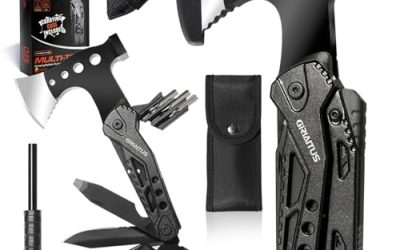
This guide is for car campers, backpackers, and cabin visitors who want a dependable edge for firewood, plus a few extras like a hammer poll or a sheath. Each option is judged only from facts in its listed title, such as length, handle material, steel, and sheath inclusion, so confirm weight and head size on the listing in 2026 before buying. A multi-piece hatchet, machete, and knife set and a tactical tomahawk were left out of the reviews, since they lean toward gadget territory rather than firewood work. The eight tools below cover small kindling hatchets through full-size splitters.
Quick Picks
Our top picks




As an Amazon Associate we earn from qualifying purchases at no extra cost to you.
| Product | Best for | Key spec from the title |
|---|---|---|
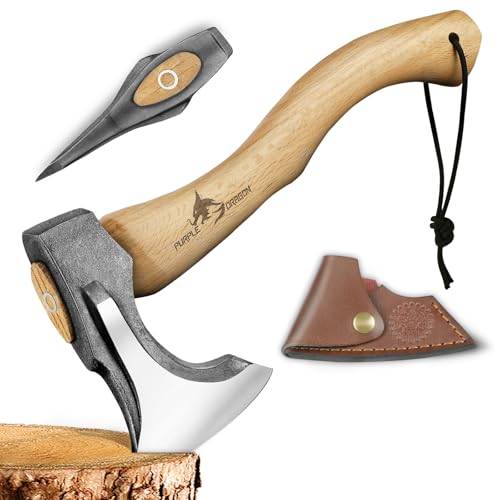
| Purple Dragon 14.7 Inch Hatchet | Traditional look and kindling | Hand forged blade, wooden handle, leather sheath |
| Fiskars X7 Hatchet | All-round camp chopping | 14 inch, forged steel head, low-friction blade |
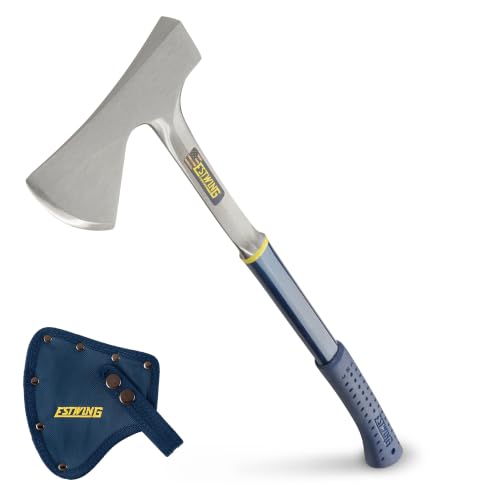
| ESTWING Sportsman’s Axe E24A | Durable one-piece build | 14 inch, leather grip, forged in one piece, made in USA |
| ESTWING Camper’s Axe E45A | Splitting larger logs | 26 inch, all steel, shock reduction grip |
| DESHIL 10 Inch Hatchet | Light packing and kindling | 10 inch, fiberglass handle, sheath |
| DESHIL 15 Inch Hatchet | Mid-size chopping | 15 inch, shock-reducing fiberglass handle |
| Mossy Oak 12 Inch Hatchet | Small multi-use camp tool | 12 inch, hex wrench slots, sheath |
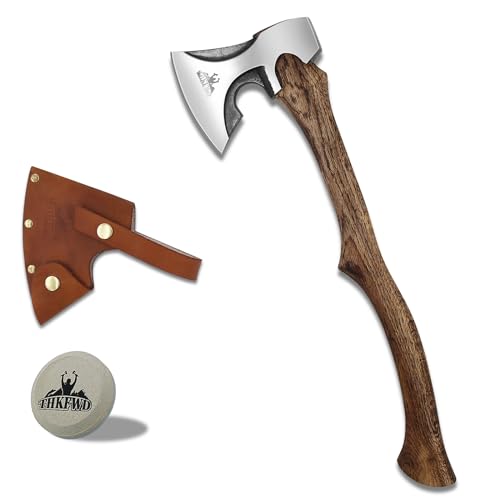
| 22.3 Inch Splitting Axe | Heavier splitting on a budget | 1065 high carbon steel head, sharpening stone, sheath |
How to Choose
Match handle length to the wood you split
Handle length controls leverage and risk. Hatchets in the ten to fifteen inch range handle kindling, small branches, and tent stakes, and they fit in a pack. Tools around twenty-two to twenty-six inches swing farther and split thicker rounds with less effort, but they take up space in a car and demand more clearance when swinging. A good rule is to pick the shortest tool that still handles the thickest piece you plan to split, and never to use a short hatchet on large logs, where a missed strike travels close to the legs.
Handle material and shock
Wood handles feel traditional and are easy to replace, but they can crack if left wet. Fiberglass handles, as named on the DESHIL and Fiskars-style designs, are meant to resist moisture and soften shock. All-steel or forged one-piece tools, such as the ESTWING models, remove the weak joint between head and handle, and a rubber or leather grip is added for comfort. Whatever the material, look for a textured, anti-slip grip, since sweaty or wet hands are common in camp.
Steel, edge, and sheath
Titles mention forged steel heads, hand forged blades, and 1065 high carbon steel. Forged heads are generally associated with durability, and high carbon steel can take a keen edge but needs wiping dry to avoid rust. A sheath is not optional gear: it protects the edge in a pack and protects the user when the tool is set down. Confirm the sheath is included, and consider a small sharpening stone, since a dull axe glances rather than bites. Store the tool with the sheath on, edge protected, and never leave it stuck in a stump overnight where someone could walk into it in the dark.
Where budget models cut corners and what to ignore
Low-cost tools tend to skimp on head-to-handle fit, edge heat treatment, and sheath stitching, so check that the head sits firmly and the edge arrives sharp. A loose head is a safety issue, and any tool that rattles or wobbles should go back rather than into the woodpile. Ignore tactical styling, survival-kit extras, and long feature lists such as built-in screwdrivers; they rarely help with firewood. Use eye protection and gloves, split on a stable chopping block rather than the ground, keep bystanders well back, and follow campground fire rules, which can limit cutting live wood.
The 8 Best Options
Purple Dragon 14.7 Inch Camping Hatchet
This is a hand-forged hatchet with a wooden handle and a leather sheath, aimed at splitting and chopping outdoors. At nearly fifteen inches, it sits in the middle of the hatchet range.
- Strength: a hand forged blade and wooden handle give it a classic camp look and feel.
- Strength: a leather sheath is included for safe carry.
- Trade-off: wood handles need care in wet weather and the title gives no weight figure.
It suits campers who like a traditional tool and mainly split kindling. Skip it if a low-maintenance fiberglass handle is the priority, or if heavy log splitting is the goal.
Fiskars X7 Hatchet
The X7 is a fourteen inch hatchet for campfires and chopping kindling, with an insert-molded forged steel head and a low-friction blade named in the title. Buyers often choose it for steady, no-fuss camp chores.
- Strength: the forged steel head is insert-molded into the handle for a secure connection.
- Strength: the low-friction blade is meant to help it release from wood.
- Trade-off: it is a small hatchet, so splitting bigger rounds takes many swings.
It fits weekend campers who want a lightweight, simple tool. Skip it if a leather or wooden look matters, or if big logs are common.
ESTWING Sportsman’s Axe E24A
Forged in one piece with a genuine leather grip, this fourteen inch hatchet is made in the USA according to the title, and it ships with a heavy-duty sheath. The single piece of steel removes the handle-joint failure point.
- Strength: one-piece forged construction is hard to break under normal use.
- Strength: a leather grip and a heavy-duty sheath come with it.
- Trade-off: an all-steel hatchet can feel heavier and transmit more shock than fiberglass.
It suits buyers who want one tool for years of camp use. Skip it if a very light pack weight matters most.
ESTWING Camper’s Axe E45A
At twenty-six inches with all-steel construction and a shock reduction grip, this is the largest tool in the group. The long handle gives real leverage for splitting.
- Strength: the length helps when splitting thicker rounds.
- Strength: the shock reduction grip is meant to ease impact on the hands.
- Trade-off: the title mentions no sheath, so a cover should be confirmed or bought separately, and the size is awkward for backpacking.
It suits car campers who burn lots of wood. Skip it for ultralight trips or tight storage.
DESHIL 10 Inch Mini Camping Axe
A ten inch hatchet with a fiberglass shock-reduction handle, an anti-slip grip, and a sheath, built for kindling and small branches.
- Strength: the compact size packs easily and suits belt or pack carry.
- Strength: the fiberglass handle with an anti-slip grip is described in the title.
- Trade-off: ten inches limits power; anything thicker than small branches is a poor job for it.
It suits backpackers and people who mostly make feather sticks and kindling. Skip it if you will split full-size firewood.
DESHIL 15 Inch Chopping Hatchet
The larger DESHIL runs fifteen inches and keeps the shock-reducing fiberglass handle. It is aimed at splitting and kindling, with survival and hiking mentioned as additional uses.
- Strength: slightly longer reach than most hatchets for a bit more swing power.
- Strength: a fiberglass handle resists wet conditions.
- Trade-off: the title does not state a sheath, so confirm it on the listing.
It suits campers wanting a step up from a kindling hatchet. Skip it if only the smallest tasks are planned.
Mossy Oak 12 Inch Camping Axe
This twelve inch hatchet adds hex wrench slots, a non-slip dual-color handle, and a sheath, marketed as an outdoor multitool and survival hatchet.
- Strength: hex wrench slots add a small utility feature.
- Strength: a non-slip handle and a sheath come with it.
- Trade-off: the multitool extras may matter less than blade quality, which the title does not detail.
It suits casual campers who value extras. Skip it if firewood performance is the only criterion.
22.3 Inch Splitting Axe with Leather Sheath
A twenty-two inch camp axe with an ergonomic wood handle, a 1065 high carbon steel head, a leather sheath, and a sharpening stone included.
- Strength: the longer handle suits splitting rounds beyond kindling size.
- Strength: a sharpening stone and sheath are bundled.
- Trade-off: high carbon steel needs drying and light oiling to avoid rust.
It suits campers who split for a full evening fire. Skip it if pack space is the main limit.
Which One Fits Your Situation
Backpacking with minimal gear
The DESHIL 10 Inch is the lightest-looking choice on paper and handles kindling and small branches. Pair it with a folding saw if bigger limbs need cutting, since a ten inch tool is a kindling specialist rather than a splitter.
Weekend car camping with a nightly fire
The Fiskars X7 or the ESTWING Sportsman’s Axe covers most tasks, and the Sportsman’s one-piece forging suits rough handling. Both are long enough to split medium pieces after the wood has been cut to length, and short enough to stay controlled in a crowded site.
Winter or group trips needing heavy splitting
The ESTWING Camper’s Axe, or the 22.3 inch splitting axe with the sharpening stone, offers the reach for bigger rounds. Cold-weather campers who feed a fire for hours, or groups cooking over open flame, will appreciate fewer swings per log, provided there is room in the vehicle and a stable block to work on.
Buyers who want a classic look
The Purple Dragon hatchet gives a hand-forged blade, a wooden handle, and a leather sheath. It also makes a presentable gift for a camper who enjoys older-style gear, though it should be kept dry and lightly oiled to keep the handle in good shape.
Common Mistakes
- Using a ten inch hatchet on thick logs and risking a glancing strike.
- Splitting wood on bare ground instead of a chopping block.
- Storing carbon steel damp, which leads to rust.
- Skipping gloves and eye protection.
- Buying a multi-tool hatchet for extra features instead of blade quality.
Related guides
- Battery Powered Generator For Refrigerator
- Portable Power Station For Refrigerator
- Portable Power Station For Camping
Frequently Asked Questions
Hatchet or axe for camping?
A hatchet in the twelve to fifteen inch range handles kindling and light chopping. A longer axe splits larger rounds more easily but takes more room.
Is a fiberglass handle better than wood?
Fiberglass resists moisture and softens shock, while wood offers a traditional feel and can be replaced. The choice is mostly about care and preference.
Do camping axes need sharpening?
Yes. A dull edge glances off wood, so a stone or file helps. Wipe the head dry after use, and add a light coat of oil to carbon steel before long storage.
Can campers cut live trees?
Often no. Many parks and campgrounds restrict cutting living wood, so check local rules and use dead, downed wood only. Also confirm whether the site bans bringing in outside firewood, because some regions restrict moving wood between areas.
More from Amazon
Programs that pair well with the guide above. Offers and eligibility are set by Amazon and may change.
Free shipping on eligible items, Prime Video and more. Eligible new members can start with a free trial.
Start a Prime free trialA Prime membership for ages 18-24 with a trial period. Eligibility is set by Amazon.
See Prime for Young AdultsAudiobooks and podcasts to listen to on the go. Eligible new members can start with a free trial.
Try Audible freeAd-free music streaming. Eligible new subscribers can start with a free trial.
Try Music Unlimited freeAs an Amazon Associate we earn from qualifying purchases.


Write Your Review
No reviews yet. Be the first to share your experience!