

Key takeaways
- Water is the heaviest thing most backpackers carry, which is why a filter changes how a route is planned.
Water is the heaviest thing most backpackers carry, which is why a filter changes how a route is planned. Instead of hauling several liters up a ridge, a hiker can carry one bottle and refill at streams along the way. The catch is that filter styles feel very different on the trail: a straw means kneeling at the water’s edge, a pump means arm work, a squeeze system means filling bags, and a bottle-style press means pushing through a cup of water. The best choice depends on group size, route and how much patience a hiker has at the end of a long day.
This guide looks at six filters for 2026 trips, based only on what each title says, including flow rate, weight where stated, micron size and certification wording. Treatment performance depends on the source and on correct use, and no listing text replaces local advice. Check the certifications on the listing to see which standards the maker cites, research the water source and consider a home test kit, and follow the manufacturer’s instructions for cleaning and replacement. Anyone with a medical or immune concern should talk to a doctor before relying on any backcountry water treatment.
Quick Picks
Our top picks


As an Amazon Associate we earn from qualifying purchases at no extra cost to you.
| Product | Best for | Key spec from the title |
|---|---|---|
| LifeStraw Personal | Minimalists and emergency kits | Personal filter for hiking, travel and emergency |
| GRAYL GeoPress 24 oz | Hikers who want a bottle-style press | 24 oz, listed as purifier and filter, 8-second use |
| MSR MiniWorks EX | Groups and long trips with a pump | Backpacking and camping pump filter |
| Katadyn Hiker Pro | Pump users who want a light unit | 1 liter per minute, 11.2 oz, hand pump |
| Membrane Solutions Straw S1 | Buyers who want a multipack of straws | NSF/ANSI 42 372 401 certified wording, 0.1 micron, 4 pack |
| Platypus Quickdraw | Ultralight squeeze-style filtering | 1 liter, ultralight, ConnectCap and DrinkCap |
How to Choose
Match the filter style to the trip
Straws are the lightest and simplest, but they only serve one drinker at a time and require getting down to the water. Pump filters, like the MSR and Katadyn, move water into bottles and suit groups or long trips with several liters of daily use. Squeeze-style filters pair a filter with a bag and are popular with ultralight hikers. Bottle presses combine storage and treatment in one container. Think about how many people need water at the same time and how long the walk between sources runs. A group of four sharing a straw each means four people kneeling at the stream, while one pump can fill every bottle in a few minutes. Solo hikers who drink as they go often prefer the straw for its simplicity.
Micron size, flow and certifications
A micron figure, such as 0.1 micron on two titles here, describes the filter’s pore size, and a smaller number is not the same as a certification. The Membrane Solutions title cites NSF/ANSI 42, 372 and 401, which are standards for specific categories of performance; the listing should explain what each one covers. Flow rate matters on a long day because slow flow leads to frustration, and a stated figure like 1 liter per minute on the Katadyn title is a useful comparison point. Treat any manufacturer promise as a starting point and read the instructions. Cloudy or silty water can clog a filter quickly, so letting sediment settle in a bottle, or filtering through a bandana first, can extend the life of the cartridge on trips where clear streams are not guaranteed.
Weight, durability and cleaning
Straws are very light but often have a fixed lifespan stated in gallons. Pump filters weigh more and need cleaning, which can be done in the field with a brush or backflush as the manual directs. Freezing temperatures can damage some filters if water remains inside, so keep the filter in a sleeping bag or an inside pocket on cold nights. Always check the listing for cartridge life, replacement parts and storage guidance. Many hikers also carry a small backup, such as chemical treatment tablets used according to their label, in case a filter cracks or clogs far from the trailhead.
Where budget filters cut corners
Low-cost filters may use thinner housings, vague documentation or short stated lifespans, and multi-packs can make the cost per unit look attractive while hiding limits on lifespan. Look for clear flow rates, a stated lifespan, a listing that explains the standards it cites and replacement parts. If a filter lacks clear guidance on cleaning, its real-world value drops quickly. Reading how a filter is cleaned and what happens at the end of its stated life tells more about the true cost of ownership than the cost of the first unit.
The 6 Best Options
LifeStraw Personal Water Filter
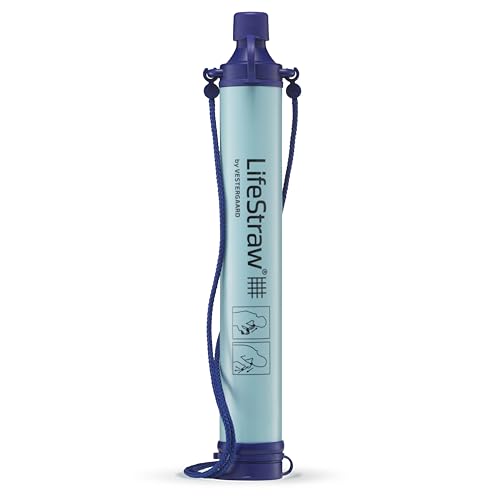
LifeStraw Personal is a straw-style personal filter promoted for hiking, travel and emergency preparedness. It fits solo hikers and emergency kits where the simplest possible tool is the goal.
- Straw format needs no pumping or assembly.
- Lightweight and easy to stash in a pack or glovebox.
- Trade-off: it serves one drinker at a time and demands a trip to the water’s edge.
Skip it if the group needs water at camp for cooking, or if filtered water must be carried in bottles. Read the listing for lifespan and follow the instructions for storage and cleaning. Some hikers carry it alongside a lightweight bottle so the straw is not the only way to carry water between sources.
GRAYL GeoPress 24 oz
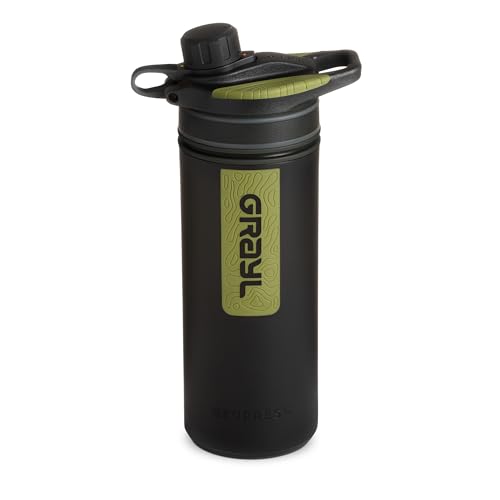
The GeoPress is a 24-ounce bottle that the title calls a purifier and filter, with a press-through use that the listing says takes about eight seconds. It suits hikers who value a single container that both stores and treats water.
- One-container design reduces pieces to carry.
- Press-through use is simple and quick, as stated.
- Trade-off: the title gives no weight, and one bottle serves a single person at a time.
Skip it if several liters at once are required for a group. Check the listing for what the unit is certified for, and review replacement cartridge guidance. Because the unit doubles as a bottle, it also needs regular cleaning of the outer container to keep it pleasant to drink from.
MSR MiniWorks EX
The MiniWorks EX is a pump-style backpacking and camping filter from a well-known outdoor brand. It is suited to groups and longer trips where several people need water at once.
- Pump format moves water into bottles for multiple people.
- Established brand with a long history in backpacking gear.
- Trade-off: heavier and bulkier than straws, and pump handles take effort.
Skip it if every ounce counts or if cleaning in the field is unappealing. Review the listing for filter media details and maintenance steps. Buyers should also practice the pumping motion at home so the first time is not at dusk at a muddy stream.
Katadyn Hiker Pro
The Hiker Pro is a transparent hand-pump filter with a stated flow of 1 liter per minute and a weight of 11.2 ounces. It is for hikers who want a compact pump and are comfortable with a bit of arm work at each stop.
- Flow rate and weight are both stated in the title.
- Transparent body makes it easier to see what is happening at the intake.
- Trade-off: pumping takes time and effort compared with a straw.
Skip it if a squeeze or straw system is preferred for speed. Follow the manual for cleaning and for protecting the filter from freezing. Since the weight is in the title, it is easy to compare against other pumps when building a gear list.
Membrane Solutions Personal Water Filter Straw S1
This four-pack of straw filters cites NSF/ANSI 42, 372 and 401, a 1320-gallon capacity, a 0.1 micron rating and a fit for 28 mm bottles. It suits families, emergency kits and groups who want spares.
- Four filters mean extras for family hikes or kits.
- Certification wording and a stated capacity are in the title.
- Trade-off: straws are single-user tools, and the certification standards need to be read on the listing.
Skip it if a pump or squeeze system is needed for camp cooking. Check what each standard actually covers before assuming it matches a specific concern. Hand the spares to different members of a family so that each person has their own straw and cross-use is avoided.
Platypus Quickdraw Ultralight 1 Liter
The Quickdraw is an ultralight squeeze-style filter system with a 1-liter capacity, a ConnectCap and a DrinkCap. It is for weight-conscious hikers who want to filter into a bag and drink or pour from it.
- Ultralight positioning and 1-liter size are stated.
- Two caps help with filling and drinking from the bag.
- Trade-off: squeezing takes hand strength, and the title says little about lifespan.
Skip it if the hike has long dry stretches where large volumes are needed at once. Review the listing for flow and cleaning instructions. Squeeze-style systems are easiest to fill at a stream with a little depth, so a shallow trickle may call for a cup to scoop water first.
Which One Fits Your Situation
A solo ultralight route
Platypus Quickdraw Ultralight 1 Liter gives a squeeze system, while LifeStraw Personal is the simpler option for those who accept the kneeling-at-the-stream style.
A group of four with camp cooking
MSR MiniWorks EX or Katadyn Hiker Pro handle bigger volume. Pick the MiniWorks for brand pedigree and the Hiker Pro for a stated weight and flow.
Fast single-bottle use on the trail
GRAYL GeoPress 24 oz offers a press-through bottle. Check the listing for certifications and cartridge replacement plans.
Emergency kits and family trips
Membrane Solutions Straw S1 four-pack gives spares at a mid-range outlay. Confirm what the standards cited actually cover, and keep a note of where the spare filters are stored so they are not lost between seasons.
Common Mistakes
- Assuming any filter handles every water source without reading the listing.
- Letting a filter freeze with water inside, which can damage the media.
- Skipping cleaning and maintenance until flow slows to a trickle.
- Carrying a single straw for a group that needs camp water.
- Not testing the filter at home before relying on it on the trail.
Related guides
- Battery Powered Generator For Refrigerator
- Portable Power Station For Refrigerator
- Portable Power Station For Camping
Frequently Asked Questions
What does 0.1 micron mean?
It describes pore size in the filter. It is a useful comparison number, but certifications and instructions tell more about what a filter is designed to do.
Should backcountry water still be researched or checked?
Checking conditions at a source is good general practice, and local land managers can advise on water conditions. No filter listing replaces that advice.
How should a filter be stored?
Follow the manual. In general, keep it clean, let it dry as directed and protect it from freezing temperatures. Do not use a filter that has been dropped hard or frozen with water inside unless the manufacturer says it is still usable.
Are pump filters worth the weight?
For groups and long trips, many hikers find them worth it. Solo ultralight hikers often prefer straws or squeeze systems. The right answer depends on group size, trip length and how much effort a hiker is willing to spend at each water stop.
More from Amazon
Programs that pair well with the guide above. Offers and eligibility are set by Amazon and may change.
Free shipping on eligible items, Prime Video and more. Eligible new members can start with a free trial.
Start a Prime free trialA Prime membership for ages 18-24 with a trial period. Eligibility is set by Amazon.
See Prime for Young AdultsAudiobooks and podcasts to listen to on the go. Eligible new members can start with a free trial.
Try Audible freeAd-free music streaming. Eligible new subscribers can start with a free trial.
Try Music Unlimited freeAs an Amazon Associate we earn from qualifying purchases.
Write Your Review
No reviews yet. Be the first to share your experience!