

Key takeaways
- Shoppers who type "top rated power stations" are usually trying to avoid a bad purchase, not chase a specification.
Shoppers who type “top rated power stations” are usually trying to avoid a bad purchase, not chase a specification. The trouble is that popularity and fit are not the same thing: a 3000Wh home unit and a 90Wh pocket pack can both be well liked by their owners and still be wrong for you. So this guide skips crowd scores and lines up nine well-known models by what their listing titles actually state, then tells you which job each one suits.
The audience is anyone choosing between a small camping battery and a serious backup system in 2026. If you only charge phones on a trailhead, the 89.6Wh and 288Wh units will do. If you want to ride out a multi-hour outage with a refrigerator, look at the 1000Wh to 3000Wh group. Because the capacity range here is wide, the section on how to choose spends most of its time helping you pick a size class first.
Quick Picks
Our top picks





As an Amazon Associate we earn from qualifying purchases at no extra cost to you.
| Product | Best for | Key spec from the title |
|---|---|---|
| Jackery Explorer 300 | Light camping | 292Wh, LiFePO4 |
| PECRON F3000LFP | Home backup | 3072Wh, 3600W, expandable |
| BLUETTI Elite 30 V2 | Compact UPS use | 288Wh, 600W, 10ms UPS |
| Jackery Explorer 1000 v2 | Mid-size all-rounder | 1070Wh, 1500W, 1 hour fast charge |
| Anker SOLIX C300 DC | DC-centric outdoor use | 288Wh, 300W, LiFePO4 |
| Anker SOLIX C1000 Gen 2 | Fast-recharge backup | 1024Wh, 2000W, 49 min full charge |
| Daran 89.6Wh | Pocket carry | 89.6Wh, 100W, PD fast charging |
| Anker SOLIX S2000 | Larger outage backup | 2010Wh, 1500W |
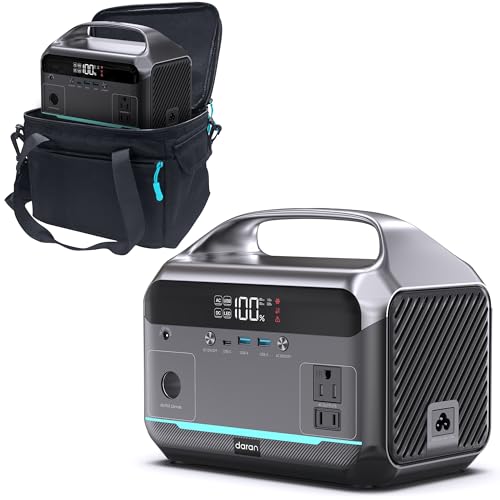
| DARAN 288Wh | Port-hungry campers | 288Wh, 350W, 7-port design |
How to Choose
Pick a size class before a brand
Under 150Wh is a power bank with an outlet. Around 300Wh is a weekend camping tier that handles phones, lights, and a laptop. Roughly 1000Wh is where a small fridge or a CPAP overnight becomes realistic. Above 2000Wh you are planning for home outages. Choosing the class first eliminates most of the field in a minute.
Compare continuous watts to your largest load
The AC figure that matters is the sustained one. A 300W unit cannot run a space heater. A 1500W unit can run a microwave but drains quickly. Peak numbers in parentheses only cover short surges, so do not compare a peak on one listing to a continuous figure on another.
Value charging speed and chemistry
Several titles here emphasize LiFePO4 or LFP cells, which generally tolerate far more charge cycles. Fast-charge claims, such as 49 minutes or one hour to full, matter if you plan to top up between errands or during a short stop. Check that the wall charger is built in rather than a separate brick.
Ignore marketing adjectives, check outputs
Words like “mini” and “solar generator” appear in nearly every title. Count the AC outlets, confirm USB-C power delivery wattage, and look for UPS switchover if you want to protect a desktop computer. Budget models often trim outlets, cut cable length, or skip a display.
The 9 Best Options
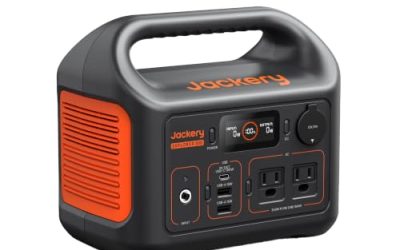
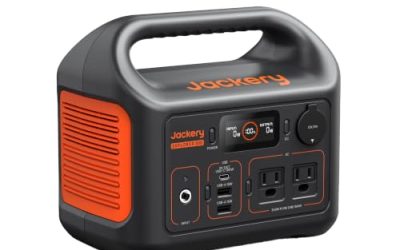
Jackery Explorer 300
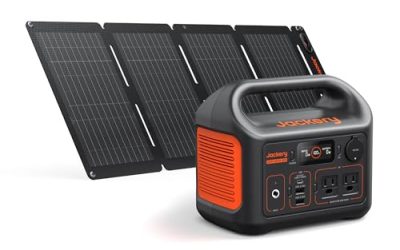
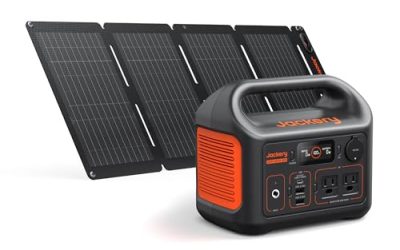
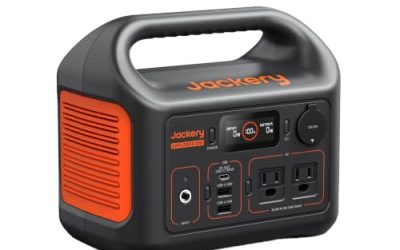
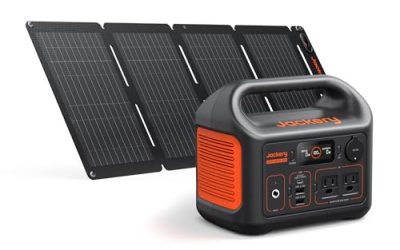
This 292Wh LiFePO4 station is marketed for outdoors, camping, travel, hunting, and blackouts. It suits first-time buyers who want a recognizable name and a size they can carry with one hand. The title mentions a solar panel in a truncated note, so check whether the version you select includes one.
- Strength: LiFePO4 chemistry in a compact 292Wh body.
- Strength: a broad use-case list, from camping to short outages.
- Trade-off: limited capacity for anything that runs continuously, like a fridge.
Skip it if you need multi-day power or want to run more than one or two small devices at once. Buyers who intend to charge it from the sun should verify the panel is in the box and not a separate option.
PECRON F3000LFP
The F3000LFP combines 3072Wh with 3600W output and an LFP battery, aimed at home backup and fast charging. The title says capacity can be expanded, which makes it appealing for households that may add storage later. It is the sort of unit people buy before hurricane or winter-storm season.
- Strength: 3600W output can handle several household loads at once.
- Strength: expandable capacity per the title, with LFP cells.
- Trade-off: this is stationary equipment, not a weekend camp pack.
Skip it if you carry gear to remote sites by hand, or if your loads are small enough that a 1000Wh unit would cover them. Confirm the expansion module details before assuming compatibility, and plan floor space and ventilation before it arrives.
BLUETTI Elite 30 V2
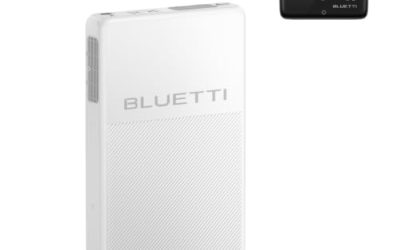
A 288Wh, 600W LFP unit with a power-lifting mode that the title lists at 1500W, 10ms UPS switchover, and 45 minutes from empty to 80 percent. It suits remote workers who want a battery under the desk and campers who occasionally need a hair dryer or small tool.
- Strength: the 10ms UPS spec helps protect electronics during dropouts.
- Strength: fast charging to 80 percent in 45 minutes.
- Trade-off: only 288Wh, so heavy lifting mode drains it fast.
Skip it if you want hours of runtime from big appliances. Treat the 1500W lifting mode as a short-burst feature and check the manual for which loads it supports. Buyers who need a laptop and monitor to stay up through a long outage will want to step up to a larger capacity class.
Jackery Explorer 1000 v2
The Explorer 1000 v2 lists 1070Wh, 1500W output, a one-hour fast charge, a LiFePO4 battery, and 100W USB-C output. It fits families who want an all-rounder for car camping and short outages, with enough capacity to power a small fridge for a while.
- Strength: a fast-charge claim of one hour reduces downtime between uses.
- Strength: 100W USB-C can feed laptops without an adapter.
- Trade-off: 1500W continuous cannot run two big appliances together.
Skip it if you only need phone charging, or if you need to run electric heating. A smaller unit would save weight and storage space for those jobs. Also skip it if you need more than about a day of fridge power without recharging, because 1070Wh is a mid-range figure rather than a whole-house reserve.
Anker SOLIX C300 DC
The name signals a DC-oriented design: 288Wh, 300W, LiFePO4, and a pitch aimed at camping, UPS use, travel, and emergencies. It suits campers with USB and 12V gear who do not need full household AC. Read the spec sheet for AC availability before buying, since the DC label can change what ports you get. That caveat matters most for anyone expecting to plug in a laptop brick or a small kitchen gadget.
- Strength: LiFePO4 cells at 288Wh in an outdoor-minded body.
- Strength: the listing positions it for UPS and emergency roles.
- Trade-off: the DC branding suggests fewer or different AC options.
Skip it if standard wall-plug appliances are the main reason you want a power station, or if you need a unit that doubles as a household outage solution. Its 300W ceiling also keeps it in the light-duty category, so think phones, cameras, lights, and small fans rather than anything with a heating element.
Anker SOLIX C1000 Gen 2
This one lists 1024Wh, 2000W output with 3000W peak, an LiFePO4 battery, and a full charge in 49 minutes. It suits remote workers, vanlifers, and homeowners who want strong output and quick turnaround between outages.
- Strength: 2000W continuous is a high ceiling at this capacity.
- Strength: the 49-minute full charge is the quickest claim in the group.
- Trade-off: high output can drain a 1024Wh battery quickly.
Skip it if you want long runtimes from a modest load, since a bigger battery fits that job better. The peak figure is only a surge allowance. Buyers who rarely stack heavy loads can step down a tier and save weight, and anyone planning to run a mini-split or electric stove should look at larger systems instead.
Daran 89.6Wh
A pocket-size LiFePO4 pack with 100W output (200W peak), AC outlets, and PD fast charging, marketed as a solar power bank and small generator. It suits commuters, day hikers, and anyone who wants an AC outlet in a very small box.
- Strength: the smallest and lightest option listed.
- Strength: PD fast charging for phones and tablets.
- Trade-off: 89.6Wh runs out quickly with a laptop.
Skip it if you need to power anything beyond personal electronics. It is a travel convenience, not a backup plan for a home. The title also calls it a portable charger, so think of it as a bridge between a regular power bank and a true camping station, ideal for airports, trailheads, and car consoles. Anyone with a CPAP, a drone fleet, or camera batteries in bulk will outgrow it quickly.
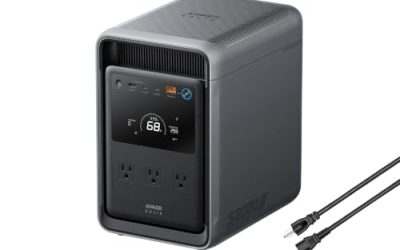
Anker SOLIX S2000
The S2000 lists 2010Wh, 1500W output, and an LiFePO4 battery, aimed at home backup, outdoor use, and emergencies. It suits households that want long runtime for a few essential devices rather than maximum wattage.
- Strength: 2010Wh gives long runtime at modest loads.
- Strength: LiFePO4 chemistry suits standby duty.
- Trade-off: 1500W cannot start the heaviest appliances.
Skip it if you need a high-wattage tool or a heater. Compare it against the 3072Wh PECRON if you want more output and capacity. The S2000 also sits in a heavy class, so it fits a garage shelf or a vehicle cargo area better than a long walk to a campsite. Buyers who value flexible charging should check the manual for solar input limits, since the title does not spell them out.
DARAN 288Wh
This DARAN pairs a 288Wh LiFePO4 battery with 350W output (600W peak), an AC outlet, a 7-port layout, and 2.1-hour fast charging. It suits campers with many small devices who value outlets over raw capacity.
- Strength: seven ports serve multiple devices at once.
- Strength: 2.1-hour fast charging per the title.
- Trade-off: 350W limits it to light appliances.
Skip it if you need a brand with deep service networks, or if your devices exceed 350W. The peak figure of 600W describes a brief surge, so do not count on it for anything that runs continuously. The title also calls it a mini solar generator with a power bank design, meaning it is a compact pick for people who want many charging points more than long runtime from a single large appliance. Pair it with a separate panel if you want off-grid recharging.
Which One Fits Your Situation
Weekend camper with phones and a lantern
The Jackery Explorer 300 or DARAN 288Wh covers it without carrying extra weight.
Remote worker who wants backup under the desk
The BLUETTI Elite 30 V2 gives UPS-style switchover in a small body, while the Anker SOLIX C1000 Gen 2 adds more headroom for a monitor setup.
Family facing storm-season outages
Go with the PECRON F3000LFP for output and expansion, or the Anker SOLIX S2000 for long runtime at lower wattage.
Traveler with only personal electronics
The Daran 89.6Wh is the lightest route.
Common Mistakes
- Buying on popularity alone without matching watt-hours to actual loads.
- Reading a peak number as continuous output.
- Skipping the check on whether a solar panel is included.
- Storing a battery at zero percent for months.
- Running a gas generator inside a garage or tent as a stand-in; its exhaust contains carbon monoxide, which can kill without warning, so fuel generators belong outdoors, well clear of openings.
Specs and Terms Explained
Watt-hours
This is the size of the fuel tank. Multiply a device’s watts by the hours you want it to run, then add a margin for conversion loss. A phone needs a tiny sip; a mini fridge or a CPAP draws steadily through a night.
LiFePO4 and cycle life
Lithium iron phosphate cells tolerate many more full discharge cycles than the older nickel-manganese-cobalt type and are less sensitive to heat. The trade-off is usually a slightly heavier pack. The PECRON F3000LFP carries the chemistry in its name, and listings for other models spell it out as well.
Pass-through charging
The ability to power devices while the unit itself is charging. It matters for a desk setup or a work-from-van routine, and much less for a weekend trip.
Boost or lift modes
Some brands advertise a mode that lowers voltage to run heating appliances above the rated output. These usually apply to resistive loads only, and delivered power is reduced, so they are not a substitute for a larger inverter.
Sizing and Compatibility Checklist
- Write down the largest wattage you will run at once; the continuous rating must exceed it.
- Count how many AC, USB-C, and DC ports you need at the same time.
- Check the maximum USB-C power delivery if you plan to charge a laptop from it.
- Look at how the unit is recharged: wall only, car, solar input, or all three.
- Confirm the weight against how far you carry it.
- Read the airline rules if you fly: lithium batteries above the carry-on limit generally cannot go on a plane.
Who Should Skip These
Anyone seeking a single unit that does everything will be disappointed. The Jackery Explorer 300 and Daran 89.6Wh are easy to carry but will not run a space heater or a kettle. The PECRON F3000LFP is far too heavy for a backpacking trip.
If you camp only where a car outlet is within reach, a modest power bank or compact unit costs less in weight and space than a large one. Equally, buyers who rarely lose power at home should hesitate before buying a big unit that will sit in a closet needing occasional charging.
Which One Should You Buy?
| If you… | Choose… |
|---|---|
| Want pocket-sized power for phones and a lantern | Daran 89.6Wh or DARAN 288Wh |
| Want a light unit for a weekend with a laptop | Jackery Explorer 300 or Anker SOLIX C300 DC |
| Need a unit for a small fridge or CPAP all night | Jackery Explorer 1000 v2 or Anker SOLIX C1000 Gen 2 |
| Need serious backup for home use | PECRON F3000LFP or Anker SOLIX S2000 |
Related guides
- Battery Powered Generator For Refrigerator
- Portable Power Station For Refrigerator
- Portable Power Station For Camping
Frequently Asked Questions
What size power station do I need for a refrigerator?
Start with a 1000Wh class unit for a small fridge, then check the fridge’s running watts. Larger kitchen fridges lean toward 2000Wh and up.
Is LiFePO4 better than standard lithium-ion?
It generally offers more charge cycles and good thermal stability, which is why many models here advertise it.
Can I use a power station indoors?
Battery units produce no exhaust, so indoor use is normal if ventilation is adequate. Fuel generators cannot be used indoors.
Does fast charging hurt the battery?
Manufacturers design these units around their stated charge rates, so using the supplied charger is the safe route.
Write Your Review
No reviews yet. Be the first to share your experience!