

Key takeaways
- The phrase "solar generator with panels" tells you the shopper wants a bundle: a battery box and the collection hardware arriving together.
The phrase “solar generator with panels” tells you the shopper wants a bundle: a battery box and the collection hardware arriving together, so there is no guessing about whether a separately bought panel will plug in. That is a different decision than picking a bare power station. The panel wattage included in the kit decides how quickly the battery refills outdoors, which means a big battery paired with a small panel can leave you waiting days for a full recharge.
This guide is for campers, van and RV travelers, and homeowners who want a ready-to-charge setup in 2026. The picks run from palm-sized 146Wh packs with a 40W panel up to whole-house systems with twin 200W panels. Everything is judged from the specs in each listing title, so confirm cable lengths, connector types, and what is physically in the box before you commit to any of them.
Quick Picks
Our top picks





As an Amazon Associate we earn from qualifying purchases at no extra cost to you.
| Product | Best for | Key spec from the title |
|---|---|---|
| Jackery Solar Generator 300 | Weekend camping | 292Wh, 300W AC, 40W panel |
| Unbranded 300W Solar Kit | Budget tier camping | 280Wh, 60W panel |
| MARBERO 155Wh Kit | Phones and lights | 155Wh, 30W panel |
| Jackery HomePower 3600 Plus | Whole-home backup | 3584Wh, 3600W AC, 2x200W panels |
| Jackery HomePower 3000 | Heavy-load backup | 3072Wh, 7200W surge, 2x200W panels |
| Jackery Explorer 2000 v2 | Long RV stays | 2042Wh, 2200W AC, 2x200W panels |
| MARBERO 237Wh Kit | Compact travel | 237Wh, 300W, 60W foldable panel |
| 100W 146Wh Solar Power Bank Kit | Ultralight trips | 146Wh, 40W panel |
| EcoFlow Delta 3 Classic | Mid-size all-rounder | 1024Wh, 1800W AC, 220W panel |
How to Choose
Match panel watts to battery size
A sensible target is a panel that can refill the battery in roughly two to three sunny days. A 40W panel feeding a 292Wh battery is workable for a long weekend, because you rarely drain it flat. That same 40W panel on a battery above 1000Wh would be painfully slow, which is why the larger kits here ship with 200W-class panels. Remember that real-world solar input usually lands well under the printed panel wattage.
Check AC output against your heaviest device
List the wattage of the largest thing you plan to run, such as a mini fridge, CPAP machine, or electric kettle, and make sure the continuous AC figure clears it with room to spare. Pure sine wave output matters for laptops, camera chargers, and medical gear. A 300W unit will not run a kettle, while 1800W and above can handle several kitchen-style loads, one at a time.
Look at battery chemistry and cycle life
Titles that say LiFePO4 or LFP indicate a chemistry that generally lasts through many more charge cycles than standard lithium-ion. If the unit will sit in a closet as storm backup for years, that durability matters more than shaving a little off the budget. Where a title names no chemistry, treat cycle life as unknown.
Ignore surge headlines, count the ports
Surge numbers describe a split-second start-up burst, not what the unit can sustain. Compare continuous AC watts and battery watt-hours instead. Budget models tend to cut corners on port count, panel connector quality, and cable length, so look for USB-C power delivery if you charge laptops and a DC port if you run a 12V cooler.
The 9 Best Options
Jackery Solar Generator 300
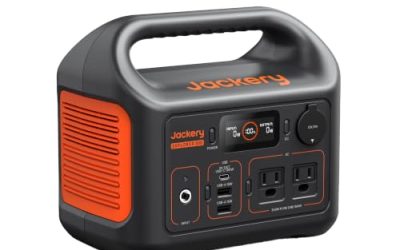
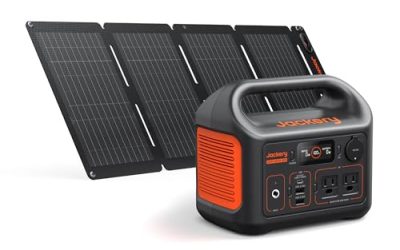
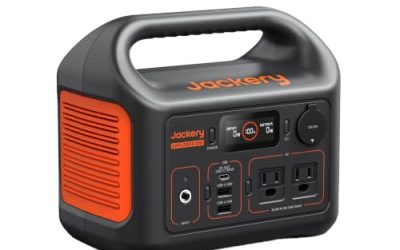
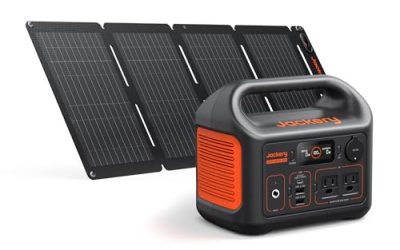
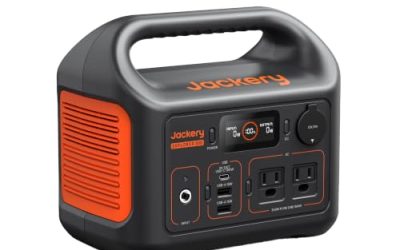
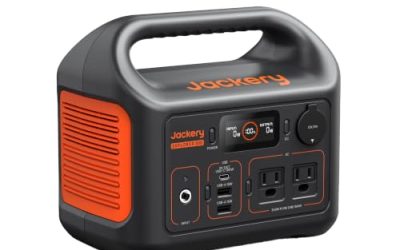
This bundle pairs a 292Wh battery with a 40W panel and 300W of pure sine wave AC output. It suits weekend campers, RV owners, and blackout preppers who want a recognizable-brand starter kit without sizing components themselves. The title also points to travel and outdoor use, so it is positioned as a grab-and-go unit rather than a permanent install.
- Strength: the title lists pure sine wave AC, which suits laptops and camera chargers.
- Strength: 292Wh covers phones, lights, and a laptop across a short trip.
- Trade-off: a 40W panel refills a 292Wh battery slowly under cloud cover.
Skip it if you plan to run anything that heats or cools, since 300W is a tight ceiling for those loads, or if you expect to camp for a week without strong sun.
Unbranded 300W Solar Kit
Listed as a 300W station with a 60W panel, 280Wh battery, pure sine wave 110V output, and USB QC3.0 plus DC ports, this kit targets shoppers who want a larger panel at a budget tier. It is a practical choice for car camping and short power outages, where a lighter wallet matters more than a famous logo on the case.
- Strength: a 60W panel is bigger than the 40W panels bundled with several rivals.
- Strength: it lists QC3.0 USB, DC, and AC outputs for varied gear.
- Trade-off: the title names no battery chemistry, so cycle life is unclear.
Skip it if long-term standby duty is the goal, or if you want a recognizable brand behind the warranty and replacement parts.
MARBERO 155Wh Kit
A small solar generator with a 30W panel, 155Wh capacity, and a listed 150W surge figure. It is aimed at day hikers, tent campers, and anyone whose electronics list stops at phones, headlamps, and a small camera. Think of it as a battery bank with an AC outlet and a way to top itself up, not as a household substitute.
- Strength: it is the smallest battery in this group, so it is easy to pack.
- Strength: the 30W panel is included in the set.
- Trade-off: only 30W of solar input means refills are slow.
Skip it if you want to keep a laptop running for several days or need real AC headroom for tools. Anyone shopping for a fridge or heater should look two tiers up.
Jackery HomePower 3600 Plus
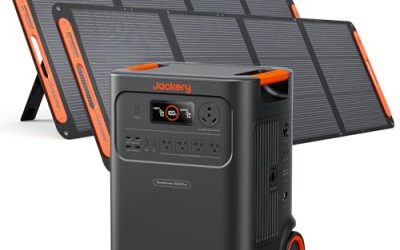
The largest system here: 3584Wh, 3600W AC output, an LFP battery, two 200W panels, and expandability to 21kWh per the title. It is built for essential home backup, where the goal is keeping a refrigerator, router, and lights alive through an outage. The expansion headroom also makes it a sensible foundation if your needs grow.
- Strength: expansion headroom lets you add capacity later.
- Strength: LFP chemistry suits years of standby use.
- Trade-off: this is a household appliance, not something you carry to a campsite.
Skip it for tents, kayaks, or any trip where you haul gear by hand, and for anyone whose loads never exceed a few hundred watts, since a smaller kit would cost far less and weigh far less.
Jackery HomePower 3000
This kit lists 3072Wh, 3600W AC output, a 7200W surge figure, an LFP battery, and two 200W panels. It fits owners who need to start motor loads such as a sump pump or refrigerator compressor and who want the whole system arriving as one bundle. The title frames it as essential backup for home use, which tells you where the maker aims it.
- Strength: the high surge figure is helpful for compressor start-ups.
- Strength: LFP battery with two panels already in the bundle.
- Trade-off: less capacity than the Plus model, with the same AC ceiling.
Skip it if portability matters more than runtime or if your loads are all small electronics. Buyers who want maximum runtime from the same bundle style should compare it against the Plus model first.
Jackery Explorer 2000 v2
A 2042Wh LiFePO4 station with 2200W AC output, 20ms UPS switchover, 100W USB-C power delivery, and two 200W panels. It suits RV travelers and cabin owners who want strong output without stepping up to a whole-home system. At this size it can anchor a campsite kitchen, a laptop workstation, and lighting at the same time.
- Strength: UPS-style switchover can help protect a desktop computer during a dropout.
- Strength: the 100W USB-C port can charge many laptops directly.
- Trade-off: it is bulkier than anything under 1000Wh.
Skip it for backpacking or short car-camping trips where a smaller battery would do the job. Also skip it if your vehicle or storage space is tight, because a 2042Wh unit with two full-size panels needs real room for transport and for laying the panels out.
MARBERO 237Wh Kit
This set pairs a 237Wh battery with 300W pure sine wave output and a foldable 60W panel. It suits road-trippers and anglers who want a compact middle ground between pocket power banks and heavier stations. The foldable panel is the standout, since a larger collection area at a budget tier is what makes small batteries practical outdoors.
- Strength: the foldable panel packs flat for transport.
- Strength: 300W output handles small appliances and chargers.
- Trade-off: capacity is only modestly above the 155Wh kit.
Skip it if you need more than a day of laptop use between sunny charging windows. Anyone who wants a named brand, a visible chemistry in the title, or a larger battery for a multi-night trip will be happier with one of the Jackery bundles above.
100W 146Wh Solar Power Bank Kit
A small generator listed at 100W with a 146Wh battery, 40W panel, AC outlet, USB-A, USB-C, and DC output. It is for travelers who treat the box as an oversized power bank and want a way to recharge it off-grid. The mix of outputs lets one device cover phones, a tablet, and a small 12V accessory without separate adapters.
- Strength: AC, USB-A, USB-C, and DC outputs all sit in one compact box.
- Strength: light enough to carry in a daypack.
- Trade-off: 100W of output rules out most appliances.
Skip it if a CPAP, fan, or cooler is on your packing list. It is best viewed as insurance for communication and lighting, not as a camp power source for comfort gear.
EcoFlow Delta 3 Classic
The Delta 3 Classic bundle includes a 220W panel, a 1024Wh LiFePO4 battery, 1800W AC output with 3600W surge, and 100W USB-C. It fits families who want one flexible unit for camping, vanlife, and the occasional outage. Of the kits listed, it sits in the sweet spot between portable and powerful, with output strong enough for real appliances.
- Strength: the 220W panel is the largest single panel in the group.
- Strength: 1800W AC can run a coffee maker or small heater for short stretches.
- Trade-off: it is heavier and costlier than any sub-300Wh kit.
Skip it if your needs end at phones and lights, or if you have no way to keep a heavier box dry and off the ground at camp. Check that the included panel’s connector matches the input port before relying on it.
Which One Fits Your Situation
Occasional tent camper
Take the Jackery Solar Generator 300. Its 292Wh battery and included panel match a few nights outdoors without excess weight.
Full-time RV or cabin owner
The Jackery Explorer 2000 v2 or the EcoFlow Delta 3 Classic gives enough capacity for refrigeration and electronics, with panels sized to keep up. Pick the Delta if you want to stay near 1000Wh.
Storm-prone home
Choose the Jackery HomePower 3000 or HomePower 3600 Plus. Their 3600W AC output is meant for essential circuits, and the Plus adds expansion room.
Ultralight traveler
The MARBERO 155Wh kit or the 146Wh power bank kit keeps weight down and still gives you a panel in the bundle.
Common Mistakes
- Buying a large battery with a tiny panel and expecting a quick refill.
- Chasing surge numbers instead of continuous AC watts.
- Assuming the panel can sit in the sun while the battery stays in shade without checking cable length.
- Leaving the battery fully drained for months in storage.
- Pairing a solar kit with a gas generator run indoors or in an attached garage; combustion engines release carbon monoxide, which can be deadly, and belong outdoors only.
Specs and Terms Explained
Rated panel watts versus real output
A panel’s rating describes output under ideal lab light. Real sunlight, angle, haze, heat, and shade usually deliver noticeably less, so a panel labeled for a given wattage rarely hits it. Treat the figure as a ceiling when estimating refill time.
MPPT charge controller
Maximum power point tracking adjusts voltage and current to draw the most from a panel. Units with it generally recover faster than those using simpler charging, especially under partly cloudy skies.
Watt-hours and refill time
Divide battery watt-hours by the effective panel watts to estimate the hours of full sun for a complete charge. The result is a rough guide, not a promise, because input limits and sun angle cap it.
Connectors
Panels commonly use DC barrel plugs or MC4 connectors. Bundled kits come matched, but adding another panel later means checking that the plug and voltage range fit.
Setup and Care Tips
- Point panels toward the sun and tilt them rather than laying them flat; adjust every couple of hours if you can.
- Keep the battery out of direct sun while it charges, since heat shortens lifespan and can trigger protective shutdowns.
- Wipe panel surfaces with a damp soft cloth; dust and pollen cut output more than people expect.
- Fold panels along the factory creases and store them in their sleeve to protect the cells.
- Avoid a long, thin extension cable between panel and unit, which wastes power as heat.
- Check for shade creeping across a panel during the day; even a partial shadow can pull output down sharply.
Who Should Skip These Kits
Home-backup buyers whose outage plan depends on a refrigerator, or who live where winter days are short and gray, may prefer the largest battery they can afford and a separate panel purchase, since bundled panels are often modest.
Photographers and phone-only campers can pass on a big system like the Jackery HomePower 3600 Plus or the EcoFlow Delta 3 Classic; a small kit such as the MARBERO 155Wh Kit or the 100W 146Wh Solar Power Bank Kit covers lights and chargers. If you only camp at spots you drive to, panels may never leave the trunk, in which case a plain power station charged at home or from the car is simpler.
Which One Should You Buy?
| If you… | Choose… |
|---|---|
| Camp with a tent and charge only small devices | MARBERO 155Wh Kit or 100W 146Wh Solar Power Bank Kit |
| Want a step up for a laptop and lights | Jackery Solar Generator 300 or Unbranded 300W Solar Kit |
| Need mid-size capacity for a small fridge | Jackery Explorer 2000 v2 or EcoFlow Delta 3 Classic |
| Want a large unit for outage backup | Jackery HomePower 3600 Plus or Jackery HomePower 3000 |
Related guides
- Battery Powered Generator For Refrigerator
- Portable Power Station For Refrigerator
- Portable Power Station For Camping
Frequently Asked Questions
How long does a solar kit take to recharge?
Divide the battery watt-hours by the panel watts, then expect real results to be slower because sun angle and clouds cut output. Plan on multiple sunny days for the smaller panels.
Can I add more panels later?
Many stations cap their solar input. Check the input wattage and voltage range in the manual before buying extra panels.
Is a solar generator safer than a gas generator?
It produces no exhaust, so it can sit near living areas. A gas generator must only run outdoors, well away from windows and doors, because of carbon monoxide.
Do I need pure sine wave output?
For laptops, medical devices, and audio gear it is the safer choice, and several kits here list it.
Write Your Review
No reviews yet. Be the first to share your experience!