

Key takeaways
- Campsites are bad places to depend on solar. Tree cover, tent shade, low winter sun.
Campsites are bad places to depend on solar. Tree cover, tent shade, low winter sun, and a panel that has to be moved every hour all cut into what a folding panel can deliver. That does not make a solar generator a poor camping choice. It means the shopping question is less “how big a panel” and more “how much battery can I carry so I am not stuck waiting for the sun.” The kits below all bundle a panel, which is the convenience that sets them apart from a bare power station.
The audience here is the camper who wants a self-contained box: battery, inverter, and panel in one purchase, with enough outputs for phones, lights, and a small fan. Seven distinct kits are compared, from 88.8Wh to 1,024Wh. In keeping with 2026 listing standards, every judgment comes from the specs printed in the titles; no runtime numbers are invented, and where a title is vague the review says so.
Quick Picks
Our top picks


As an Amazon Associate we earn from qualifying purchases at no extra cost to you.
| Product | Best for | Key spec from the title |
|---|---|---|
| Jackery Solar Generator 300 | Brand-backed starter kit | 292Wh, 300W AC, 40W panel |
| 300W 280Wh Solar Generator Kit | Bigger panel in a small bundle | 280Wh, 300W, 60W panel |
| MARBERO 155Wh Solar Generator | Phones and lights only | 155Wh, 150W surge, 30W panel |
| Takki 120W Peak Solar Generator | Tiniest tent kit | 88.8Wh, 120W peak, 21W panel |
| 100W 146Wh Solar Generator | Small AC-capable kit | 146Wh, 100W, 40W panel |
| BROWEY 1600W Power Station | Longer stays, larger loads | 1,024Wh LiFePO4, 1,600W, built-in panel |
| 300W 296Wh Power Station | Many ports for a group | 296Wh, 300W, pure sine wave, 7 outputs |
How to Choose
Plan around the battery, not the panel
A 21W to 60W panel gives a trickle in good light and almost nothing under trees. Use the battery as your primary budget: 90Wh to 150Wh for phones and a light, 280Wh to 300Wh for a small group with a laptop, and 1,000Wh or more if a cooler or CPAP joins the trip. Treat the panel as a way to extend the trip by a few hours of use, not as a source that keeps pace with your loads.
Match panel wattage to how you camp
Fixed-site campers who can angle a panel toward the sun for six hours get more from a 60W panel than a 21W one. Mobile campers who move daily may only need a small panel that dries and packs fast. A built-in panel, as on the BROWEY, trades flexibility for fewer cables. Whatever you choose, confirm the connector type on the panel matches the power station’s solar input.
Outputs that actually get used
Look for at least one USB-C port at 60W or more if you charge a laptop, a pure sine wave AC outlet for sensitive electronics, and a DC output for car-style accessories. Surge wattage helps with brief startups, but continuous wattage decides what runs for hours. A 100W unit fits a light, a phone, and a small fan, but it will not run a coffee maker.
Safety, chemistry, and budget corners
LiFePO4 batteries are favored for repeated trips because they handle many charge cycles. Cheaper kits often omit chemistry, cycle life, and warranty detail from the title. Battery-based systems also remove the exhaust hazard: gas generators produce carbon monoxide and should never be run in or near a tent, camper, or enclosed space. Keep any power station out of direct sun and off hot car dashboards.
The 7 Best Options
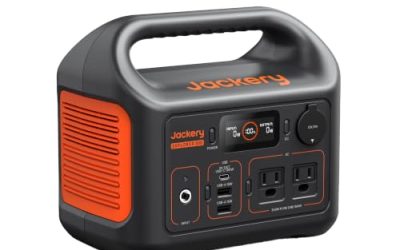
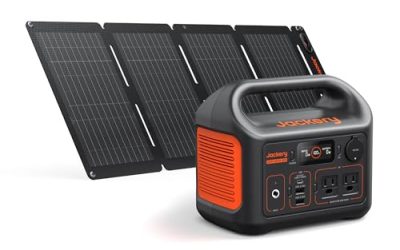
Jackery Solar Generator 300 with 40W Panel
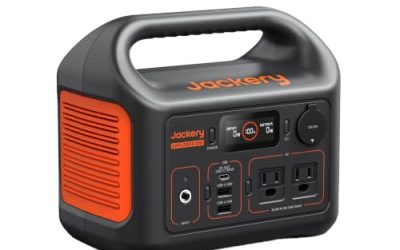
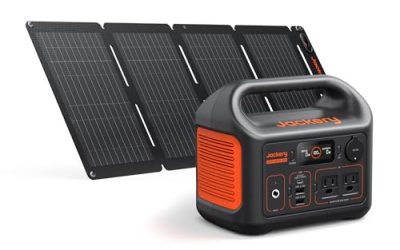
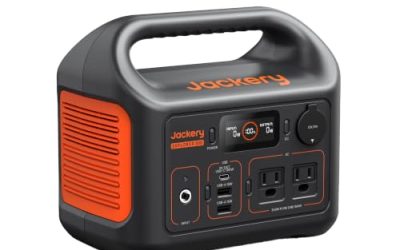
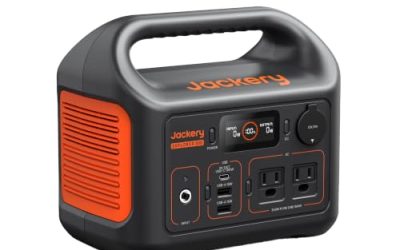
The title lists 292Wh, 300W AC, a pure sine wave outlet, and a 40W panel, with RV, outdoors, camping, travel, and blackout use named. For a first solar generator it is the most straightforward kit on this list: one box, one panel, one brand name behind it.
- Strength: Panel included, and pure sine wave AC supports laptops.
- Strength: 292Wh covers a couple of nights of small devices.
- Trade-off: A 40W panel recharges slowly in partial shade.
Skip it if you want to run a heater or a kettle. It also pays to bring a wall charger for trips that follow cloudy weather, because the panel alone will not reliably refill the battery. Campers who bring a vehicle can also use a car port to top it up on the drive home, which makes the 292Wh size easier to live with over repeated weekends.
300W 280Wh Solar Generator Kit with 60W Panel
An unbranded-style kit with 280Wh, 300W, a 60W panel, a 110V pure sine wave outlet, and USB QC3.0 ports. The 60W panel is the largest among the small bundles, which helps when you can park the panel in the open.
- Strength: Larger panel than the other small kits.
- Strength: Pure sine wave AC and quick-charge USB.
- Trade-off: Little brand, warranty, or chemistry detail in the title.
Skip it if you want a manufacturer name with a known support channel. Shoppers who value panel size over pedigree will find the pairing of 280Wh and 60W a balanced mid-point for weekend use. Pay attention to the QC3.0 USB ports in the title: they speed up phone charging but are not a substitute for a USB-C PD port when you need to charge a laptop.
MARBERO 155Wh Solar Generator
The MARBERO title lists 155Wh, a 150W surge rating, and a 30W solar panel kit. It sits in the light-duty tier, fitting phones, a headlamp, and a tablet over a weekend.
- Strength: Panel kit is bundled.
- Strength: Small capacity keeps the entry point low.
- Trade-off: Only 150W of surge limits what you can plug in.
Skip it if more than two people will charge devices or you want to run a fan overnight. Phones, a tablet, and a headlamp are the realistic ceiling for this kit. A group will drain 155Wh in a single evening, and a 30W panel cannot catch up the next day. For a solo camper who rations usage, it is workable. Keep in mind that the 150W surge figure caps anything with a startup spike.
Takki 120W Peak Solar Generator with 21W Panel
The smallest kit in the group: 88.8Wh, 120W peak, a 21W panel, and a 110V AC outlet, with camping, RV, tent, and home outings in the title. It is meant to top up a phone or two and run a small light.
- Strength: Includes an AC outlet despite its small size.
- Strength: Panel is in the box, keeping the setup simple.
- Trade-off: 88.8Wh is only a modest amount of energy.
Skip it if you need to charge a laptop more than once. It suits solo hikers and overnighters who treat it as an emergency charger rather than a main power source. At this size the AC outlet is best saved for something small, like a battery charger, rather than anything that runs continuously, since the 120W peak figure leaves little room.
100W 146Wh Solar Generator with 40W Panel
This kit lists 146Wh, 100W, and a 40W panel, with AC, USB-A, USB-C, and DC outputs. It offers the full mix of port types in a small package.
- Strength: Wide range of output types for the size.
- Strength: 40W panel is larger than the 21W and 30W bundles.
- Trade-off: 100W continuous output rules out most appliances.
Skip it if you plan to run a mini fridge or power tools. It is a decent compromise for couples who carry two phones, a camera, and a light and want the sun to extend the day. Because it carries DC output as well, it can also feed a 12V accessory, which makes it more flexible than a USB-only power bank.
BROWEY 1600W Power Station with Built-in Solar Panel
The only mid-size unit here: 1,024Wh, LiFePO4, 1,600W (3,200W peak), 100W USB-C fast charging, and a built-in panel. For long weekends with a group, it is the kit that can run a bigger variety of devices.
- Strength: 1,024Wh and 1,600W handle fans, a small cooler, and laptops.
- Strength: LiFePO4 chemistry and 100W USB-C.
- Trade-off: A built-in panel limits placement flexibility.
Skip it if you hike in or carry gear by hand, since the title offers no weight or dimensions. It is also more capacity than a solo camper needs. Group campers should still confirm the solar input limit before buying extra panels, and plan on wall charging before departure so the first night starts with a full 1,024Wh.
300W 296Wh Power Station with Seven Outputs
The title cites 296Wh, a 300W pure sine wave AC outlet, an MPPT controller, a 20W flashlight, a 100W Type-C port, and seven outputs. It is a port-rich option for groups who need many things charging at once.
- Strength: Seven outputs and a 100W Type-C port.
- Strength: MPPT controller is listed for solar input.
- Trade-off: The title is brief on the brand and on panel inclusion, so confirm what ships in the box.
Skip it if you require a clearly bundled panel or a recognized brand. The 20W flashlight is a nice touch but not a reason to buy; the real draw is the number of outputs and the 100W Type-C port for a laptop. Buyers should read the full listing to confirm warranty terms and what ships alongside the battery.
Which One Fits Your Situation
Couple on a two-night tent trip
The Jackery Solar Generator 300 handles phones, lights, and a laptop with room to spare, and the panel is in the box.
Solo overnighter traveling light
The Takki 88.8Wh or the MARBERO 155Wh keeps the load small. Choose the MARBERO if you want a bit more capacity, and the Takki if the lowest possible bulk is the goal. Either pairs well with a power-bank mindset: charge devices during the day and let them run on their own batteries at night.
Family or friends sharing power
The BROWEY 1,024Wh offers the capacity and wattage to share, while the 296Wh seven-output unit helps where many small devices need ports.
Camper who values panel size
The 300W 280Wh kit with the 60W panel gets more daytime recharge than the other small bundles, provided you can place it in direct light. Pair it with a habit of angling the panel every couple of hours. Anyone camping under heavy tree cover should still expect slow solar gains and carry a wall-charged battery.
Common Mistakes
- Expecting a 21W or 30W panel to refill a battery within a single day.
- Leaving the panel in the shade of the tent and wondering why charging is slow.
- Ignoring continuous wattage and buying on surge ratings.
- Forgetting to charge the battery fully from a wall outlet before leaving home.
- Storing the power station inside a closed car on hot days.
Sizing and Compatibility Checklist
- Panel connector. Solar panels use several plug styles, including MC4, DC barrel, and Anderson-type. Confirm that the cable on the panel matches the input on the battery, or plan for the correct adapter.
- Voltage window. A station accepts solar only inside a stated voltage range. A panel that exceeds the upper limit can trip the input or damage it, so check the spec sheet before using a different panel.
- Input wattage. Note the maximum solar input listed for your unit. A panel larger than that limit adds nothing.
- Cable length. Long, thin cables lose power. Keep the panel close to the battery or use a heavier cable.
- Folded size. Compare the folded panel with your pack or trunk space, and think about how you will carry and protect it.
- Weather resistance. Look for a stated splash or water-resistance level on the panel and its connectors before relying on them in drizzle. If none is listed, treat the kit as fair-weather gear.
- Wall charger backup. Verify that the box includes a wall charger or car cable, so a gray day does not leave you with an empty battery.
Setup and Care Tips
Angle the panel toward the sun and tilt it so it faces the light more directly; a flat panel on the ground loses a lot, especially in the morning and late afternoon. Re-aim it every couple of hours, or choose a spot where shade will not creep across it. Even a small shadow on one corner can cut output a surprising amount. Keep the battery itself in the shade or inside the tent vestibule, out of direct sun, with the cable running to the panel. Wipe dust and pollen off the panel surface with a soft cloth, never an abrasive one, and let it dry before folding. Avoid leaving connectors in water, and cover them if rain is likely. At day’s end, fold the panel and store it flat so the surface is not scratched in transit.
Who Should Skip These
Anyone camping in heavy forest, under constant cloud cover, or in low-sun winter conditions should not rely on a bundled panel, because output can be a small fraction of the label figure. Hikers carrying everything on their back may find a folding panel and battery heavier than a simple power bank. And families expecting a kit such as the Takki 120W Peak Solar Generator with 21W Panel to run a cooler for several days will be disappointed. Those buyers are better served by the BROWEY 1600W Power Station with Built-in Solar Panel or a larger battery and a plan to recharge from the car.
Related guides
- Battery Powered Generator For Refrigerator
- Portable Power Station For Refrigerator
- Portable Power Station For Camping
Frequently Asked Questions
Can a small panel keep up with phone charging?
Often, yes, for phones and lights in strong sun. It will not keep up with a laptop, a fan, and phones at the same time.
Do I need pure sine wave output?
It is the safer choice for laptops, cameras, and medical devices. Simple resistive loads tolerate other waveforms, but camping gear is usually sensitive.
Is a built-in panel better than a separate one?
It simplifies packing but reduces your ability to aim the panel while the unit sits in the shade. Separate panels give better placement.
Should I worry about carbon monoxide?
Not with a battery unit, which has no combustion. It is a serious risk with gas generators, which must never run inside a tent, vehicle, or garage.
Write Your Review
No reviews yet. Be the first to share your experience!