

Key takeaways
- Search for a portable solar generator and you will find two very different products wearing the same label.
Search for a portable solar generator and you will find two very different products wearing the same label. One is a small battery box with a folding panel in the bundle, sized for phones, a camera battery charger, and a camp light. The other is a multi-kilowatt-hour system with a 3,600W AC output that happens to have a handle. The word “portable” stretches across both, so the first decision is not a brand. It is how much you plan to carry, and how much you plan to power once you get there.
This guide is written for buyers who want a single box that stores energy and a panel that refills it, without a gas engine. It covers entry-level kits with panels included, a mid-size 1,024Wh option, and two Jackery HomePower systems built for much heavier loads. Everything below is judged from the specifications stated in each product title for 2026 listings, so treat it as a spec-driven shortlist rather than a field report.
Quick Picks
Our top picks





As an Amazon Associate we earn from qualifying purchases at no extra cost to you.
| Product | Best for | Key spec from the title |
|---|---|---|
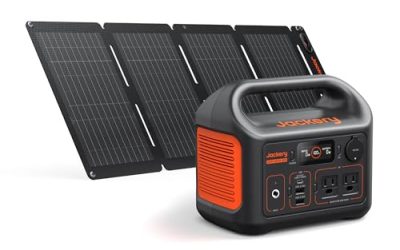
| Jackery Solar Generator 300 | Recognized-brand starter kit | 292Wh, 300W AC, 40W panel included |
| 300W 280Wh Solar Generator Kit | Larger panel in a small bundle | 280Wh, 300W, 60W panel, pure sine wave |
| MARBERO 155Wh Solar Generator | Lightest-duty charging | 155Wh, 150W surge, 30W panel kit |
| Jackery HomePower 3600 Plus | Whole-circuit backup plus panels | 3,584Wh, 3,600W AC, expandable to 21kWh |
| BROWEY 1600W Power Station | Mid-size all-in-one | 1,024Wh LiFePO4, 1,600W (3,200W peak), built-in panel |
| 100W 146Wh Solar Power Bank Kit | Smallest AC-capable bundle | 146Wh, 100W, 40W panels |
| Jackery HomePower 3000 | High surge appliances | 3,072Wh, 3,600W AC, 7,200W surge |
How to Choose
Start with watt-hours, then match them to a real load
Watt-hours (Wh) tell you how much energy is stored. Divide that figure by the wattage of what you plug in, then knock off roughly 15 to 20 percent for inverter losses, and you have a realistic runtime. A 150Wh unit suits phones, earbuds, and a light. Around 300Wh begins to cover a laptop for a work session. Past 1,000Wh you are into small appliances. Above 3,000Wh you are sizing a backup system rather than a camping accessory.
Check AC output and surge separately
Two numbers matter: continuous AC watts and surge watts. Anything with a motor or a heating element can pull far more at startup than its label suggests. A 300W unit will not run a 700W kettle regardless of how many watt-hours it stores. Compare the wattage on the appliance label with the continuous figure in the title, and leave headroom of at least 20 percent.
Solar input and the panel in the bundle
A 30W or 40W panel recharges a small battery slowly and only in strong sun, so treat those panels as a trickle top-up. A 60W panel is better but still modest against a 280Wh battery. Larger systems list multiple 200W panels, which is where a solar refill becomes a genuine daily routine. Also confirm the unit can be charged from a wall outlet or car port, because cloudy days happen.
Chemistry, expandability, and where budget models cut corners
LiFePO4 (also written LFP) batteries generally tolerate more charge cycles than older lithium-ion packs, and several titles here call it out. Budget kits often skip details such as a stated cycle life, a named brand warranty, or expansion options. Ignore flashy extras like built-in flashlights and focus on pure sine wave output if you will plug in sensitive electronics, plus the port mix you need: USB-C PD, AC outlets, and a DC output.
The 7 Best Options
Jackery Solar Generator 300 with 40W Panel
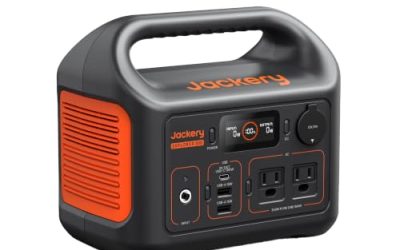
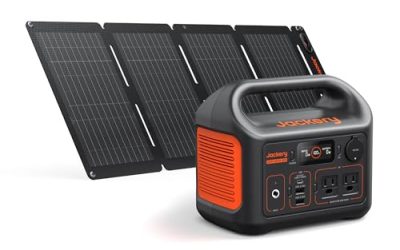
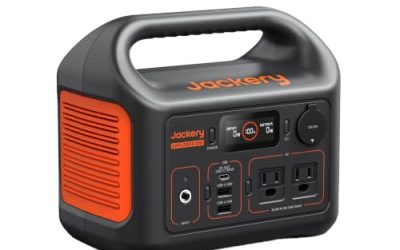
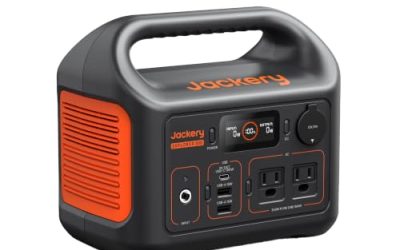
This bundle pairs a 292Wh battery with a 40W solar panel and a 300W AC outlet using pure sine wave output. The title also names RV, camping, travel, and blackout uses, which makes it a straightforward first purchase for someone who wants one kit that arrives ready to charge from sunlight.
- Strength: Panel is included, so no separate shopping for compatible solar gear.
- Strength: Pure sine wave AC suits laptops and other sensitive chargers.
- Trade-off: A 40W panel is slow against a 292Wh battery, so plan on wall charging for a quick reset.
Skip it if you want to run anything above 300W, such as a hair dryer or a space heater. It also makes less sense for anyone who expects the included panel alone to keep a laptop-heavy routine going, because a 40W panel is better treated as a supplement. Buyers who mostly camp near a vehicle can lean on a car or wall charge and use the sun as a bonus.
300W 280Wh Solar Generator Kit with 60W Panel
An unbranded-style kit that lists 280Wh, 300W, a 60W panel, a 110V pure sine wave outlet, and USB QC3.0 ports. The panel is a notch larger than the 40W bundled with the Jackery, which matters for solar refills.
- Strength: 60W panel gives more daylight recharging than the smallest bundles.
- Strength: Pure sine wave AC and quick-charge USB output for phones.
- Trade-off: The title offers little brand or cell chemistry detail, so check warranty terms before ordering.
Skip it if long-term support from a named manufacturer is a priority. The spec line is solid for the size, but a title cannot tell you how responsive the seller is when a port fails. Shoppers who value a documented service path should weigh that against the larger bundled panel.
MARBERO 155Wh Solar Generator
The title lists 155Wh, 150W surge, and a 30W solar panel kit. That puts it in the personal-electronics tier: phones, tablets, a camera, a small light. It is the kind of unit that rides in a daypack rather than in a vehicle trunk.
- Strength: Panel kit comes in the bundle.
- Strength: Small capacity keeps the entry point approachable.
- Trade-off: 150W of surge is thin for anything with a motor.
Skip it if you need to run a mini fridge, a fan with a strong motor, or a CPAP machine overnight. At this capacity, the practical use case is topping up devices during the day and keeping a lantern going at night. Anyone planning multi-day trips with several people sharing one battery will want to step up a tier.
Jackery HomePower 3600 Plus with 2x200W Panels
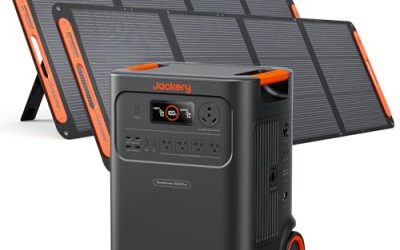
Here the numbers jump: 3,584Wh, 3,600W AC output, an LFP battery, and expandability to 21kWh, bundled with two 200W panels. The title describes it as essential home backup. As a portable solar generator, it is portable in the loosest sense, so check the dimensions before assuming it will go in a hatchback.
- Strength: Large capacity and 3,600W output handle multiple household loads.
- Strength: Expandable architecture lets you grow storage later.
- Trade-off: Capacity this large generally brings size and weight that the listing does not state, so verify before buying.
Skip it if your trips involve hiking in or carrying gear by hand. It also overshoots a basic weekend, since most campers will never need a 3,600W inverter. The appeal is for buyers who want one system that can serve a campsite, a long road trip, or a power outage at home without buying twice.
BROWEY 1600W Power Station with Built-in Solar Panel
A 1,024Wh LiFePO4 unit with 1,600W continuous (3,200W peak) output, 100W USB-C fast charging, and a built-in solar panel. The integrated panel is the distinguishing feature, since it removes one item from the packing list.
- Strength: 1,024Wh with 1,600W output covers a wider range of appliances than the small kits.
- Strength: LiFePO4 chemistry and 100W USB-C suit laptops.
- Trade-off: A built-in panel is convenient but limits how you angle it; the title does not list a separate panel input rating.
Skip it if you want a documented, named-panel expansion path. Buyers who plan to add more solar later should look for a listing that spells out the maximum solar input. For a single-trip kit that keeps the gear count low, though, the all-in-one design is a clear selling point.
100W 146Wh Solar Power Bank Kit with 40W Panels
This one combines a 146Wh battery, 100W output, and 40W of panels with an AC outlet, USB-A, USB-C, and DC output. It is the smallest bundle here that still offers a wall-style outlet.
- Strength: Full set of output types in a tiny footprint.
- Strength: Panels are included in the listing.
- Trade-off: 100W of output rules out most heated or motor-driven appliances.
Skip it if you plan to run a laptop charger and another device at once for long stretches. The 100W ceiling is shared across every port, so stacking loads gets crowded quickly. It works best as a grab-and-go emergency kit or a charger for small electronics on a day outing. The mix of AC, USB-A, USB-C, and DC outputs is unusual at this size, so it can charge a phone, run a small lamp, and top up a camera battery without extra adapters.
Jackery HomePower 3000 with 2x200W Panels
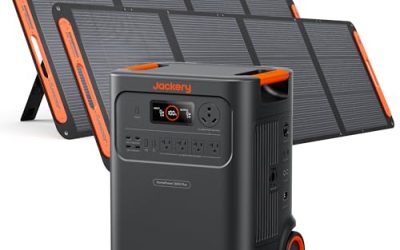
The title lists 3,072Wh, a 3,600W AC output, a 7,200W surge, an LFP battery, and two 200W panels. The surge number is the headline, because startup spikes from compressors and pumps are what overwhelm smaller systems.
- Strength: 7,200W surge handles demanding startups.
- Strength: LFP battery with a sizable panel pair in the bundle.
- Trade-off: Its size and cost tier are far above camping needs.
Skip it if your real load is a phone, a light, and a laptop. Buyers in that situation are paying for headroom they will not use. This is the unit for people who have already written down the wattage of a well pump, a freezer, or power tools and found the small kits wanting.
Which One Fits Your Situation
Weekend car camper with phones and a tablet
The Jackery Solar Generator 300 is the sensible middle: 292Wh, a panel in the box, and a known brand name. The 300W 280Wh kit is a cheaper alternative with a bigger panel.
Hiker who only needs a camera and a headlamp
The MARBERO 155Wh or the 146Wh power bank kit keeps capacity modest. Pick between them by whether you want the USB-C and DC mix of the latter.
Van or cabin owner who wants a fridge to run
The BROWEY 1,024Wh unit offers the 1,600W headroom that small kits lack. Confirm your fridge startup wattage first.
Household preparing for outages
The Jackery HomePower 3600 Plus and HomePower 3000 are the two in this list that target home backup. Choose the 3600 Plus for more storage and expandability, or the 3000 if the 7,200W surge is the deciding factor.
Common Mistakes
- Buying on watt-hours alone and ignoring continuous AC wattage.
- Assuming a bundled 30W or 40W panel will fully recharge the battery in one afternoon.
- Forgetting that a bundled panel’s connector must match the power station’s solar input.
- Choosing a home-class system for a hiking trip, then discovering it cannot be carried comfortably.
- Skipping the check for pure sine wave output when charging laptops and medical-adjacent gear.
Specs and Terms Explained
Panel wattage is a ceiling, not a promise
A panel’s listed watts describe output under ideal laboratory sunlight. Real conditions include haze, a tilted angle, a warm panel, and passing shade, so actual output is usually well below the label. When a kit pairs a 40W or 60W panel with a few hundred watt-hours of battery, expect a slow refill on a clear day and very little on a cloudy one.
MPPT charging
MPPT is a type of solar charge controller that adjusts voltage and current to pull more energy from a panel than a simple controller would. Many kits handle it inside the unit, so you only need to confirm the input voltage window and maximum input watts in the spec sheet before adding or swapping panels.
Input limits
Every station caps how much solar it can accept. Adding extra panels beyond that limit gains nothing, because the unit simply ignores the surplus. This matters most with the larger systems, where two panels may already approach the limit.
Built-in versus separate panels
A built-in panel, as on the BROWEY 1600W Power Station with Built-in Solar Panel, keeps everything in one package but cannot be pointed at the sun while the battery stays in shade. Folding panels on a cable let you leave the battery in a cool spot and move only the panel.
Which One Should You Buy?
| If you… | Choose… |
|---|---|
| charge phones and a camera on short trips | Jackery Solar Generator 300 with 40W Panel |
| want a slightly larger kit for a weekend car camp | 300W 280Wh Solar Generator Kit with 60W Panel |
| want a very compact kit for a day hike | 100W 146Wh Solar Power Bank Kit with 40W Panels |
| want a very small unit for basic charging only | MARBERO 155Wh Solar Generator |
| run a fridge in a van or cabin | Jackery HomePower 3000 with 2x200W Panels |
| want a single-piece package with a panel on top | BROWEY 1600W Power Station with Built-in Solar Panel |
| want the largest AC output with panels included | Jackery HomePower 3600 Plus with 2x200W Panels |
Who Should Skip These
Shoppers expecting a small kit to run a refrigerator, a space heater, or power tools will be disappointed; the bundled panels in the smaller kits are sized for slow top-ups, not heavy loads. Anyone camping mostly in dense forest or in winter should consider a kit with a larger battery and plan to recharge from a wall outlet or vehicle, since the panel may add little. And if you only ever need a phone charged once a day, a standard power bank is simpler.
Related guides
- Battery Powered Generator For Refrigerator
- Portable Power Station For Refrigerator
- Portable Power Station For Camping
Frequently Asked Questions
What does a solar generator actually consist of?
It is a battery, an inverter, and a charge controller, sold with or without solar panels. The sun refills the battery through the controller, and the inverter turns stored power into AC outlets.
Is a bigger panel always better?
Not if the battery cannot accept the input. Compare the panel wattage in the listing with the maximum solar input of the power station, since the lower figure sets the pace.
Can these units replace a gas generator?
For quiet, low-to-medium loads, yes, and they produce no exhaust. Gas generators emit carbon monoxide and must never run inside a tent, garage, or camper, whereas a battery unit has no combustion fumes.
How do I know which size to buy?
List every device, add up the watts for items running together, and multiply the hours you need them. Choose a battery with at least that watt-hour figure plus a 20 percent cushion.
Write Your Review
No reviews yet. Be the first to share your experience!