

Key takeaways
- Most camping trips need less power than people think, and a few need much more. A night under a tarp with a phone and a headlamp can be handled by a.
Most camping trips need less power than people think, and a few need much more. A night under a tarp with a phone and a headlamp can be handled by a battery the size of a paperback, while a family weekend with a cooler, a camp fan, and a drone to recharge calls for something closer to a small suitcase. The challenge when choosing a portable power station for camping is resisting the urge to buy for the worst-case trip instead of the typical one, because every extra watt-hour is weight you carry from the car to the site.
This guide groups six stations into three practical tiers: power-bank-sized units around 90 to 100Wh, mid-size 288 to 296Wh stations that fit a weekend, and a 1,000Wh-plus model for longer car-camping stays. It is aimed at tent campers, hammock campers who drive in, and van or truck-bed sleepers. All judgments are based on the specs printed in each product title, so confirm port layouts and weights on the manufacturer page before you buy in 2026.
Quick Picks
Our top picks


As an Amazon Associate we earn from qualifying purchases at no extra cost to you.
| Product | Best for | Key spec from the title |
|---|---|---|
| Jackery Explorer 300 | Simple weekend trips | 292Wh LiFePO4 battery |
| BLUETTI Elite 30 V2 | Fast turnaround and small appliances | 288Wh, 600W, 45-minute 0-80% charge |
| Anker SOLIX C300 DC | 12-volt and USB device focus | 288Wh LiFePO4, 300W |
| Jackery Explorer 1000 v2 | Multi-night car camping | 1070Wh, 1500W, 1-hour fast charge |
| Daran 89.6Wh | Ultralight device charging | 89.6Wh LiFePO4, 100W with PD fast charge |
| EnginStar 300W 296Wh | Budget-minded mid-size option | 296Wh, two 110V pure sine wave outlets |
How to Choose
Pick a capacity tier by the gear on your packing list
Write down every device and its wattage. Phones, cameras, and headlamps are tiny draws; a laptop and a portable fan are moderate; a cooler, an electric blanket, or a camp stove adapter is where capacity vanishes. Around 100Wh is a rechargeable power bank with an AC outlet: fine for phones, a tablet, and a light. The 288 to 296Wh class covers a weekend of those devices plus a fan or a small lantern array. At 1,000Wh and up, you can run a 12-volt cooler for days and still have juice left over.
Check output watts against your heaviest device
The smaller stations top out at 100W to 300W of AC output, which is fine for charging and lighting but not for a kettle or a hair dryer. Look for the continuous rating and any listed peak figure: the Daran unit lists 100W with a 200W peak, and the Bluetti lists 600W with a power-lifting mode for 1500W. If a device label says 800W, a 300W station will shut down no matter how much battery it has. Match the heaviest single load, then check the total of everything running at once.
Look at charging speed and flexibility
Camping rarely offers a wall socket, so charging options matter. A car cigarette-lighter cable is the most reliable way to refill on the drive. Solar input is a bonus that takes patience. Fast wall charging helps when you are packing the night before: the Bluetti title cites 45 minutes to reach 80 percent, and the Jackery Explorer 1000 v2 title cites a one-hour fast charge. USB-C power delivery inputs and outputs also let you refill the station from a laptop charger in a pinch.
Chemistry, weight, and safe placement
Most models in this guide list a LiFePO4 battery, which generally handles heat and repeated cycles better than older lithium-ion packs; the EnginStar title says only lithium. Smaller units weigh less than a bag of groceries; the 1,000Wh class is a two-hand lift. Keep the station off wet ground, out of direct sun in a closed car, and away from tent heaters. Unlike a gas generator, a battery station is safe to store inside a vehicle’s cabin while charging a few devices, but fuel generators produce carbon monoxide and should never be run near a tent or inside a vehicle.
The 6 Best Options
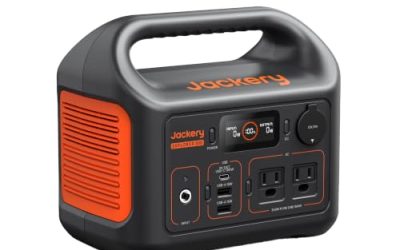
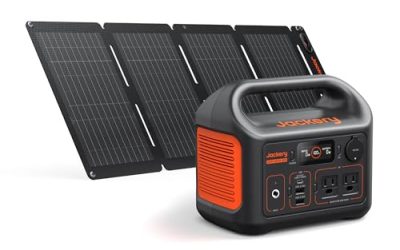
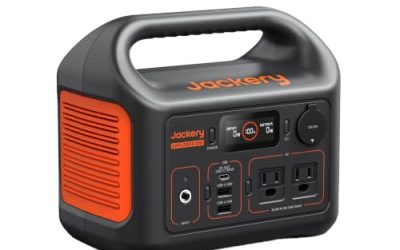
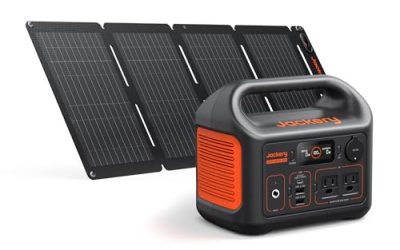
Jackery Explorer 300
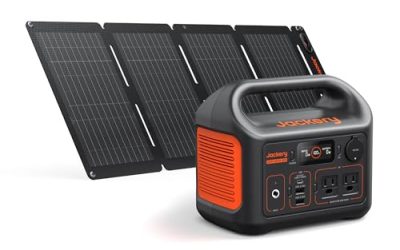
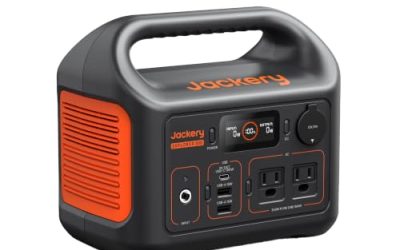
The Explorer 300 lists 292Wh and a LiFePO4 battery, and the title positions it for outdoors, camping, travel, hunting, and blackouts. It is the straightforward choice if you want a name-brand station for phones, cameras, and a small light setup without reading a spec sheet for an hour. Solar panel bundles are offered separately.
- Strength: 292Wh is a good fit for a one- or two-night trip.
- Strength: LiFePO4 chemistry is a long-lasting choice for gear that sits between trips.
- Trade-off: the title does not list a fast-charge feature, so the refill is slower than some rivals.
Skip it if you plan to run a cooler, a space heater, or anything near the limits of a 300-watt-class inverter, or if you want to add expansion batteries later. Campers who like fast refills before a trip may prefer a model whose title promises a quick charge.
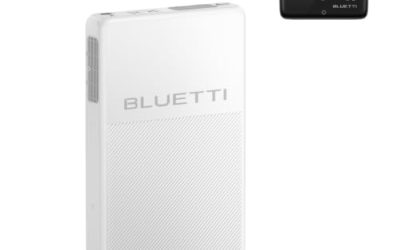
BLUETTI Elite 30 V2
This 288Wh LFP station lists 600W of output, a Power Lifting mode that reaches 1500W, a 10ms UPS function, and a 45-minute 0-80% fast charge. The jump in output compared with other 288Wh options means it may handle a higher-draw device that a plain 300W station would refuse, within the limits of the lifting mode. Read the manual on how that mode works and which loads it supports before counting on it.
- Strength: 600W output with a 1500W lifting mode handles more than most 288Wh units.
- Strength: a 45-minute 0-80% charge fits a quick pre-trip top-up.
- Trade-off: Power Lifting is a limited mode, not a way to run big appliances all day.
Skip it if you only need to charge phones and lights, where the extra capability is wasted.
Anker SOLIX C300 DC
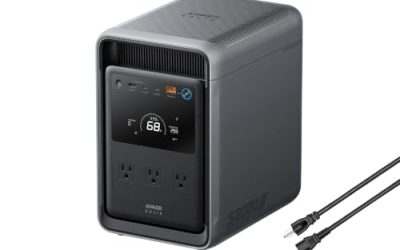
Anker lists 288Wh, 300W, and LiFePO4, aimed at outdoor camping, UPS use, travel, and emergencies. The “DC” in the name and the camping focus suggest this model leans on DC and USB outputs, so confirm the port list if you need a standard wall outlet. For devices that charge over USB-C or 12 volts, it is a compact way to power a camp.
- Strength: 288Wh of LiFePO4 is a sensible weekend size.
- Strength: it doubles as a UPS-style backup for a router or a few small devices at home.
- Trade-off: the title does not promise AC outlets, which limits it for corded gadgets.
Skip it if your camp relies on AC-powered gear such as a small coffee grinder or a laptop brick.
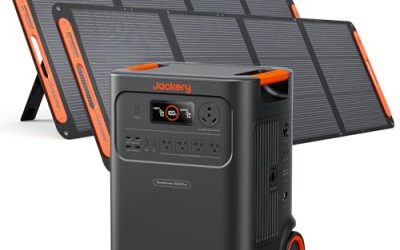
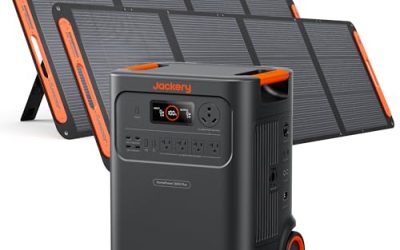
Jackery Explorer 1000 v2
At 1070Wh with 1500W of output, a one-hour fast charge, a LiFePO4 battery, and a 100W USB-C port, this is the stretch pick for campers who want a powered cooler and several chargers across multiple nights. It also works as home outage backup, which helps justify the larger footprint.
- Strength: 1070Wh supports a long weekend of mixed loads.
- Strength: the one-hour fast charge speeds up turnarounds between trips.
- Trade-off: it is much heavier than the 288Wh class and stays near the car.
Skip it if you hike any distance from the parking area or only camp for a single night. For short trips, this much capacity mostly means extra weight in the trunk, and the 288Wh class does the same job more easily.
Daran Portable Power Station 89.6Wh
Daran lists an 89.6Wh LiFePO4 battery with 100W (200W peak), AC outlets, and PD fast charging, and the title calls it a solar power bank. It is closer to a large power bank than a true station, and it is the lightest, most compact pick for tossing in a pack.
- Strength: tiny footprint is easy to pack for backpack-style trips.
- Strength: AC outlets and PD fast charging cover most small electronics.
- Trade-off: 89.6Wh is only a few phone charges plus lights, not a multi-night supply.
Skip it if you need to power a laptop for hours, a fan overnight, or anything that draws more than 100W. Treat it as a backup for small electronics and a nice companion to a larger station, rather than the only power source for a multi-night camp.
EnginStar 300W 296Wh Solar Generator
EnginStar lists a 296Wh lithium battery with two 110V pure sine wave AC outlets, aimed at camping, road trips, and RV use. It matches the mid-size class and gives you two AC sockets, which is useful when a laptop charger and a small fan both need a plug.
- Strength: two pure sine wave AC outlets add flexibility for a camp table.
- Strength: 296Wh matches the typical weekend-trip capacity tier.
- Trade-off: the 300W limit rules out any heating appliance.
Skip it if you want LiFePO4 chemistry spelled out in the title, since this listing says only lithium battery. Buyers who care about brand familiarity should also compare the warranty terms and the spec sheet for solar input and weight before choosing between this and the better-known 288Wh options.
Which One Fits Your Situation
Weekend tent trip with two people
The Jackery Explorer 300 covers phones, a camera, and lights comfortably, and its size makes it a no-fuss pick.
Backpack-style trips from a parked car
The Daran 89.6Wh is the pocket-friendly choice for charging a phone and a headlamp at camp without hauling extra weight.
Cold drinks and gadgets for four days
The Jackery Explorer 1000 v2 is built for it, with 1070Wh for a cooler plus chargers and a fast charge listed for the next trip.
Small appliance or heated blanket in cold weather
The BLUETTI Elite 30 V2 offers the highest output in the small class, with a 1500W lifting mode for brief surges. Pair it with a car charging cable or a wall top-up the night before so the battery is full when the temperature drops, since cold air reduces what any lithium pack can deliver.
Common Mistakes
- Buying on capacity alone and forgetting to check that the inverter can start your heaviest device.
- Planning to recharge by solar in a heavily wooded campsite where panels get little direct sun.
- Leaving the station in a hot, closed vehicle all afternoon.
- Assuming every “solar generator” includes a panel when many listings sell the station alone.
- Using a gas generator near the tent or inside a vehicle to top up the station, which creates a carbon monoxide hazard.
Sizing and Compatibility Checklist
A power station that looks right on paper can still fall short at the campsite. Check these points while packing.
- USB-C wattage. A phone charges happily on a modest port, but a laptop may need a much higher listed output. Match the port to the charger your laptop ships with.
- Cable quality. A cable built for fast charging matters as much as the port. Thin or unmarked cables often limit speed.
- Barrel and 12V adapters. Camp lights, small fans, and portable fridges often use a barrel plug or a car-style socket. Confirm the plug size and polarity on your gear before you rely on a DC output.
- Extension cord. Pack a short outdoor-safe cord so the station can sit in a dry spot while appliances stay where you use them.
- Flying to the trip. Airlines generally cap spare lithium batteries at 100Wh unless the airline approves a larger one, and bar anything above 160Wh from the cabin. The Daran Portable Power Station 89.6Wh sits under that 100Wh line by its name; the larger models in this guide will likely need to go by car.
- Charging before you go. Wall-charge everything the night before and note how long a full refill takes, so you do not discover a slow charger on the last day.
Who Should Skip These
A power station is a poor purchase for a backpacking trip where every ounce counts. A plain power bank covers a phone and a headlamp with a fraction of the weight. It is also not the right buy if your only goal is lighting a tent, since a rechargeable lantern is lighter. And for anything that heats, such as a space heater, an electric kettle, or a hair dryer, the load will drain a camping-sized battery within minutes; those jobs belong to a stove, a fuel source, or an RV hookup instead.
Setup and Care Tips
Store the unit upright and shaded in the car or tent, away from the sleeping bag and from any liquid. In cold weather, keep it inside the insulated part of your setup so the battery stays warm enough to deliver power and accept a charge. Turn off the AC inverter when you are only charging USB devices, since the inverter uses a little energy while idling. After each trip, dry off any dew, brush out dust around the ports, and put it away with a partial charge rather than full or empty.
Related guides
- Battery Powered Generator For Refrigerator
- Portable Power Station For Refrigerator
- Solar Generator For Home Backup
Frequently Asked Questions
How many watt-hours do I need for camping?
Around 100Wh handles phones and lights for a night, roughly 300Wh covers a weekend of small devices, and 1,000Wh or more covers a cooler and larger gear.
Can a 300Wh power station run a camp fridge?
It can power small 12-volt coolers for a short time, but a compressor fridge will drain it fast. Check the cooler’s wattage and divide the battery capacity by it.
Is LiFePO4 worth looking for?
Yes, for most buyers. It generally offers longer cycle life and better heat tolerance than older lithium types, which suits gear that sits in a trunk.
Do I need a solar panel?
For trips of one or two nights, charging at home first is usually enough. For longer stays, a panel or a car charging cable keeps the station topped up.
Write Your Review
No reviews yet. Be the first to share your experience!