

Key takeaways
- The phrase "3000 watt solar generator" hides a decision that trips up a lot of shoppers: do you need 3,000 watts of output.
The phrase “3000 watt solar generator” hides a decision that trips up a lot of shoppers: do you need 3,000 watts of output, 3,000 watt-hours of storage, or both? A unit that can push 3,600 watts through its AC outlets will start a well pump or a mini-split compressor, but it may run dry in a couple of hours if the battery is small. A unit with a big battery but a modest inverter will last all night on lights and a refrigerator yet trip the moment a space heater or circuit saw kicks on. This guide sorts the listed models by that exact tradeoff so you can match the number on the box to the loads in your life.
It is written for people shopping for home backup, a cabin, an RV, or a job site who want a battery-and-solar system rather than a gas engine. Three of the models below pair a 3,600-watt AC rating with roughly 3,000 watt-hours or more. The rest sit in the 1,800 to 2,400-watt range with a higher surge figure, so they are included as the “3000-watt class” for buyers whose real loads are smaller than they assumed. Everything here is judged from the specs printed in each product title, so confirm details on the manufacturer spec sheet before you buy in 2026.
Quick Picks
Our top picks





As an Amazon Associate we earn from qualifying purchases at no extra cost to you.
| Product | Best for | Key spec from the title |
|---|---|---|
| PECRON F3000LFP | Home backup that can grow later | 3072Wh, 3600W, expandable to 10752Wh |
| Jackery HomePower 3000 | Heavy motor loads at startup | 3072Wh, 3600W AC, 7200W surge |
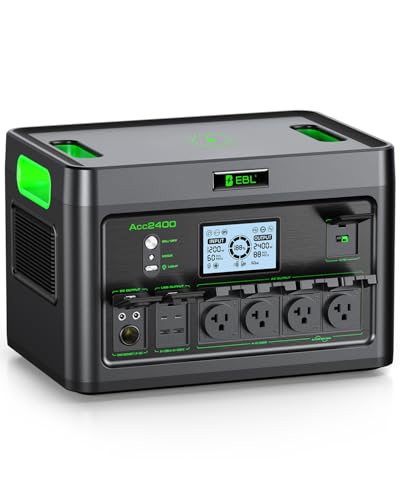
| EBL 2400W Power Station | Many devices at once | 1843.2Wh, 2400W AC, 12 outlets |
| EcoFlow Delta 3 Classic | Compact solar bundle on a tighter budget | 1024Wh, 1800W AC, 3600W surge |
| Jackery HomePower 3600 Plus | Longest runtime and future growth | 3584Wh, 3600W AC, expandable to 21kWh |
| Anker SOLIX C1000 Gen 2 | Smaller loads with a panel included | 1,024Wh LiFePO4, 2,000W, up to 3,000W output |
How to Choose
Separate continuous watts from surge watts
Continuous output is what the inverter can deliver all day; surge (or peak) is a brief burst for motor startup. A 3,600-watt continuous rating handles a 120-volt well pump, a window air conditioner, and a refrigerator together. A unit listing 1,800 watts continuous with a 3,600-watt surge can start the same motors for a second or two, but it cannot sustain them stacked up. Add up the running watts of everything you plan to power at once, then add the largest single startup spike. If the total goes past the continuous number, step up a size.
Size the battery in watt-hours, then divide
Runtime is roughly capacity divided by load, minus inverter losses. A 3,000-watt-hour class battery feeding a 150-watt refrigerator that cycles on and off can last a long stretch, while the same battery feeding a 1,500-watt space heater is empty in about two hours. The 1,000-watt-hour models in this group suit shorter outages, a work truck, or camping, not whole-home circuits. Expandable systems matter if you expect to add battery modules later, so check the maximum capacity printed in the listing.
Check the solar input before you count on panels
Several listings here bundle panels, and bundles change the math. Two 200-watt panels in full sun refill a large battery over several days, not a few hours, so a high solar input rating and a wall-charging option both matter. Look for the maximum solar input wattage and voltage range on the spec sheet, and confirm your panel connector type. A bundle is convenient, but a panel sold alone is simply a panel, and it is not a substitute for the battery and inverter you actually need.
Chemistry, outlets, and safety
Every model on this page lists a LiFePO4 (LFP) battery, the chemistry generally favored for longer cycle life and better thermal stability than older lithium types. Count the 120-volt outlets, check whether a 30-amp RV or 240-volt connection is offered, and confirm the unit can pass power through while charging if you want it to act as a backup. Remember that gas generators produce carbon monoxide and must never run in a garage, basement, or near an open window; a battery system has no exhaust, which is the reason many people choose one for indoor-adjacent backup. Ignore flashy marketing numbers like total outlet counts if the continuous rating is the limit.
The 6 Best Options
PECRON F3000LFP
The F3000LFP pairs a 3072Wh LiFePO4 battery with a 3600W output, and the title says capacity can expand to 10752Wh. That puts it in the same class as the biggest home-backup units while leaving room to grow. Listings come with different panel bundles, from a single 200W panel to a 300W panel, so shoppers can choose how much solar to start with.
- Strength: 3600W output covers most household appliances at once.
- Strength: expansion to 10752Wh means the system can scale with your needs.
- Trade-off: a single 200W or 300W panel will recharge a battery this large slowly.
Skip it if you only want a camping box that one person can carry, or if you do not plan to add capacity later and would rather pay for a lighter unit. Buyers who do want expansion should read the spec sheet for which add-on battery modules are compatible and how they connect.
Jackery HomePower 3000
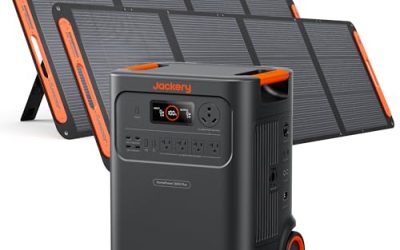
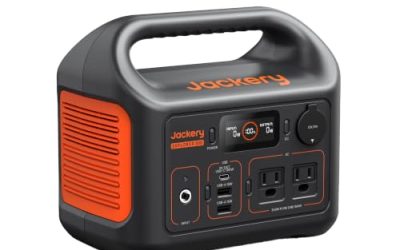
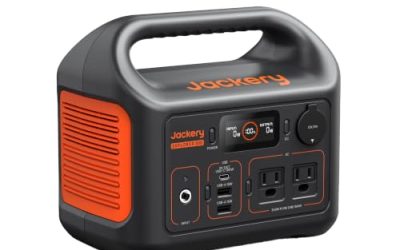
Jackery lists this model at 3072Wh with 3600W of AC output and a 7200W surge figure, which stands out when you are starting a compressor or a pump. It uses an LFP battery and is described as essential backup for home use. It is offered alone or as a bundle with two 200W solar panels, so you can buy the station first and add panels afterward.
- Strength: the 7200W surge figure helps with motor startup spikes.
- Strength: bundle with two 200W panels gives a ready-to-use solar setup.
- Trade-off: it targets home backup, so it is a heavy, stay-at-home purchase rather than a grab-and-go unit.
Skip it if your loads are under 1,000 watts and a smaller, cheaper battery would do. It also makes little sense for anyone who needs to move the unit often, since this class of station is built to sit near a panel or a breaker box.
EBL 2400W Portable Power Station
EBL lists 2400W of AC output from a 1843.2Wh LiFePO4 battery, with 12 outlets and a USB-C PD port. It is aimed at home battery backup and works as a solar generator. The outlet count is the headline: it suits someone running a router, a laptop, lights, and a refrigerator at once without a power strip tower.
- Strength: 12 outlets make it easy to spread out many small devices.
- Strength: the 2400W AC rating is high for its battery size.
- Trade-off: at 1843.2Wh, it will not carry big loads for long, and it falls below the 3,000-watt mark.
Skip it if you need to start a large well pump or a central air unit. Treat it as the entry point of the group for buyers whose real loads are a refrigerator, a few electronics, and lighting rather than heavy motors.
EcoFlow Delta 3 Classic
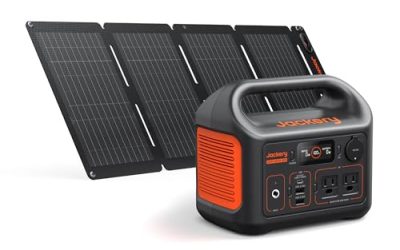
This listing bundles a 220W solar panel with a 1024Wh LiFePO4 station listed at 1800W AC and a 3600W surge, plus a 100W USB-C output. The surge figure lets it start some motor loads that its continuous rating would suggest are out of reach. It is the most compact entry here and suits buyers who want solar included from day one.
- Strength: 3600W surge helps with tools and small compressors.
- Strength: a bundled 220W panel is a complete starter kit.
- Trade-off: 1024Wh is small next to the 3,000-watt-hour models, so runtime on big loads is short.
Skip it if you want multi-day backup for a whole house or need a true 3,000-watt continuous inverter. Because the listing already includes a panel, it works best as a first step for a household that expects to add capacity or panels only if outages turn out to be a recurring problem.
Jackery HomePower 3600 Plus
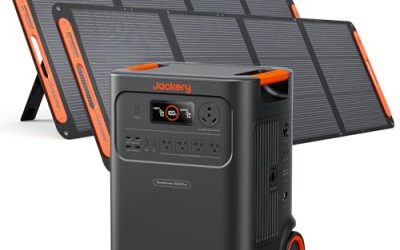
The largest battery in the group at 3584Wh, with 3600W AC output and a listed expansion path up to 21kWh. The listing shows a bundle with two 200W solar panels and an LFP battery for essential home backup. It is the pick for people who want the most stored energy before adding any modules.
- Strength: 3584Wh is the biggest starting capacity on this page.
- Strength: expandable to 21kWh, so it can grow into a serious backup system.
- Trade-off: it sits at the premium end, and two 200W panels recharge it slowly.
Skip it if you only need a few hours of power for camping or short outages. The extra capacity is wasted on small loads, and a lighter station would be far easier to carry and store between uses.
Anker SOLIX C1000 Gen 2
Anker pairs a 200W solar panel with a 1,024Wh LiFePO4 battery and a 2,000W output figure, with up to 3,000W output mentioned in the listing. That makes it a compact route into the 3000-watt class for people who care more about short bursts than long runtime. Think of it as a tool-and-gadget station with solar included rather than a whole-house answer, and read the manufacturer notes on what the higher output mode requires.
- Strength: the up-to-3,000W figure covers brief high-draw tools.
- Strength: a bundled 200W panel provides a ready solar option.
- Trade-off: 1,024Wh runs out quickly under a heavy load.
Skip it if you plan to run a refrigerator and well pump overnight, or if the up-to-3,000W figure is a hard requirement for continuous use rather than occasional bursts.
Which One Fits Your Situation
Whole-home backup during outages
Choose the Jackery HomePower 3600 Plus for the biggest starting battery and the longest expansion path, or the PECRON F3000LFP if you want a similar output and the option to reach 10752Wh. Both pair 3600W output with a battery above 3,000Wh.
Starting a well pump or compressor
The Jackery HomePower 3000 lists a 7200W surge figure, which is the most direct answer to startup spikes. Match it with a transfer switch or dedicated outlet, and have an electrician check the wiring.
Running lots of small devices at a cabin
The EBL 2400W Power Station, with 12 outlets and 2400W of AC, makes sense when your loads are many small things rather than one big one.
Lighter loads with solar included
The EcoFlow Delta 3 Classic or the Anker SOLIX C1000 Gen 2 both ship with a panel and 1,024Wh class batteries, a good fit for tools and short outages.
Common Mistakes
- Confusing watts with watt-hours and assuming a 3,000-watt rating means three hours of runtime on a 3,000-watt load.
- Ignoring startup surge on pumps, compressors, and air conditioners, then watching the inverter shut down.
- Counting on a single panel to refill a large battery in one afternoon.
- Running a gas generator as a cheaper fallback inside a garage or enclosed porch, which risks carbon monoxide poisoning.
- Buying for outlet count alone while the continuous output rating is the real limit.
Sizing and Compatibility Checklist
Work through these checks before ordering a unit in this class, because most returns trace back to a mismatch rather than a defect.
- Voltage of every load. List each appliance and note whether it runs on 120V or 240V. Well pumps, electric dryers, and some central air systems are often 240V, and a standard 3,000-watt-class power station may only offer 120V outlets. Confirm the outlet layout in the spec sheet.
- Plug shape and amperage. A household plug and an RV-style locking plug are not interchangeable. If a load needs a 30-amp connection, look for that exact outlet or plan for an adapter built for the job.
- Motor loads. Anything with a compressor or pump can pull several times its running watts for a moment at startup. Compare that figure with the surge number, not just the continuous one.
- How power reaches the house. Extension cords to individual appliances are the simple route. Feeding a breaker panel should go through a transfer switch or inlet installed by a licensed electrician. Never push power backward through an outlet with a homemade double-male cord.
- Cord gauge and length. Long, thin cords waste power and run warm. Keep runs short and use heavy-gauge cords sized for the load.
- Recharge path. Check wall-charging time and the solar input limit together, so you know whether a cloudy day can refill what a night used.
Setup and Care Tips
A big battery rewards a little routine. Place the unit on a dry, level, shaded surface with open space around the vents, and never run it in a closed garage or enclosed room. Lithium cells charge poorly in freezing weather, so keep the unit in a conditioned space during winter outages and let it warm up before charging. For storage, many manufacturers advise leaving the battery partly charged rather than empty or topped off, and refreshing it every few months; follow the manual for your unit. Run it under a modest household load every so often so a dead inverter or a bad port shows up on a calm day, not mid-storm.
Who Should Skip These
A 3,000-watt-class battery is the wrong tool if the goal is running an electric furnace, central air, or an electric water heater for days at a time. Those loads drain even a large battery quickly, and a standby generator or a purpose-built home battery system fits better. Shoppers who only want phones, a router, and a few lights during an outage will also overbuy here. The Anker SOLIX C1000 Gen 2 sits at the lighter end of this guide and covers that kind of use with far less weight to move. Finally, if nobody in the household can safely move a heavy unit or you have no dry indoor spot for it, a smaller model is the realistic choice.
Which One Should You Buy?
| If you… | Choose… |
|---|---|
| want the largest AC output in this guide for whole-home essentials | Jackery HomePower 3600 Plus |
| want a 3,000-watt-class unit built around LFP chemistry | PECRON F3000LFP |
| need roughly 2,400 watts rather than the full 3,000 | EBL 2400W Portable Power Station |
| want a straightforward 3,000-class option from a large brand | Jackery HomePower 3000 |
| mostly run small devices and want less bulk | Anker SOLIX C1000 Gen 2 |
Related guides
- Battery Powered Generator For Refrigerator
- Portable Power Station For Refrigerator
- Portable Power Station For Camping
Frequently Asked Questions
Can a 3000 watt solar generator run a whole house?
Not by itself in most cases. A 3,600-watt inverter can run a refrigerator, lights, and a few appliances, but central air or electric heat will exceed it. Pick essential circuits and run them through a transfer switch.
Is a 3000-watt-hour battery the same as a 3000-watt generator?
No. Watt-hours measure how much energy is stored; watts measure how fast you can use it. Check both numbers on the spec sheet.
How many solar panels do I need?
It depends on how quickly you want to recharge. More panels and a higher solar input rating shorten recharge time, and many people also use wall charging to top up before a storm.
Are battery generators safer than gas generators?
They produce no exhaust, so there is no carbon monoxide risk from the unit itself. They still need ventilation and a dry location, and you should follow the manual for charging and storage.
Write Your Review
No reviews yet. Be the first to share your experience!