

Key takeaways
- Compare the best wheel stud installers for lug stud replacement: bearing pull tools, thread sizes covered, and the no-hammer method that protects bearings.
As an Amazon Associate we earn from qualifying purchases.
A snapped or spinning wheel stud looks like a ten-minute job until the new stud has to go back in. The old way is a hammer: drive the stud into the hub flange from behind and hope it seats straight. That method note matters more than any single tool on this page, because hammering a stud in can damage the hub bearing. Each blow sends shock through the bearing races, and a bearing that was healthy before the repair can end up brinelled and noisy afterward. A wheel stud installer exists to avoid exactly that. It pulls the new stud into the flange with controlled, steady force instead of impact.
Every tool below works on the same principle. The new stud is pushed through its hole in the hub flange from behind. The installer body slides over the threaded end of the stud, and a lug nut is threaded on against the tool. As the nut is tightened with a ratchet or an impact wrench, it draws the stud forward until the knurled shoulder under the stud head seats fully against the flange. A bearing inside the tool lets the nut turn without twisting the stud or galling its threads. The result is a stud that pulls in square, with no hammer anywhere near the bearing.
Affiliate Disclosure: This article contains affiliate links. If you buy through them, we may earn a commission at no extra cost to you.
How the pull-in method works, step by step
Access comes first. On most cars the old stud is pressed or driven out with the hub supported, and the new stud is fed through the flange hole from behind, sometimes after rotating the hub to line the hole up with a gap in the backing plate. The installer then goes over the stud threads, an open-end lug nut is threaded on by hand until it contacts the tool, and the nut is run down with a ratchet or impact wrench. The stud slides forward in one smooth pull. The job is done when the head of the stud sits flat and flush against the back of the flange, with no gap.
Two small habits extend tool life. Use an open-end lug nut rather than a capped one, so the nut seats flat against the tool instead of bottoming out on its cap. And put a washer and a smear of grease between the lug nut and the tool face where the design allows it; the bearing does most of the friction work, but grease reduces wear on both. The bearing itself is a wear part on every tool in this class, and on the original Lisle design it is explicitly not covered by the warranty.
What to check before choosing
Stud diameter is the first split in this class. Standard installers in the common 22800 pattern are made for most automotive and light-duty truck studs. Heavier trucks run larger studs, and a standard sleeve tool will not fit over them; the truck pattern covers studs up to 22 mm, or 7/8 inch, in diameter. Match the tool to the largest stud it may meet, not the smallest.
Thread size is the second check, and it is about the nut, not the tool body. The sleeve fits over the stud shaft, but the pulling force comes from a lug nut threaded onto that stud, so the nut must match the stud thread exactly: M12x1.25 and M12x1.5 cover most cars, M14x1.5 appears on larger cars and trucks, and older domestic vehicles may use 1/2-20. Most installers rely on the vehicle’s own lug nut. One kit below includes hex nuts in the three common metric sizes, which matters when the vehicle’s nuts are capped or damaged.
Finally, remember what these tools do not do. An installer seats a new press-in stud; it does not remove the old one, and it does not repair stripped threads. Removal and thread-restoration tools are separate classes, and none of the picks below should be bought expecting those jobs.
1. Lisle 22800 Wheel Stud Installer — the original pattern

The Lisle 22800 is the tool that defined this class, and the design most other installers copy. Its two-piece body uses a roller bearing to cut friction as the lug nut is tightened, so the stud pulls in straight instead of twisting. Lisle rates it for most automotive and light-duty truck wheel studs, import and domestic, driven by a ratchet or an impact wrench.
The 22800 works with the stud’s own lug nut, and Lisle’s guidance is to use an open-end lug nut so it bears flat on the tool. The warranty position is stated plainly on the listing: limited lifetime coverage on the tool, with the bearing excluded because it wears with use. This is the reference pick for standard car and light-truck studs.
Specs
- Model: Lisle 22800
- Design: Two-piece installer with roller bearing
- Material: Tool steel
- Drive: Ratchet or impact wrench
- Fitment: Most automotive and light-duty truck wheel studs, import and domestic
- Lug nut: Uses the stud’s own lug nut; open-end lug nuts recommended
- Product dimensions: 7.5 x 4.75 x 1.25 in
- Warranty: Limited lifetime, bearing excluded
- UPC: 083045228004
2. ecocstm WSIT-01 Wheel Stud Installer Kit — nuts included

The ecocstm WSIT-01 follows the 22800 pattern but ships as a small kit: the installer tool plus three hex lug nuts, in M12x1.25, M12x1.5, and M14x1.5. That makes it the only pick here that arrives ready for the three most common metric stud threads without borrowing a nut from the vehicle. For a car whose factory lug nuts are capped or chrome-sleeved, having plain hex nuts in the box is a genuine advantage, because a capped nut can bottom out against the tool before the stud is fully seated.
The tool itself is steel and iron with an oxidation-treated surface, and its stated dimensions are compact: 1.6 x 0.6 x 0.8 in. It drives with a ratchet or an impact wrench like the rest of the class. No warranty term is stated on the listing, and no bearing specification is published, so the honest summary is that this pick trades paperwork for completeness: the thread coverage is in the box, the support terms are not stated.
Specs
- Model: ecocstm WSIT-01
- Contents: Installer tool plus 3 hex lug nuts
- Nut thread sizes: M12x1.25, M12x1.5, M14x1.5
- Material: Steel and iron, oxidation-treated surface
- Dimensions: 1.6 x 0.6 x 0.8 in
- Drive: Ratchet or impact wrench
- Fitment: Cars and light-duty trucks with matching stud threads
- Warranty: Not stated
3. PEATOVIE 22800 Wheel Stud Installer — the warranty-led copy

The PEATOVIE tool is a steel 22800-pattern installer aimed squarely at the same work as the Lisle: most automotive and light-duty truck wheel studs, pulled in with a ratchet or an impact wrench. Its listing describes high-quality steel with abrasion resistance and an anti-oxidation, rust-resistant finish, which is the right set of claims for a tool that lives in a toolbox and gets covered in brake dust and road grit.
What separates it from the pack is the stated warranty: one year of warranty service. That is shorter than the Lisle’s limited lifetime tool coverage, but it is a written term on a tool whose listings often state none at all. No dimensions are published for this one, and no hex nuts are included, so it relies on the vehicle’s own open-end lug nut like the original. Choose it when the job is standard-size studs and a stated warranty matters more than included extras.
Specs
- Model: PEATOVIE 22800 pattern
- Material: Steel, abrasion-resistant and anti-oxidation finish
- Drive: Ratchet or impact wrench
- Fitment: Most automotive and light-duty truck wheel studs
- Lug nut: Uses the stud’s own lug nut, not included
- Dimensions: Not stated
- Warranty: 1 year
4. JUSTTOP 22800 Wheel Stud Installer — forged, with published dimensions
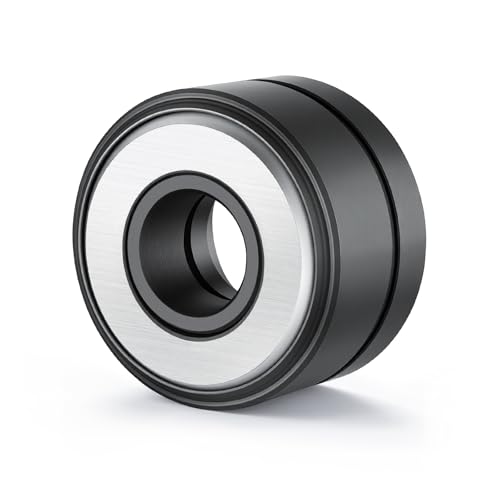
The JUSTTOP installer is another 22800-pattern tool, but it publishes the numbers most listings leave out. It is forged from high-grade steel alloy with an oxidation finish, and the stated dimensions are an outer diameter of 1.56 in, an inner diameter of 0.57 in, and a height of 0.9 in. That inner diameter is the figure to check against the stud: the sleeve has to pass over the threaded section of the stud with room to spare, and a published measurement lets that check happen before ordering instead of after.
The listing also calls out a use case the shorter tools struggle with: studs that are longer than standard, where a shallow installer body can run out of travel before the shoulder seats. The JUSTTOP description presents the tool as solving that overlong-stud problem. No warranty term is stated, and no hex nuts are included.
Specs
- Model: JUSTTOP 22800 pattern
- Material: Forged steel alloy, oxidation finish
- Outer diameter: 1.56 in
- Inner diameter: 0.57 in
- Height: 0.9 in
- Drive: Ratchet or impact wrench
- Fitment: Most automotive and light-duty truck wheel studs, including overlong studs
- Lug nut: Uses the stud’s own lug nut, not included
- Warranty: Not stated
5. OEMTOOLS 24235 Truck Wheel Stud Installer — for studs up to 22 mm

The OEMTOOLS 24235 is the heavy-duty end of this class. Where the 22800-pattern tools stop at standard car and light-truck studs, the 24235 is built for truck wheel studs up to 22 mm, or 7/8 inch, in diameter. It works the same way, pulling the stud into place with a ratchet or an impact wrench rather than a hammer, and the design intent is the same throughout the OEMTOOLS line: seat the stud with controlled force so the lug nut and the new stud’s threads are not damaged in the process.
OEMTOOLS, a brand of Great Neck Saw Mfg. Inc., sells this tool alongside a standard-size companion, the 24234, which covers studs up to 9/16 inch; the two are also sold together as a set. For a standard car, the 24235 is more tool than the job needs. For a heavier truck, a trailer, or any hub running large-diameter studs, it is the only pick on this page sized for the work. Check the stud diameter first; if it is anywhere near the 22 mm ceiling of this tool, this is the correct class of installer.
Specs
- Model: OEMTOOLS 24235
- Manufacturer: Great Neck Saw Mfg. Inc.
- Maximum stud diameter: 22 mm (7/8 in)
- Drive: Ratchet or impact wrench
- Product dimensions: 12.19 x 7.87 x 1.78 cm
- Item weight: 113.4 g
- Companion model: OEMTOOLS 24234 for studs up to 9/16 in
Standard pattern or truck tool: the size decision
Four of the five picks share the 22800 pattern because that pattern covers the studs most people actually replace: passenger cars, SUVs, and light-duty trucks, in thread sizes such as M12x1.25, M12x1.5, and M14x1.5. Within that group the differences are about what is in the box and what is in writing. The Lisle is the original, with the clearest warranty terms and a bearing openly excluded from them. The ecocstm kit includes the three common metric hex nuts. The PEATOVIE states a one-year warranty. The JUSTTOP publishes its dimensions and suits overlong studs.
The OEMTOOLS 24235 sits outside that group on size alone. Stud diameter, not brand preference, should make this decision: measure the stud, and if it is a large truck stud approaching 22 mm, start with the truck tool. If it is a standard automotive stud, any of the 22800-pattern tools will pull it in the same way.
One safety check applies to the whole class. The CPSC SaferProducts database was checked for recalls under the product names for this tool class, and no recalls were returned for any wheel stud installer. These are unpowered hand tools, so the safety work is in the method: support the hub, seat the stud fully until its head is flush with the flange, and torque the wheel fasteners to the vehicle maker’s specification once the wheel is back on.
FAQ
Can a wheel stud be installed without a dedicated installer?
The common field workaround is a stack of flat washers and a lug nut, tightened to draw the stud in. It can work, but there is no bearing, so the nut drags and can gall the new stud’s threads, and the stack can tilt and pull the stud in crooked. Hammering the stud in from behind is the method to avoid entirely, because the impact travels into the hub bearing.
Does a wheel stud installer also remove old studs?
No. Every tool on this page only installs. The old stud has to come out first, usually by pressing it out or driving it out with the hub properly supported, and removal tools and shop presses are a different class of equipment. An installer will not repair a hub or a stud with damaged threads either.
Which thread sizes should the lug nut match?
The nut must match the stud being installed, exactly. M12x1.25 and M12x1.5 cover most passenger cars, M14x1.5 is common on larger cars and trucks, and M14x2.0 and 1/2-20 appear on heavier and older domestic applications. The ecocstm kit includes hex nuts in the first three of those sizes. With every other pick, the vehicle’s own lug nut does the pulling, and it should be an open-end nut so it seats flat against the tool.
How long does the bearing in the tool last?
The bearing is a wear part on every installer in this class. Lisle states openly that the bearing on the 22800 will wear with use and is not covered by its warranty. A washer and grease between the lug nut and the tool face slow that wear. For occasional home use the bearing should last through many stud replacements; high-volume shop use will wear it faster.
The bottom line
For standard lug stud replacement, the Lisle 22800 remains the reference tool: the original bearing design, clear fitment, and warranty terms stated in plain language. The ecocstm WSIT-01 is the pick when the vehicle’s own lug nuts cannot be used, because its box includes M12x1.25, M12x1.5, and M14x1.5 hex nuts. The PEATOVIE and JUSTTOP tools cover the same standard studs, with a stated one-year warranty and published forged dimensions respectively. And when the studs are truck-size, up to 22 mm in diameter, the OEMTOOLS 24235 is the one tool here built for them. Whichever one ends up in the toolbox, the point is the same: pull the stud in, never hammer it, and leave the hub bearing out of the repair.
More from Amazon
Programs that pair well with the guide above. Offers and eligibility are set by Amazon and may change.
Free shipping on eligible items, Prime Video and more. Eligible new members can start with a free trial.
Start a Prime free trialA Prime membership for ages 18-24 with a trial period. Eligibility is set by Amazon.
See Prime for Young AdultsAudiobooks and podcasts to listen to on the go. Eligible new members can start with a free trial.
Try Audible freeAd-free music streaming. Eligible new subscribers can start with a free trial.
Try Music Unlimited freeAs an Amazon Associate we earn from qualifying purchases.

Write Your Review
No reviews yet. Be the first to share your experience!