

Our Short List of 3

- Capacity: 45 L
- Dimensions: 13 x 12 x 18.5 in
- Material: 600D polyester, bluesign-approved fabrics
- Boot storage: Separate waterproof compartment with drain holes
- Capacity: 50 L
- Material: 600D polyester
- Boot storage: Rear zippered compartment with tarpaulin lining
- Main compartment: Fits helmet, goggles, gloves and layers

- Dimensions: 17 x 15 x 14 in
- Weight: 3.8 lb
- Material: Polyester with waterproof PVC bottom
- Boot storage: Two separate side boot compartments, vented
All 4 Picks at a Glance
| Product | Specs | Action |
|---|---|---|
| 1. Thule RoundTrip Boot Backpack 45L — The Carry-On Specialist |
| Check price on Amazon |
| 2. Dakine Boot Pack 50L — The All-Round Backpack |
| Check price on Amazon |
| 3. Athalon Everything Boot Bag/Backpack — The Big Gear Hauler |
| Check price on Amazon |
 4. Athletico Ski Boot Bag — The Triangular Classic |
| Check price on Amazon |
Key takeaways
- Five ski boot bags with vented boot garages, drainage grommets and waterproof bottoms, from a carry-on-ready 38L pack to a 50L full-kit hauler.
As an Amazon Associate we earn from qualifying purchases.
A ski boot bag has one job that matters more than all the others: keeping a pair of snow-soaked boots from sharing their meltwater with everything else you own. Boots come off the mountain wet inside and out, and whatever they touch in the car, the condo or the airplane cabin gets damp too. A proper boot bag solves this with a separate, lined boot compartment, vents and drainage that let moisture escape instead of sealing it in, and a waterproof base that can sit in slush without wicking it up.
The five bags below cover the main shapes in the category. Backpack-style bags carry like a hiking pack and keep both hands free for skis and poles. Trapezoidal bags point the boots toe-to-toe in side pockets around a central gear well, which balances the load and keeps wet shells away from clothing. Compact travel bags trade raw volume for overhead-bin manners. What separates good ones from gym bags with a logo is the wet-gear engineering: ventilated boot garages, grommet drainage, tarpaulin or coated bottoms, and a fleece-lined place for goggles to live.
One reality check for flyers: on many airlines a boot bag travels together with a ski bag as a single piece of sports equipment rather than as a second checked item, which is why so many skiers carry boots on board instead. Boots are the one piece of kit that cannot be replaced by a rental fleet at the last minute, so carry-on-friendly dimensions and stowable straps are worth real attention if your ski trips start at an airport.
Affiliate Disclosure: This article contains affiliate links. If you buy through a link on this page, we may earn a commission at no extra cost to you.
1. Thule RoundTrip Boot Backpack 45L — The Carry-On Specialist
- Capacity: 45 L
- Dimensions: 13 x 12 x 18.5 in
- Material: 600D polyester, bluesign-approved fabrics
- Boot storage: Separate waterproof compartment with drain holes
Thule designed the RoundTrip 45L around the airport, and it shows in the details. The boots ride in their own waterproof compartment with drain holes in the base, so meltwater exits the bag instead of pooling under your liners. A zip-out step pad gives you a dry, clean surface to stand on while changing in a slushy parking lot — a small feature that becomes a favorite within one trip.
At 13 x 12 x 18.5 inches the soft body squeezes into most overhead bins, and the padded backpack straps with a sternum strap make the terminal-to-gate walk genuinely comfortable. A fleece-lined pocket protects goggles, the main compartment swallows a helmet and a jacket, and the zippers accept a travel lock for checked use. Storage inside is organized rather than cavernous: four exterior pockets plus the main well, all easy to reach with gloves on.
The trade-off is volume. At 45 liters this is a one-person, one-day-plus-travel bag; multi-day clothing for a long trip will need a second piece of luggage. If your ski travel means flying with boots in the cabin and skiing the day you land, this is the most complete package here.
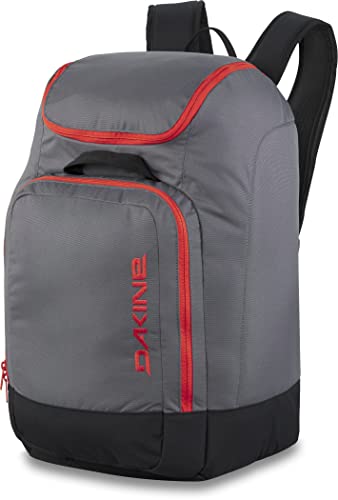
2. Dakine Boot Pack 50L — The All-Round Backpack
- Capacity: 50 L
- Material: 600D polyester
- Boot storage: Rear zippered compartment with tarpaulin lining
- Main compartment: Fits helmet, goggles, gloves and layers
The Boot Pack 50L is the bag skiers buy when they want one pack for the car, the lodge and the occasional flight. The boots load into a rear compartment lined with tarpaulin, which does two things at once: meltwater stays in the boot zone where it can be wiped out, and the sharp edges of buckles and walk-mode levers never chew into the main compartment’s contents.
That main compartment is the reason this bag keeps winning weekending duty. Fifty liters swallows a helmet, goggles, gloves, a shell and a mid-layer with room left over, so the whole ski day lives in one bag and the morning routine becomes grab-and-go. The 600-denier polyester shell is the same weight class Dakine uses across its luggage line, and it shrugs off parking-lot drags and trunk duty season after season.
It lacks the Thule’s drainage holes and changing pad, and the boot compartment is a single shared space rather than two divided pockets, so very wet boots should be toweled off before a long drive. For resort skiers who drive more than they fly, it is the balanced default: big enough for a full kit, tough enough to live in the car all winter.
3. Athalon Everything Boot Bag/Backpack — The Big Gear Hauler
- Dimensions: 17 x 15 x 14 in
- Weight: 3.8 lb
- Material: Polyester with waterproof PVC bottom
- Boot storage: Two separate side boot compartments, vented
Athalon’s model 330 is built on a simple promise: one bag, everything in it. Each boot gets its own separate side compartment, which keeps the pair balanced on your back and isolates wet shells on both sides of a large central well. That center section takes a helmet, goggles, gloves, jacket and extra layers without the Tetris session smaller bags demand.
The base is where the Everything earns its name for wet-boot duty. A waterproof PVC bottom lets you set the bag down in slush or on a soaked lodge floor without moisture creeping upward, and the side boot compartments vent so liners can breathe between ski days. Backpack straps handle the carry from car to lift, and at 17 x 15 x 14 inches the bag stays manageable even loaded — though at nearly four pounds empty, it is not the lightest option here.
This is the pick for families consolidating gear, racers carrying a full kit plus spares, and anyone whose current setup involves a boot bag plus a second tote. If you travel light or fly often, the smaller bags above will suit you better; if your problem is sheer volume of gear, this is the answer.
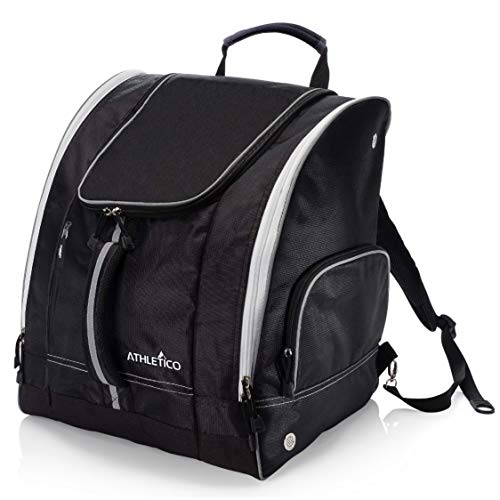
4. Athletico Ski Boot Bag — The Triangular Classic
- Style: Triangular boot bag
- Storage: Boots plus jacket, helmet, goggles, gloves and accessories
- Ventilation: Vented boot area
- Drainage: Grommets for snow drainage
The Athletico takes the older trapezoidal approach: boots sit point-first in the tapered body of the bag, and the surrounding space is organized around them for a jacket, helmet, goggles, gloves and accessories. It is a simpler, lighter way to build a boot bag, and for skiers who mostly go from garage to car to lodge, the simplicity is the point.
Wet-gear handling is built in rather than added on. Venting lets the boot area breathe so liners do not stew in a sealed bag overnight, and grommets in the base drain snowmelt before it can pool. That combination matters more than it sounds: the funk that ruins boot liners by spring almost always starts with boots stored wet in an airtight bag.
You give up the structured organization of the backpacks above — there is no fleece-lined goggle vault or lockable travel hardware here, and the single main space asks you to pack a little more thoughtfully. In return you get a bag that disappears into a closet or gear bin between trips and handles the standard ski-day load without fuss. For new skiers building their first kit and families outfitting kids, it covers the essentials honestly.
5. OutdoorMaster 38L Ski Boot Bag — The Compact Traveler
OutdoorMaster’s 38L bag is the smallest here, and that is its entire appeal. Sized for air travel, it carries boots, a helmet, goggles and gloves in six compartments while staying light and cabin-friendly — the kind of bag that fits an overhead bin or the footwell of a rental car without dominating either.
The waterproof bottom handles the wet-boot problem from below: set it on a snowy curb or a wet trunk floor and the contents stay dry, while the boot pocket keeps meltwater corralled away from the helmet and glove storage. Backpack straps and a hand-carry handle cover both the airport walk and the parking-lot shuffle.
Thirty-eight liters is a hard ceiling. Bulky helmets plus boots plus a full change of ski clothing will not all fit, and tall boots in larger sizes should be checked against the compartment before ordering. But as a dedicated boots-and-essentials carrier — especially for skiers who rent skis at the destination and only fly with their own boots and helmet — it is exactly the right size, and it stores flat in a closet the other fifty weeks of the year.
Specs
- Capacity: 38 L
- Compartments: 6
- Carry: Backpack straps and hand-carry handle
- Bottom: Waterproof
- Fits: Boots, helmet, goggles and gloves
- Model: 803439
How to Choose a Ski Boot Bag
Start with your boots. Check the bag’s stated maximum boot size — most list a mondo or US men’s size limit — and remember that tall, stiff boots with big buckles need more room than the number suggests. If you are near the limit, size up.
Prioritize ventilation and drainage. Wet boots are the whole problem this category exists to solve. Look for a boot compartment that is separate from your clothing, lined with tarpaulin or another wipe-clean waterproof material, and vented so liners dry between ski days. Drainage grommets or drain holes in the base are a genuine functional edge, and a waterproof bottom panel keeps slush out when the bag sits on the ground.
Match the carry style to your trip. Backpack bags keep hands free for skis, poles and coffee, and are the default for resort parking lots and airports. Trapezoidal bags balance a boots-plus-gear load well and tend to be lighter and simpler. Wheeled boot bags exist but are rare and mostly aimed at carry-on use; for most skiers a backpack is the more versatile tool.
Be realistic about flying. Soft boot bags in the 38–45L range generally fit overhead bins, but bin dimensions and enforcement vary by airline and aircraft, so check your carrier’s stated carry-on size before you fly. Many airlines count a boot bag together with a ski bag as one piece of sports equipment when checked — a general pattern worth confirming on your airline’s sports-equipment page rather than assuming.
Consider a heated bag only if you will plug it in. Heated boot bags are a real premium category: they use plug-in warming panels in the boot compartments, powered from a wall outlet or a car’s 12V socket, to soften cold shells before the first run. They make the most sense for racers and skiers in very cold regions who have outlet access the night before or during the drive. Everyone else is better served by a well-vented unheated bag.
Store boots dry. Whatever bag you choose, open the vents and let boots dry fully before long storage, buckle them loosely to hold their shape, and keep the bag somewhere cool. A vented bag used properly will keep liners fresher for seasons; a sealed bag with wet boots inside will undo any of these designs.
FAQ
Can I take a ski boot bag as a carry-on?
Often, yes. Compact bags around 38–45 liters usually meet common overhead-bin dimensions, and soft sides compress when a bin is tight. Limits differ by airline and aircraft, so compare the bag’s dimensions with your carrier’s published carry-on size before the trip.
How do I stop wet boots soaking my clothes in the bag?
Choose a bag with a separate, waterproof-lined boot compartment, shake and towel off loose snow before packing, and open the vents when you get home so the liners dry. Drainage grommets help meltwater escape instead of pooling in the base.
What capacity do I need if I also carry a helmet?
Around 38 liters is the practical floor for boots, a helmet, goggles and gloves. Step up to 50 liters or more if you also want a jacket, pants and spare layers in the same bag.
Are heated boot bags worth choosing over a regular bag?
For most skiers, no — a vented, well-organized unheated bag covers the need. Heated models earn their keep for racers, instructors and very cold climates where stiff, frozen shells are a daily problem and an outlet or car socket is always available.
How should ski boots be stored in the off-season?
Dry them completely with the liners loosened, buckle the shells lightly so they hold their shape, and store them in the bag with vents open in a cool, dry place away from heat sources and direct sun.
Conclusion
For flying skiers, the Thule RoundTrip 45L pairs a draining, waterproof boot compartment with genuine carry-on manners. The Dakine Boot Pack 50L is the all-round backpack most resort skiers will live out of all winter, while Athalon’s Everything bag swallows the biggest loads. The Athletico covers the classic triangular brief with proper venting and drainage, and OutdoorMaster’s 38L is the compact pick for boots-and-helmet travel. Whichever shape you choose, judge it by how it handles wet boots — separation, ventilation, drainage and a waterproof base — and it will earn its place in the gear closet.
More from Amazon
Programs that pair well with the guide above. Offers and eligibility are set by Amazon and may change.
Free shipping on eligible items, Prime Video and more. Eligible new members can start with a free trial.
Start a Prime free trialA Prime membership for ages 18-24 with a trial period. Eligibility is set by Amazon.
See Prime for Young AdultsAudiobooks and podcasts to listen to on the go. Eligible new members can start with a free trial.
Try Audible freeAd-free music streaming. Eligible new subscribers can start with a free trial.
Try Music Unlimited freeAs an Amazon Associate we earn from qualifying purchases.
Write Your Review
No reviews yet. Be the first to share your experience!