

Key takeaways
- Compare the best chinchilla dust baths, from fine volcanic pumice dusts to an enclosed bath house, for clean, healthy coats without a drop of water.
As an Amazon Associate we earn from qualifying purchases.
A chinchilla never takes a water bath. Its fur is among the densest of any land mammal, with dozens of fine hairs growing from a single follicle, and that density is exactly why water is dangerous: moisture soaks in, stays trapped against the skin, and creates the damp conditions where fungal infections take hold. Instead, chinchillas groom the way their wild ancestors did in the Andes, by rolling in fine volcanic dust. The dust works its way down through the coat, absorbs the oils and moisture that build up at the skin, and shakes back out again, leaving the fur clean, dry, and standing full.
That only works with the right material. True chinchilla dust is ground volcanic pumice or ash, milled to a powder fine enough to pass between those tightly packed hairs. Bathing sand, the coarser product sold for hamsters, is a different material with larger, sharper grains. Sand cannot penetrate a chinchilla coat properly, it cleans poorly, and the grit can irritate eyes and skin. The two products sit side by side on store shelves and are easy to confuse, so the first buying skill is simply reading the label: for a chinchilla, it must say dust, and the ingredient should be pumice or volcanic ash, nothing perfumed and nothing gritty.
What to look for in a chinchilla dust bath
Material first. Volcanic pumice, sometimes listed as aluminum silicate, is the standard. Some brands name their source deposit, such as the Blue Beauty or Blue Cloud pumice mined in the American Southwest, which is prized for a consistently fine grind. Avoid any dust with added fragrance. A chinchilla’s respiratory system is sensitive, and scented dust is a marketing extra the animal does not need and may not tolerate.
Fineness. The powder should feel like soft flour between your fingers, with no gritty particles. A fine grind reaches the skin, absorbs more oil, and shakes out of the coat instead of clinging to it.
Container. Dust is bought again and again, so jar size and resealability matter. A wide-mouth jar with a lid that seals keeps the powder dry in storage and makes filling the bath easier. Keep the listed weight in mind rather than the jar’s apparent size, since a half-empty large jar is a common sight in this category.
The bath itself. An open, heavy bowl works, but an enclosed bath house keeps far more dust inside the bath and off the cage floor. Whichever you use, the bath is a timed accessory, not cage furniture: offer it for about 10 to 15 minutes, a few times a week, then take it out. Left in the cage full-time, a dust bath quickly becomes a toilet, and constant access over-dries the skin and feet.
The best chinchilla dust baths
1. Oxbow POOF! Chinchilla Dust Bath

Oxbow’s POOF! is the reference point most other dusts are measured against. It is made from 100% natural Blue Beauty volcanic pumice, the fine aluminum silicate dust mined in the United States that chinchilla rescues and breeders have recommended for years. The grind is genuinely powder-fine, so it works down through a dense coat to the skin, picks up oil effectively, and shakes out cleanly afterward instead of leaving the fur looking grey.
The 2.5 lb jar is a practical size for a single chinchilla or a pair, and the wide mouth makes it easy to pour a layer into a bath house or bowl without a scoop. Oxbow lists the dust as suitable for degus, gerbils, and hamsters as well, but the formula is a chinchilla dust first, milled for the fineness a chinchilla coat demands. There are no perfumes or additives in the jar, which is exactly what a sensitive respiratory system needs.
Specs
- Material: 100% natural Blue Beauty volcanic pumice (aluminum silicate)
- Particle character: ultra-fine powder
- Container: 2.5 lb jar
- Additives: none stated; no fragrance
- Also labelled for: degus, gerbils, hamsters
2. Lixit Blue Beauty Chinchilla Dust
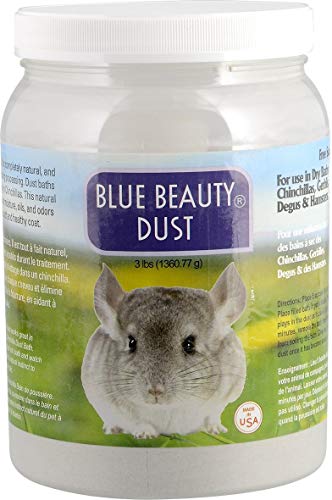
Lixit draws its dust from the same Blue Beauty pumice tradition, sustainably mined in Southern California, and sells it in a larger 3 lb jar for keepers who go through dust quickly or keep several chinchillas. The maker describes the dust as completely natural with no added chemicals and no free silica, and free from the limestone, glass, and sand particles that have no place in a chinchilla bath.
The texture is the selling point: a soft, fine powder that chinchillas roll in enthusiastically and that releases from the coat with a good shake. The bigger jar is the better fit for multi-chinchilla homes, where a 2.5 lb container empties fast at several baths per animal each week. As with the Oxbow dust, there is nothing scented here, and the resealable jar keeps the contents dry between uses.
Specs
- Material: Blue Beauty volcanic pumice (aluminum silicate), mined in Southern California, USA
- Particle character: fine powder
- Container: 3 lb jar
- Additives: no added chemicals per maker; contains no free silica per maker
- Exclusions per maker: free from limestone, glass, and sand
3. Kaytee Chinchilla All Natural Dusting Powder

Kaytee’s dusting powder is the most widely stocked chinchilla dust in North America, sold in a 2.5 lb container and made from natural pumice. It is the straightforward, easy-to-find option: a plain volcanic dust with no fragrance and no complicated claims, designed to absorb the excess oils and moisture that dull a chinchilla’s coat between baths.
One honest caution applies to this pick. Kaytee sells a separate product called Chinchilla Bath Sand, and the two are not interchangeable. The bath sand is the coarser material meant for other small pets, and it is not fine enough for a chinchilla’s coat. If you buy the Kaytee name, buy the Dusting Powder in the listing below and check the words on the container when it arrives. Used correctly, the dust itself does the job well and is a sensible staple for a first chinchilla.
Specs
- Material: natural volcanic pumice
- Particle character: fine dusting powder
- Container: 2.5 lb (model 100037012)
- Additives: none stated; all natural per maker
- Maker: Kaytee (Central Garden & Pet)
4. ChillDust Natural Critter Dust Bath by Arizona Agriculture Supply

ChillDust takes a slightly different angle on the same job. It is 100% pure pumice, blended from select grades, and the maker states plainly that it is crystalline silica-free and made in the USA. That silica point is worth attention: cheap mineral dusts can carry crystalline silica, which is a respiratory irritant for both the animal and the person pouring it, so a dust that rules it out on the label is doing something right.
The listing is labelled for several dust-bathing animals, including hamsters, gerbils, and chickens, so read it as a general pumice dust rather than a chinchilla-only formula. What keeps it in this lineup is the material and the grind: it is a true fine pumice dust, not a sand, and pumice dust of this fineness is what a chinchilla coat needs. The 2.7 lb container sits between the common 2.5 lb jars and the larger 3 lb size.
Specs
- Material: 100% pure pumice, blended from select grades
- Particle character: fine dust
- Container: 2.7 lb (model CHILDB)
- Additives: none stated; crystalline silica-free per maker
- Origin: made in the USA
5. Kaytee Chinchilla Bath House

The one bath house in this lineup exists to solve the mess problem. Fine pumice dust is light, and a chinchilla rolling enthusiastically in an open bowl throws a surprising amount of it across the cage and the room. Kaytee’s bath house is a fully enclosed chamber of durable translucent plastic with a single front opening, so the dust stays mostly inside while you can still watch the bath happen. Two hooks on the back let it clip to the cage bars so it does not travel mid-roll, and the concave bottom keeps the dust pooled where the chinchilla lands.
It measures about 9 inches long, 9.25 inches wide, and 8.5 inches high, which suits an average adult chinchilla; very large chins may find it snug. The house arrives with a small free sample of Kaytee’s bath sand, and the honest advice is to treat that sample as packaging rather than a recommendation: fill the house with one of the pumice dusts above, about an inch deep, and let the chinchilla do the rest. Being plastic, it should be used under supervision for the timed bath and removed afterward, which good practice requires anyway.
Specs
- Type: enclosed dust bath house (model 100079170)
- Material: durable translucent plastic
- Dimensions: about 8.64 x 9 x 8.5 inches
- Mounting: two rear hooks clip to cage bars
- Included: free sample of Kaytee bath sand (dust from the picks above is the better fill)
How to run a dust bath routine
Fill the bath house or a heavy, tip-resistant bowl with roughly an inch of dust. Place it in the cage or a play area and let the chinchilla hop in on its own; most need no encouragement and will start rolling within seconds. Leave the bath in for about 10 to 15 minutes, then remove it. Two to four sessions a week suits most chinchillas, with more in humid weather when coats pick up moisture faster, and fewer if you notice dry, flaky skin or feet.
Between uses, sift out any droppings or soiled clumps and top the dust up rather than replacing the whole fill every time. Replace it fully once it looks grey, clumps easily, or stops leaving the coat feeling dry and full. Store the jar sealed in a dry place, because pumice dust that has absorbed household humidity cleans noticeably worse.
Two rules close out the routine. First, never get a chinchilla wet to clean it: no water baths, no damp wipes as a substitute, and if a chinchilla ever does get soaked accidentally, it needs careful, complete drying and a vet’s advice, not a towel and optimism. Second, watch the breathing. Occasional sneezing after a bath is common, but persistent sneezing, wheezing, or a chinchilla that avoids the bath may be telling you the dust is too dusty for it or that something respiratory needs a vet’s attention. Switching to a fine, unscented pumice like the picks above is the first step, not the last word.
Affiliate Disclosure: This article contains affiliate links. If you buy through these links, we may earn a commission at no additional cost to you.
More from Amazon
Programs that pair well with the guide above. Offers and eligibility are set by Amazon and may change.
Free shipping on eligible items, Prime Video and more. Eligible new members can start with a free trial.
Start a Prime free trialA Prime membership for ages 18-24 with a trial period. Eligibility is set by Amazon.
See Prime for Young AdultsAudiobooks and podcasts to listen to on the go. Eligible new members can start with a free trial.
Try Audible freeAd-free music streaming. Eligible new subscribers can start with a free trial.
Try Music Unlimited freeAs an Amazon Associate we earn from qualifying purchases.










Write Your Review
No reviews yet. Be the first to share your experience!