

Key takeaways
- Best for solo campers: A 1–1.5 L aluminum or hard-anodized pot set weighing about 0.5–1 lb, with a lid, mug, bowl and compact stove-compatible pot.
- Best for couples: A 2–3 L nesting cook set with two place settings, two mugs and removable handles.
- Best for families: A 4–5 L stainless-steel or thick aluminum set with four plates, four bowls and serving utensils.
- Best for car campers: A 20-piece-plus kitchen set, where durability and comfortable cookware matter more than minimum packed weight.
- Best for backpackers: A minimalist pot-and-cup system rather than a complete tableware set; every unused fork and plate adds bulk.
The best camp kitchen sets match your group size and cooking style: choose a compact 6–10-piece hard-anodized set for solo trips, a 15–23-piece nesting set for two people, or a larger stainless-steel kit when a family needs shared cookware and tableware.
Our top picks

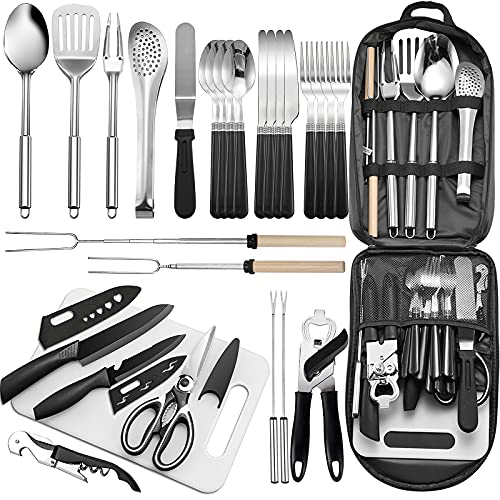


As an Amazon Associate we earn from qualifying purchases at no extra cost to you. Ratings are shown as listed on Amazon.
Quick picks by camping situation
- Best for solo campers: A 1–1.5 L aluminum or hard-anodized pot set weighing about 0.5–1 lb, with a lid, mug, bowl and compact stove-compatible pot.
- Best for couples: A 2–3 L nesting cook set with two place settings, two mugs and removable handles.
- Best for families: A 4–5 L stainless-steel or thick aluminum set with four plates, four bowls and serving utensils.
- Best for car campers: A 20-piece-plus kitchen set, where durability and comfortable cookware matter more than minimum packed weight.
- Best for backpackers: A minimalist pot-and-cup system rather than a complete tableware set; every unused fork and plate adds bulk.
What makes a camp kitchen set worth buying?
Piece count is useful, but it can be misleading. A set may advertise 20 pieces while counting lids, trivets and storage bags as separate items. For cooking, concentrate on the usable core: pot capacity, pan size, number of eating vessels, utensils and whether the set supports your stove.
Material is the next major decision. Hard-anodized aluminum heats quickly, keeps weight down and is usually the best balance for backpacking and general camping. It can scratch if used with metal utensils, so pack it with a cloth or use the supplied storage bag. Stainless steel resists dents, abrasion and high heat better, but it is heavier and can create hot spots unless the base is substantial. Titanium is exceptionally light and corrosion-resistant, but it is expensive and not ideal for even frying or simmering.
Nonstick coatings make cleanup easier, particularly for eggs and sauces, but they are the component most likely to age poorly. Avoid metal tools, abrasive scrubbers and overheating an empty pan. For frequent family use, an uncoated stainless or hard-anodized set can outlast a lightweight nonstick kit.
Best camp kitchen sets compared
| Set type | Typical pieces | Useful capacity | Typical packed weight | Packed size | Best for | General price range |
|---|---|---|---|---|---|---|
| Ultralight solo pot set | 6–10 | 0.9–1.5 L pot | 0.5–1 lb | 5.5–7 in high, 5–6 in diameter | Solo backpackers and boil-in-pot meals | $25–$80 |
| Two-person aluminum set | 12–18 | 1.5–3 L pots | 1.5–3 lb | 6–8 in high, 7–8 in diameter | Couples and weekend campers | $45–$130 |
| Family stainless-steel set | 18–24 | 3–5 L pot or Dutch-oven-style vessel | 4–8 lb | 8–12 in high, 9–12 in diameter | Car camping and groups of four | $70–$220 |
| Compact nonstick skillet set | 8–15 | 1.5–2.5 L pot plus 8–10 in pan | 2–4 lb | 7–10 in high, 8–10 in diameter | Breakfasts, fresh food and easy cleanup | $50–$160 |
These are practical buying ranges rather than specifications for one particular model. Actual measurements vary, and manufacturers may weigh cookware without the storage sack or accessories. Check the packed dimensions against your backpack, food box or vehicle kitchen bin before ordering.
Best choice for solo campers: the minimalist hard-anodized set
Solo campers rarely need a complete kitchen. The most efficient arrangement is one 0.9–1.5 L pot, a lid that doubles as a small pan or plate, one insulated mug and a long-handled spoon. A folding handle or removable grip keeps the set from wasting space inside a pack.
Choose a pot around 1 L if you mainly boil water for dehydrated meals, coffee and oatmeal. Move closer to 1.5 L if you cook pasta, rice or soup and want enough room to prevent boilovers. A set with an integrated heat exchanger can improve stove efficiency, but it may be less convenient to clean and often costs more.
Do not buy a four-person set simply because its piece count seems good value. For a solo hiker, four cups and four plates are dead weight. A practical target is under 1 lb for the cookware and under 2 lb for the complete eating system.
Best choice for couples: a nesting two-person set
For two campers, the sweet spot is usually a 2–3 L main pot, a smaller 1–1.5 L pot or frying pan, two bowls, two cups and two utensils. Look for handles that fold inward and a design in which the fuel canister, stove and lighter can fit inside the largest pot. That internal storage can save more pack space than reducing the set by a few ounces.
Hard-anodized aluminum is the strongest all-purpose choice here. It offers more even heating than very thin titanium and is substantially lighter than stainless steel. If you regularly cook pancakes, eggs or fish, a protected nonstick pan is convenient; if you mainly make one-pot meals, skip the pan and choose a deeper pot.
Well-known examples in this category include the GSI Outdoors Pinnacle Camper for groups wanting a broad tableware package, and Sea to Summit’s Alpha cookware range for campers who prefer modular aluminum pots. Compare the included bowls and mugs carefully: a set marketed for two may still require separate plates or utensils.
Best choice for families: durable stainless steel or thick aluminum
Families benefit more from robust cookware than from the lowest packed weight. A 4–5 L pot can handle pasta, chili or soup for four people, while an 8–10 inch skillet gives enough surface area for eggs or vegetables. Four plates, four bowls, four cups and a serving spoon make the set functional without forcing everyone to eat directly from the cooking pot.
Stainless steel is a good choice when children are sharing the kitchen or when gear is likely to be packed roughly. It tolerates metal cutlery and aggressive washing better than nonstick coatings. The trade-off is weight: a family stainless set may weigh several pounds more than an aluminum alternative. For drive-up campsites, that is usually a worthwhile exchange.
The Stanley Adventure Base Camp Cook Set is a recognizable example of the large, integrated format, with a roughly 20-piece-plus inventory intended for group meals. Before choosing a similar set, check whether its plates and bowls are full-size enough for your meals and whether its pot handle locks securely when lifted full.
Decision matrix: match the set to your use
| Your situation | Prioritize | Avoid | Recommended specification |
|---|---|---|---|
| First-time camper on a tight budget | Simple construction and replaceable utensils | Fragile coatings and complicated hinges | Aluminum, 1.5–2 L pot, 8–12 pieces |
| Experienced backpacker | Weight, nesting and stove compatibility | Separate plates and oversized handles | 0.9–1.5 L pot, under 1 lb cookware |
| Weekend couple using a car | Cooking flexibility and easy cleaning | Ultra-thin pots that scorch food | 2–3 L pot, 8–10 in pan, 12–18 pieces |
| Family camping several times per year | Durability and serving capacity | Small mugs and single-serving pots | 4–5 L pot, four place settings, 18–24 pieces |
| Limited storage at home | Fully nesting design and one storage bag | Sets with loose accessories | Under 10 in packed diameter and under 12 in height |
How to judge pack size and real capacity
Nominal capacity is not the same as comfortable cooking capacity. A 2 L pot should not be filled to the rim; leave roughly 20% headroom for boiling and stirring. That means a practical 2 L pot holds about 1.6 L of food or water during cooking. For four people, a 4 L vessel therefore provides approximately 3.2 L of usable working volume, enough for many one-pot meals but not necessarily for leftovers.
Use the following quick calculation before buying: packed volume is approximately pi × radius squared × height. A cylindrical set measuring 4 inches in radius and 8 inches high occupies about 402 cubic inches before allowing for irregular shapes. If the listed packed dimensions are close to your storage compartment, leave extra room for the bag, fuel and stove rather than assuming the cookware will fit perfectly.
Durability and maintenance details that matter
- Handles wear first: Hinges loosen, silicone grips split and locking tabs collect grease. Select handles that can be tightened or replaced when possible.
- Coatings need restraint: Use wood, silicone or plastic utensils, and let the pan cool before washing. Sudden cold water can warp thin cookware.
- Clean soot correctly: For wood fires, soot may permanently darken aluminum. A thin layer of dish soap on the outside before cooking can make cleanup easier, but keep soap away from the flame and rinse thoroughly afterward.
- Dry before nesting: Trapped moisture causes odors and can encourage corrosion around stainless-steel seams or aluminum scratches.
- Inspect after every trip: Check rivets, lid fit, pot handles and cracks in plastic cups. A loose handle is a safety problem when carrying hot food.
Final buying advice
Choose the smallest set that supports your actual meals, not the largest piece count you can afford. Solo campers should favor a light pot system; couples should look for efficient nesting and two complete place settings; families should spend more on capacity, stable handles and materials that survive repeated washing. If you camp only a few times each year, a straightforward hard-anodized aluminum set usually offers the best balance of price, durability and packed size. Frequent car campers can justify stainless steel and a fuller kitchen, while backpackers should leave anything unused at home.



Write Your Review
No reviews yet. Be the first to share your experience!