

Key takeaways
- For a couple or a small family car camping: Start with a 20–30-quart hard cooler, such as the YETI Roadie 24 or Igloo BMX 25. It is easier to fit in a vehicle than a large chest and usually offers enough room for a day or two of drinks alongside ice.
- For a picnic, beach walk, or drinks carried from the car: Choose a soft cooler like the RTIC 20 Can Soft Pack. Its lower empty weight and flexible shape make it easier to carry and stow, but it is less suited to rough handling or being used as a seat.
- For a backyard party or a big group: A wheeled 50–60-quart cooler reduces the burden of carrying a loaded chest. The YETI Tundra Haul is a sturdy option, though its heavy empty weight and premium price are overkill for occasional small outings.
- For a tighter budget or frequent rough use: A basic hard cooler from a mainstream brand can be the sensible buy. Spend on extra capacity and convenient handles before paying a large premium for insulation features you may not need.
Best Outdoor Beverage Coolers: The Right Pick for Campsites and Backyards
The best outdoor beverage coolers depend on how you’ll use them: choose a wheeled hard cooler for large gatherings, a compact hard cooler for car camping, or an insulated soft cooler when low weight and easy carrying matter most. For most people who want dependable cold drinks without hauling a full-size chest, a 20–30-quart hard cooler is the best balance of capacity, insulation, and portability.
Quick comparison
Capacity figures below are approximate and refer to the cooler’s stated volume, not a guaranteed can count. Ice, dividers, and the shape of bottles reduce usable drink space. Product dimensions and weights can vary by model or revision, so check the current specification before buying.
Our top picks


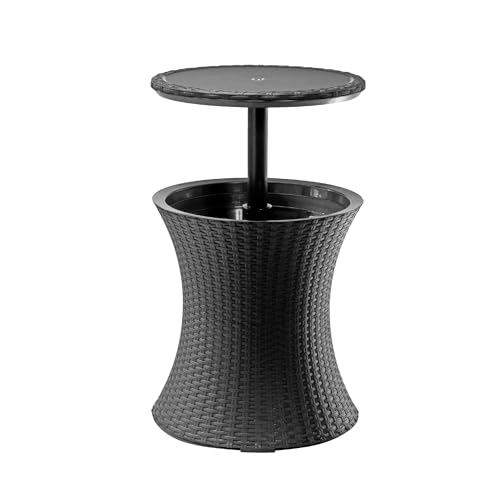
As an Amazon Associate we earn from qualifying purchases at no extra cost to you. Ratings are shown as listed on Amazon.
| Cooler | Capacity | Empty weight | Construction and carrying | Best fit |
|---|---|---|---|---|
| YETI Roadie 24 | 24 qt (about 23 L) | About 13 lb (5.9 kg) | Rotomolded hard cooler; shoulder strap | Car camping and smaller groups |
| RTIC 20 Can Soft Pack Cooler | 20-can class | About 4 lb (1.8 kg) | Insulated soft-sided construction; shoulder strap | Short outings and carrying on foot |
| Igloo BMX 25 | 25 qt (about 24 L) | About 11 lb (5 kg) | Hard shell with molded handles | Value-focused camping and backyard use |
| YETI Tundra Haul | 55 qt (about 52 L) | About 37 lb (16.8 kg) | Rotomolded hard cooler; wheels and tow handle | Large groups and trips over firm ground |
Weights are approximate published empty weights; they do not include ice or drinks. “20-can class” describes a nominal soft-cooler format rather than a fixed beverage count—packing results depend on can size and whether ice or ice packs are included.
Choose by situation
- For a couple or a small family car camping: Start with a 20–30-quart hard cooler, such as the YETI Roadie 24 or Igloo BMX 25. It is easier to fit in a vehicle than a large chest and usually offers enough room for a day or two of drinks alongside ice.
- For a picnic, beach walk, or drinks carried from the car: Choose a soft cooler like the RTIC 20 Can Soft Pack. Its lower empty weight and flexible shape make it easier to carry and stow, but it is less suited to rough handling or being used as a seat.
- For a backyard party or a big group: A wheeled 50–60-quart cooler reduces the burden of carrying a loaded chest. The YETI Tundra Haul is a sturdy option, though its heavy empty weight and premium price are overkill for occasional small outings.
- For a tighter budget or frequent rough use: A basic hard cooler from a mainstream brand can be the sensible buy. Spend on extra capacity and convenient handles before paying a large premium for insulation features you may not need.
What matters more than the headline capacity
Cooling capacity and ice space
A cooler’s quart rating is not the amount of drinks you can pack while keeping them cold. Ice occupies space, and bottles need room around their shoulders and caps. For a drink-focused load, leave roughly one-third of the interior for ice as a starting point, then adjust based on trip length and how often the lid will open. A cooler packed with drinks at room temperature needs more cooling capacity than one loaded with pre-chilled beverages.
For example, if a group wants 24 cans plus ice, a 20-quart cooler is likely too small for a comfortable, accessible pack. Moving up to roughly 30 quarts gives more room, but a tall bottle mix may still call for a different shape. Check the interior dimensions against the largest bottle you expect to bring.
Insulation and lid access
Thick walls and a well-fitting lid help slow heat gain, but performance also depends on the seal, shade, starting temperature, and how often people open the cooler. A high-end insulated chest can still warm quickly if it sits in direct sun with the lid open during a gathering. For backyard serving, consider whether a separate drink cooler can keep the main food cooler closed.
Drainage and cleanup
A drain plug is useful when melted ice needs to be emptied without tipping a heavy cooler. Before buying, check whether the drain is easy to reach in a packed vehicle and whether the plug is tethered or easy to misplace. After use, drain the cooler, wipe out residue, and leave the lid open until the interior is fully dry. That routine helps prevent stale odors and keeps seals and corners from staying damp.
Portability, handles, and terrain
Empty weight is only the starting point: ice and drinks can add dozens of pounds. A strap works well for a lighter soft cooler, while molded handles are useful for two people lifting a hard chest. Wheels help on pavement and packed paths, but they are less useful on sand, roots, or uneven campsite ground. If one person will move the cooler, prioritize manageable loaded weight over maximum volume.
Cup and bottle storage
Many coolers do not include dedicated cup holders or bottle organizers. A flat lid can serve as a temporary surface, but it is not a substitute for a stable drink holder—especially on uneven ground. Look for molded lid recesses, compatible accessories, or a separate folding side table if drinks need a place outside the ice. For bottles, measure interior height and width rather than relying on a can-count claim.
Ownership details that affect the choice
Hard coolers are generally easier to wipe down and better able to tolerate knocks, but they take up fixed storage space. Soft coolers pack away more easily; their zippers, seams, and fabric are the parts most likely to need careful handling over time. Avoid dragging a soft cooler across abrasive ground, and clean around zipper tracks after sandy or muddy trips.
Do not use a cooler as a cutting board or assume every lid is designed to support a seated person. Keep the drain plug closed during use, and check that it is seated before loading ice. For better cooling, chill drinks beforehand, keep the cooler shaded, and open it only long enough to retrieve what you need. Reusable ice packs reduce meltwater and simplify cleanup; loose ice is flexible and often easier to arrange around mixed-size bottles.
Bottom line
For most campsite drink duty, a 20–30-quart hard cooler is the practical starting point. Pick a soft cooler when carrying comfort and storage matter more than ruggedness, or step up to a wheeled 50–60-quart model for larger gatherings. Before choosing, compare interior dimensions, empty weight, drain access, and the actual place where cups or bottles will sit—those details often matter more in daily use than the largest number on the product label.



Write Your Review
No reviews yet. Be the first to share your experience!