

Our Top Picks
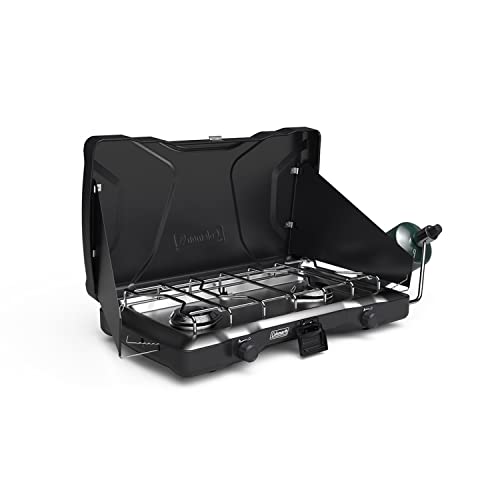

The Camp Chef Everest 2X is the best overall two-burner propane camp stove in this group for most car campers: two 20,000 BTU cast-aluminum burners, a roomy 215 square inch cooking area and a three-sided windscreen make it the most complete portable cooktop on the list. A two-burner propane stove is a suitcase-style cooktop that burns propane from a small cylinder or a larger tank, giving you two independently controlled burners for pans and pots. If you want a simpler, lighter, lower-output stove, the two Coleman Triton models are the easier picks.
Quick List
- Coleman Triton+ InstaStart – best for campers who want push-button ignition in a compact suitcase stove
- Coleman Triton – best for budget-minded campers who want the same 22,000 BTU layout
- 150,000 BTU Two-Burner Outdoor Stove – best for backyard cooking and large pots (a high-pressure outdoor cooker, not a compact camp stove)
- Gas One Two-Burner, First Listing – best for big stockpots and boils with a detachable-leg stand
- Gas One Two-Burner, Second Listing – best for shoppers comparing the removable-leg variant
- Camp Chef Everest 2X – best for serious car-camp cooking with the most cooking area and output in a portable body
Which One Is Right for You?
| If you… | Choose |
|---|---|
| Cook full meals at camp and want both power and room | Camp Chef Everest 2X |
| Want easy lighting and a small footprint for weekend trips | Coleman Triton+ InstaStart |
| Want a simple Coleman stove and do not need push-button ignition | Coleman Triton |
| Boil seafood or cook for crowds in a backyard or campsite | Gas One Two-Burner (either listing) |
| Want a high-pressure stove with side shelves and a cover | 150,000 BTU Two-Burner Outdoor Stove |
| Need a stove you can carry in one hand and pack in a trunk corner | Coleman Triton+ InstaStart |
Three of these six are high-pressure outdoor cookers, which are a different class from the folding suitcase stoves. They produce far more heat but need a hose, a regulator and a bigger fuel tank. Pick by how you cook: moderate burners for pan meals, high-pressure burners for big pots.
All 6 Picks in Detail
1. Coleman Triton+ InstaStart – Best for Compact Push-Button Cooking
As an Amazon Associate we earn from qualifying purchases at no extra cost to you.

The Triton+ is a classic suitcase-style stove with a latch, two wind guards and a chrome-plated grate that lifts out for cleaning. Coleman lists 22,000 BTU in total, which works out to 11,000 BTU per burner, and the InstaStart feature means a push-button igniter rather than a match or lighter. The cooktop is sized for one 10 inch and one 12 inch pan at the same time, which is enough for eggs and bacon or a pot of pasta alongside a skillet.
It suits weekend campers, tailgaters and anyone who values a stove that stores flat. Output is modest, so boiling a big pot of water takes patience, and it is not the stove for large stockpots. It runs on 16 ounce propane cylinders and can be fed from a larger tank with a hose adapter sold separately.
- Output: 22,000 BTU total across two burners
- Ignition: push-button InstaStart
- Pan capacity: one 10 inch and one 12 inch pan at once per Coleman
- Wind protection: two wind guards
- Fuel: propane; runs on 16 ounce cylinders, hose adapter sold separately
- Weight: about 12 pounds per Coleman; confirm on listing
Pros:
- Easy push-button lighting
- Compact, latching suitcase body
- Removable grate for cleanup
Cons:
- Lower heat than larger stoves
- Small cooking area
Compared with the base Triton, the Triton+ adds the ignition convenience; against the Everest 2X it gives up power and space for portability.
2. Coleman Triton – Best for Simple, Budget-Minded Suitcase Cooking
The listing for this Triton describes a portable camping cooktop with the same 22,000 BTU rating, two adjustable burners and wind guards. The title does not mention InstaStart, so confirm on the product page whether it uses a push-button igniter or a match-lit design before buying. In practice the two Tritons are nearly identical stoves, differing in how you light them and in minor trim.
This is a good fit for first-time campers, scouting groups and tailgating, where you want a familiar and easy-to-service stove. It is not a high-output cooker, and it shares the same small cooking area as its sibling. Keep the latch closed in the car and use a flat, stable table.
One practical tip for either Triton: use cookware that fits inside the wind guards, and avoid oversized griddles that overhang the burners, because trapped heat can damage the knobs and the finish. A cast-iron skillet on one burner and a small pot on the other is the combination these stoves handle best.
- Output: 22,000 BTU total, adjustable burners
- Ignition: confirm on listing
- Wind protection: wind guards included
- Fuel: propane, typically 16 ounce cylinders; larger-tank adapter sold separately
- Body: suitcase style with latch; dimensions confirm on listing
Pros:
- Familiar, easy-to-use layout
- Same output as the Triton+
Cons:
- Ignition details are unclear from the title
- Modest output for large pots
Choose this over the Triton+ only if the listing shows a meaningful saving or a feature you prefer, since the cooking performance should be similar.
3. 150,000 BTU Two-Burner Outdoor Stove – Best for Backyard and Large-Pot Cooking

This listing describes a two-burner high-pressure propane stove with side shelves, a windscreen, a waterproof cover and detachable legs, and states that it is CSA certified. At 150,000 BTU it belongs to the outdoor cooker class used for turkey fryers, seafood boils and canning, not a compact camp stove for a tent site. Be honest about that when choosing: it is better placed as a runner-up for campers who cook for crowds at a fixed site or a backyard, and it needs a high-pressure regulator and hose.
It suits tailgaters and large-group cooks who value heat above portability. Because the output is so high, you need a sturdy base, clearance from anything flammable and a full-size propane tank.
Because it is a large frame with legs, plan for a dedicated spot in the trunk and a level pad at camp. Many campers keep a stove like this for base-camp weekends and a smaller suitcase stove for lighter trips, which is a sensible way to split the work.
- Output: 150,000 BTU, high-pressure burners
- Certification: CSA certified per the listing
- Extras: side shelves, windscreen, waterproof cover
- Stand: detachable legs per the listing
- Regulator and hose: confirm on listing
- Weight and dimensions: confirm on listing
Pros:
- Very high heat for big pots
- Side shelves and cover included
Cons:
- Bulky and heavy for tent camping
- Needs a large propane tank and careful setup
It is closest to the Gas One stoves below; the Everest 2X is the better answer if you want portability.
4. Gas One Two-Burner (First Listing) – Best for Stockpots and Outdoor Boils
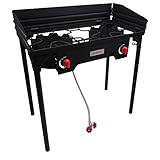
This Gas One stove is another high-pressure cooker with a windscreen, an adjustable regulator and a four foot hose. Retailer pages for Gas One two-burner models commonly cite 75,000 BTU per burner, but the exact figure should be confirmed on the product page for this variant. It is a frame-style stove, a different design from the suitcase Colemans, and it is meant to sit on a stand rather than a picnic table.
It suits seafood boils, large pots, frying and group meals where you have space and a full-size tank. Because the burners are intense, it is not a gentle simmering tool unless you throttle the regulator. Keep it on level ground, away from tents and wind-blown debris.
A useful habit with any high-pressure burner is to open the tank valve slowly, light the burner at low flow and then raise the heat, rather than starting at full blast. That keeps the flame stable and puts less stress on the regulator and hose.
- Type: high-pressure two-burner outdoor stove
- Regulator: adjustable PSI per the listing
- Hose: 4 foot hose per the listing
- Wind protection: windscreen included
- BTU per burner and total: confirm on listing
- Weight: confirm on listing; retailer pages describe it as heavy
Pros:
- Strong heat for large cookware
- Adjustable regulator for control
Cons:
- Heavy and bulky
- Better for fixed sites than for backpacking-style camping
Compared with the unbranded 150,000 BTU unit, it is a similar concept from a more recognizable name; the Camp Chef is the tidier campsite alternative.
5. Gas One Two-Burner (Second Listing) – Best for Comparing the Removable-Leg Variant

The second Gas One listing uses nearly identical wording and adds that the legs are removable. That detail matters for storage: detaching the legs lets the cooktop and the stand travel in a trunk more compactly. As with the first listing, check the BTU number, regulator type and hose length on the product page, because these stoves share a family look and the spec fields may differ.
It suits the same campers as the first listing: people who cook for groups and own or plan to buy a full-size propane tank. If you prefer a design that stores flat, the Colemans are more convenient; if you want more raw heat, this is the better of the two Gas One pages if its legs and regulator details are clearer.
Whichever Gas One page you choose, check that the hose and regulator are rated for the tank you own, and replace the hose if it shows cracking. Hoses are cheap compared with the consequences of a leak, and an annual inspection takes only a minute.
- Type: high-pressure two-burner outdoor stove
- Legs: removable per the listing
- Regulator: adjustable PSI per the listing
- Hose: 4 foot hose per the listing
- BTU output: confirm on listing
- Windscreen: confirm on listing for this variant
Pros:
- Removable legs help with storage
- Adjustable regulator
Cons:
- Near-duplicate of the first listing
- Heavy and not suited to casual tent trips
Pick this over the first Gas One only if the product page lists the removable legs and the specs you want.
6. Camp Chef Everest 2X – Best for Serious Car-Camp Cooking

The Everest 2X is Camp Chef’s high-output portable two-burner. The listing and retailer pages state two 20,000 BTU cast-aluminum burners (40,000 BTU total), a 215 square inch cooking area, matchless ignition, a three-sided fold-down windscreen and a stainless drip tray. A regulator adapter for 1 pound cylinders is included, and a high-pressure adapter hose lets it run from a 20 pound tank. It strikes the best balance between cooking power and portability in this group.
It suits campers who cook real meals, groups of three to six and anyone who wants a stove that behaves like a home range. It is heavier than the Colemans, with retailer pages giving roughly 12 to 15 pounds, so confirm on the listing.
- Output: two 20,000 BTU burners, 40,000 BTU total
- Cooking area: 215 square inches
- Ignition: matchless ignition
- Wind protection: three-sided fold-down windscreen
- Fuel: propane; 1 pound cylinder adapter and 20 pound tank hose per retailer descriptions
- Extras: stainless drip tray and carry handle
Pros:
- Most output and cooking area of the portable models
- Built-in windscreen and easy ignition
Cons:
- Heavier than the Coleman stoves
- Uses fuel faster at high settings
Relative to the Triton+, it doubles the power and doubles the usable space, at the cost of weight and a larger footprint in the trunk.
Specs Compared
| Stove | Total BTU | Burner type | Ignition | Windscreen | Fuel setup |
|---|---|---|---|---|---|
| Coleman Triton+ InstaStart | 22,000 | Two adjustable burners | Push-button InstaStart | Two wind guards | 16 oz cylinders; hose adapter sold separately |
| Coleman Triton | 22,000 | Two adjustable burners | Confirm on listing | Wind guards | 16 oz cylinders; adapter sold separately |
| 150,000 BTU outdoor stove | 150,000 | High-pressure burners | Confirm on listing | Windscreen | High-pressure regulator and hose; confirm on listing |
| Gas One (first) | Confirm on listing | High-pressure, two burners | Confirm on listing | Windscreen | Adjustable regulator, 4 ft hose |
| Gas One (second) | Confirm on listing | High-pressure, two burners | Confirm on listing | Confirm on listing | Adjustable regulator, 4 ft hose, removable legs |
| Camp Chef Everest 2X | 40,000 | Two 20,000 BTU cast-aluminum | Matchless | Three-sided | 1 lb adapter; 20 lb tank hose adapter |
How We Chose These
This is research-based guidance, not a bench test. We began with the six listed stoves and compared listing titles with manufacturer pages and retailer specification fields, focusing on stated BTU output, burner count, ignition type, wind protection and fuel connections. Where a listing did not state a value, we say to confirm on the product page, and where sources disagreed on weight or dimensions we avoided picking a side. We also separated compact suitcase stoves from high-pressure outdoor cookers, because they solve different problems, and we marked the cookers as a distinct group so you can choose the right class.
What to Look For
BTU Output and What It Actually Means
BTU measures heat energy per hour, but more is not always better. A 22,000 BTU suitcase stove has about 11,000 BTU per burner, enough to simmer and sauté and to boil a quart or two of water in several minutes. A 40,000 BTU stove with 20,000 BTU burners cooks closer to a home range. High-pressure units rated at 75,000 BTU per burner or more are designed for stockpots, and they will scorch a small pan. As a rule of thumb, you want roughly 10,000 BTU per burner for casual camp meals, 15,000 to 20,000 for regular cooking and the high-pressure class only when you routinely use pots larger than 10 quarts.
Wind Protection and Burner Design
Wind is the real enemy of a camp stove. Built-in wind guards or a three-sided screen keep the flame steady and can cut fuel use. Regulated burners hold output as the cylinder cools; unregulated ones fade when the tank gets cold or low. Look for cast-aluminum or stainless burners and a removable grate or drip tray that makes cleaning easier. If wind is frequent where you camp, take a separate foil wind block too.
Fuel Connections and Runtime
Small 16 ounce cylinders are convenient but run out quickly: Coleman states up to one hour on high for the Triton family, and one review of the Everest 2X reports about 45 minutes with both burners at full power. A 20 pound tank with an adapter hose lasts many times longer and is cheaper per hour. A worked example: a stove drawing 40,000 BTU at full power uses a little under 2 pounds of propane per hour, so a 1 pound cylinder lasts roughly half an hour on high but longer at normal settings. Carry a spare cylinder for any multi-day trip.
Safety and Setup
Propane stoves must be used outdoors in well-ventilated space, never inside a tent, a vehicle or a camper, because they produce carbon monoxide. Check hoses and connections for cracks, and test new connections with soapy water: bubbles mean a leak. Set the stove on a stable, non-flammable surface, keep it clear of dry grass, and never leave it burning unattended. Disconnect the cylinder after use, and store propane upright and out of the sun and the cabin of a hot car. High-pressure cookers in particular need a full-size tank, clearance on all sides and a fire extinguisher nearby.
Cookware, Accessories and Everyday Use
The best stove can be held back by the wrong pans. Flat-bottomed cookware heats evenly on a two-burner grate, while thin pots warp quickly on high output. Bring a lid for every pot, since covering a pot can cut boil time and fuel use noticeably. A small folding table keeps the stove at a comfortable height, and a bin for the stove, hose, lighter and soapy-water spray bottle makes setup fast. If you cook breakfast regularly, a flat griddle plate that fits the grate is a worthwhile add-on, but check the stove maker’s guidance before using one, because some designs warn against oversized plates that trap heat.
Questions
Are 22,000 BTU stoves enough for a family?
For typical meals such as pancakes, eggs or pasta, yes. They are slower with large pots of water or when cooking for more than four people.
Can I use a larger propane tank with a suitcase stove?
Usually yes, with a compatible hose and regulator adapter. Coleman and Camp Chef both describe adapters for 20 pound tanks, but confirm the part on the product page.
Is a high-pressure stove safe for camping?
It can be when used with a certified regulator, a good hose and plenty of space, but it is designed for fixed outdoor setups. Keep it far from tents and flammable materials.
How long will a 1 pound cylinder last?
Coleman cites about one hour on high for the Triton family, and a review of the Everest 2X reports closer to 45 minutes at full power. Cooking at medium settings stretches that considerably.
What is the benefit of matchless ignition?
It lets you light a burner with a button instead of a lighter, which is handy in wind or darkness. Carry a lighter anyway as a backup if the igniter fails.
Can I cook on a two-burner stove in the rain?
Only under a well-ventilated shelter with plenty of open sides, such as a canopy, and never inside a tent. Keep the cover or case on the stove between uses to keep water out of the burners.
Update History
- October 14, 2026 – Initial publication; product set drawn from current catalog listings.
- Check the product page for current specifications and availability before buying.
Sources
- Manufacturer product and specification pages for Coleman and Camp Chef
- Retailer listing titles and specification fields for all six products
- Third-party outdoor gear review sites for fuel runtime and weight references



Write Your Review
No reviews yet. Be the first to share your experience!