

Key takeaways
- The right 3-season sleeping bag is the one whose temperature rating matches the coldest night a camper realistically expects, with a little margin.
The right 3-season sleeping bag is the one whose temperature rating matches the coldest night a camper realistically expects, with a little margin, and whose weight and packed size suit the way the trip is carried. Most buyers do best with a bag whose lower limit sits a few degrees below the lowest forecast temperature, because ratings describe survival-level performance more than comfort.
The category covers a wide span of conditions, from cool spring nights near freezing to crisp early autumn mornings. That range is why two bags with the same label can feel completely different in the field. This guide explains the decisions that matter, from insulation type to shape to the sleeping pad underneath, so the final choice fits the trips it will actually see.
What “3-Season” Really Means
A 3-season bag is built for spring, summer, and fall use at moderate elevations. It is warmer than a summer liner or a lightweight quilt, yet lighter and less bulky than a winter expedition bag. In practice, most bags sold under this label carry a lower-limit rating somewhere between the low teens and the mid-thirties Fahrenheit.
That spread matters. A bag near the warm end of the range works well for summer car camping and warm-weather backpacking. A bag near the cold end handles shoulder-season trips where frost is possible. Buyers who camp mostly in one climate should pick toward the end of the range that fits, rather than the middle by default.
Understanding Temperature Ratings
Many bags follow a standardized lab test that produces a comfort rating and a lower-limit rating. The comfort figure is the temperature at which a standard cold-sleeping woman is expected to sleep without shivering in a relaxed position. The lower-limit figure is the temperature at which a standard man in a curled position is expected to stay warm for a night, with some discomfort.
Because most people feel the cold differently, a good habit is to treat the comfort figure as the realistic target for cold sleepers and the lower-limit figure as the target for warm sleepers. When a bag lists only one number with no mention of a standard, treat it as optimistic and give yourself a wider margin.
Down or Synthetic Insulation
Insulation is the biggest single factor in weight, packed size, and how the bag behaves when conditions turn damp. Both types are common in the 3-season category, and each suits a different kind of camper.
Down Fill
Down offers the best warmth for its weight and compresses small, which is why backpackers favor it. Fill power measures loft per ounce: values in the 600s are good value, the 700s and 800s are lighter and more compressible, and higher figures push into premium territory. Down loses much of its insulating power when it gets soaked, so look for treated down and a water-resistant shell if the climate is humid or rainy.
Synthetic Fill
Synthetic insulation is heavier and bulkier for the same warmth, but it keeps insulating when damp, dries faster, and usually costs less. It also tolerates rough handling and being stuffed into a sack every morning. Campers who drive to the site, camp in wet regions, or want a durable bag for kids and guests often find synthetic the practical choice.
Shape and Fit
Shape controls how much dead air the body has to heat. A bag that is too roomy wastes warmth, and one that is too tight compresses insulation and restricts movement.
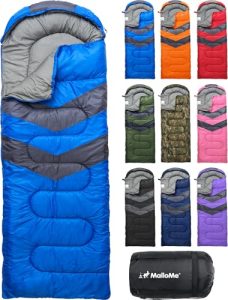
- Mummy: Tapered at the shoulders, hips, and feet. Warmest and lightest for the rating, and the usual pick for backpacking and cold shoulder-season nights.
- Semi-rectangular (also called modified mummy): More room at the knees and feet, with some of the efficiency of a mummy. A good compromise for side sleepers who feel boxed in.
- Rectangular: Roomiest and often unzips into a blanket. Better for warm nights and car camping, less efficient when temperatures drop.
- Quilt style: No back insulation, relying on the pad underneath. Light and flexible, but best for campers who already understand how to manage drafts.
Length matters as much as shape. Sleeping bags come in regular and long sizes, and many makers offer women’s cuts with extra insulation in the torso and feet and a shorter overall length. A bag that matches body length leaves no empty space at the feet, which is where cold air tends to collect.
Features Worth Checking Before Buying
Once rating, fill, and shape are settled, a handful of details separate a comfortable bag from an annoying one.
- Hood and draft collar. A cinchable hood keeps heat from escaping through the head, and a padded collar behind the neck blocks warm air from leaking out when the sleeper turns over.
- Draft tube along the zipper. An insulated flap behind the zipper stops cold air from creeping in through the teeth. Cheap bags often skip this.
- Zipper quality and side. Look for a snag-resistant zipper guard and a full-length zip if ventilation matters. Two-way zippers let campers vent the feet on warm nights.
- Shell and liner fabric. A lightweight ripstop shell with a water-resistant finish handles tent condensation. A soft liner feels better against skin and is easier to clean.
- Baffle construction. Sewn-through seams are lighter but create cold spots, while box baffles hold insulation in place and reduce those spots. Better 3-season bags use some form of baffled design.
- Stuff sack and storage sack. A compression sack saves pack space for the trail, and a large cotton or mesh sack keeps the bag lofted at home.
Weight, Packed Size, and How the Bag Is Carried
Backpackers count ounces, so a lighter bag with a compact packed size is usually worth a higher budget. A bag that fits a smaller pack can mean the difference between a comfortable carry and an overloaded one. Car campers can ignore much of that and spend the budget on comfort, such as a roomier shape and a thicker pad.
Weight and warmth are linked, so comparisons only make sense between bags with similar ratings. A very light bag with a high rating is either a premium down model or a bag whose rating is inflated. If the numbers look too good, check whether the rating follows a standardized test.
The Sleeping Pad and Other Factors That Change Warmth
A sleeping bag does very little under the body, because insulation is crushed flat by weight. The pad provides that warmth instead. Pads carry an R-value, and for 3-season camping a value in the range of about 3 to 5 covers most conditions, with higher numbers for near-freezing nights. A great bag on a thin pad will still feel cold from below.
Other variables also shift how warm a bag feels:
- Eating a snack before bed gives the body fuel to produce heat overnight.
- Dry base layers help, while damp clothing pulls warmth away.
- A warm hat and dry socks make a noticeable difference at the extremities.
- A small tent holds warmth better than a big one, and a ground tarp or footprint adds a barrier against cold soil.
- Wind, humidity, and elevation all push the real-world rating lower.
Common Mistakes to Avoid
Several errors show up again and again when people shop for this kind of bag.
- Buying by the lowest number on the label. The lower-limit figure is not the comfort figure, so a bag with a 20-degree limit is not cozy at 20 degrees for most people.
- Ignoring the pad. Spending the budget on the bag and using a thin foam mat leaves the sleeper cold from beneath.
- Choosing a bag that is too large. Extra space means extra air to heat. A snug but not tight fit is warmer.
- Storing the bag compressed. Long-term compression flattens the insulation permanently. Hang it or keep it loosely stored.
- Skipping the liner or wash routine. Body oils reduce loft over time, and a clean bag insulates better.
Budget Tiers Without the Numbers
Entry-level bags usually use synthetic fill and a simple rectangular or semi-rectangular shape. They are heavier and bulkier but perform well for weekend car camping in mild weather. Mid-range bags add better baffling, a sturdier shell, and either higher-quality synthetic or entry-level down, which suits regular campers and casual backpackers. Premium bags use high fill-power down, light fabrics, and refined construction, and they pay off for people who carry the bag long distances or camp in cold shoulder seasons.
Quick Checklist Before Buying
- Know the coldest expected night and pick a rating a few degrees below it.
- Decide between down and synthetic based on climate and how the bag will be carried.
- Match the shape to the sleeping style: mummy for warmth, semi-rectangular for room.
- Confirm the length fits, with options for regular or long sizes.
- Look for a hood, a draft collar, and a draft tube along the zipper.
- Pair the bag with a pad that suits the season.
- Check whether the stated rating follows a standardized test.
Related guides
- Battery Powered Generator For Refrigerator
- Portable Power Station For Refrigerator
- Backpacking Stoves For Solo Hikers
Frequently Asked Questions
What temperature rating should a 3-season bag have?
Most campers do well with a rating between about 15 and 30 degrees Fahrenheit, chosen a few degrees below the coldest night expected. Cold sleepers should lean toward the lower end of that range. Warm-weather campers can go higher and save weight.
Is down always better than synthetic?
Not always. Down wins on weight and packed size, which matters for backpacking, while synthetic holds up better in damp conditions and usually costs less. The better choice depends on climate, how the bag is carried, and how much care the owner will give it.
Can a 3-season bag be used in winter?
It can work on mild winter nights if paired with a well-insulated pad, warm layers, and a liner, but it is not designed for deep cold. Using it below its lower limit risks poor sleep or real danger, so a dedicated winter bag is safer for freezing conditions.
How should a sleeping bag be washed and stored?
Wash it occasionally with a cleaner made for the fill type, using a front-loading machine on a gentle cycle, then dry on low heat until fully dry. Store it loosely in a large breathable sack or hung in a closet, never compressed in its stuff sack for months.
More from Amazon
Programs that pair well with the guide above. Offers and eligibility are set by Amazon and may change.
Free shipping on eligible items, Prime Video and more. Eligible new members can start with a free trial.
Start a Prime free trialA Prime membership for ages 18-24 with a trial period. Eligibility is set by Amazon.
See Prime for Young AdultsAudiobooks and podcasts to listen to on the go. Eligible new members can start with a free trial.
Try Audible freeAd-free music streaming. Eligible new subscribers can start with a free trial.
Try Music Unlimited freeAs an Amazon Associate we earn from qualifying purchases.
Write Your Review
No reviews yet. Be the first to share your experience!