

Key takeaways
- Birdwatching binoculars reward a different kind of buying logic than binoculars for sports or travel.
Birdwatching binoculars reward a different kind of buying logic than binoculars for sports or travel. A hawk soaring over a ridge needs reach, but a warbler flicking through a thicket needs a bright image, a wide field of view and focus that snaps into place before the bird moves. That is why the usual instinct to buy the highest magnification often backfires: more power means a shakier image, a narrower field and more trouble finding a small bird in the first place. The better question is which specification combination fits the places where the birding actually happens.
This guide compares six listings for 2026, using only the details in each title, such as magnification and objective size, prism type, waterproofing and extras like phone adapters. Details such as weight, close focus distance, eye relief and field of view are usually on the listing page rather than in the title, so check them before buying. The goal is to sort the field into useful types, from pocket-size compacts to full-size 42-millimeter models, and to match each with a birding style.
Quick Picks
Our top picks


As an Amazon Associate we earn from qualifying purchases at no extra cost to you.
| Product | Best for | Key spec from the title |
|---|---|---|
| 20×50 High Powered Binoculars | Open-water and distant viewing | 20×50, waterproof, low light vision |
| Occer 12×25 Compact | Pocket carry and casual walks | 12×25, easy focus, large eyepiece |
| Vortex Triumph HD 10×42 | Serious birders who want a full-size model | 10×42, HD optics, waterproof, fogproof, tripod adaptable |
| Celestron Outland X 8×42 | Woodland and general birding | 8×42, rubber-armored, waterproof, BaK-4 prisms |
| Aurosports 10×25 Compact | Light carry on trips and cruises | 10×25, BAK4, FMC coating |
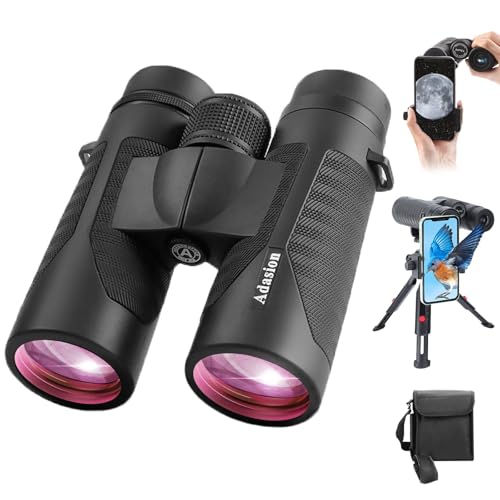
| 12×42 with Phone Adapter | Photographers who want a phone link | 12×42, phone adapter, tripod, BAK4, waterproof |
How to Choose
Magnification and objective lens size
The first number is magnification and the second is the objective lens diameter in millimeters. An 8×42 is a traditional birding format because eight-power gives a steady image and a wide field, while 42 millimeters gather plenty of light for dawn and dusk. A 10×42 reaches a little farther at the cost of a slightly shakier view. Compacts such as 10×25 trade light gathering for pocket size. High-power models like 20×50 can be hard to hold steady without a tripod, so they are better for scanning open water than for tracking small birds in trees. Beginners often do best by starting at eight or ten power, learning to find birds quickly, and only then deciding whether more reach is worth the trade-offs. Close focus distance matters too, since butterflies, dragonflies and birds at a feeder reward binoculars that can focus on subjects a few yards away.
Prisms, coatings and optical quality
BAK4 prisms are a common choice for a bright, evenly lit image, and fully multi-coated lenses reduce glare. A title that mentions HD optics, like the Vortex listing, suggests premium glass, though real-world quality needs to be judged from the listing details and warranty. Cheaper binoculars can show color fringing at the edges and soft focus at the corners. If possible, compare images on a high-contrast subject like a bird against a bright sky. Reading the return terms is wise for any pair bought sight unseen, since a few minutes at a window or feeder will show whether the focus feels smooth and both barrels line up comfortably.
Waterproofing, durability and weather
Birders are outside in rain, fog and dust. A waterproof and fogproof design, which the Vortex and Celestron titles describe, matters for long field days. Rubber armoring protects the body from knocks and gives a better grip when wet. Compact models are often water-resistant rather than fully waterproof, so read the listing carefully. Rinse off salt or mud with a damp cloth and store binoculars in a dry place. Rain guards and objective lens caps protect the glass when a pair rides in a pack, and a quick check of the listing will show which accessories are included.
Fit, weight and where budget models cut corners
Weight matters on a full day in the field. Check eye relief if wearing glasses, and look for a focus wheel that is smooth without being loose. Budget models may skimp on prism alignment, focus mechanism and lens coatings, and “high powered” labels can hide a narrow field of view. A harness or strap that spreads the weight across the shoulders is more comfortable than a neck strap for heavier models. The right fit also means adjusting the barrels to the width between the eyes and setting the diopter ring so both eyes are sharp, a simple step that many new users skip.
The 6 Best Options
20×50 High Powered Binoculars
This 20×50 model is described as waterproof, compact and good for low-light viewing, with bird watching listed among its uses. It suits users who want far reach for open fields, lakes and shorelines and are happy to use a tripod or brace the elbows.
- Twenty-power gives the most reach on this list.
- Waterproof description is stated in the title.
- Trade-off: strong magnification magnifies hand shake and narrows the field of view.
Skip it if tracking small birds in trees is the goal, or if long walks make a heavy pair tiring. The listing appears in more than one variant, so confirm the chosen one. Treat the low-light wording as a marketing description and look for lens size and coatings on the listing to judge it. A strap that sits comfortably is also important, because a larger pair can feel heavy after an hour.
Occer 12×25 Compact Binoculars
The Occer is a compact 12×25 model for adults and kids with easy focus and a large eyepiece, aimed at bird watching, cruises and travel. It suits casual birders who want something that slips into a pocket.
- Compact size is easy to carry anywhere.
- Easy focus and a large eyepiece are stated.
- Trade-off: a 25-millimeter objective gathers less light than a 42.
Skip it if dim forest light or dawn birding is the plan. Younger users should be supervised when handling optics, and adjustment to fit small faces should follow the instructions. Pocket-size pairs are a smart second pair even for experienced birders, since they ride along in a coat on days when a full-size pair would stay home.
Vortex Triumph HD 10×42
The Triumph HD is a 10×42 model with HD optics, tripod adaptability and waterproof, fogproof and shockproof construction, plus a Glasspak harness and an unconditional warranty. It suits dedicated birders who want a full-size, field-ready tool from a known brand.
- HD optics and a full 42-millimeter objective are in the title.
- Warranty and harness are listed.
- Trade-off: it sits above the budget tier and a 10-power view takes a steady hand.
Skip it if the budget is tight or if a pocket-size pair is needed. It is best for regular field use rather than occasional outings. Tripod adaptability is a plus for long watches at a hawk lookout or a shorebird flat, and the harness spreads the load across the shoulders instead of the neck.
Celestron Outland X 8×42
The Outland X is an 8×42 binocular for birding and nature viewing, with a rugged rubber-armored body, waterproofing, BaK-4 prisms and multi-coated optics. It suits woodland birders who value a steady image and a durable build.
- Eight-power with 42-millimeter lenses is a classic birding combination.
- Waterproof and rubber-armored build is stated.
- Trade-off: full-size binoculars are heavier than compacts.
Skip it if a pocket-size pair is the priority. Check the listing for field of view and eye relief before deciding. Because the title lists multi-coated optics and BaK-4 prisms, it is a reasonable benchmark for comparing value against other full-size pairs, and its rugged build makes it a good match for wet-weather outings.
Aurosports 10×25 Compact Binoculars
The Aurosports is a small 10×25 model with BAK4 prisms and FMC coating, aimed at bird watching, cruises and travel for adults and kids. It suits travelers who want a light carry and reasonable clarity.
- BAK4 prisms and FMC coating are in the title.
- Small, lightweight form factor.
- Trade-off: a 25-millimeter objective is less suited to low light.
Skip it if long dawn sessions in forest shade are planned. Supervise children and follow the listing’s adjustment instructions. Because both compact models share a similar format, the choice often comes down to coatings and focus feel, so reading the listing details for each is time well spent.
12×42 Binoculars with Phone Adapter and Tripod
This 12×42 model lists a phone adapter, tripod, BAK4 prisms and waterproof construction, aimed at bird watching and travel. It suits users who want to snap phone photos through the eyepieces.
- Phone adapter and tripod support are included in the title.
- 42-millimeter lenses with BAK4 prisms are listed.
- Trade-off: 12x magnification shows hand shake, so a tripod helps.
Skip it if photo capture is unimportant or if a lightweight handheld pair is preferred. Check how the adapter attaches to the phone model in use, and practice lining up the camera with the eyepiece before the trip, since it takes some patience to get a clear photo. Photos through binoculars are best treated as keepsakes rather than field-guide images.
Which One Fits Your Situation
Woodland birding at dawn
Celestron Outland X 8×42 balances brightness and steadiness. Vortex Triumph HD 10×42 is the upgrade for those who want HD optics. Early-morning light favors the larger objective lenses on both, and a harness keeps the weight comfortable during a long walk.
Lakes and open marshes
20×50 High Powered Binoculars or the 12×42 with tripod give more reach. Use a tripod or a steady rest for the best view, and scan slowly in overlapping sweeps rather than swinging quickly across the water.
Travel and cruise ship birding
Occer 12×25 or Aurosports 10×25 pack small. Choose Aurosports for BAK4 and FMC details and Occer for easy focus. Either one fits easily in a coat pocket for a quick look at a bird from the ship’s rail.
Sharing photos from the field
12×42 Binoculars with Phone Adapter and Tripod links optics to a phone. Practice the setup before heading out.
Common Mistakes
- Buying maximum magnification and losing the field of view.
- Ignoring eye relief when wearing glasses.
- Choosing compacts for dim-light birding.
- Assuming waterproof means submersible without checking the listing.
- Skipping a neck strap or harness fit check before a long day.
Related guides
- Battery Powered Generator For Refrigerator
- Portable Power Station For Refrigerator
- Portable Power Station For Camping
Frequently Asked Questions
What does 8×42 mean?
The first number is magnification and the second is the objective lens diameter in millimeters. It is a common birding format.
Are higher-power binoculars better for birding?
Not always. Higher power narrows the field and magnifies shake, which can make small birds harder to find.
Can kids use these binoculars?
Some titles mention kids, but young children should be supervised, and fit should follow the manufacturer’s instructions.
How should binoculars be cleaned?
Use a soft brush for dust and a lens cloth for smudges, and avoid harsh cleaners. Store them dry, with lens caps on, and keep them away from hot dashboards. A gentle blow with a rubber bulb removes grit before wiping, which avoids scratching the coatings.
More from Amazon
Programs that pair well with the guide above. Offers and eligibility are set by Amazon and may change.
Free shipping on eligible items, Prime Video and more. Eligible new members can start with a free trial.
Start a Prime free trialA Prime membership for ages 18-24 with a trial period. Eligibility is set by Amazon.
See Prime for Young AdultsAudiobooks and podcasts to listen to on the go. Eligible new members can start with a free trial.
Try Audible freeAd-free music streaming. Eligible new subscribers can start with a free trial.
Try Music Unlimited freeAs an Amazon Associate we earn from qualifying purchases.


Write Your Review
No reviews yet. Be the first to share your experience!