

Key takeaways
- Compare the best chicken nesting pads, from aspen excelsior to washable silicone and turf, for cleaner eggs, fewer cracks and faster nest box changeouts.
As an Amazon Associate we earn from qualifying purchases.
Affiliate Disclosure: This article contains affiliate links. If you buy through a link on this page, we may earn a commission at no extra cost to you. That support helps us keep publishing practical backyard flock guides.
A nesting pad is the consumable layer that sits inside the nest box, between the hen and the box floor. It is not the box itself, and it is not bulk coop bedding — it is a sized, replaceable liner whose whole job is to cushion the egg at the moment it is laid, keep the laying surface cleaner between changeouts, and come out in one piece when it is soiled. Loose straw and shavings can do the same work, but they get scratched out of the box, mixed with droppings, and replaced handful by handful. A pad turns nest maintenance into a lift-out, drop-in task that takes seconds per box.
What a pad actually buys you is narrower than most product pages suggest. It buys egg protection: a resilient layer under the hen reduces cracked and checked eggs caused by eggs landing on, or being rolled against, a hard box floor. It buys cleaner shells, because droppings sit on a defined surface you remove rather than grinding into bedding that stays in the box for weeks. And it buys speed — a full round of nest boxes can be refreshed in minutes. What a pad does not buy you is a fix for behaviour or parasite problems. Egg eating is a management issue involving collection frequency, diet, and individual hens. Floor laying is about box placement, training young pullets, and competition for favoured boxes. Mites and lice live in coop cracks and on the birds themselves, and no liner material treats them. A pad is a hygiene and cushioning tool, and it should be judged on those terms only.
How to Choose a Nesting Pad
Material is the first decision. Aspen excelsior pads — curled wood fibres formed into a mat, sometimes bonded to a paper backing — are the traditional disposable option. Hens can scratch and shape them into a proper nest bowl, which is partly the point: rearranging the nest is natural laying behaviour, and a pad that allows it tends to be accepted quickly. Excelsior is compostable, and a soiled pad goes straight onto the compost pile with its contents contained. Washable plastic and silicone pads are the reusable alternative. They never need restocking, they hose or wash clean, and they give a consistent surface — but their hygiene depends entirely on you actually washing them, and some hens dislike a bare synthetic surface at first. A thin scattering of straw or shavings over a washable pad solves most rejection problems while keeping changeouts fast. Artificial grass turf pads sit between the two camps: washable and reusable, with a textured surface hens generally accept, though the fibres need a thorough shake and rinse to clear trapped debris.
Size comes second. The standard pad footprint is roughly 13 x 13 inches, which fits most commercial and home-built nest boxes. Smaller 12 x 12 inch pads suit compact boxes and roll-away designs with narrower floors. Measure the inside floor of your boxes before ordering, not the outside of the coop. Excelsior pads fluff and compress to fit and can be folded or trimmed at the edges; most washable pads can also be cut down with sturdy scissors, though rigid-backed turf pads trim less neatly. A pad that is slightly large is workable; a pad that leaves a bare strip of floor at the back of the box will collect the droppings and the occasional egg exactly where you did not want them.
Set a changeout cadence and keep it. Disposable excelsior pads should be lifted out as soon as they are visibly soiled or flattened — in an active laying box that is often every one to two weeks, and immediately if a broken egg has soaked in, because dried egg in a nest encourages egg eating. Washable pads should be swapped or hosed off on the same trigger, not on a fixed monthly schedule; a spare set makes this painless because a clean pad goes in while the dirty one dries. Whatever the material, a pad that stays in the box dirty is worse than loose bedding changed often.
The 5 Best Chicken Nesting Pads
1. Eaton Pet and Pasture Premium Laying Hen Nesting Pads

Eaton Pet and Pasture’s pads are the reference point for the disposable excelsior format. Each pad is a mat of USA-grown, sustainably harvested aspen excelsior — fine curled wood fibres that interlock into a springy cushion roughly an inch thick once fluffed. There is no paper backing, so the pad is all fibre: hens can scratch it into a bowl, pull material around themselves, and settle properly, and the whole thing composts when it is done. The 13 x 13 inch footprint matches standard nest boxes, and the 10-pack format means a typical four-to-six-box coop can be fitted out with spares left over for the next changeout round.
The honest limitations are the ones shared by all excelsior. Determined scratchers can tear a pad apart ahead of schedule, scattering fibre into the coop — that is nesting behaviour, not a defect, but it shortens pad life in some boxes. And because the pads are disposable, an active flock creates a steady, if compostable, waste stream. For keepers who want the most natural laying surface and the fastest possible changeout — lift, compost, drop in a fresh pad — this is the straightforward pick.
Specs
- Material: Aspen excelsior (USA grown, sustainably harvested)
- Dimensions: 13 x 13 in
- Pack count: 10 pads
- Type: Disposable, compostable
- Backing: None (all-fibre pad)
- Trimmable: Can be folded or cut to fit
2. Pecking Order Nest Box Pads

Pecking Order takes the same excelsior concept and adds the one feature the Eaton pad lacks: a kraft paper backing. The pads are made from Great Lakes aspen excelsior fibres adhered to that paper layer, and the backing changes how the pad handles in two practical ways. It holds the fibre mat together when you lift a soiled pad out, so droppings and debris come away in one piece instead of shedding through the box, and it acts as a moisture barrier between the pad and the box floor, which keeps wooden box floors drier and easier to scrape clean at a deep clean.
The trade-off is that the backed pad is slightly less shapeable — hens can still work the fibre surface, but the pad holds its flat form more than an unbacked mat, and a hen determined to build a deep bowl may work the edges up. The 13 x 13 inch size and 10-pack count match the standard format, and the pads are disposable and compostable like any excelsior product. Choose this format if your main frustration with loose bedding or unbacked pads is the mess left behind in the box at changeout time.
Specs
- Material: Aspen excelsior adhered to kraft paper backing
- Dimensions: 13 x 13 in
- Pack count: 10 pads
- Type: Disposable, compostable
- Backing: Kraft paper
- Trimmable: Yes, cut or fold to fit
3. CLOCAL Washable Chicken Nesting Pads

CLOCAL’s pads are the open-grid washable plastic format: flexible plastic liners with a raised, textured surface that lets droppings and debris fall through or sit below egg level, so eggs rest on a cleaner contact surface than a flat mat provides. At 12 x 12 inches they suit compact and standard boxes, and the 6-piece set covers a small coop with a spare for wash day. Being plastic, they are hosed, scrubbed, or shaken clean and go straight back in — there is nothing to compost and nothing to reorder.
Two honest cautions apply to this whole format, and this set is no exception. First, the hygiene advantage is real only if the pads are actually washed; a plastic pad left dirty for a month is a worse laying surface than fresh excelsior, because nothing absorbs anything. Second, some hens — especially pullets just coming into lay — are suspicious of a bare synthetic surface. Topping the pad with a light layer of straw for the first week or two usually ends the protest while keeping most of the easy-clean benefit. The pads can be trimmed with scissors for an exact fit in non-standard boxes.
Specs
- Material: Plastic (washable, reusable)
- Dimensions: 12 x 12 in
- Pack count: 6 pads
- Type: Washable and reusable
- Surface: Raised open-grid texture
- Trimmable: Yes, cut to fit
4. Pawtners Silicone Nesting Pads for Chicken Coop
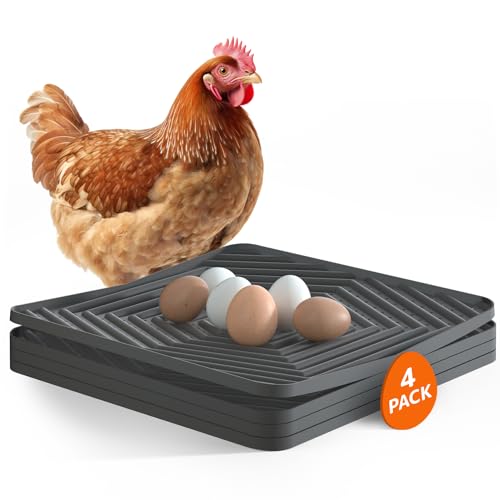
Pawtners makes its pads from silicone, which gives the softest surface of any washable option here. The flexible pad cushions the egg as it is laid — silicone gives under the egg rather than meeting it with a rigid grid — and the non-porous material does not absorb moisture or odour, so a wash with water and a brush returns it to a genuinely clean state rather than a rinsed one. The pads are listed at 12 x 12 inches in a 4-pack, sized for standard individual nest boxes.
Silicone’s softness is also the point to think through. A flat, smooth pad offers the hen nothing to shape, and layers that care about arranging a nest may prefer it topped with a little loose material at first. The 4-pack is the smallest count in this roundup, which suits a small coop but means no spares in rotation unless you buy two sets — and a washable system works best when a clean pad can go in while the used one is being washed. For keepers whose priority is sanitation — quarantine coops, breeding pens, or anyone who has dealt with a mite or bacteria problem and wants surfaces that can be properly scrubbed — silicone is the strongest format here.
Specs
- Material: Silicone
- Dimensions: 12 x 12 in
- Pack count: 4 pads
- Type: Washable and reusable
- Surface: Smooth, flexible, non-porous
- Trimmable: Not specified by the maker
5. Yudlto Artificial Grass Chicken Nesting Box Pads

Yudlto’s pads use artificial grass — a synthetic turf surface on a backing — as the laying layer. The turf fibres cushion eggs, give hens a textured surface with some grip, and let liquid and fine debris pass down away from the eggs. The pads are listed at 12 x 12 x 1 inches, and the 12-pack count is the largest in this roundup, which makes turf the economical washable format for bigger coops: every box can be fitted and a full spare set kept for changeout day. The pads are washable — shake out debris, hose down, and dry before returning them to the box.
Turf asks a little more of the wash routine than smooth silicone or open-grid plastic. Debris lodges between fibres, so a pad that only gets a quick rinse is not fully clean; a stiff brush during washing makes the difference. Turf pads also trim less cleanly than plain plastic, since cutting crosses the stitched fibre rows, so measure your boxes first and order the size that drops in as-is where possible. For a larger flock that wants a reusable pad with a natural-feeling texture and enough pieces to rotate, this set covers the most boxes per purchase.
Specs
- Material: Artificial grass (synthetic turf)
- Dimensions: 12 x 12 x 1 in
- Pack count: 12 pads
- Type: Washable and reusable
- Surface: Turf fibre texture
- Trimmable: Possible, but trims less neatly than plain plastic
Keeping Pads Working: Cadence and Troubleshooting
Whichever format you choose, the routine matters more than the material. Check nests daily when you collect eggs and pull any pad with a broken egg on it the same day — egg residue in a nest is the single most fixable cause of egg eating, a habit that spreads through a flock once one hen learns it. Replace disposable pads when they are flattened, soiled through, or torn apart; wash reusable pads when they carry visible droppings build-up, and let them dry fully before they go back in, because a damp pad in a closed box grows mould faster than bedding does.
If hens are laying on the floor despite good pads, the pads are rarely the cause. Look at box height, light, and competition: pullets often need a few dummy eggs in the boxes to learn the location, and one aggressive hen guarding a favoured box will push subordinates to the floor. If eggs are being eaten, collect more often, keep nests dim, and make sure the ration is not short on calcium or protein before blaming the liner. And if you find mites in the nest boxes, treat the coop structure and the birds — changing pads removes harbourage and helps the clean-up, but no pad, of any material, is a treatment.
Bottom Line
For most backyard coops, start with excelsior: the Eaton Pet and Pasture pads if you want an all-fibre pad hens can shape freely, or the Pecking Order pads if a paper backing that lifts out clean appeals. Move to a washable format when the recurring restocking bothers you more than the washing will — CLOCAL’s open-grid plastic for compact boxes, Pawtners’ silicone where scrub-down sanitation matters most, and Yudlto’s turf set when a bigger coop needs pads and spares in one purchase. Measure your boxes, keep the changeout cadence honest, and the eggs will come in cleaner with fewer cracks.
More from Amazon
Programs that pair well with the guide above. Offers and eligibility are set by Amazon and may change.
Free shipping on eligible items, Prime Video and more. Eligible new members can start with a free trial.
Start a Prime free trialA Prime membership for ages 18-24 with a trial period. Eligibility is set by Amazon.
See Prime for Young AdultsAudiobooks and podcasts to listen to on the go. Eligible new members can start with a free trial.
Try Audible freeAd-free music streaming. Eligible new subscribers can start with a free trial.
Try Music Unlimited freeAs an Amazon Associate we earn from qualifying purchases.







Write Your Review
No reviews yet. Be the first to share your experience!