

Key takeaways
- Flat to moderate rocker: best for first starts, casual riding, and riders who value easy acceleration.
- Moderate progressive rocker: useful for recreational slalom and learning controlled turns.
- More aggressive rocker: intended for advanced course skiing, where turn shape matters more than effortless starts.
The best water skis for most beginners are wide combo skis with a flatter rocker and adjustable bindings; progressing slalom riders should move to a narrower, shaped or traditional slalom ski matched to their weight, while experienced skiers need a precisely sized competition ski rather than maximum width.
Our top picks

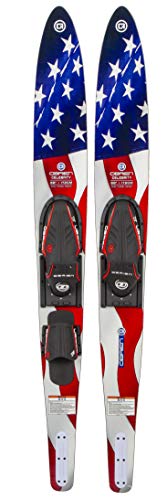


As an Amazon Associate we earn from qualifying purchases at no extra cost to you. Ratings are shown as listed on Amazon.
Best water skis by riding situation
| Rider and goal | Best ski type | Useful specifications | Why it works |
|---|---|---|---|
| First-time adult or family sharing one set | Wide combo skis | 65–75 mm or wider waist; 67–69 in length; adjustable bindings | More surface area creates stability and allows a slower, easier deep-water start |
| Child or lightweight beginner | Junior combo skis | 54–59 in length; trainer bar or stabilizing bar compatible | Shorter skis reduce leverage and are easier to control behind a small boat |
| Beginner ready to learn one ski | Wide-body or shaped slalom ski | 65–68 in length; wider forebody; moderate rocker | Retains beginner stability while introducing slalom balance and edging |
| Recreational one-ski rider | Recreational slalom ski | 63–68 in length; medium-width profile; adjustable rear binding or rear toe plate | Turns more efficiently than combos without demanding tournament-level technique |
| Course skier or advanced open-water rider | Traditional competition slalom ski | 65–69 in length; narrow waist; low-to-moderate rocker; fixed-position boots | Delivers speed and precise edge changes, but exposes poor sizing and technique |
What to look for before choosing
Width: the most important beginner specification
A wider ski has more planing surface and generally rises onto the water at a lower speed. That makes wide combos the sensible starting point for new riders, heavier riders, and families that want predictable starts rather than maximum turning performance.
Width is not standardized across manufacturers, so compare the actual shape rather than relying only on labels such as “wide” or “performance.” A beginner-friendly ski normally has a broad forebody and substantial tail area. A narrow competition slalom ski may feel fast and responsive, but it requires more accurate weight distribution and stronger edge control.
Very wide skis are not automatically better for every adult. Once a rider can reliably get up on one ski and hold an edge, excessive width can make the ski feel slower in turns. At that point, a shaped slalom ski is often a better bridge to a conventional slalom model.
Length: match weight before height
Water-ski length is chosen primarily by rider weight and ability, not by standing height. The following ranges are useful starting points for recreational skis, but the manufacturer’s chart should take priority because rocker lines and widths differ.
| Approximate rider weight | Typical combo or shaped-ski length | Typical competition slalom length |
|---|---|---|
| Under 60 lb / 27 kg | 46–54 in | Junior-specific ski |
| 60–100 lb / 27–45 kg | 54–59 in | 55–59 in |
| 100–150 lb / 45–68 kg | 59–65 in | 63–65 in |
| 150–200 lb / 68–91 kg | 65–67 in | 65–67 in |
| 200–250 lb / 91–113 kg | 67–69 in | 67–69 in |
| Over 250 lb / 113 kg | 69 in or a wider model | Manufacturer-specific advice |
If a rider is between sizes, choose the longer ski for stability and lower-speed starts. Choose the shorter option only when the rider already has reliable technique and wants quicker turning.
Rocker: stability versus turning response
Rocker is the curve from tip to tail. A flatter rocker usually releases easily, accelerates efficiently, and feels predictable for beginners. More rocker helps a ski initiate tighter turns and absorb aggressive edge changes, but it also increases drag and makes poor balance more noticeable.
- Flat to moderate rocker: best for first starts, casual riding, and riders who value easy acceleration.
- Moderate progressive rocker: useful for recreational slalom and learning controlled turns.
- More aggressive rocker: intended for advanced course skiing, where turn shape matters more than effortless starts.
Bindings: adjustability matters more than premium materials
For a shared family ski, prioritize bindings with a broad adjustment range, secure heel retention, and enough room for the largest intended foot. Adjustable front bindings and rear toe plates accommodate growth and different users. A trainer bar can be particularly useful for teaching a child or first-time rider because it helps maintain ski spacing during the initial starts.
Fixed competition boots can provide more precise control, but they are a poor choice for a rental-style setup. They need accurate sizing and should not be forced onto a growing foot. Bindings should hold the foot without numbness, pressure points, or excessive heel lift; fit problems become more noticeable as the ski gets narrower and faster.
Shortlist by ski style
Wide combo skis for beginners
Look for a pair of skis that can be used together or separately, with a stabilizing bar option and adjustable front bindings. Models in the recreational ranges from established water-sports brands such as HO Sports, Connelly, and O’Brien commonly follow this format. The advantage is versatility: two skis provide a stable learning platform, while removing one ski allows progression without immediately buying a second setup.
For a household ski, a 67–69 inch wide combo set is often a practical compromise for medium-to-large adults. Smaller riders may struggle to control an oversized set, so junior sizes are preferable for children rather than simply sharing adult equipment.
Shaped skis for the first step toward slalom
A shaped ski has more width and surface area than a traditional slalom ski but uses a one-ski configuration. It is a strong choice when the rider can already deep-water start on two skis and wants to learn one-ski starts, crossing the wake, and progressive edging.
Choose a model with a moderately wide forebody, a comfortable rear toe plate or adjustable rear binding, and a length matched closely to body weight. This category is usually more forgiving than a competition slalom ski while still teaching the balance and stance needed later.
Traditional slalom skis for advanced riders
Advanced skis from brands such as HO Sports, Connelly, Radar, and O’Brien are built around specific rocker lines, flex patterns, bevels, and binding positions. These details matter more than a simple width measurement. A skier who is still fighting deep-water starts should not choose a high-performance ski merely because it is lighter or more expensive.
For course skiing, use the manufacturer’s weight chart and binding-placement recommendations. Small changes in boot position can alter how easily the ski turns, accelerates, or releases, so record the original settings before making adjustments.
Decision matrix: spend money where it improves your skiing
| Your situation | Prioritize | Do not overpay for |
|---|---|---|
| Ride fewer than five days per year | Durable combo skis, adjustable bindings, protective storage bag | Carbon construction or tournament boots |
| Family shares equipment | Wide size range, trainer-bar compatibility, replaceable binding parts | Fixed custom boot placement |
| Ride 5–15 days per year | Shaped slalom ski and properly fitted rear binding | The most aggressive rocker profile |
| Regular course practice | Exact length, binding adjustability, tunable fin and boot setup | Buying by appearance or weight alone |
Setup and ownership details that affect performance
Before the first outing, inspect binding screws, plates, rubber, and stitching. Confirm that every fastener is tight and that the binding releases as intended if the manufacturer specifies a release system. Do not drill new mounting holes without the brand’s approved template; an inaccurate position can damage the ski or create unpredictable handling.
After each use, rinse the skis and bindings with fresh water, especially after saltwater exposure. Let them dry completely in shade before storing them. Do not leave skis in a hot, closed vehicle: heat can accelerate adhesive failure, deform plastic parts, and make rubber bindings brittle. Store skis flat or supported at several points rather than leaning them for months against one edge.
The parts that usually wear first are rubber binding components, heel pieces, mounting hardware, and protective edges. Salt, sunscreen, grit, and repeated wet storage shorten their life. A binding that feels loose, cracked, stretched, or difficult to adjust should be replaced before the ski is used again.
Common buying mistakes
- Choosing a narrow slalom ski before mastering stable deep-water starts.
- Using an adult ski for a small child because the family expects the child to grow into it.
- Ignoring rear-binding fit and focusing only on the front boot.
- Assuming a longer ski is always faster or a shorter ski is always easier.
- Changing binding position without marking the original setting.
- Leaving wet skis in direct sun or storing them while salt and sand remain in the bindings.
Final recommendation
For most new riders, buy a wide, adjustable combo set in the correct weight range and choose a trainer-bar-compatible design if a child is learning. Move to a shaped slalom ski when two-ski starts and wake crossings are comfortable. Choose a traditional competition slalom ski only when the rider’s technique, frequency of use, and willingness to tune binding position justify it. The best water skis are not the most expensive ones; they are the skis whose width, rocker, length, and binding setup make the next skill easier to learn.





Write Your Review
No reviews yet. Be the first to share your experience!