

Key takeaways
- Run the cycle immediately after cleaning, while residue is still wet.
- Remove hair and larger debris from the roller chamber manually.
- Empty and rinse the dirty-water tank; do not leave food particles in it overnight.
- Take out the filter and let it dry completely before reinstalling it.
- Inspect the roller for flattened fibers, sour odor, or reduced water pickup.
The best vacuum mop combos for most homes are the Tineco Floor One S7 Stretch for balanced everyday cleaning, the Roborock Flexi Pro for edge reach and easier maneuvering, and the Bissell CrossWave HydroSteam for sticky, dried-on messes—provided you mainly clean sealed hard floors.
These machines vacuum debris, dispense clean water, scrub with a powered roller, and recover dirty water in one pass. They can replace a separate vacuum and mop for kitchens, bathrooms, entryways, and other sealed surfaces, but they are not a complete carpet-cleaning solution. The right choice depends less on headline suction than on roller design, water management, maintenance effort, and how often you will actually use the machine.
Our top picks

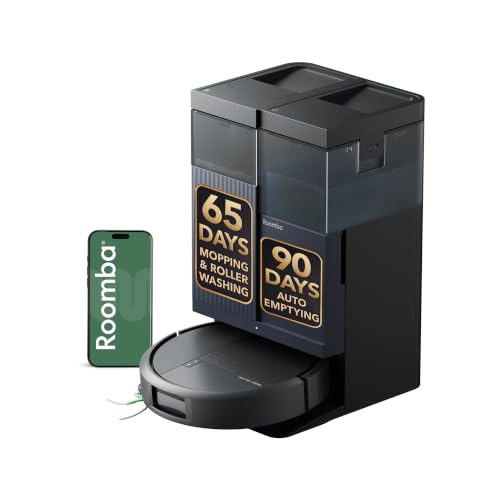

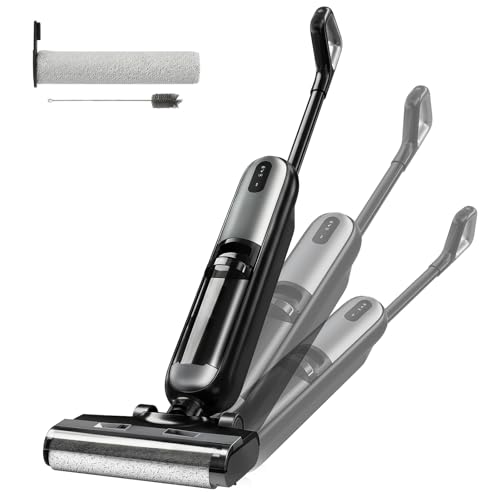
As an Amazon Associate we earn from qualifying purchases at no extra cost to you. Ratings are shown as listed on Amazon.
Best vacuum mop combos at a glance
| Model | Best for | Runtime | Clean-water tank | Notable limitation |
|---|---|---|---|---|
| Tineco Floor One S7 Stretch | Most households and low-clearance cleaning | Up to 40 minutes | Approximately 0.8 L | Requires thorough roller and tank cleaning after use |
| Roborock Flexi Pro | Furniture edges and easy steering | Up to 50 minutes | Approximately 0.73 L | Higher typical market price |
| Bissell CrossWave HydroSteam | Sticky or dried-on kitchen messes | Approximately 28 minutes | Approximately 0.82 L | Shorter battery runtime and less convenient cord-free operation than newer rivals |
| Dreame H14 Pro | Large sealed-floor areas and automated drying | Up to 40 minutes | Approximately 0.88 L | Bulkier dock and more involved ownership routine |
Tank capacities and runtime are approximate manufacturer figures and vary with cleaning mode, floor conditions, and regional versions. A “maximum” runtime is normally measured in an economical mode rather than while removing heavy soil.
Head-to-head: which machine fits your floors?
Tineco Floor One S7 Stretch: the balanced choice
The S7 Stretch is a strong all-rounder for sealed tile, vinyl, laminate, and finished wood floors. Its flexible body is designed to lie lower under furniture than many upright wet-dry cleaners, while automatic water and suction adjustment helps prevent flooding a floor during routine cleaning. The dual-edge roller design is useful along baseboards, although no round roller reaches perfectly into every corner.
Its main advantage is consistency: the machine handles crumbs, pet hair, everyday dust, and light wet spills without requiring separate passes. The trade-off is maintenance. The brush roll, dirty-water tank, filter, and debris channel should be rinsed after each session, and the roller must dry fully rather than remain wet in a closed dock or cupboard.
Roborock Flexi Pro: best for edges and maneuverability
The Flexi Pro is a compelling option when furniture placement makes cleaning awkward. Its flexible design and edge-oriented roller access make it easier to follow baseboards and reach beneath some cabinets. Steering assistance reduces the effort of moving the machine across a large hard-floor area, particularly when the tank is full.
Choose it when convenience and coverage matter more than the lowest purchase price. It still needs the same basic care as other wet-dry cleaners: empty the dirty tank promptly, remove trapped hair, rinse the filter, and allow washable parts to dry. The machine reduces scrubbing labor; it does not eliminate cleaning chores.
Bissell CrossWave HydroSteam: best for dried-on residue
The CrossWave HydroSteam uses heated cleaning assistance alongside vacuuming and powered mopping. That makes it particularly suitable for cooking grease residue, tracked-in grime, and spills that have dried onto sealed tile or vinyl. It is also a practical pick for buyers who prefer a familiar, established floor-care design and do not need the longest cordless runtime.
The shorter runtime matters in larger homes. Its cleaning method is better suited to deliberate wet cleaning than rapid whole-house passes, and users should follow the product’s guidance on approved solutions. Too much detergent can leave a sticky film, create excess foam, and make the recovery tank harder to rinse.
Dreame H14 Pro: best for larger hard-floor zones
The H14 Pro combines a relatively large clean-water tank with a self-cleaning and heated-drying dock. This is useful when one session covers a kitchen, dining area, hall, and several bathrooms. Heated drying can reduce the damp odor that develops when a roller stays wet, though it does not remove the need to inspect and clean the machine.
Its larger capacity can also mean more weight when full. If you have stairs or only a small apartment, a lighter machine with a smaller tank may be more comfortable and less wasteful.
Decision matrix: choose by situation
| Your situation | Best direction | Why |
|---|---|---|
| Small apartment, cleaning once or twice weekly | Compact cordless model with a 0.6–0.8 L tank | Less water to carry, faster setup, and enough capacity for a modest floor plan |
| Open-plan home cleaned several times per week | Long-runtime model with 0.8 L or larger clean tank | Fewer refills and better continuity across connected rooms |
| Many cabinets, chair legs, and baseboards | Low-profile, edge-cleaning design | Reach and steering affect real coverage more than maximum suction claims |
| Dried food and sticky spills are common | Steam-assisted or high-agitation model | Heat and repeated roller contact can loosen residue more effectively |
| First wet-dry cleaner | Automatic water control and a simple self-clean cycle | Fewer settings reduce the chance of over-wetting or overusing detergent |
| Mostly carpet or area rugs | Separate vacuum plus a hard-floor mop | Most vacuum mop combos are intended primarily for sealed hard floors |
How much floor can one tank cover?
Capacity is useful, but tank size alone does not predict coverage. A machine may use more water on heavily soiled floors or in a high-flow mode. As a planning example, suppose a 0.8-liter clean tank provides roughly 500–700 square feet of routine hard-floor cleaning before a refill. A 1,200-square-foot home with about 70% sealed floor has 840 square feet of cleanable area. At an assumed 600 square feet per tank, that requires:
840 ÷ 600 = 1.4 tanks
In practice, plan on two fills, especially if the first pass includes muddy entryway soil or dried spills. The same session may also require emptying the dirty-water tank before the clean tank is exhausted, because recovered debris and foam reduce usable capacity.
What “self-cleaning” does—and does not—mean
A self-clean cycle flushes the internal water path and roller with clean water. Some premium docks also dry the roller with warm air. These features save time, but they are not automatic sterilization or a substitute for inspection.
- Run the cycle immediately after cleaning, while residue is still wet.
- Remove hair and larger debris from the roller chamber manually.
- Empty and rinse the dirty-water tank; do not leave food particles in it overnight.
- Take out the filter and let it dry completely before reinstalling it.
- Inspect the roller for flattened fibers, sour odor, or reduced water pickup.
The parts most likely to wear first are the brush roller, roller cover, filter, squeegee edges, and battery capacity. Homes with pets or long hair may need more frequent roller replacement because wrapped hair increases drag and can strain the drive mechanism. Keep at least one spare roller and filter if the machine is used several times a week.
Carpet limitations you should know
Most vacuum mop combos can pick up a small dry spill from a low-pile rug, but they are not equivalent to a dedicated carpet vacuum. The wet roller can dampen carpet, leave it slower to dry, and transfer dirt from one surface to another. Avoid using the wet-mop mode on rugs unless the manual explicitly supports it.
For homes with substantial carpet, the better arrangement is a strong dry vacuum for rugs and upholstery, plus a vacuum mop reserved for sealed hard floors. This also avoids repeatedly switching water tanks and rollers when moving between floor types.
How to get better results and lower ownership cost
- Dry-pick up large debris first. Remove sharp fragments, litter, and excessive sand before wet cleaning; these can clog channels or scratch some floor finishes.
- Use the lowest effective water setting. Sealed wood and laminate should not be left visibly wet. Make a slow pass over sticky areas rather than flooding them.
- Clean in overlapping lanes. Move at a steady pace and overlap each pass slightly so the roller does not leave alternating dry and wet strips.
- Dry every washable component. Odor usually comes from trapped moisture and organic residue, not from a lack of fragrance.
- Use only compatible solution. Unapproved cleaners may foam excessively or damage seals and sensors.
For a frequently used machine, consumables and electricity are minor compared with the value of saved time, but neglect can turn a convenient appliance into a maintenance problem. The best vacuum mop combos are therefore the ones whose tank size, reach, controls, and drying routine match your actual home—not simply the model with the longest advertised runtime.





Write Your Review
No reviews yet. Be the first to share your experience!