

Key takeaways
- Five manual dethatching rakes compared on head width, tines, handles and weight, with honest guidance on measuring thatch depth and timing the work.
As an Amazon Associate we earn from qualifying purchases.
Thatch is the brown, spongy layer of dead stems, roots and runners that builds up between the green grass blades and the soil. A thin layer is normal and even useful — it cushions the turf and shades the soil. Once it grows thick, though, it acts like a thatched roof: rain and sprinkler water run off instead of soaking in, fertilizer sits on top instead of reaching the roots, and the grass thins out no matter how carefully it is fed.
A manual dethatching rake is the simplest tool for pulling that layer out of a home lawn. It needs no fuel, no cord and no charging, it stores on a garage wall, and for the small-to-medium lawns most households have, it does the whole job. This guide covers manual thatch rakes only — powered dethatchers and scarifiers are a different class of machine, built for large areas; every pick below is worked by hand, one pull at a time.
Affiliate Disclosure: This article contains affiliate links. If you buy through a link on this page, the site may earn a commission at no extra cost to you. Product picks are based on specifications and listing details, not on commissions.
Measure First: The Half-Inch Rule
The most important honest point in this guide comes before any product: dethatching only helps when the thatch layer is actually too thick, and the threshold is about half an inch. Below that depth, the layer is protecting the lawn, and raking it out does more harm than good — it tears up healthy runners, opens bare soil to weeds and stresses turf that was doing fine.
So measure before you rake. Cut a small wedge of turf with a trowel or knife, a few inches deep, and look at the profile. The thatch is the dense brown mat between the green blades and the dark soil. If it measures more than about half an inch, the lawn will benefit from dethatching. If it is thinner, put the wedge back, water it in, and spend your weekend on something else. Check two or three spots, because thatch is rarely even: it builds fastest under the most vigorous, heavily fed parts of the lawn.
A second limit, plainly: a manual rake is hand work. On a small or medium lawn it is a satisfying hour or two; on a very large property it becomes a long, physical day, and no handle design changes that arithmetic.
Timing Matters More Than Force
Dethatching tears some living material out along with the dead, so the lawn needs to be in a position to grow back quickly. That means working while the grass is actively growing — never during dormancy, drought or a heat wave, when the turf cannot repair itself and the open soil bakes.
For cool-season grasses such as fescue, bluegrass and ryegrass, the best window is late summer into early fall, with early spring as the second choice. For warm-season grasses such as bermuda, zoysia and St. Augustine, work in late spring through early summer, once the lawn has fully greened up and is growing strongly.
On the day itself: mow a little lower than usual first and clear the clippings, then rake when the soil is moist but not soggy — a day after rain or deep watering is ideal. Dry, hard ground makes the tines skate across the mat instead of hooking it; soaked ground lets them tear out live roots with the thatch. Work in strips, in short, firm strokes, shaking gathered material off the tines as you go. Afterwards, remove everything you lifted, water well, and overseed thin patches so new grass, not weeds, fills the gaps.
Tines and Angle Decide How Aggressive a Rake Is
Not all thatch rakes pull equally hard, and the difference is in the tines and the head angle.
Curved, flared tines are the classic dethatching shape. The curve hooks under the mat and the flared tips lift it out; on the best designs they cut on both the push and the pull stroke. This is the aggressive end of the manual range, meant for a genuine thatch problem.
Spring tines flex as they work. They ride over healthy crowns and dig out loose dead material and debris with less tearing, which suits lawns with a lighter layer, or yards where the rake doubles for gathering pine needles, leaves and mulch.
Blade-style tines slice rather than comb. They suit compacted, matted spots and mossy patches, and the better versions make the blades replaceable, because a slicing edge is a wear part.
Head angle is the adjustment that matters most. On rakes with an adjustable head, a steeper angle drives the tines deeper for thick thatch; a shallower angle skims lighter material and loosens the surface for overseeding. A fixed head saves weight and cost but gives you one attack angle, and your arms supply the difference.
What to Check Before Buying
- Head width. Fifteen inches is the standard working width — wide enough for steady progress, narrow enough to control in tight corners. Wider heads cover open lawn faster but demand more strength on every pull.
- Tine count and material. Nineteen curved steel tines is the classic pattern. Steel keeps its shape and spring; manganese and carbon steel are the harder-wearing versions, and stainless steel shrugs off rust when the tool is stored damp.
- Adjustable or fixed. An adjustable head angle lets one rake handle both deep thatch and light grooming. Sectional handles that shorten are easier to store and let you set the length to your height.
- Handle material. Hardwood absorbs vibration and is the traditional choice. Fiberglass is light and weatherproof. Stainless steel sectional handles are rustproof but can loosen at the joints if not tightened firmly.
- Weight. The rakes below run from about 3.3 to 5.6 pounds. Weight helps tines bite into a thick mat, but every pound is lifted and pulled hundreds of times in a session.
1. AMES 2915100 Adjustable Self-Cleaning Thatch Rake
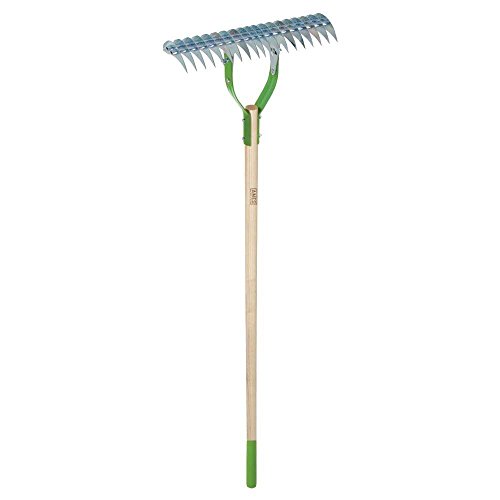
The AMES 2915100 is the reference design for this class of tool: a 15-inch head carrying 19 curved steel tines on a North American hardwood handle. The head angle adjusts, so the same rake can be set steep to dig into a thick mat or shallow for lighter grooming and seedbed work, and the tines are flared at the tips so they lift thatch on both the push and the pull stroke instead of only one way.
The head is described as self-cleaning: gathered material sheds from the curved tines as you work rather than packing solid between them, though in practice a quick shake every few strokes is still part of the rhythm. The handle is 54 inches of hardwood — 61 inches overall — with a 10-inch cushion grip at the top, long enough to work standing upright with both hands spaced for control. At 4.5 pounds it sits in the middle of this roundup: heavy enough for the tines to bite, light enough for a full session on a medium lawn. A limited 15-year warranty backs the model.
Specs
- Head: 15 in, adjustable angle, self-cleaning design
- Tines: 19 curved steel tines, flared tips
- Handle: 54 in North American hardwood (61 in overall), 10 in cushion grip
- Adjustable: Yes — head angle
- Weight: 4.5 lb
2. Bully Tools 92312 Leaf & Thatching Rake

The Bully Tools 92312 takes the opposite approach to the AMES: instead of curved dethatching tines, it runs 24 spring steel tines across a wide head of roughly 23.5 inches. The spring tines flex as they travel, so the rake combs out loose thatch, dead grass and debris while riding over healthy crowns instead of tearing them — the gentler tool of this group, and the one that doubles most naturally for pine needles, leaves and mulch.
The tines are tempered spring steel made in the USA, and the handle is fiberglass, bringing the total length to 66 inches and the weight down to 3.4 pounds despite the wide head. There is no angle adjustment — the head is fixed — so depth control comes from how hard you bear down. The width is the honest trade-off: it covers open lawn faster than any 15-inch rake here, but it is more awkward in narrow strips between beds, and a wide head full of wet debris is a real pull. A limited lifetime warranty covers the tool.
Specs
- Head: About 23.5 in, fixed angle
- Tines: 24 spring steel tines, tempered
- Handle: Fiberglass, 66 in overall
- Adjustable: No — fixed head
- Weight: 3.4 lb
3. Walensee Thatch Rake, 15-Inch

The Walensee is the versatile adjustable of the group. Its 15-inch head carries 19 curved manganese steel tines and is dual-sided: one face is the dethatching side, built to hook under the mat and lift it, and the reverse loosens the soil surface — useful in the same session if you are overseeding the patches you just opened up. Manganese steel is a hard, wear-resistant alloy, a sensible choice for tines that spend their life being dragged through grit.
The handle is the other half of the design. It is stainless steel, built from sections that screw together, and it sets to about 40, 55 or 70 inches, so the same rake fits a shorter user, standard work and a tall user who wants maximum leverage; the sections also break down for compact storage. Two honest notes: threaded joints can loosen during long sessions if not snugged down firmly at the start, and at 4.6 pounds this is a mid-heavy rake — the weight helps the tines bite, and you will feel it by the end of a big lawn.
Specs
- Head: 15 in, dual-sided (dethatch and cultivate)
- Tines: 19 curved manganese steel tines
- Handle: Stainless steel, sectional — about 40, 55 or 70 in
- Adjustable: Yes — handle length (head angle fixed)
- Weight: 4.6 lb
4. BARAYSTUS Thatch Rake Dethatcher

The BARAYSTUS pairs the classic curved-tine pattern with the adjustment the fixed-head rakes leave out. The 15-inch head carries 19 curved carbon steel tines, heat-treated and powder-coated against rust, and the head pivots to multiple angles, so the attack can be set steep for stiff, dry thatch or shallow for light debris and surface loosening. That angle adjustment is the feature that decides aggression on this rake, and it is the main reason to pick it over a fixed 19-tine design.
The handle is four-section stainless steel that screws together to 58.5 inches and breaks down for storage. At 3.3 pounds the BARAYSTUS is the lightest rake in this roundup, which makes it the easiest to swing through a long session and the kindest option for smaller yards and spot work — with the matching caveat that a light rake needs more downward pressure from the user to bite into a genuinely thick mat. As with any sectional handle, check the joints are tight before starting.
Specs
- Head: 15 in, angle-adjustable
- Tines: 19 curved carbon steel tines, powder-coated
- Handle: Stainless steel, 4-section, 58.5 in
- Adjustable: Yes — head angle and handle sections
- Weight: 3.3 lb
5. Fuuner Stainless Steel Thatch Rake

The Fuuner is the blade-style entry. Where the other rakes comb with curved or spring tines, this one works with stainless steel blade tines across a 14.2-inch head — a slicing action that suits matted, compacted patches and mossy corners where a combing rake skates. Because a slicing edge is a wear part, the kit includes two extra replaceable blades, so a dulled or bent blade is a swap rather than a new tool.
The construction is stainless steel throughout, head and handle alike, which makes it the rake least bothered by being put away damp. The handle is built from four sections, so its length adjusts and it stores short. At 5.61 pounds it is the heaviest pick here by a clear margin. That weight works for the user on the pull stroke — the head stays down in the mat with less arm pressure — but it is a real consideration on a large area, and on a lawn with only a light thatch layer it is more tool than the job needs.
Specs
- Head: 14.2 in, fixed angle
- Tines: Stainless steel blade tines, replaceable (2 spare blades included)
- Handle: Stainless steel, 4-section adjustable length
- Adjustable: Handle length only — head angle fixed
- Weight: 5.61 lb
Aftercare: What You Do Next Decides the Result
Dethatching is the middle of the job, not the end. The lawn you have just opened up needs three things promptly: everything you pulled out removed from the surface, water so the exposed roots and crowns do not dry out, and seed in the thin patches while the soil is open and contact is easy. Skip the cleanup and the lifted thatch settles back; skip the watering on a dry week and the stress you were trying to relieve gets worse.
Keep the measurement habit, too. Checking the layer each year with the same wedge test takes two minutes and tells you whether the rake needs to come out at all — in a year when the layer is under half an inch, that is the most useful answer of all.
Frequently Asked Questions
How do I know if my lawn needs dethatching?
Cut a small wedge of turf and measure the brown layer between the green blades and the soil. More than about half an inch means dethatching will help. A lawn that feels spongy underfoot and sheds water is showing the same signs.
When is the best time to dethatch by hand?
While the grass is actively growing and can repair itself: late summer to early fall for cool-season lawns, late spring to early summer for warm-season lawns. Avoid dormancy, drought and heat waves.
Will a thatch rake damage healthy grass?
Used on moist soil with short, firm strokes, a dethatching rake lifts mainly dead material. Spring-tine designs such as the Bully Tools pick are gentler still. Raking dry, hard ground or working during drought does tear live turf — timing and moisture are what keep the job safe.
How is a manual dethatcher different from a leaf rake?
A leaf rake has long, flexible fan tines that ride on top of the grass to gather surface debris. A dethatching rake has short, stiff, curved or bladed tines set at an angle to dig into the mat below the blades and pull it out. The two tools overlap on light cleanup but are not interchangeable for real thatch.
More from Amazon
Programs that pair well with the guide above. Offers and eligibility are set by Amazon and may change.
Free shipping on eligible items, Prime Video and more. Eligible new members can start with a free trial.
Start a Prime free trialA Prime membership for ages 18-24 with a trial period. Eligibility is set by Amazon.
See Prime for Young AdultsAudiobooks and podcasts to listen to on the go. Eligible new members can start with a free trial.
Try Audible freeAd-free music streaming. Eligible new subscribers can start with a free trial.
Try Music Unlimited freeAs an Amazon Associate we earn from qualifying purchases.










Write Your Review
No reviews yet. Be the first to share your experience!