

Key takeaways
- Keep it covered: Use a roofed, shaded counter protected from rain, sprinklers, and falling leaves.
- Leave ventilation space: Follow the manual; as a practical minimum, avoid pressing vents against a wall and allow several inches for airflow.
- Control heat: Direct sun and temperatures above the stated operating range reduce production and increase compressor strain.
- Prevent corrosion: Coastal air, chlorine, and wet metal can damage panels, fasteners, and electrical contacts. Wipe the exterior dry after use.
- Store it indoors: Drain and dry a portable machine before moving it inside. Do not leave water in it during freezing weather.
The best outdoor ice makers for patio drinks are compact countertop machines with fast cycle times, a drain you can reach easily, and enough ventilation to survive sheltered outdoor use—not appliances that are advertised as permanently weatherproof.
For most patios, a portable self-contained ice maker producing 26–44 pounds of ice per day is the practical choice. Choose a bullet-ice model for inexpensive, high-volume drinks; a nugget-ice model for chewable ice and softer texture; or a built-in undercounter machine when you need dependable storage and a permanent water connection. Before buying, check whether the manufacturer permits outdoor use: many countertop ice makers are intended for indoor use and should be operated outdoors only under a roof, away from rain, sprinklers, salt air, and direct sun.
Our top picks



As an Amazon Associate we earn from qualifying purchases at no extra cost to you. Ratings are shown as listed on Amazon.
Quick picks by patio situation
| Patio situation | Best machine type | Why it fits | Watch out for |
|---|---|---|---|
| Occasional cocktails and a small budget | Compact bullet-ice maker, 26 lb/day | Usually about $80–$150, quick setup, modest footprint | Small storage bin and limited insulation |
| Frequent parties or a large family | 40–50 lb/day countertop machine | Faster recovery and fewer refill cycles | Consumes more water and needs better airflow |
| Soft, chewable ice for sodas | Nugget-ice maker | Produces chewable pebble-style ice | Often costs $400–$700 and needs more careful cleaning |
| Permanent outdoor kitchen | Built-in undercounter ice maker | Insulated storage, larger production, cleaner installation | Often requires a drain, water line, ventilation, and weather-rated cabinet |
| Camping or off-grid drinks | 12-volt or low-watt portable unit | Can work from a suitable power station or inverter | Startup surge, battery runtime, and uneven surfaces matter |
Best outdoor ice makers compared
Best all-purpose choice: a 26-pound bullet-ice countertop maker
A standard compact machine, such as the type sold under brands including Igloo, Frigidaire, and NewAir, is the sensible pick for most covered patios. These units commonly make their first batch in roughly 6–10 minutes and advertise around 26 pounds of production in 24 hours. Their actual output depends on ambient temperature, water temperature, ventilation, and how often the basket is emptied.
Bullet ice has a hollow center and rounded shape. It is not as dense as traditional freezer ice, but it chills drinks quickly and is easy to scoop. A typical bin holds approximately 1.5–2 pounds, so the machine makes ice continuously rather than storing an entire day’s production in a cold reservoir. Expect a price range of roughly $80–$180.
This category works well for a few drinks at a time, but it is not ideal in direct sun. The compressor must reject heat through side or rear vents, and high outdoor temperatures can lengthen cycles or trigger overheating protection.
Best for chewable ice: a nugget-ice machine
Nugget machines, including the GE Profile Opal 2.0 Ultra and similar countertop models, make small, porous pieces that are softer and easier to chew than bullet ice. They are particularly appealing for long drinks, sodas, and iced coffee because the pieces absorb flavor and feel less hard against the teeth.
The tradeoff is cost, maintenance, and speed. Countertop nugget machines commonly produce around 24–38 pounds per day, with a storage bin near 3 pounds, and often cost approximately $450–$700. Production is usually slower at startup than a basic bullet machine. Many include recirculating water systems, which means stagnant water and mineral buildup can affect taste and performance if the reservoir is not emptied and cleaned.
For outdoor use, place a nugget maker in a shaded, dry location and bring it indoors after use if the forecast is wet. The electronics, controls, and water system are not automatically weatherproof simply because the unit sits on a patio counter.
Best for high-volume entertaining: a larger countertop machine
Machines advertising 40–50 pounds of ice per day suit frequent entertaining better than the smallest units. They may produce a batch in approximately 7–15 minutes and often have a 2–3 pound basket. Some use a water reservoir; others can be connected to a bottle or manual refill system.
The headline capacity needs interpretation. A 44-pound daily rating does not mean the machine can deliver 44 pounds at once. If your group needs 12 pounds during a two-hour gathering, check the cycle time and basket size, not only the daily number. A large countertop unit may also draw 120–150 watts while running, with a brief startup surge that matters when using a portable power station.
Best for a permanent outdoor kitchen: a built-in ice maker
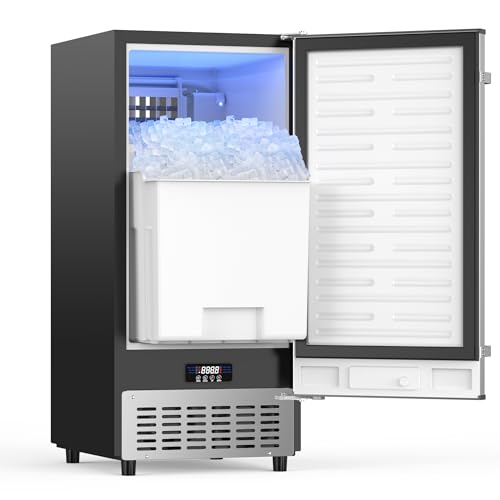
Undercounter machines are the right format when ice is used every day and the patio has a planned utility connection. They commonly produce about 50–80 pounds per day and store approximately 20–30 pounds, depending on insulation and model design. Prices often range from $1,000 to more than $3,000 before installation.
Look for a model specifically rated for outdoor or marine-style installation. A suitable unit should have corrosion-resistant construction, protected controls, adequate ventilation, and instructions covering the intended temperature range. It will usually need a potable-water line and a gravity drain or drain pump. A standard indoor countertop maker placed inside an outdoor cabinet is not an equivalent substitute: trapped heat and condensation can shorten its life.
Feature comparison: what the numbers mean
| Ice-maker category | Typical first ice | Advertised daily output | Typical storage | Power and drainage | Ice type |
|---|---|---|---|---|---|
| Compact countertop | 6–10 minutes | 26 lb | 1.5–2 lb | 100–150 W; manual drain | Hollow bullet |
| Large countertop | 7–15 minutes | 40–50 lb | 2–3 lb | 120–180 W; manual drain or hose | Bullet or clear-style pieces |
| Countertop nugget | 15–25 minutes | 24–38 lb | 2.5–3 lb | 150–250 W; reservoir and drain plug | Nugget or pebble |
| Outdoor undercounter | 10–20 minutes | 50–80 lb | 20–30 lb | 250–700 W; plumbed drain often required | Clear, gourmet, or cube-style |
These are category ranges rather than guarantees for every model. Product dimensions commonly range from about 9–15 inches wide for countertop units, while built-in models are often designed around a 15-inch cabinet opening. Measure the counter, door clearance, lid clearance, and space around the vents—not just the machine’s width.
Drainage, water, and power requirements
Drainage is one of the most overlooked ownership details. Countertop machines usually retain melted ice in the reservoir until you remove a drain plug or open a valve. Position the outlet over a tray or near a sink, and do not allow meltwater to pool beneath the appliance. A short drain hose is useful on a bar cart but can kink or siphon incorrectly if routed uphill.
For a worked estimate, suppose a 26-pound machine makes 26 pounds per day but your patio gathering needs 8 pounds. Eight pounds equals about 3.6 kilograms, or roughly 3.6 liters of water before small process losses. A unit with a 2-liter reservoir will therefore require at least two refills for that event. The machine may also need several hours to produce the supply, so start early rather than waiting until guests arrive.
Most portable models use a standard household outlet and should not be operated from a lightweight extension cord. If using a power station, a 150-watt running load for three hours consumes about 450 watt-hours before inverter losses; a 600-watt-hour station may provide only around 3.5–4 hours in real conditions. Check both continuous output and surge rating, and keep all connections dry.
Weather resistance and placement
- Keep it covered: Use a roofed, shaded counter protected from rain, sprinklers, and falling leaves.
- Leave ventilation space: Follow the manual; as a practical minimum, avoid pressing vents against a wall and allow several inches for airflow.
- Control heat: Direct sun and temperatures above the stated operating range reduce production and increase compressor strain.
- Prevent corrosion: Coastal air, chlorine, and wet metal can damage panels, fasteners, and electrical contacts. Wipe the exterior dry after use.
- Store it indoors: Drain and dry a portable machine before moving it inside. Do not leave water in it during freezing weather.
Cleaning and durability realities
The water circuit, pump, ice-making evaporator, fan, and drain plug are the parts most likely to cause trouble. Hard water leaves scale on the evaporator and sensors; dust restricts the condenser; and repeated movement can loosen a drain cap or damage a hose. A machine that makes less ice than usual, produces wet pieces, or runs continuously may need cleaning before it needs replacement.
After each use, remove remaining ice, drain the water, wipe the basket, and leave the lid open until the interior dries. Follow the manufacturer’s cleaning instructions for descaling frequency. Do not use dish soap inside unless the manual permits it, and rinse thoroughly after any approved cleaner. For nugget machines, pay particular attention to the recirculating reservoir and ice chute, where residue can remain out of sight.
Final buying recommendation
Choose a 26-pound bullet-ice machine if you want the lowest cost and simplest patio setup. Move up to a 40–50-pound countertop unit when gatherings are frequent and you can provide better ventilation and a convenient drain. Choose a nugget machine only if its texture is the priority and you are willing to clean the water system regularly. For a true year-round outdoor kitchen, buy an outdoor-rated undercounter model and budget for water, drainage, ventilation, and professional installation rather than adapting an indoor appliance.



Write Your Review
No reviews yet. Be the first to share your experience!