

Key takeaways
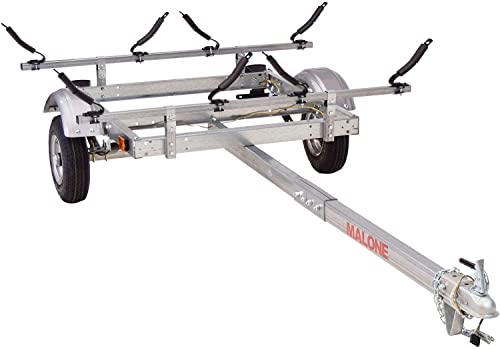
- Best all-around choice for two kayaks: Malone MicroSport. Its approximately 350-pound load rating, 78-inch crossbars, 12-inch wheels, and widely available accessories make it a versatile choice for recreational paddlers.
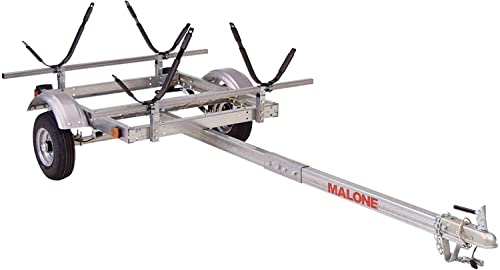
- Best for low storage weight: Malone EcoLight. This compact trailer is designed for lighter loads and easier handling when one or two recreational kayaks are being moved.
- Best for several boats or heavier gear: Malone MegaSport. Its larger frame and approximately 800-pound load capacity are better suited to multiple kayaks, canoes, or a mixed load of boats and equipment.
- Best for a compact, easy-to-tow design: SylvanSport Go Easy. It is aimed at recreational users who want a small trailer footprint and a relatively simple loading process.
The best kayak trailers depend on how many boats you haul, where you store the trailer, and how often you drive to the water: choose a lightweight single-kayak trailer for occasional use, a corrosion-resistant two-kayak trailer for regular trips, or a higher-capacity multi-boat model for clubs and families.
Our top picks


As an Amazon Associate we earn from qualifying purchases at no extra cost to you. Ratings are shown as listed on Amazon.
Quick Picks by Situation
- Best all-around choice for two kayaks: Malone MicroSport. Its approximately 350-pound load rating, 78-inch crossbars, 12-inch wheels, and widely available accessories make it a versatile choice for recreational paddlers.
- Best for low storage weight: Malone EcoLight. This compact trailer is designed for lighter loads and easier handling when one or two recreational kayaks are being moved.
- Best for several boats or heavier gear: Malone MegaSport. Its larger frame and approximately 800-pound load capacity are better suited to multiple kayaks, canoes, or a mixed load of boats and equipment.
- Best for a compact, easy-to-tow design: SylvanSport Go Easy. It is aimed at recreational users who want a small trailer footprint and a relatively simple loading process.
Best Kayak Trailers Compared
The figures below are useful for comparing trailer classes, but hitch, crossbar, rack, and accessory configurations can change the final rating. Always follow the current manufacturer instructions and confirm the capacity of your vehicle hitch.
| Trailer or class | Typical boat capacity | Load rating | Wheel size | Best use | Storage and setup notes |
|---|---|---|---|---|---|
| Malone EcoLight | 1–2 kayaks, depending on rack setup | About 275 lb | Small road wheels, commonly 8 in | Light recreational boats and short-to-medium trips | Low overall weight; easier to move by hand and store in a garage |
| Malone MicroSport | Up to 2 kayaks with standard rack configuration | About 350 lb | 12 in | Frequent family or touring-kayak use | Approximately 78-inch crossbars; add carriers for different hull shapes |
| SylvanSport Go Easy | Usually 1–2 recreational kayaks | About 400 lb, configuration-dependent | Small road wheels | Compact storage and straightforward loading | Check the supplied rack arrangement before planning a two-boat setup |
| Malone MegaSport | Several kayaks, canoes, or mixed cargo | About 800 lb | 12 in or larger, configuration-dependent | Heavy boats, clubs, and large equipment loads | More frame and storage space, but requires more room to park and maneuver |
| Single-kayak utility trailer | 1 kayak | 200–300 lb | 8–12 in | Budget-conscious occasional paddlers | Usually the easiest type to assemble and store vertically |
What Matters More Than the Advertised Boat Count
Capacity and weight distribution
A trailer advertised for two kayaks may have enough rack positions but not enough payload for two heavy fishing kayaks. Calculate the real load before buying:
Total payload = kayak weights + carriers + paddles + spare tire + tiedown equipment.
For example, two 55-pound kayaks, two 12-pound carriers, 20 pounds of paddles and safety gear, and 15 pounds of straps and accessories equal 169 pounds. A 275-pound trailer appears to have 106 pounds remaining, but that margin can shrink when wet gear, coolers, or camping equipment are added. Keep the load comfortably below the rated maximum rather than treating the rating as a target.
Frame corrosion resistance
Galvanized steel is usually the practical choice for a kayak trailer because it combines strength with better resistance to rain and road spray than ordinary painted steel. Aluminum frames resist rust and can be easier to handle, but they may cost more and still contain steel axles, fasteners, hubs, or couplers that need protection.
Saltwater is the real durability test. After coastal use, rinse the frame, axle, wheels, coupler, and lights with fresh water. Flush salt and sand from the hubs where possible, dry the trailer, and inspect galvanized surfaces for white oxidation, damaged coating, or trapped debris. Corrosion usually starts at scratches, fasteners, light brackets, and the underside of the frame rather than on the broad exposed rails.
Tongue length and turning clearance
A longer tongue creates more space between the vehicle and the kayaks, reducing the chance that a boat or carrier contacts the rear hatch during tight turns. It also makes backing easier for some drivers. The trade-off is a longer storage footprint and more swing at the rear of the trailer.
For a two-kayak trailer, measure from the hitch ball to the nearest rear edge of the loaded kayak. Leave enough clearance for the vehicle’s hatch, spare tire, and a sharp turn. A compact trailer can work well with a sedan, but a short tongue becomes inconvenient when a wide fishing kayak sits close to the vehicle.
Suspension and wheel size
Leaf-spring suspension generally gives a smoother ride than a rigid axle, especially on broken pavement and gravel access roads. It also reduces shock transferred to kayak hulls and rack hardware. Independent suspension is less common on basic kayak trailers and usually adds cost and maintenance.
Eight-inch wheels keep a trailer compact, but their smaller diameter turns faster and can run hotter at highway speed. Twelve-inch wheels are a useful middle ground for regular road travel. If your route includes long highway drives, rough launch roads, or a fully loaded trailer, favor larger wheels, a proper spare, and hubs rated for the intended speed and load.
Single Kayak or Multiple Kayaks?
Choose a single-kayak trailer when:
- You normally paddle alone and your kayak weighs less than about 70 pounds.
- Storage space is limited to a narrow garage, shed, or apartment parking area.
- You want the lowest purchase price and the easiest hand movement.
- Your vehicle has a modest hitch rating and you carry little extra equipment.
Choose a two-kayak trailer when:
- You regularly transport a partner’s boat or want room for a second kayak later.
- The frame includes adjustable crossbars or compatible carriers for different hull widths.
- You can load the heavier kayak low and near the axle, while keeping the tongue weight within the recommended range.
Choose a multi-boat trailer when:
- You carry three or more kayaks, canoes, or paddleboards.
- You need a lower deck for coolers, carts, dry boxes, or camping equipment.
- The additional width and storage footprint are acceptable at home.
Setup Details That Prevent Problems
- Assemble on level ground. Confirm that the axle, springs, fenders, lights, and coupler are installed in the correct orientation before tightening hardware.
- Position the crossbars. Place them far enough apart to support the kayak without concentrating weight in one small hull section. Follow the carrier maker’s spacing limits.
- Balance the load. Put heavy boats low, center them from side to side, and keep moderate downward weight on the hitch. Too little tongue weight can cause sway; too much can overload the hitch or rear suspension.
- Secure boats independently. Use separate bow and stern lines as well as straps over the hull. Do not rely only on bungee cords or the carrier’s padded supports.
- Check lights and clearance. Make sure the boats do not cover the trailer lamps or license plate. Add a light board if necessary.
- Recheck after the first short drive. Stop after roughly 10 minutes, then inspect straps, carrier bolts, coupler latch, wheel temperature, and load movement.
Ownership Costs and Maintenance
Basic kayak trailers commonly occupy a general market range of roughly $500 to $1,500, while larger multi-boat systems and accessory-heavy configurations can cost more. The cheapest option is not always the lowest-cost choice: adding a second carrier, spare wheel, tongue extension, storage rack, and replacement lights can materially change the final price.
The parts most likely to wear first are tires, wheel bearings, lights, tie-down straps, winch or bow-line hardware, and padded carrier surfaces. Replace straps when they become stiff, frayed, or sun-damaged. Inspect tires for cracks and uneven wear, and check their pressure before every trip. Grease serviceable bearings according to the hub instructions, particularly after launching near salt water.
Store the trailer with the coupler closed, the tires properly inflated, and the boat removed. If vertical storage is permitted by the manufacturer, use a stable support point and chock the trailer before lifting or tilting it. Never let a kayak rest long-term on narrow, hard carrier edges; pressure points can deform some plastic hulls.
Bottom Line
For most households, the Malone MicroSport is the strongest all-purpose starting point because it balances two-kayak capacity, 12-inch wheels, useful crossbar length, and broad accessory compatibility. Pick an EcoLight or similar compact single-kayak trailer when storage and hand handling matter most. Move to a MegaSport-style heavy-duty trailer when several boats or substantial camping gear are part of every trip. Whichever model you choose, verify payload, tongue weight, hitch compatibility, corrosion protection, and wheel service requirements before placing the order.






Write Your Review
No reviews yet. Be the first to share your experience!