

Our Short List of 3

- Type: Electric scalder
- Power: 2,000 W element, 120 V, requires a dedicated 20 A circuit
- Capacity: 15 gallons; maker states 2 large or 3 standard chickens
- Temperature control: Digital thermostat, up to 180 °F, displays set and actual temperature
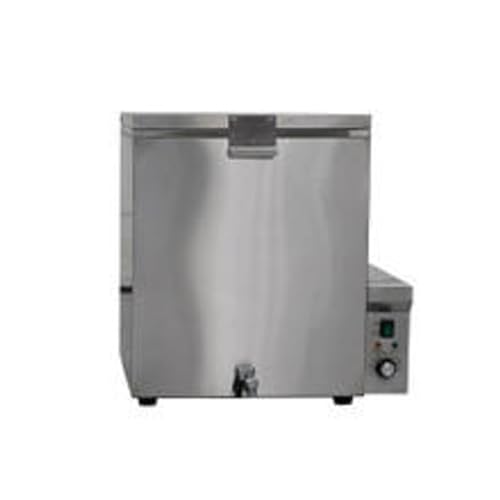
- Type: Electric scalder
- Power: 120 V; element wattage not published by the maker
- Capacity: 14.5 gallons; maker states 1–2 chickens at a time
- Temperature control: Thermostat, 32–230 °F range
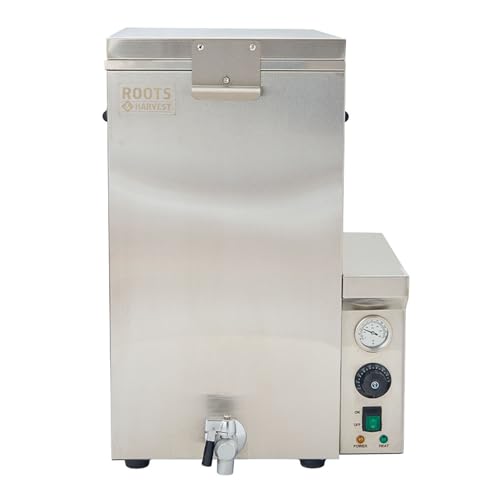
- Type: Electric scalder
- Power: 1,500 W element, 120 V
- Capacity: 13 gallons; maker states 1–2 chickens at a time
- Temperature control: Thermostat, 86–230 °F range
All 4 Picks at a Glance
| Product | Specs | Action |
|---|---|---|
| 1. Rite Farm PRO120US 15 Gal Scalder |
| Check price on Amazon |
| 2. Stromberg’s 14.5 Gal Scalder |
| Check price on Amazon |
| 3. Roots & Harvest 13 Gal Scalder |
| Check price on Amazon |
 5. Rite Farm Pro Texas Quail Scalder |
| Check price on Amazon |
Key takeaways
- Compare the best chicken scalders for home processing: electric and propane models judged on thermostat control, capacity, recovery time and build.
As an Amazon Associate we earn from qualifying purchases.
A scalder is not a plucker, and the two machines do opposite halves of the same job. The plucker — covered separately in our chicken pluckers roundup — strips feathers mechanically with rubber fingers. The scalder comes first: it is a heated tank that holds water in a narrow temperature window so the feather follicles relax and let go. Get the scald right and the plucker finishes a bird in seconds. Get it wrong and no plucker can save the skin.
That window is 145 to 150 °F for chickens, and it is less forgiving than it sounds. A few degrees too cool and the feathers stay set; the bird comes out of the tank looking scalded but the wing and tail feathers still resist, and the plucker tears skin trying to pull them. A few degrees too hot and the outer skin starts to cook — it turns rubbery, then rips in sheets in the drum, and the finished bird looks rough no matter how carefully it is handled. A dedicated scalder exists to hold that window steady, bird after bird, while a plain pot on a burner drifts every time a cold bird goes in.
That is why temperature control is the product here. Thermostat accuracy, and how fast the element brings the water back after each bird drops the temperature, matter more than raw tank size. The five scalders below cover the realistic home-processing range: two mid-size electric tanks, a double-wall stainless model, a propane kit for off-grid processing days, and a small unit built for quail and game birds.
Affiliate Disclosure: This article contains affiliate links. If you buy through them, this site may earn a commission at no extra charge to you. Product details are taken from manufacturer listings and specifications.
1. Rite Farm PRO120US 15 Gal Scalder
- Type: Electric scalder
- Power: 2,000 W element, 120 V, requires a dedicated 20 A circuit
- Capacity: 15 gallons; maker states 2 large or 3 standard chickens
- Temperature control: Digital thermostat, up to 180 °F, displays set and actual temperature
The PRO120US is the straightforward home-processor’s pick: the biggest tank in this roundup that still runs on household current. Its digital control shows both the temperature you set and the actual water temperature, which is the single most useful feature a scalder can have — you can see the drop when a bird goes in and watch the recovery before dunking the next one, instead of guessing with a floating thermometer.
The 2,000 W element is strong for a 120 V machine, but it comes with an electrical catch: this scalder needs a dedicated 20 A circuit. Plug it into a shared barn circuit next to a plucker and you will spend processing day resetting a breaker. The aluminum tank keeps the unit light enough to move, though aluminum dents more easily than stainless and Rite Farm’s hand-built tanks are known for minor cosmetic imperfections. Two honest gaps: there is no drain valve, so emptying 15 gallons means siphoning or carefully tipping, and no dunking basket or dunker is listed — birds go in and out by hand, held by the feet.
Source: https://www.amazon.com/dp/B0D8WT18PN
2. Stromberg’s 14.5 Gal Scalder
- Type: Electric scalder
- Power: 120 V; element wattage not published by the maker
- Capacity: 14.5 gallons; maker states 1–2 chickens at a time
- Temperature control: Thermostat, 32–230 °F range
Stromberg’s sells the most complete kit in this group. The dunking basket, drain valve and lid are all in the box, which sounds like a small thing until you have emptied a full scalder by dipping it out with a bucket. The thermostat range runs from 32 to 230 °F, far wider than scalding requires, and the useful part of that range is the top end: at 180 °F the same tank handles the heat-shrink dip for storage bags, so one machine covers processing day and packaging day.
The tank is stainless steel, the easiest of these materials to scrub clean and the most resistant to the dents and corrosion of barn life. Be clear-eyed about capacity, though: despite holding 14.5 gallons, the maker puts the working load at one or two chickens at a time — the basket, not the water volume, defines the batch. Stromberg’s also does not publish the heating element’s wattage, so there is no honest way to compare its heat-up and recovery speed against the wattage-stated models here on paper; what can be said is that the thermostat holds a set point across the full published range.
Source: https://www.amazon.com/dp/B0CJPD4DPP
3. Roots & Harvest 13 Gal Scalder
- Type: Electric scalder
- Power: 1,500 W element, 120 V
- Capacity: 13 gallons; maker states 1–2 chickens at a time
- Temperature control: Thermostat, 86–230 °F range
The Roots & Harvest scalder attacks the recovery problem from the insulation side instead of the wattage side. Its tank is double-wall stainless steel, so the water loses less heat to the room between birds. A 1,500 W element is modest on paper next to the Rite Farm above, but in a double-wall tank more of that heat stays in the water, which is what recovery time actually depends on. The thermostat adjusts from 86 to 230 °F, again covering both the scalding window and the 180 °F shrink-bag dip.
A large drain spigot empties the tank without tipping it — at 46 pounds empty and far heavier full, that matters. The trade-offs are equally plain: the maker puts the load at one or two chickens at a time, and neither a dunker nor a lid is listed, so birds are dunked by hand and the tank sits open, losing heat from the surface while you work. It is the only scalder in this roundup with a published warranty period, at one year.
Source: https://www.amazon.com/dp/B0DNNHKGC9
4. Rite Farm Products 5 in 1 Propane PRO Scalder
This is the scalder kit for processing where there is no outlet: a 42-quart aluminum pot with a pour spout, a 28,500 BTU propane burner, a stand that wraps the pot so it cannot slide off, a long-stem thermometer, and a basket. It holds two chickens or one turkey at a time, and the burner brings water to temperature far faster than any electric element in this roundup.
What it does not have is a thermostat. Temperature control is a burner dial in one of your hands and the thermometer in the pot — you are the thermostat. Propane heats aggressively, so the same setup that reaches 148 °F quickly will sail past 155 °F while your attention is on the plucker. The honest routine is to bring the water up, cut the burner back to a holding flame, and check the thermometer before every bird. And the obvious rule bears stating: an open propane burner is outdoor equipment only, full stop — never in a barn, garage or tent, both for fire risk and carbon monoxide.
Specs
- Type: Propane scalder kit
- Power: 28,500 BTU propane burner, adjustable dial; propane tank not included
- Capacity: 42 quarts (10.5 gallons); 2 chickens or 1 turkey at a time
- Temperature control: Manual burner control with long-stem thermometer; no thermostat
- Material: Aluminum pot with pour spout
- Basket/dunker: Basket included; wrap-around burner stand included
- Drain: Pour spout; no drain valve
Source: https://www.amazon.com/dp/B07HCRJ1M1
5. Rite Farm Pro Texas Quail Scalder
- Type: Electric scalder
- Power: 1,000 W element, 120 V
- Capacity: 4 gallons; maker states 6 or more quail per dunk
- Temperature control: Thermostat, up to 180 °F
Most scalders are sized for chickens, and dunking a quail in 15 gallons of water is like washing a teacup in a bathtub. This 4-gallon welded-aluminum unit is built for the small-bird end of the line: quail, doves, pigeons and similar game birds, six or more per dunk. Its 1,000 W element works out to more watts per gallon than any other scalder here, so it heats fast and recovers fast between small batches — exactly what a long string of little birds demands.
The thermostat runs up to 180 °F, so it also covers the shrink-bag dip for small birds. A dunker or basket and a lid are included, and it comes with a skimmer for clearing the floating feathers that small birds shed in surprising volume. There is no drain valve, but at 9 pounds empty the whole unit simply gets carried to a sink or doorstep and poured out. Be honest about the boundary, though: a standard chicken does not fit in a 4-gallon tank. This is a specialist tool for quail keepers and dove hunters, not a small chicken scalder.
Source: https://www.amazon.com/dp/B0G5QHHF2S
How to Choose a Chicken Scalder
Start with the temperature window, not the tank. For chickens, 145 to 150 °F with a dunk of roughly half a minute to a minute, swishing the bird so water reaches under the feathers, is the working range. The test is simple: a large wing feather should pull out with a firm tug and no tearing. Waterfowl are a different job — ducks and geese carry down and natural oils that resist wetting, and they need a longer, hotter scald and often a drop of dish soap in the water to wet the feathers at all.
Recovery time is the hidden spec. Every cold bird pulls heat out of the tank. What brings the temperature back is element wattage relative to water volume, helped by insulation and a lid. A high-wattage element on a big tank, or a modest element in a double-wall tank, both work; a small element in a big single-wall tank means long waits between birds, and impatient dunking into cool water is how feathers stay set.
Read capacity in birds, not gallons. Gallon figures describe water, not workload. Most home scalders dunk one or two chickens at a time regardless of tank size, because the bird has to move freely in the water. Size the tank to the bird — turkeys need depth more than width — and size the batch claim to the basket.
Electric or propane is a control decision. Electric scalders hold a set temperature on their own, which is why most home processors choose them; the price of that convenience is circuit planning, since the stronger 120 V units want a dedicated 20 A circuit and anything bigger steps up to 240 V. Propane heats faster, works anywhere outdoors, and demands constant attention in exchange. Run electric scalders on a GFCI-protected outlet without exception — they are heating elements sitting in water.
Plan the emptying before the filling. Fifteen gallons of water weighs about 125 pounds. A drain valve or spigot turns cleanup into opening a tap over a bucket; without one, you are siphoning hot, feather-flecked water or tipping a heavy tank. On processing day, that difference is bigger than most spec-sheet gaps.
The Bottom Line
For most backyard and homestead processors, the Rite Farm PRO120US pairs the clearest temperature readout with the largest household-current tank. If a complete kit with basket and drain matters more, the Stromberg’s is the finished package, and the Roots & Harvest is the pick where heat retention and easy draining lead. The propane Rite Farm kit remains the off-grid standard, used with a watchful eye on the thermometer, and quail keepers finally have a right-sized option in the Texas Quail Scalder. Whichever you choose, judge it the way the birds will: by how boringly steady it holds 148 °F, bird after bird.
More from Amazon
Programs that pair well with the guide above. Offers and eligibility are set by Amazon and may change.
Free shipping on eligible items, Prime Video and more. Eligible new members can start with a free trial.
Start a Prime free trialA Prime membership for ages 18-24 with a trial period. Eligibility is set by Amazon.
See Prime for Young AdultsAudiobooks and podcasts to listen to on the go. Eligible new members can start with a free trial.
Try Audible freeAd-free music streaming. Eligible new subscribers can start with a free trial.
Try Music Unlimited freeAs an Amazon Associate we earn from qualifying purchases.
Write Your Review
No reviews yet. Be the first to share your experience!