

Key takeaways
- Five baitcasting reels that suit bass fishing from the bank, compared on gear ratio, braking system, drag, weight and line capacity for shore anglers.
As an Amazon Associate we earn from qualifying purchases.
Fishing from the bank changes what a baitcasting reel needs to be. There is no rod locker: most shore anglers carry one or two combos and walk real distance between spots. A bank reel gets set down on gravel, dragged through brush, and must cast far enough to reach fish boat anglers simply idle up to. It also has to cover several techniques with a single setup.
The five reels below were chosen with that reality in mind. All are low-profile baitcasters sold on Amazon, each earning its place for a different reason — from a forgiving teacher for first-time baitcasters to a budget reel you need not baby. Where a spec sheet claim is mostly marketing, this guide says so.
Affiliate Disclosure: This article contains affiliate links. If you buy through a link on this page, we may earn a commission at no additional charge to you. That income supports the site.
1. Abu Garcia Revo X Low Profile — Best All-Rounder
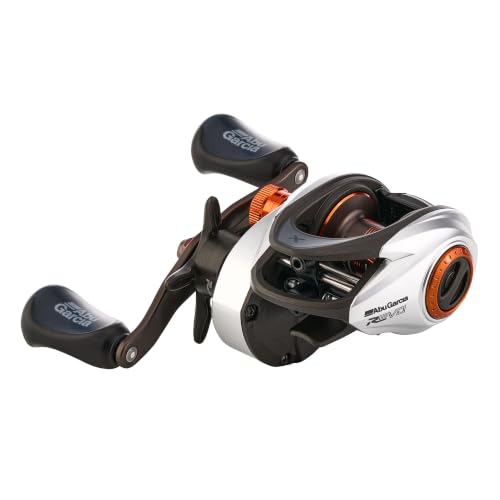
The fifth-generation Revo X is the easiest reel on this list to recommend to a bank angler who wants one setup to do most things. The C6 carbon frame and sideplate keep weight down to 7.3 ounces, which matters when the rod stays in your hand for a full shoreline session. The MagTrax magnetic brake applies consistent pressure through the cast and adjusts with a simple external dial, so swapping lure weights is a two-second job.
Abu Garcia sells the Revo X in three gear ratios, and that spread is why it anchors this list. The 5.4:1 winch version is a genuine crankbait tool, the 6.7:1 covers spinnerbaits and chatterbaits, and the 7.3:1 high-speed model listed here is the one to buy if jigs and soft plastics are your main game. The Carbon Matrix drag is smooth and strong, with good leverage from the 90 mm bowed handle when a fish must be turned from cover. The honest limitation: magnetic-only braking gives less fine control over the first instant of the cast than a good centrifugal system, so very light lures in a headwind still demand an educated thumb.
Specs
- Gear ratio: 7.3:1 (5.4:1 and 6.7:1 versions also available)
- Line retrieve: 30 inches per turn
- Weight: 7.3 oz
- Bearings: 7 stainless steel ball bearings + 1 roller bearing
- Braking system: MagTrax magnetic, external dial
- Max drag: 20 lb, Carbon Matrix drag system
- Line capacity (mono): 10 lb / 135 yd, 12 lb / 110 yd
- Frame: C6 carbon frame and sideplate, low profile
2. Shimano SLX DC — Easiest Reel to Learn On

A bad backlash costs a bank angler dearly: you cannot motor to another spot while you pick it out, and it can end a short session entirely. The SLX DC attacks that problem directly with Shimano’s I-DC4 digital control braking. A tiny computer in the sideplate senses spool speed many times per second and applies braking exactly when a conventional brake would let the spool overrun. It runs off the spinning spool’s energy — no battery to charge or replace. The listing linked here is the 151HG, the left-hand retrieve, 7.2:1 model.
The result is the most forgiving baitcaster in this roundup for someone moving up from a spinning reel, and a genuinely good skipping and pitching tool for experienced anglers fishing docks from shore. Note what it proves about spec sheets: just four ball bearings plus a roller bearing — fewer than almost any rival — yet the Hagane metal body keeps everything aligned and the retrieve tight and smooth. Bearings are about placement and quality, not raw count. Two honest caveats: the DC unit makes a faint electronic whine during the cast that some anglers love and others never get used to, and digital braking reduces backlashes rather than eliminating them — heavy lures cast hard into the wind can still overrun if spool tension is set far too loose.
Specs
- Gear ratio: 7.2:1 (model SLXDC151HG, left-hand retrieve)
- Line retrieve: 30 inches per turn
- Weight: 7.6 oz
- Bearings: 4 ball bearings + 1 roller bearing
- Braking system: I-DC4 digital control, four external settings
- Max drag: 11 lb
- Line capacity (mono): 10 lb / 120 yd, 12 lb / 110 yd, 14 lb / 90 yd
- Body: Hagane metal frame, low profile
3. Daiwa Fuego CT — Aluminum Frame Value Pick

The Fuego CT is Daiwa’s answer to a fair question: how much of the flagship experience can you get in a reel built to a tighter budget? Its foundation is a compact aluminum CT frame — real metal where many rivals in this tier use graphite — keeping gears aligned under load and feeling flex-free when you lean on a fish. At 7.6 ounces it palms easily, and the compact 100-size body suits the lighter rods many bank anglers prefer.
Casting control comes from Daiwa’s Magforce magnetic system with a wide-range external dial, the same basic approach used across the Daiwa lineup. It is predictable and easy to live with: set it higher for a windy point, lower for calm pockets. The 7.3:1 model listed here pulls in 30.5 inches of line per turn, fast enough for jigs and Texas rigs along a bank, and the drag is strong enough for anything a pond or reservoir shoreline produces. The honest trade-off is what you give up versus Daiwa’s Tatula line: there is no T-Wing levelwind here, so line leaves through a conventional narrow guide, and the five-bearing system is workmanlike rather than refined. Neither matters much at the water’s edge; the frame quality matters every cast.
Specs
- Gear ratio: 7.3:1 (model FGCT100HS, right-hand retrieve)
- Line retrieve: 30.5 inches per turn
- Weight: 7.6 oz
- Bearings: 5 ball bearings + 1 roller bearing
- Braking system: Magforce magnetic, external dial
- Max drag: 13.2 lb, Ultimate Tournament Drag
- Line capacity (mono): 12 lb / 150 yd, 14 lb / 120 yd
- Frame: aluminum CT compact frame, low profile
4. Lew’s Custom Lite SLP — Lightest Pick for Long Walks

At 4.9 ounces, the Custom Lite SLP is the lightest reel Lew’s has ever made, and for bank fishing that number is not a gimmick. Across two miles of shoreline and several hundred casts, two ounces less than the other reels here is a difference your wrist can describe in detail by evening. The one-piece Tanso Tech frame with C45 carbon sideplates is how Lew’s gets there without building a fragile reel, and the drilled 30 mm Duralumin spool keeps startup inertia low for lighter lures.
It is also the centrifugal-brake representative here. The QuietCast system uses six pins with 27 external adjustment positions, and centrifugal braking has a real advantage for bank work: it applies its strongest control at the start of the cast, when the spool spins fastest and backlashes are born, then backs off so the lure keeps flying. The carbon fiber drag is strong and the 95 mm carbon handle a pleasure to crank. The limitations are equally clear. Line capacity is just 90 yards of 12 lb mono, and the shallow spool and light build are aimed at jerkbaits, topwaters and small crankbaits rather than big swimbaits or heavy flipping. The Amazon listing here is the left-hand retrieve model; right-hand versions exist if that is your preference.
Specs
- Gear ratio: 7.5:1 (model CL1SHL, left-hand retrieve)
- Line retrieve: 28 inches per turn
- Weight: 4.9 oz
- Bearings: 10 ball bearings + 1 roller bearing, double-shielded stainless steel
- Braking system: QuietCast adjustable centrifugal braking, external dial
- Max drag: 20 lb, carbon fiber drag system
- Line capacity (mono): 12 lb / 90 yd
- Frame: Tanso Tech frame, C45 carbon sideplates, 30 mm Duralumin spool
5. KastKing Royale Legend II — Budget Pick That Takes Abuse

Bank fishing is hard on gear, and there is a rational case for a reel you do not have to baby. The Royale Legend II is that reel. The graphite frame keeps it light, Cross-Fire magnetic braking uses eight magnets with an external dial, and the carbon fiber drag is stronger than any bass can argue with. KastKing sells it in two ratios, and the 5.4:1 version deserves special mention for bank anglers: one of the few genuinely slow reels in its class, and a sensible dedicated crankbait tool for covering a shoreline at the right pace.
Set expectations correctly and it is a satisfying tool. The retrieve is not as glassy as the Shimano or Daiwa here, the graphite frame flexes a little under a hard hookset on heavy line, and long-term bearing smoothness depends on rinsing and basic care — true of every reel in this guide. What you get is a legitimate, fully featured baitcaster that palms well, in both hands and both useful ratios — a smart first baitcaster or a knock-around reel that lives in the truck.
Specs
- Gear ratio: 7.2:1 (5.4:1 version also available)
- Line retrieve: 29.8 inches per turn
- Weight: 7.2 oz
- Bearings: 5 ball bearings + 1 roller bearing
- Braking system: Cross-Fire magnetic, 8 magnets, external dial
- Max drag: 17.6 lb, carbon fiber drag
- Frame: graphite frame and side covers, low profile
- Retrieve: right- and left-hand versions available
How to Choose a Baitcasting Reel for Bank Fishing
Gear ratio is about technique, not quality. A higher ratio number does not mean a better reel; it means more line picked up per handle turn. Fast reels in the 7:1 to 8:1 range suit jigs, soft plastics and topwaters, where you take up slack instantly and move fish away from cover. Slower reels around 5:1 to 6:1 give crankbaits their proper wobble and more cranking power against a lure that pulls hard. If you own one reel for the bank, something near 7:1 is the honest compromise.
Braking systems are backlash management. Centrifugal brakes (the Lew’s above) bite hardest at the start of the cast. Magnetic brakes (the Abu Garcia, Daiwa and KastKing) apply steadier pressure and are easier to adjust on the fly. Digital braking (the Shimano) adjusts itself mid-cast and is the most forgiving of all. None of them replaces your thumb: set spool tension so the lure falls slowly, and feather the spool with your thumb at splashdown.
Ignore bearing counts. This guide includes a four-bearing reel smoother than rivals advertising twice as many. What matters is bearing quality at the spool and pinion, and shielding — a real consideration when a reel regularly gets set down on dirt and sand.
Low profile versus round. All five picks are low-profile reels, which palm comfortably for lure fishing. Traditional round reels still have a place for catfish, heavy line and bait fishing from the bank, where capacity and cranking torque beat finesse. For bass lures on foot, low profile wins.
Left or right retrieve is personal, not wrong. Right-hand retrieve reels are the default, but many right-handed anglers prefer left-hand retrieve so the rod stays in their dominant hand and no hand swap is needed after the cast. Every reel here is offered in both hands, though individual listings may show one only — pick the one that matches how you already fish.
Frequently Asked Questions
What gear ratio should a beginner choose for bank fishing?
Something in the 6.7:1 to 7.3:1 range. It is fast enough for plastics and jigs, slow enough to fish a spinnerbait or shallow crankbait reasonably, and forgiving while you learn spool control.
Can one reel really cover all bank fishing techniques?
Mostly, yes. A mid-to-fast low-profile reel with 12 lb fluorocarbon or 30 lb braid handles most shoreline techniques acceptably. The compromises show at the extremes: deep crankbaits prefer a slower reel, and heavy flipping prefers more line capacity.
How do I stop backlashing?
Set the spool tension so the lure falls slowly, start with the brake dial higher than you think you need, cast with smooth acceleration rather than a snap, and keep a light thumb on the spool as the lure lands. Lower the brakes gradually as your casts clean up.
Is a digital braking reel worth it for shore anglers?
If you fish short sessions, skip lures under docks, or are still building casting confidence, yes — it protects the time you have. Experienced casters with a trained thumb may prefer the distance and simplicity of a conventional brake.
Conclusion
For most bank anglers, the Abu Garcia Revo X is the safest single purchase: three useful ratios, honest weight, easy braking. New baitcaster owners should look hard at the Shimano SLX DC, walkers and all-day casters at the Lew’s Custom Lite SLP, the Daiwa Fuego CT covers the aluminum-frame slot, and the KastKing Royale Legend II the budget one. Pick the ratio for the lures you throw most, learn the brakes before you blame them, and the bank will fish a lot bigger than it looks.
More from Amazon
Programs that pair well with the guide above. Offers and eligibility are set by Amazon and may change.
Free shipping on eligible items, Prime Video and more. Eligible new members can start with a free trial.
Start a Prime free trialA Prime membership for ages 18-24 with a trial period. Eligibility is set by Amazon.
See Prime for Young AdultsAudiobooks and podcasts to listen to on the go. Eligible new members can start with a free trial.
Try Audible freeAd-free music streaming. Eligible new subscribers can start with a free trial.
Try Music Unlimited freeAs an Amazon Associate we earn from qualifying purchases.










Write Your Review
No reviews yet. Be the first to share your experience!