

Key takeaways
- One to two nights: 35–50 liters for compact gear; 50–60 liters for conventional equipment.
- Three to five nights: 50–65 liters for most hikers.
- Six or more nights without resupply: 60–75 liters, especially when carrying extra food or cold-weather equipment.
- Winter trips: commonly 65–80 liters because sleeping bags, insulated clothing, gloves, and shelters occupy more space.
Best Backpacking Backpacks for Multi-Day Trips
The best backpacking backpacks match your trip length and carried load to a torso-adjustable suspension, rather than simply offering the largest capacity or lowest empty weight.
For most three- to five-day trips, a 55–65-liter pack is the practical starting point. Choose a 40–50-liter model for lightweight, compact gear and frequent resupply, or move to 70 liters when carrying bulky equipment, winter layers, group food, or a bear canister. The right pack should also fit your torso, transfer weight comfortably to your hips, protect contents from weather, and provide access that suits the way you organize camp.
Our top picks
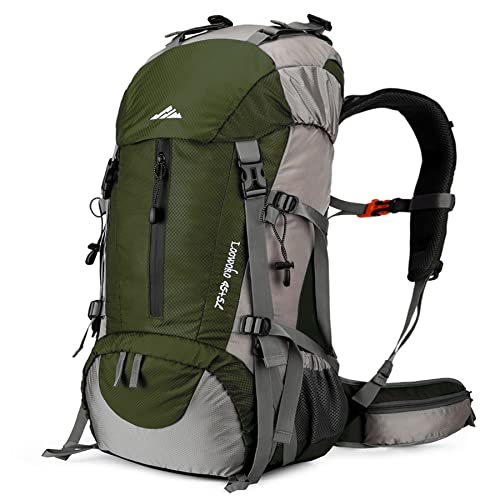


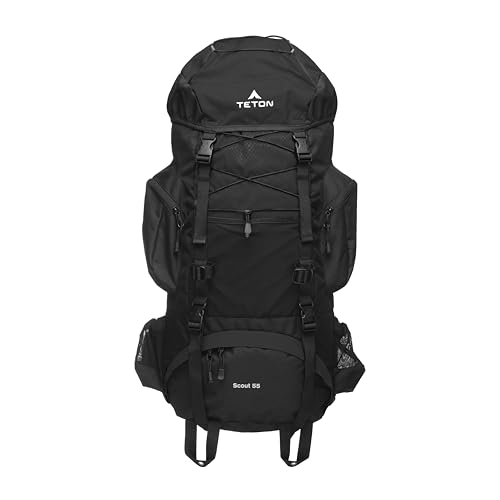
As an Amazon Associate we earn from qualifying purchases at no extra cost to you. Ratings are shown as listed on Amazon.
Quick picks by backpacking situation
| Situation | Best type or pick | Why it fits | Typical capacity |
|---|---|---|---|
| New backpacker carrying a conventional load | Osprey Atmos AG 65 or Gregory Baltoro 65 | Supportive suspension, adjustable torso systems, useful organization | 60–65 L |
| Experienced hiker with a compact kit | ULA Circuit 68 or Granite Gear Crown3 60 | High usable volume with lower weight and simpler construction | 60–68 L |
| Ultralight kit and careful packing | Hyperlite Mountain Gear Southwest 55 or Durston Kakwa 55 | Lightweight materials, weather-resistant body, efficient roll-top access | 55 L |
| Frequent hot-weather hiking | Osprey Exos 58 | Ventilated back panel and relatively low empty weight | 58 L |
| Winter or bulky three-season equipment | Gregory Baltoro 75 or a similar 70–75 L internal-frame pack | Extra volume and substantial load support | 70–75 L |
These are starting points, not universal winners. A properly fitted pack that weighs a little more is often a better choice than a lighter pack that causes pressure points or makes your load shift.
How much backpack capacity do you need?
Capacity depends more on your gear volume than on the number of days alone. Food and fuel increase with trip length, but your shelter, sleep system, clothing, and cooking kit may remain the same.
- One to two nights: 35–50 liters for compact gear; 50–60 liters for conventional equipment.
- Three to five nights: 50–65 liters for most hikers.
- Six or more nights without resupply: 60–75 liters, especially when carrying extra food or cold-weather equipment.
- Winter trips: commonly 65–80 liters because sleeping bags, insulated clothing, gloves, and shelters occupy more space.
A useful planning calculation is to estimate packed gear volume before buying. If your sleeping bag, shelter, clothing, stove, and other equipment fill about 42 liters, add roughly 8–12 liters for food, fuel, water-treatment equipment, and items that need to remain accessible. That gives a target of approximately 50–55 liters. A 70-liter pack would leave substantial unused space, encouraging overpacking and allowing the contents to move.
Remember that advertised capacity is not perfectly comparable. Some brands include exterior pockets and some report only the main compartment. A pack advertised as 55 liters may offer more usable storage than another 60-liter pack with a narrow main compartment and small pockets.
Best backpacking backpacks compared
| Pack | Listed capacity | Approx. empty weight | Load range or rating | Construction and access |
|---|---|---|---|---|
| Osprey Atmos AG 65 | 65 L | About 4 lb 8 oz / 2.0 kg | Up to about 40–50 lb, depending on fit and version | Suspended mesh back panel, aluminum frame, top lid, front and side access |
| Gregory Baltoro 65 | 65 L | About 5 lb / 2.3 kg | Approximately 30–50 lb | Structured frame, padded hip belt, top lid, front U-zip and side pockets |
| Osprey Exos 58 | 58 L | About 2 lb 13 oz / 1.28 kg | Approximately 30–40 lb | Ventilated frame, removable lid on some versions, top-loading access |
| ULA Circuit | About 68 L total | About 2 lb 5 oz / 1.05 kg | Comfortable around 30–35 lb | Light frame stays, roll-top closure, large stretch front and side pockets |
| Hyperlite Mountain Gear Southwest 55 | 55 L total | About 1 lb 15 oz / 0.88 kg | Approximately 30–40 lb, depending on size and setup | DCF body, roll-top closure, seam construction intended for wet conditions |
| Durston Kakwa 55 | 55 L total | About 2 lb / 0.9 kg | Approximately 30–40 lb | Ultra-high-molecular-weight polyethylene fabric, aluminum stay, roll-top |
Weights and load guidance vary by torso size, fabric choice, accessories, and model year. Treat the figures as comparison points, then verify the exact configuration before purchase.
For comfort with conventional equipment: Atmos AG 65 or Baltoro 65
The Atmos AG 65 and Baltoro 65 prioritize support over minimum weight. Their frames, substantial hip belts, and padded harnesses are appropriate when your loaded pack is around 30–40 pounds or when you are still refining your equipment list. They also provide more pockets and access points than many ultralight packs.
The Atmos AG uses a suspended mesh back system that creates airflow and keeps some fabric away from your back. The trade-off is extra structure and weight, along with a shape that can be less convenient when packing very bulky items. The Baltoro is similarly supportive, with a more traditional load-bearing feel and especially organized access. Choose between them by fit, not by pocket count: the hip belt should wrap your pelvis without slipping, and the frame should follow your back without digging into your shoulders.
For lower weight without abandoning a frame: Exos 58 or ULA Circuit
The Exos 58 is a strong choice for hikers who want ventilation and a conventional framed pack without moving fully into ultralight designs. It suits roughly 25–35 pounds better than heavy loads. Its open, ventilated back panel can be valuable in humid conditions, but it may place the center of gravity slightly farther from your body than a close-fitting foam-panel pack.
The ULA Circuit offers considerable capacity for its weight and works well for hikers whose complete load stays near the low-30-pound range. Its roll-top and large exterior pockets make it easy to carry wet shelter components separately from dry clothing. Its lighter frame and softer structure are advantages when packed correctly, but it is not a substitute for a load-hauling expedition pack.
For experienced lightweight hikers: Southwest 55 or Kakwa 55
The Hyperlite Southwest 55 and Durston Kakwa 55 are aimed at compact gear lists. Their water-resistant fabrics, roll-top closures, and large exterior pockets reduce the need for a separate top lid or rain cover. The Kakwa uses a lightweight internal stay to add load transfer without much weight. The Southwest emphasizes a highly weather-resistant body and simple organization.
Both work best when the load is stable and relatively light. A roll-top pack can be awkward when overfilled, and a frameless or lightly framed design becomes uncomfortable if you add several days of food, large amounts of water, or bulky communal equipment.
Fit matters more than the capacity label
Measure torso length from the prominent bump at the base of your neck to the point between the top of your hip bones. This is not the same as your height. Compare that measurement with the manufacturer’s torso-size range, and favor packs with adjustable harnesses if your measurement sits near a boundary.
- Loosen the shoulder straps, hip belt, load lifters, and sternum strap.
- Put approximately 15–25 pounds of weight in the pack for an initial fitting.
- Position the hip belt over the hip bones and tighten it firmly, without restricting movement.
- Adjust the shoulder straps so they contact your shoulders without carrying most of the weight.
- Set the load lifters at roughly a 30–45-degree angle from the shoulder area to the frame.
- Walk, climb stairs, and bend forward. Check for rubbing, concentrated pressure, and side-to-side movement.
As a practical target, the hip belt should carry most of the load while the shoulder straps stabilize the pack. If your shoulders hurt within minutes, do not assume the problem will disappear on the trail; try another torso length, hip-belt size, or suspension design.
Suspension, access, and weather protection trade-offs
- Suspended mesh: improves ventilation but can move the load away from your back and reduce packing space near the frame.
- Foam-panel backs: usually carry close to the body and pack efficiently, though they may feel warmer.
- Aluminum stays and structured frames: improve load transfer at higher weights but add ounces or pounds.
- Top lids and front zippers: provide convenient access but add weight and potential failure points.
- Roll-top closures: save weight and resist rain when properly closed, but require more discipline when organizing contents.
- Water-resistant fabrics: delay water entry but do not make every pack waterproof. Use a pack liner or dry bags for sleeping gear and spare clothing.
A pack cover protects the exterior from rain but can catch wind, leave the back panel exposed, and eventually wet the pack through prolonged storms. A lightweight waterproof liner inside the main compartment is often the more dependable solution for critical insulation.
Ownership realities and common mistakes
The first parts likely to wear are hip-belt foam, shoulder-strap mesh, stretch pockets, zipper pulls, and the bottom panel. Avoid dragging the pack across rock, and keep sharp fuel bottles, tent poles, and cookware from pressing directly against thin pockets. Clean dirt with lukewarm water and a soft brush; avoid machine washing, bleach, solvents, and high heat. Dry the pack fully before storage.
Do not use the pack’s maximum advertised load as your target. Load ratings describe a range under suitable conditions, not a promise of comfort for every body. Pack dense items such as food and cooking equipment close to your back and around the middle of the pack. Keep the sleeping bag lower, frequently used items in exterior pockets, and fragile insulation away from hard objects.
For occasional hikers, a durable 60–65-liter pack may cost more initially but remain comfortable across a wider range of trips. For frequent hikers, reducing empty weight can pay off: a 1.5-pound difference carried for 500 trail miles is 750 pound-miles of unnecessary load. The best backpacking backpacks are therefore not the lightest or largest models in isolation; they are the ones that fit your torso, support your real load, and provide just enough space for the way you travel.





Write Your Review
No reviews yet. Be the first to share your experience!