

Key takeaways
- Soft coolers: commonly best for one day, sometimes into a second day with excellent packing.
- Thin-wall budget coolers: often suitable for one to two days in warm conditions.
- Thick hard coolers: commonly suitable for two to four days when full, shaded, and opened sparingly.
- Frozen block ice: lasts longer than loose cubes but cools new warm drinks more slowly.
Best Coolers for Keeping Beer Cold
The best cooler for keeping beer cold is the YETI Roadie 48 Wheeled Cooler for large groups, while the Coleman Xtreme 5-Day Cooler offers the best low-cost capacity and the YETI Roadie 24 is the most practical choice for smaller loads.
A useful beer cooler is not judged by its advertised can count alone. Thick insulation, usable interior shape, drainage, wheel quality, and the amount of ice required all determine whether drinks stay at serving temperature or become warm water after a day in the sun. The rankings below use realistic beer capacity rather than the maximum number of cans packed without ice.
Our top picks
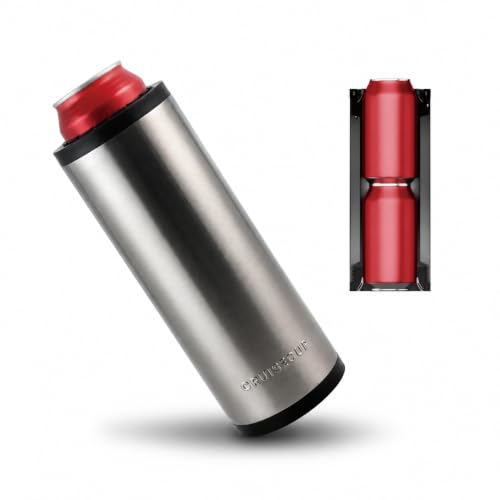


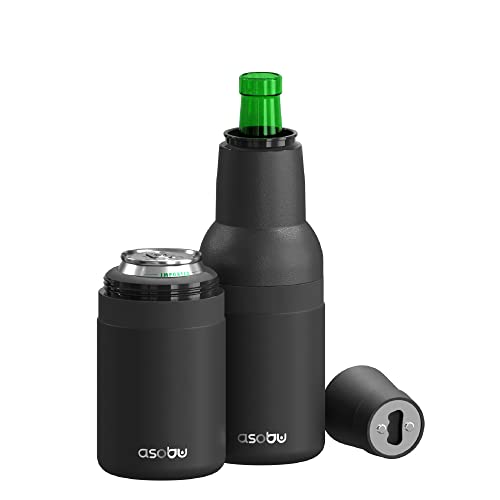
As an Amazon Associate we earn from qualifying purchases at no extra cost to you. Ratings are shown as listed on Amazon.
Best beer coolers compared
| Cooler | Type and size | Realistic beer capacity with ice | Insulation and ice guidance | Approximate empty weight | Best use |
|---|---|---|---|---|---|
| YETI Roadie 48 Wheeled | Hard cooler, 48-quart class | About 30–36 cans or 24–30 bottles | Rotomolded shell; roughly 2–3 inches of insulated wall construction; use about 1.5–2 parts ice to 1 part drinks | About 28 lb | Group camping and paved or firm trails |
| RTIC 52 QT Ultra-Tough | Hard cooler, 52-quart class | About 34–40 cans or 26–32 bottles | Rotomolded construction; approximately 2 inches of insulation; use about 1.5 parts ice to 1 part drinks | About 25 lb | Maximum volume for the money |
| Coleman Xtreme 5-Day 70-Quart | Large molded cooler, 70-quart class | About 50–60 cans or 38–46 bottles | Thick foam-insulated body; roughly 2 inches of wall insulation; use about 1 part ice to 1 part drinks | About 13 lb | Budget group camping and tailgates |
| YETI Roadie 24 | Hard cooler, 24-quart class | About 14–18 cans or 10–14 bottles | Rotomolded body with substantial foam insulation; use about 1.5–2 parts ice to 1 part drinks | About 13 lb | Car camping, day trips, and couples |
| Igloo MaxCold 50-Quart | Budget molded cooler, 50-quart class | About 30–38 cans or 22–28 bottles | Foam-insulated body; around 1.5 inches of insulation in typical construction; use about 1.5 parts ice to 1 part drinks | About 12–15 lb | Occasional camping on a limited budget |
| YETI Hopper M30 or similar soft cooler | Soft backpack-style or shoulder cooler | About 12–18 cans | Foam insulation with a flexible shell; use roughly 1 part ice to 1 part drinks | About 7–8 lb | Walking, paddling, and short outings |
These capacities assume a practical mixture of packaged beer, loose ice, and enough empty space to close the lid. Bottles consume more space than standard 12-ounce cans and are less efficient because their shape leaves larger gaps. A full cooler also performs better than a half-empty one, provided the drinks are already cold before packing.
Our top picks by camping situation
Best overall for a group: YETI Roadie 48 Wheeled Cooler
The Roadie 48 is the strongest all-round choice when several people need cold beer for a weekend. Its built-in wheels and telescoping handle solve a major hard-cooler problem: a large cooler loaded with drinks and ice can weigh more than 90 pounds. The upright shape is easier to organize than a very wide chest, and a divided interior can keep beverages separate from food.
Its practical advantage is not simply insulation. The elevated body reduces bending, the wheel system makes relocation manageable, and the drain lets you remove meltwater without turning the cooler upside down. Choose it when the cooler will travel from a vehicle to a campsite over relatively smooth ground. It is less attractive for sand, rocky paths, or steep trails, where large wheels still cannot replace a backpack.
Best value for maximum beer: Coleman Xtreme 5-Day 70-Quart
The Coleman Xtreme 5-Day 70-Quart provides the most beer volume per pound and per dollar among these choices. It is a sensible pick for a family campsite, a large base camp, or a tailgate where the cooler will remain beside the vehicle. Its lighter molded construction is easier to lift than a premium rotomolded cooler of similar capacity.
The compromises are a less refined latch and hinge system, less robust hardware, and no convenient wheels on many versions. A loaded 70-quart cooler is still awkward even when the empty cooler is light. Buy it when price and capacity matter more than premium seals and repeated rough use.
Best compact hard cooler: YETI Roadie 24
The Roadie 24 works well for two people, a day at the beach, or a main cooler paired with a separate food box. It is tall enough for wine bottles and many larger-format beverages, but its narrow footprint fits behind a vehicle seat or in a crowded campsite.
The limitation is easy to underestimate: once ice is added, its usable beer load is closer to 14–18 cans than its theoretical maximum. It is a good choice when you want reliable cold retention without carrying a large box, not when you are stocking beer for a group.
Best for walking: a quality soft cooler such as the YETI Hopper M30
A soft cooler wins when portability is more important than multi-day retention. The Hopper M30-style design is easier to carry along a shoreline, into a canoe, or from a vehicle to a remote picnic site. The flexible walls also make it easier to fit into irregular spaces.
Soft coolers generally lose their temperature advantage sooner than thick hard coolers, particularly when the zipper is opened repeatedly. Treat them as excellent day coolers and only a conditional overnight option. For a hot, exposed campsite, a hard cooler with a tight-fitting lid is the safer choice.
How much ice do you really need?
Ice-to-drink ratio is the most useful packing rule because advertised capacity often assumes no ice. For a warm-weather weekend, start with approximately 1.5 to 2 pounds of ice for every pound of beer, or use a similar volume ratio of about 1.5 parts ice to 1 part drinks. Dense block ice lasts longer; cubed ice fills gaps and chills cans faster.
For example, suppose a group packs 36 cans weighing approximately 27 pounds in total. A 1.5:1 ice-to-drink weight ratio requires about 40 pounds of ice:
27 pounds of beer × 1.5 = 40.5 pounds of ice.
That load is why a nominal 50-quart cooler may hold only 30–36 cans once ice is included. If you need 40 cans plus ice, move up to a 60- or 70-quart cooler rather than packing everything tightly and sacrificing cold circulation.
How long will beer stay at serving temperature?
With drinks pre-chilled, a well-packed hard cooler kept in shade can usually maintain near-serving temperature for roughly two to four days, depending on outdoor temperature, lid openings, ice type, and how full it remains. Premium rotomolded coolers are more likely to remain cold toward the upper end of that range, but no cooler can overcome hours in direct sun or constant opening.
- Soft coolers: commonly best for one day, sometimes into a second day with excellent packing.
- Thin-wall budget coolers: often suitable for one to two days in warm conditions.
- Thick hard coolers: commonly suitable for two to four days when full, shaded, and opened sparingly.
- Frozen block ice: lasts longer than loose cubes but cools new warm drinks more slowly.
“Five-day” or similar labeling is a performance claim under particular conditions, not a guarantee that beer will remain at serving temperature for that entire period. Meltwater temperature, sunlight, and opening frequency matter more than the number printed on the lid.
Features that matter more than the can count
- Drain design: A low drain with a tethered cap allows melted ice to escape without lifting a full cooler. Avoid draining all water too early; cold meltwater can continue chilling drinks.
- Interior height: Tall coolers accommodate bottles and cans standing upright, reducing wasted space. Check internal dimensions rather than external dimensions.
- Portability: Wheels help on pavement and compact soil but can struggle in sand and loose gravel. Two-person side handles remain important.
- Seal and hinges: A tight gasket and durable hinge reduce warm-air exchange. Hinges, latches, zippers, and drain caps are usually the first parts to wear.
- Organization: A divider or basket lets you separate food from beverages and prevents cans from being buried under ice.
- Surface durability: Rotomolded plastic tolerates repeated outdoor use, while lighter coolers are easier to carry but more vulnerable to cracked lids and damaged hardware.
How to pack a beer cooler for maximum cold retention
- Pre-chill the cooler. Put sacrificial ice inside for several hours, then discard it. This prevents the first load of drinking ice from cooling a warm interior.
- Pre-chill every drink. Warm cans consume a large portion of the available cooling capacity.
- Put long-lasting ice at the bottom. Add block ice or frozen containers first, then place cans around them.
- Fill gaps with loose ice. Ice touching the cans cools them faster and limits warm-air pockets.
- Open the lid with a plan. Keep frequently used beer near the top and avoid leaving the lid open while people choose drinks.
- Keep the cooler elevated and shaded. A groundsheet or low platform reduces heat transfer from hot soil, while a reflective cover helps in direct sun.
Ownership costs and maintenance
The purchase price is only part of the cost. A large cooler may require 30–50 pounds of ice for each major trip, and premium models can be expensive to replace if lost or stolen at a busy campsite. A cheaper cooler can be the better decision for occasional use, while a durable rotomolded model becomes more economical when used many times per season.
After each trip, drain the cooler, wash it with mild dish soap, and dry it completely with the lid open. Clean sugary residue around the drain and gasket because it attracts insects and creates odors. Do not use abrasive pads on the seal or leave a soft cooler compressed while damp. Inspect hinge pins, straps, wheels, and drain caps before a trip; these small components commonly fail before the insulated body.
Bottom line
Choose the YETI Roadie 48 for a mobile group cooler, the RTIC 52 QT Ultra-Tough when hard-cooler capacity and value are priorities, and the Coleman Xtreme 5-Day 70-Quart for the lowest-cost large beer load. For two people, the YETI Roadie 24 is easier to live with, while a soft cooler is best only when carrying comfort and short outings outweigh multi-day ice retention.



Write Your Review
No reviews yet. Be the first to share your experience!