

Key takeaways
- Polycarbonate or thermoplastic: Usually the most affordable option. These helmets can provide excellent certified protection, although they are often heavier and may have fewer shell sizes.
- Fiberglass composite: Common in mid-range and premium helmets. It can offer a useful balance of weight, stiffness, and impact performance.
- Carbon fiber: Often reduces weight, but carbon construction alone does not prove better protection. Certification, design, liner, and fit matter more than the material name.
- Mixed composites: Fiberglass, aramid, carbon, and other fibers may be combined to tune strength and weight. Compare the complete helmet rather than assuming one material is automatically superior.
Best Motorcycle Helmets for Comfort and Protection
The best motorcycle helmets balance verified impact protection, a correct fit, manageable noise, effective ventilation, and features suited to the way you ride—not simply the highest price.
Quick recommendations by riding situation
| Rider situation | Best helmet type | Useful examples | Typical price range |
|---|---|---|---|
| Daily commuting and mixed weather | Full-face or modular with a certified closed position | HJC i10, Shoei RF-1400, Schuberth C5 | $180–$850 |
| Sport riding and mountain roads | Lightweight full-face with a stable aerodynamic shell | AGV K6 S, Arai Regent-X, Scorpion EXO-R1 Air | $400–$1,000 |
| Touring and long-distance travel | Touring full-face or modular with a drop-down sun visor | Schuberth C5, Shoei Neotec 3 | $550–$950 |
| Low-cost occasional riding | Certified full-face with a simple, replaceable visor | Bell Qualifier DLX, HJC i10 | $180–$300 |
| Adventure and dual-sport riding | Adventure full-face with a removable peak and adaptable visor | Adventure helmets from Arai, Shoei, Bell, or Scorpion | $300–$800 |
Prices are broad market ranges and vary by graphics, region, promotions, and certification configuration. Confirm the label on the specific helmet, because the same model name can have different approvals in different markets.
Our top picks
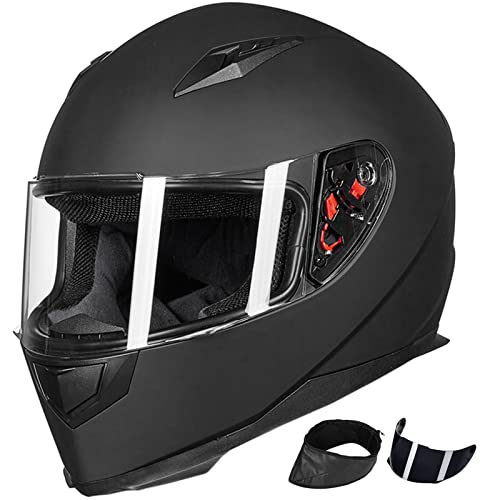

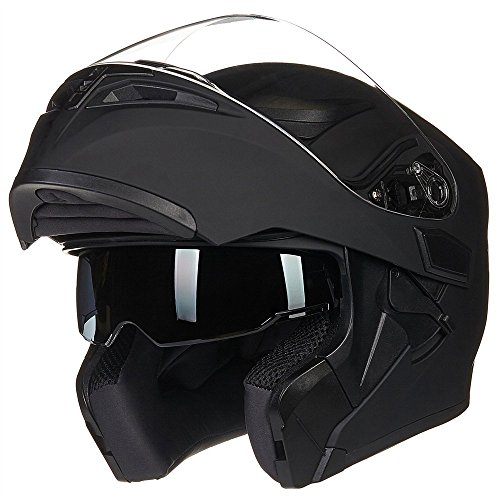

As an Amazon Associate we earn from qualifying purchases at no extra cost to you. Ratings are shown as listed on Amazon.
Safety certifications: what the labels actually tell you
ECE 22.06
ECE 22.06 is the current European motorcycle-helmet standard and adds more test conditions than the older ECE 22.05 standard, including additional impact locations, different impact speeds, rotational testing, visor testing, and testing of accessories supplied with the helmet. For many riders, an authentic ECE 22.06 label is a strong minimum requirement.
DOT FMVSS 218
DOT certification is the mandatory United States standard. A DOT label indicates that the manufacturer declares compliance with Federal Motor Vehicle Safety Standard 218. Enforcement and product quality can vary, so buy from an established manufacturer and check that the label, model information, and seller documentation match.
Snell certification
Snell motorcycle standards are voluntary and involve additional testing beyond the legal minimum in many cases. A Snell M2020D or newer Snell motorcycle certification can be a useful differentiator, particularly for sport-oriented riding. Do not confuse a genuine certification label with vague wording such as “Snell-style” or “tested to Snell requirements.”
Certification is not a substitute for fit. A premium helmet that moves on your head is a worse choice than a less expensive helmet that stays securely positioned and carries the appropriate approval for your country.
Shell materials and their real-world trade-offs
- Polycarbonate or thermoplastic: Usually the most affordable option. These helmets can provide excellent certified protection, although they are often heavier and may have fewer shell sizes.
- Fiberglass composite: Common in mid-range and premium helmets. It can offer a useful balance of weight, stiffness, and impact performance.
- Carbon fiber: Often reduces weight, but carbon construction alone does not prove better protection. Certification, design, liner, and fit matter more than the material name.
- Mixed composites: Fiberglass, aramid, carbon, and other fibers may be combined to tune strength and weight. Compare the complete helmet rather than assuming one material is automatically superior.
Weight figures are useful only when measured in the same size and configuration. A medium shell without a visor or communication system can weigh substantially less than a large modular helmet with a sun visor and metal hinge hardware.
Feature comparison: what you gain as price increases
| Helmet category | Typical weight | Shell size range | Ventilation | Noise expectation | Best use |
|---|---|---|---|---|---|
| Entry-level polycarbonate full-face | 1,550–1,750 g | 1–2 shell sizes | 2–5 vents | Moderate to high | Budget commuting and occasional rides |
| Mid-range composite full-face | 1,400–1,650 g | 2–4 shell sizes | 4–7 vents | Moderate | Frequent road riding |
| Premium sport full-face | 1,300–1,550 g | 3–5 shell sizes | 5–8 vents | Moderate, depending on posture | Sport and fast touring |
| Premium modular | 1,650–1,900 g | 2–4 shell sizes | 4–7 vents | Low to moderate when closed | Touring, commuting, and frequent stops |
These are practical category ranges, not specifications for every model. Modular helmets are heavier because of their opening mechanism, hinges, locking hardware, and sun-visor assemblies.
Fit is the most important comfort feature
Measure around the widest part of your head, approximately 2.5 cm above the eyebrows, then compare the measurement with the manufacturer’s size chart. For example, a 58 cm head may fall into a medium in one brand and a large in another, so the number on the box is only a starting point.
- Put the helmet on with the crown of your head fully seated in the liner.
- Fasten the chin strap before judging the fit.
- Keep the helmet on for at least 15 minutes. Pressure at one small spot is a warning sign.
- Try to rotate the helmet upward, downward, and side to side. Your skin should move with the liner, while the helmet should not slide independently.
- Check that the cheek pads touch firmly without causing sharp pain or forcing your mouth into an uncomfortable position.
New cheek pads often feel tight because they compress with use. Severe forehead pressure, numbness, or a persistent headache is not normal break-in. Many premium helmets offer different cheek-pad thicknesses or crown liners, which can correct a close fit but cannot fix the wrong internal head shape.
Ventilation, noise, and communication systems
Look for a controllable chin vent that directs air toward the visor and a crown vent that channels air through the EPS liner. Exhaust vents at the rear help draw warm air out. More vents do not automatically mean better airflow; internal channels, visor seals, and riding position determine whether you feel the benefit.
A quiet helmet is valuable for comfort, but no motorcycle helmet is silent. Turbulence from a windscreen, naked-bike riding position, loose visor seal, and jacket collar can create more noise than the helmet itself. Use properly fitted motorcycle earplugs on every ride, and do not turn up an intercom to overcome excessive wind noise.
Communication compatibility also matters. Check whether the helmet has speaker recesses, enough space around the cheek pads, and a flat area for a clamp or adhesive mount. Cutting the impact liner to install a device can compromise the helmet and should be avoided.
Full-face, modular, open-face, or adventure helmet?
- Full-face: The best all-round choice for road protection, weather coverage, and aerodynamic stability. It is usually the recommendation for regular highway riding.
- Modular: Convenient for fueling, navigation, and short stops. Ride with the chin bar closed unless the helmet is specifically approved for open-face use in that configuration.
- Open-face: Offers airflow and visibility but leaves the face and jaw exposed. It suits low-speed urban use only if those trade-offs are acceptable.
- Adventure: Works well for riders alternating between pavement and gravel. A large peak can create lift or vibration at highway speed, while a street-oriented adventure helmet is usually quieter.
Ownership costs and maintenance
Budget for replacement visors, pinlock-style anti-fog inserts where supported, cheek pads, and a communication system if needed. A simple ownership calculation shows why frequent riders may prefer replaceable interiors: a $450 helmet used 150 times per year for three years costs about $1 per use before accessories, while replacing a $25 liner or $40 visor is cheaper than replacing the entire helmet for a worn component.
Clean the exterior with lukewarm water and mild soap. Remove the interior according to the manual and wash it gently; avoid solvents, petroleum products, harsh household cleaners, and hot water. Let all parts air-dry completely. Inspect the chin strap, visor pivots, seals, vents, and EPS liner regularly.
Replace a helmet after a significant impact, even if there is no visible damage. Also follow the manufacturer’s service-life guidance; many recommend replacement after roughly five to seven years from manufacture, with earlier replacement if the liner has deteriorated, the shell is cracked, or the fit has loosened. Do not buy a used helmet unless its complete history is known.
Bottom line
For most riders, the best motorcycle helmets are certified full-face models that fit securely, have effective chin and crown ventilation, support replaceable pads, and match the rider’s posture and speed. Choose a lightweight sport full-face for aggressive road riding, a quiet modular for touring convenience, and a properly certified entry-level full-face when budget is the main constraint. Confirm the certification label, try the helmet on for at least 15 minutes, and prioritize stable fit over graphics, brand prestige, or a low advertised weight.






Write Your Review
No reviews yet. Be the first to share your experience!