

Key takeaways
- Check tire pressure weekly during frequent use and before long runs. Pressure changes noticeably with temperature.
- Inspect the front-wheel lock and brake before every run. A lock that engages only partially can create unstable steering.
- Rinse trail grit away with low-pressure water, then dry the frame and wheel axles. Avoid directing a strong hose at bearings or brake mechanisms.
- Clean the folding joints rather than spraying them heavily with oil. Lubricant can attract sand and interfere with locking parts.
- Expect tires, tubes, and wheel bearings to wear first. Rough surfaces, low pressure, and heavy loads accelerate replacement.
- Do not overload the handlebar. Heavy bags can alter balance and make the stroller tip backward when the child is not seated.
The best jogging strollers for active parents are the Thule Urban Glide 3 for most runners, the Baby Jogger Summit X3 for frequent pavement-to-trail use, and the BOB Gear Revolution Flex 3.0 when maximum adjustment and a high child-weight limit matter more than compact storage.
A jogging stroller should be chosen as running equipment, not simply as a three-wheeled everyday stroller. Large pneumatic or air-filled tires, a fixed front-wheel mode, usable suspension, a hand-operated brake, and a wrist strap make the biggest difference once you leave smooth pavement. The table below compares established models using manufacturer-published specifications; dimensions and limits can vary slightly by market and configuration.
Our top picks
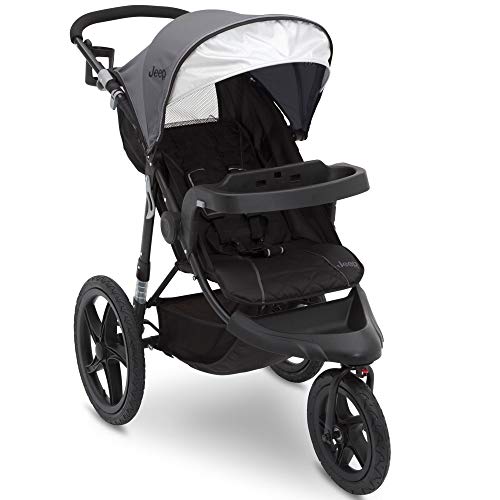


As an Amazon Associate we earn from qualifying purchases at no extra cost to you. Ratings are shown as listed on Amazon.
Best jogging strollers at a glance
| Stroller | Wheel size | Suspension and brake | Child limit | Approx. weight | Approx. folded size | Best use |
|---|---|---|---|---|---|---|
| Thule Urban Glide 3 | 12 in front; 16 in rear | Rear suspension; twist hand brake; wrist strap | 49 lb | About 26 lb | About 34 x 25 x 15 in | Regular running and mixed urban paths |
| Baby Jogger Summit X3 | 12 in front; 16 in rear | All-wheel suspension; hand brake; wrist strap | 65 lb | About 28 lb | About 37 x 25 x 15 in | Pavement-to-trail transitions |
| BOB Gear Revolution Flex 3.0 | 12 in front; 16 in rear | Adjustable suspension; hand brake; wrist strap | 75 lb | About 28.5 lb | About 39 x 25 x 16 in | Rough trails and growing children |
| Joovy Zoom 360 Ultralight | 12 in front; 16 in rear | Rear suspension; parking brake; safety strap | 75 lb | About 26.25 lb | About 34 x 25 x 18 in | Lower-cost recreational jogging |
These are jogging-oriented single strollers, not recommendations for running with a newborn. Follow the particular manufacturer’s minimum-age guidance, and ask a pediatric professional if you are unsure whether a child is ready for the vibration and posture demands of running.
Our picks by situation
| Your situation | Best match | Why |
|---|---|---|
| Running two or more times weekly | Thule Urban Glide 3 | Light for its size, easy to steer, and well suited to pavement, bike paths, and maintained gravel. |
| Frequent transitions between sidewalk and trail | Baby Jogger Summit X3 | The front-wheel switch makes it quicker to change from swiveling everyday mode to fixed running mode. |
| Rocky paths or a heavier, older child | BOB Gear Revolution Flex 3.0 | Adjustable suspension and a 75-pound child limit provide more room for demanding terrain and longer ownership. |
| Occasional jogging on a tighter budget | Joovy Zoom 360 Ultralight | Large wheels and a comparatively low weight deliver the core jogging layout without premium pricing. |
| Small apartment or compact car | Thule Urban Glide 3 | Among these choices, its folded footprint is easier to manage, although it is still much larger than a compact stroller. |
What matters more than the marketing label
Wheel size and tire type
A 16-inch rear wheel rolls over roots, cracks, and loose gravel with less pitching than a small wheel. The 12-inch front wheel keeps steering responsive without sacrificing too much obstacle clearance. Air-filled tires usually give the smoothest ride and the best traction, but they require pressure checks and can puncture. Never substitute a tire pressure outside the stroller maker’s range: an underinflated tire handles poorly, while an overinflated tire reduces comfort and grip.
For mostly asphalt, 12-inch rear wheels can be adequate, but genuinely uneven trails reward the common 12-inch-front/16-inch-rear layout. A swiveling front wheel is convenient for walking. For running, lock it straight before accelerating; a wheel that is still free to swivel can pull sharply when it contacts an edge.
Suspension
Suspension does not make a rough trail flat, but it reduces the force transferred to the seat and handlebar. The BOB’s adjustable system is useful when load and terrain change. The Summit X3 has a more trail-oriented feel, while the Thule balances compliance with lower weight. Suspension also affects control: a stroller that bounces less is easier to keep tracking straight on corrugated gravel.
Braking and wrist straps
A parking brake stops the stroller when you stand still; it is not a substitute for a hand-operated running brake. A handlebar brake gives you extra control on descents, but it should not be used as a continuous drag brake unless the manual permits that practice. Excessive braking can heat components and make the stroller pull.
Use the wrist strap every time you run. Attach it securely to your wrist before moving, rather than holding it loosely in your hand. It is a backup connection if you stumble or lose your grip, not permission to run hands-free. Confirm that the harness is snug, the canopy is locked, and the front wheel is fixed before each run.
Folded dimensions and real storage
Published folded dimensions often exclude a removable wheel, parent console, or handlebar position. Measure the narrowest doorway, the vehicle opening, and the storage height with the stroller in the configuration you will actually use. A stroller around 25 inches wide may fit through doors but still consume most of a small sedan’s trunk depth because of its long rear frame and 16-inch wheels.
Head-to-head: Thule Urban Glide 3 versus Baby Jogger Summit X3
Choose the Thule when carrying the stroller upstairs, lifting it into a vehicle, or running mostly on pavement matters. Its lighter frame and smooth steering make it the easier everyday option. Its 49-pound child limit is sufficient for many families, but it gives less long-term capacity than the Summit.
Choose the Summit X3 when your route changes surfaces repeatedly. Its front-wheel adjustment is particularly useful: swivel mode helps in shops and narrow paths, while fixed mode is appropriate for running. It is heavier and bulkier, but the higher 65-pound limit and more trail-focused suspension make the trade-off sensible for active outdoor use.
Ownership costs and maintenance
At typical 2026 market prices, jogging strollers range from roughly $250 for a basic model to $800 or more for premium configurations and accessories. Consider cost per use rather than sticker price. For example, a $600 stroller used three times per week for three years provides about 468 uses: $600 ÷ 468 is approximately $1.28 per use before accessories and repairs. A cheaper stroller used only a few times may cost more per outing.
- Check tire pressure weekly during frequent use and before long runs. Pressure changes noticeably with temperature.
- Inspect the front-wheel lock and brake before every run. A lock that engages only partially can create unstable steering.
- Rinse trail grit away with low-pressure water, then dry the frame and wheel axles. Avoid directing a strong hose at bearings or brake mechanisms.
- Clean the folding joints rather than spraying them heavily with oil. Lubricant can attract sand and interfere with locking parts.
- Expect tires, tubes, and wheel bearings to wear first. Rough surfaces, low pressure, and heavy loads accelerate replacement.
- Do not overload the handlebar. Heavy bags can alter balance and make the stroller tip backward when the child is not seated.
Common buying mistakes
The most frequent mistake is buying a three-wheel stroller that is marketed for “active” families but lacks a fixed front-wheel setting or hand brake. A second is choosing by child-weight limit alone: a high limit does not make a stroller appropriate for a younger child, nor does it compensate for poor fit in the harness and seat.
Also check whether the advertised folded measurement requires removing the front wheel. If your storage routine will not include wheel removal, treat the assembled folded size as the relevant number. Finally, compare accessory costs separately. A rain cover, snack tray, car-seat adapter, or replacement inner tube can materially change the ownership cost.
Bottom line
The Thule Urban Glide 3 is the strongest all-round choice for parents who run regularly and need a stroller that remains manageable for everyday errands. The Baby Jogger Summit X3 is the better surface-switching specialist, while the BOB Gear Revolution Flex 3.0 is the more capable choice for rough trails, heavier children, and adjustable suspension. For occasional jogging on a moderate budget, the Joovy Zoom 360 Ultralight covers the essentials, provided its larger folded depth fits your storage space.





Write Your Review
No reviews yet. Be the first to share your experience!