

Key takeaways
- 40–50 grams: Often suits slower tempos, moderate swing speeds, or golfers seeking a lighter overall club.
- 50–60 grams: A versatile middle range for many recreational players.
- 60–70 grams: Often preferred by faster swingers or golfers who need a more substantial feel.
- 70 grams and above: Usually a specialist choice for high-speed players with a strong transition.
The best golf drivers for distance and forgiveness are the TaylorMade Qi35 Max, Ping G440 Max, Callaway Elyte X, Titleist GT2, Cobra DS-ADAPT X, and Srixon ZXi Max—but the right choice depends more on your swing speed, miss pattern, launch, and fitting needs than on brand.
Our top picks


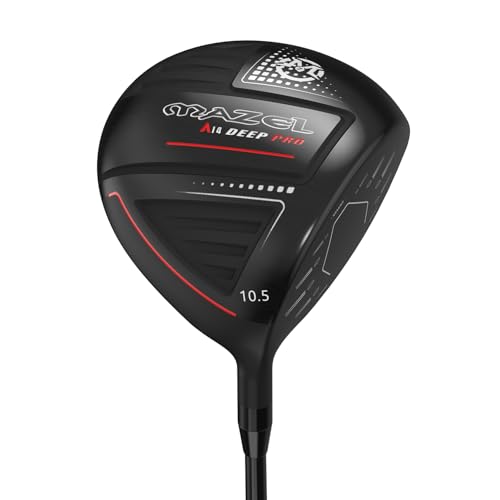
As an Amazon Associate we earn from qualifying purchases at no extra cost to you. Ratings are shown as listed on Amazon.
Quick picks: which driver suits your game?
| Player situation | Best starting point | Why it fits | Typical lofts |
|---|---|---|---|
| Maximum forgiveness and a frequent slice | Callaway Elyte X | Draw-biased head and a high-launching profile help reduce rightward curvature | 9°, 10.5°, 12° |
| Very high forgiveness with a stable, neutral flight | Ping G440 Max | Large 460cc head, high MOI design, and adjustable hosel | 9°, 10.5°, 12° |
| Adjustability and a mid-to-high launch | TaylorMade Qi35 | Moveable sole weight and adjustable loft sleeve provide useful fitting range | 9°, 10.5°, 12° |
| Fast swing speed and a consistent strike | Titleist GT2 | Low-spin potential with a stable 460cc head and neutral-to-mid launch | 8°, 9°, 10°, 11° |
| Moderate speed needing easy launch | Cobra DS-ADAPT X | High-launching head with extensive loft and lie adjustability | 9°, 10.5°, 12° |
| Forgiveness without an extremely oversized appearance | Srixon ZXi Max | High-MOI construction with a confidence-inspiring but relatively clean shape | 9°, 10.5°, 12° |
These are starting recommendations, not guarantees. A shaft that launches well for one golfer can produce too much spin for another, even at the same swing speed.
What matters most when choosing among the best golf drivers?
Head size and shape
Most modern forgiving drivers use a 460cc head, the largest size permitted under golf’s equipment rules. More volume generally allows engineers to move weight farther from the center, increasing stability when contact moves toward the heel or toe.
A large head is not automatically best for every golfer. Compact-looking heads can suit players who deliver the club consistently and want easier face rotation or a lower-spin flight. For many recreational golfers, however, the visual confidence and off-center stability of a 460cc Max or X model are more valuable than a small potential gain from a tour-shaped head.
Loft adjustability
An adjustable hosel can alter loft, face angle, and lie angle. Adding loft usually raises launch and spin and may close the face slightly, depending on the sleeve design. Reducing loft generally lowers launch and spin and can make the face appear more open.
Adjustable sole weights can also influence the shot pattern. A heavier weight toward the heel can encourage a draw or reduce a slice; a rearward weight typically increases stability and launch; a forward weight can lower spin but may make mishits less forgiving.
Center of gravity and launch
Rearward and low centers of gravity are common in Max and X models because they make it easier to launch the ball and preserve ball speed on imperfect contact. A forward center of gravity can produce a flatter, lower-spin trajectory, but it usually rewards a faster swing and more reliable impact.
Do not choose a low-spin driver simply because “low spin” sounds longer. Too little spin can cause a drive to fall out of the air, especially when the strike is low on the face or the swing speed is modest.
Head-to-head comparison of leading drivers
| Driver | Head size | Adjustment approach | Launch tendency | Best match |
|---|---|---|---|---|
| TaylorMade Qi35 | 460cc | Adjustable hosel; moveable sole weight varies by model | Mid to high | Players wanting to tune launch, spin, and face presentation |
| Ping G440 Max | 460cc | Adjustable hosel with a stable rear-weighted design | High and stable | Golfers prioritizing forgiveness and a neutral flight |
| Callaway Elyte X | 460cc | Adjustable hosel; draw-biased head design | High | Golfers who lose shots to the right |
| Titleist GT2 | 460cc | Adjustable hosel; neutral head weighting | Mid | Consistent strikers seeking speed and control |
| Cobra DS-ADAPT X | 460cc | FutureFit33 hosel with 33 loft and lie combinations | High | Players who want unusually broad hosel adjustment |
| Srixon ZXi Max | 460cc | Adjustable hosel; high-MOI construction | Mid to high | Players wanting forgiveness with a less draw-biased look |
Best golf drivers by swing speed
Below approximately 85 mph
Prioritize launch, adequate spin, and a shaft you can load without excessive effort. A 10.5° or 12° head is often a more sensible starting point than a 9° model. Lightweight versions of the Ping G440 Max, Callaway Elyte X, or Cobra DS-ADAPT X can help some slower-swinging players create speed, but the correct shaft flex is determined by delivery and tempo, not speed alone.
A common mistake is pairing a slow or moderate swing with a heavy, low-launch shaft because it is marketed as “stable.” If the ball starts low and runs rather than carries, more loft or a lighter profile may add useful distance.
Approximately 85–100 mph
This range offers the broadest choice. Start by deciding whether your main problem is launch, slice curvature, or excessive spin. The G440 Max and Qi35 are strong neutral choices; the Elyte X and DS-ADAPT X make more sense when a right miss is persistent.
Many players in this range benefit from 10.5° loft, a midweight shaft, and a mid-launch profile. Test both regular and stiff options if possible, because tempo and transition can make a larger difference than the label.
Above approximately 100 mph
Faster players should focus on spin control, strike location, and face stability rather than simply selecting the lowest-lofted head. The Titleist GT2 or a lower-spin version of a current driver can work well for a consistent striker, while a Max head remains useful if impact varies across the face.
For a high-speed golfer who already launches the ball high with excessive spin, a 9° head and a firmer, lower-launch shaft may improve carry and total distance. The combination should be confirmed on a launch monitor; lowering loft without checking spin can produce a weak, falling flight.
Shaft options: weight matters more than the flex label
Driver shafts commonly range from roughly 40 to 80 grams. A lightweight shaft can make it easier to increase clubhead speed, while a heavier shaft may improve timing and face control. Neither is universally longer.
- 40–50 grams: Often suits slower tempos, moderate swing speeds, or golfers seeking a lighter overall club.
- 50–60 grams: A versatile middle range for many recreational players.
- 60–70 grams: Often preferred by faster swingers or golfers who need a more substantial feel.
- 70 grams and above: Usually a specialist choice for high-speed players with a strong transition.
Flex labels such as regular, stiff, and extra stiff are not standardized across manufacturers. Compare launch, spin, ball speed, dispersion, and strike pattern instead of choosing only from the label. Shaft length also matters: a longer shaft may offer more theoretical speed, but a shorter build can improve center-face contact and produce more consistent distance.
A practical decision matrix
| Your priority | Head design to seek | Loft starting point | Adjustment to try first |
|---|---|---|---|
| Slice or heel-side miss | Draw-biased X model with rear weighting | 10.5° or 12° | Increase loft or move weight toward the heel |
| Low launch and short carry | High-launch Max model | 10.5° or 12° | Add loft; test a lighter or higher-launch shaft |
| High launch and too much spin | Neutral head with a more forward center of gravity | 9° or 10.5° | Reduce loft only after checking strike and spin |
| Frequent toe or heel contact | 460cc, high-MOI head | Based on launch, not appearance | Keep rear weighting; prioritize dispersion |
| Already consistent off the tee | Neutral or lower-spin head | Based on launch-monitor data | Compare forward and rearward weight positions |
How to set up and maintain a driver
- Record a baseline: Note carry distance, total distance, launch angle, spin, ball speed, and left-right dispersion before changing settings.
- Change one variable: Adjust loft or weight, then hit enough shots to identify a pattern. Changing the shaft, loft, and ball simultaneously makes the result difficult to interpret.
- Check strike location: Use impact tape or face spray. A low-face strike often increases spin, while a high-face strike can reduce it; the best setting cannot fully correct inconsistent contact.
- Clean the face and grooves: Wipe the face after play and remove dirt from the grooves with a soft brush. Avoid abrasive cleaners and harsh wire brushes that can damage the finish.
- Inspect the grip and shaft: Grips become slick and hard over time, while shafts should be checked for cracks near the hosel. Replace a worn grip before assuming the head or shaft is the problem.
Drivers typically last for years when stored dry and protected from extreme heat, but the grip is often the first consumable to wear. Repeated range use, hard ground contact, loose head screws, and carrying the club without a headcover can shorten the life of the finish and components. Tighten adjustable screws only to the manufacturer’s specified torque, using the supplied wrench where applicable.
Final buying advice
Choose the Ping G440 Max or Srixon ZXi Max for neutral forgiveness, the Callaway Elyte X for help with a right miss, the TaylorMade Qi35 for broad tuning options, the Cobra DS-ADAPT X for maximum hosel adjustability, and the Titleist GT2 for a stable, performance-oriented neutral flight.
Before buying, compare at least two lofts and two shaft weights while watching strike location and dispersion. The longest single drive is less useful than a driver that repeatedly produces playable carry. A professional fitting is particularly worthwhile when your launch is very low or high, your spin varies widely, or you are unsure whether your main issue is the head, shaft, or impact pattern.






Write Your Review
No reviews yet. Be the first to share your experience!