

Key takeaways
- Boil speed: Usually about 3–5 minutes for 1 litre in mild conditions, depending on burner output, pot lid, water temperature, and altitude.
- Simmer control: Better on regulated, premium burners than on basic ultralight models.
- Fuel use: A 100 g screw-thread canister may provide roughly 8–12 litres of boiled water in favorable conditions, less in cold or windy weather.
- Wind resistance: Recessed or shielded burner heads generally outperform exposed flame rings.
- Cookware capacity: Best with one pot or pan of approximately 1–2 litres; stability decreases as cookware gets wider, heavier, or fuller.
The best camping stoves for most people are a compact canister stove for lightweight trips, a wind-resistant integrated canister system for fast one-pot meals, and a dual-burner propane stove for car camping and real camp-kitchen cooking.
The right choice depends less on maximum heat than on how you cook. Boil speed matters for dehydrated meals and coffee; simmer control matters for sauces and pancakes; fuel use affects trip cost; wind resistance determines whether the advertised output is useful outdoors; and cookware capacity decides whether dinner is one pot or several pans.
Our top picks
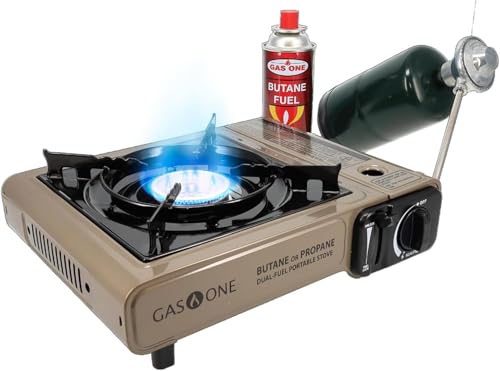
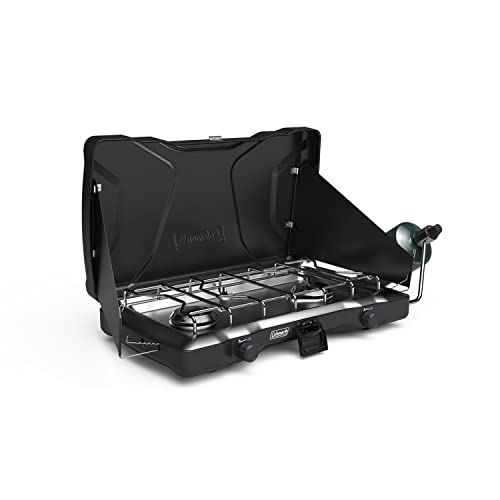


As an Amazon Associate we earn from qualifying purchases at no extra cost to you. Ratings are shown as listed on Amazon.
Best camping stoves by camping situation
| Camping situation | Best stove type | Recommended example | Why it fits |
|---|---|---|---|
| Solo or two-person backpacking | Compact canister stove | MSR PocketRocket Deluxe | About 83 g, small packed size, strong simmer control, and broad pot support for its class |
| Cold, exposed, or windy camps | Wind-resistant compact stove | SOTO WindMaster | About 87 g with its four-flex pot support and an elevated burner design that protects the flame |
| Fast boiling with minimal fuss | Integrated canister system | Jetboil Flash | Roughly 1 litre of integrated cooking capacity and a claimed boil time near 100 seconds in favorable conditions |
| Family car camping | Dual-burner propane stove | Coleman Classic 2-Burner | Two independent burners, larger cookware capacity, and widely available 16.4 oz propane cylinders |
| Frequent group cooking | High-output dual burner | Camp Chef Everest 2X | Two powerful burners and better space for a skillet plus a pot, with a heavier but more capable design |
Compact canister stoves: best for weight and flexibility
MSR PocketRocket Deluxe: the balanced lightweight pick
The MSR PocketRocket Deluxe is a strong all-round choice when you want a small stove that can boil water quickly but still cook real food. It weighs about 83 g before the fuel canister and has a push-button igniter, a regulator intended to maintain more consistent performance as canister pressure drops, and a burner head that provides useful wind protection.
Its main advantage over an ultralight minimalist burner is control. The valve can be adjusted finely enough for oatmeal, rice, or a sauce rather than only “off” and “maximum.” The folding pot supports accommodate common backpacking cookware, but the stove is not a substitute for a full camp range. Keep cookware roughly within the manufacturer’s supported size and avoid placing a large, heavy pan on a narrow burner.
SOTO WindMaster: best when wind is the deciding factor
The SOTO WindMaster is one of the best camping stoves for exposed ridgelines, beaches, and shoulder-season trips where gusts routinely disrupt small burners. Its burner design sits partly recessed, and the four-flex pot support gives a more stable platform than many ultralight three-legged stoves. Weight is about 87 g with the four-support configuration.
It is particularly attractive if you use a slightly wider pot or want more confidence when stirring. The trade-off is a larger packed footprint than the simplest compact burners, plus a removable pot support that should be stored carefully. In strong wind, it can still benefit from shelter, but use a shield only in a way that does not trap heat around the fuel canister.
Compact stove performance in practice
- Boil speed: Usually about 3–5 minutes for 1 litre in mild conditions, depending on burner output, pot lid, water temperature, and altitude.
- Simmer control: Better on regulated, premium burners than on basic ultralight models.
- Fuel use: A 100 g screw-thread canister may provide roughly 8–12 litres of boiled water in favorable conditions, less in cold or windy weather.
- Wind resistance: Recessed or shielded burner heads generally outperform exposed flame rings.
- Cookware capacity: Best with one pot or pan of approximately 1–2 litres; stability decreases as cookware gets wider, heavier, or fuller.
Integrated canister stoves: fastest boiling, narrower cooking role
Jetboil Flash: best for hot drinks and freeze-dried meals
The Jetboil Flash combines a burner with a heat-exchanger cup, lid, insulating sleeve, and bottom cover. Its approximately 1-litre vessel is designed to transfer heat efficiently, and the manufacturer’s stated boil time is around 100 seconds under favorable test conditions. In ordinary camping conditions, expect the result to vary with wind, water temperature, elevation, and fuel level.
This is the most convenient category when your routine is boiling water for coffee, tea, soup, or dehydrated meals. The integrated cup also reduces the need to pack a separate pot. However, the narrow vessel is less suitable for frying, cooking for several people, or preparing foods that need constant stirring. Some integrated systems accept optional cookware adapters, but adding accessories reduces the simplicity that makes the design appealing.
Choose an integrated stove if speed and fuel efficiency matter more than culinary flexibility. Choose a compact burner instead if you regularly sauté vegetables, cook pasta in a wide pot, or share one stove among several people.
Dual-burner propane stoves: best for an actual camp kitchen
Coleman Classic 2-Burner: the practical family choice
A traditional two-burner propane stove is the better answer for car camping, base camps, and groups. The Coleman Classic 2-Burner uses the common 16.4 oz disposable propane cylinder, provides two independently controlled burners, and typically weighs around 11–12 lb depending on the version. Its cooking surface can accommodate a pot on one side and a frying pan or kettle on the other.
Its strengths are capacity and familiarity rather than packability. You can boil water while frying eggs, keep a pot warm while making coffee, and use normal household-style cookware. The drawbacks are bulk, disposable-cylinder waste unless you use a refillable-cylinder setup where permitted, and lower efficiency for a single person boiling one mug.
Camp Chef Everest 2X: best for higher-output group cooking
The Camp Chef Everest 2X is a heavier, more powerful dual-burner option for campers who cook substantial meals often. Models in this class commonly offer two burners around 10,000–20,000 BTU per side, depending on the specification, with independent controls and a folding lid or windscreen.
Higher BTU numbers do not automatically mean faster cooking. Burner shape, pot contact, wind protection, and regulator performance matter just as much. The Everest 2X makes sense when you need a stable platform for larger cookware and want more reserve power for a full pot. It is excessive for occasional solo coffee and takes noticeably more storage space than a compact canister stove.
Head-to-head comparison
| Stove class | Typical packed weight | Typical boil time | Simmer control | Wind resistance | Practical cookware capacity |
|---|---|---|---|---|---|
| Basic compact canister | 25–70 g | 3–6 minutes per litre | Fair | Fair to poor without shelter | 0.75–2 litres |
| Premium compact canister | 80–100 g | 3–5 minutes per litre | Good to very good | Good | 1–2.5 litres |
| Integrated canister system | 370–500 g including cup and burner | About 1.5–3 minutes per litre | Fair | Good | 0.8–1.5 litres, usually one vessel |
| Dual-burner propane | 10–13 lb, excluding fuel | 4–8 minutes per litre per burner | Very good | Good with built-in windscreens | Two pots or pans, commonly up to 10–12 inches each |
Fuel-use calculation: when a larger stove is cheaper
Suppose a compact canister stove uses approximately 8 g of fuel to boil 1 litre of water. A 100 g canister would provide about 12.5 litres in ideal conditions, although cold weather and wind may reduce that figure. If a canister costs $6–$9, fuel costs roughly $0.48–$0.72 per litre boiled.
A propane cylinder contains much more fuel, but a dual-burner stove also heats larger pans and often runs for longer. For a family cooking two hot meals daily, the convenience of two burners may outweigh the compact stove’s lower fuel consumption. For one person boiling 0.5 litre twice a day, the larger stove wastes space and fuel capacity you do not need.
Ownership details that affect the best choice
- Inspect seals: Check the canister connection O-ring for cracking or flattening. A damaged seal can cause leaks and should be replaced according to the manufacturer’s instructions.
- Keep burner ports clean: Food spills and soot can create an uneven flame. Let the stove cool completely, then use the recommended soft brush or cleaning method rather than forcing wire into tiny jets.
- Protect the igniter: Piezo buttons are convenient but can fail after repeated impacts or moisture exposure. Carry a small waterproof lighter as backup.
- Do not use oversized windshields carelessly: A shield that surrounds a canister stove can reflect heat toward the fuel container. Use the stove’s built-in screen or leave ventilation around the canister.
- Plan for cold fuel: Standard butane-propane mixtures lose pressure in low temperatures. Keep the canister within safe manufacturer limits and consider a pressure-regulated stove for colder trips.
- Transport propane safely: Keep cylinders upright, protected from heat, and never use a damaged or visibly corroded cylinder.
Final recommendations
Buy the MSR PocketRocket Deluxe for the best balance of weight, speed, and simmering. Choose the SOTO WindMaster when wind exposure and pot stability are more important than the smallest packed size. Pick the Jetboil Flash for exceptionally fast boiling and simple one-pot meals. For families and multi-course meals, skip backpacking burners and choose the Coleman Classic 2-Burner; upgrade to the Camp Chef Everest 2X if you cook frequently and need stronger output and more usable pan space.



Write Your Review
No reviews yet. Be the first to share your experience!