

Key takeaways
- Best overall for car camping: Weber Traveler. Its 320-square-inch grate is large enough for a family meal, the single burner is easy to operate, and the cart folds into a compact, wheeled package.
- Best for two-zone cooking: Napoleon TravelQ PRO285. Independent burners let you sear on one side while finishing food over gentler heat on the other.
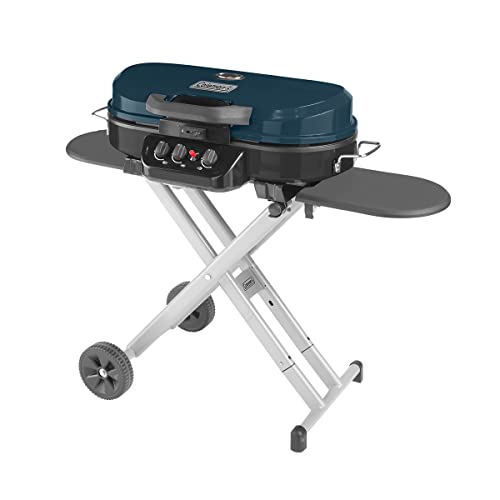
- Best with a built-in stand: Coleman RoadTrip 285. Its folding stand brings the cooking surface to a comfortable height and makes it suitable for campsites where no table is available.
- Best compact gas grill: Weber Q1200. It sacrifices cooking area for a smaller footprint and is easier to store in a crowded vehicle or use on a small balcony or picnic table.
- Best for pancakes, eggs, and chopped food: Blackstone 17-inch Tabletop Griddle. The solid surface prevents small ingredients from falling through, but it cannot provide traditional grill marks unless a separate grate is used.
- Best budget charcoal option: A 14- to 16-inch portable charcoal kettle. It offers smoke flavor and simple mechanics, but temperature control and cleanup require more attention.
The best portable camping grill for most people is the Weber Traveler, but the right choice depends on whether you prioritize a large cooking area, quick setup, charcoal flavor, wind resistance, or the ability to cook for a bigger group.
A portable grill is not simply a smaller backyard grill. The most useful differences appear at camp: how much food fits without crowding, whether the burner can hold a steady low temperature, how easily the grill travels, and how much greasy cleanup remains after dinner. The comparison below focuses on those practical trade-offs.
Our top picks


As an Amazon Associate we earn from qualifying purchases at no extra cost to you. Ratings are shown as listed on Amazon.
Best portable camping grills at a glance
| Grill | Fuel | Cooking area | Approx. weight | Best for | Practical serving size |
|---|---|---|---|---|---|
| Weber Traveler | Disposable or refillable propane cylinder | 320 sq in | 49 lb | One-grill family camping | 4–6 people |
| Napoleon TravelQ PRO285 | Propane | 285 sq in | About 20 lb | Portable two-zone cooking | 3–5 people |
| Coleman RoadTrip 285 | Propane | 285 sq in | About 52 lb with stand | Car camping with a stand | 4–6 people |
| Weber Q1200 | Propane | 189 sq in | About 31 lb | Compact, frequent use | 2–4 people |
| Blackstone 17-inch Tabletop Griddle | Propane | 267 sq in | About 22 lb | Breakfasts and flat-top meals | 2–4 people |
| Portable charcoal kettle grill, 14–16 inch class | Charcoal | 150–185 sq in | 10–25 lb | Low-cost charcoal cooking | 2–4 people |
Cooking areas are nominal grate or griddle measurements, and usable space is lower when food needs room between pieces. A grill advertised for four burgers may cook only two or three thick steaks comfortably, because steaks need more separation and stronger heat zones.
Our picks by camping situation
- Best overall for car camping: Weber Traveler. Its 320-square-inch grate is large enough for a family meal, the single burner is easy to operate, and the cart folds into a compact, wheeled package.
- Best for two-zone cooking: Napoleon TravelQ PRO285. Independent burners let you sear on one side while finishing food over gentler heat on the other.
- Best with a built-in stand: Coleman RoadTrip 285. Its folding stand brings the cooking surface to a comfortable height and makes it suitable for campsites where no table is available.
- Best compact gas grill: Weber Q1200. It sacrifices cooking area for a smaller footprint and is easier to store in a crowded vehicle or use on a small balcony or picnic table.
- Best for pancakes, eggs, and chopped food: Blackstone 17-inch Tabletop Griddle. The solid surface prevents small ingredients from falling through, but it cannot provide traditional grill marks unless a separate grate is used.
- Best budget charcoal option: A 14- to 16-inch portable charcoal kettle. It offers smoke flavor and simple mechanics, but temperature control and cleanup require more attention.
Head-to-head: which features matter at camp?
Cooking area and group size
For two campers, 180 to 200 square inches is usually sufficient for burgers, vegetables, or a couple of chicken breasts. Three or four campers will be more comfortable with 250 to 290 square inches. A group of five or six should look for roughly 300 square inches or plan to cook in batches.
The Weber Traveler has the largest grate in this group, but the Napoleon TravelQ PRO285 makes better use of its space when meals require different temperatures. The Coleman RoadTrip 285 is similarly sized and can accept interchangeable cooking surfaces, depending on the configuration. The compact Weber Q1200 is convenient, but its 189 square inches can turn dinner into a sequence of batches.
Fuel type and cooking style
Propane is the easiest option for most campers. A portable gas grill lights quickly, produces no ash, and makes it possible to cook breakfast at a controlled low temperature. Disposable 1-pound cylinders are convenient but create more waste and can become expensive with frequent use. A refillable propane cylinder with the correct hose is more economical for regular car camping; always use the connection specified by the grill manufacturer.
Charcoal provides a smoky flavor and high direct heat, usually at a lower purchase price. Its disadvantages are a longer setup, less precise temperature control, hot coals after cooking, and ash disposal. Never leave charcoal unattended or place warm ash in a plastic bin, vehicle, or campsite trash container.
A griddle is a specialized choice. Its flat steel surface is excellent for eggs, bacon, pancakes, cheesesteaks, and diced vegetables. It is less useful when you want to cook over indirect heat or allow fat to drip away from food.
Heat control and wind performance
Two burners give the Napoleon TravelQ PRO285 a meaningful advantage for indirect cooking. You can brown chicken over high heat and move it to the cooler side, or keep one side warm while cooking a second item. Single-burner grills can still cook well, but the entire grate tends to share one temperature.
Wind is a bigger problem than many specifications suggest. Gusts pull heat away, lengthen cooking time, and can make a gas flame uneven. Models with enclosed burner areas and substantial lids generally cope better than very open tabletop burners. The Weber Traveler and Weber Q1200 have relatively protective lid and burner layouts; the Coleman’s broad cooking surface benefits from using its stand in a sheltered position.
Do not surround a grill with a solid windscreen. Blocking ventilation can trap heat around the propane cylinder or cause unsafe combustion. Instead, position the grill away from direct gusts, keep the lid closed while preheating, and leave the required clearance around the appliance.
Portability versus stability
Weight alone does not determine portability. A 22-pound tabletop grill may be awkward if it has no good carrying handles, while a heavier wheeled grill can be easier to move from the vehicle to the picnic table. The Weber Traveler and Coleman RoadTrip 285 are substantial pieces of equipment rather than backpacking gear. They suit drive-in campsites, tailgating, and backyard storage—not long walks from a parking area.
The Napoleon TravelQ PRO285 and Blackstone 17-inch are better for carrying short distances, although they still need a stable, heat-resistant table. The 14- to 16-inch charcoal kettle class is often the lightest option, but its round shape can waste table space and may be less stable on uneven ground.
Decision matrix: choose by your real priority
| Your situation | Best match | Why | Main compromise |
|---|---|---|---|
| First grill, 4–6 campers, simple meals | Weber Traveler | Large grate, straightforward controls, wheeled cart | Heavy and usually more expensive than compact tabletop models |
| Experienced cook making different foods together | Napoleon TravelQ PRO285 | Two independent burners and strong temperature flexibility | Requires a table or separate stand |
| Small vehicle, 2–3 campers, regular weekend use | Weber Q1200 | Compact footprint and dependable gas control | Limited room for large meals |
| Breakfast-heavy menus and no desire for ash | Blackstone 17-inch | Flat surface handles small foods efficiently | Needs seasoning and careful grease management |
| Lowest equipment cost and smoky flavor | Portable charcoal kettle | Simple design and inexpensive fuel options | Slower setup, ash cleanup, and weaker precision |
Setup and cleanup details that affect ownership
Allow 10 to 15 minutes for a propane grill to preheat, especially in cold or windy weather. Preheating burns off residue and gives the grate enough energy to sear rather than steam food. For charcoal, allow roughly 25 to 35 minutes from lighting to a stable cooking bed, depending on the amount of fuel and weather.
- Place the grill on level, nonflammable ground or a heat-rated table.
- Check the hose, regulator, and cylinder connection before opening the gas valve.
- Light the grill with the lid open if the manufacturer instructs you to do so; this prevents gas from accumulating under the lid.
- Preheat with the lid closed, then brush the grate with a suitable grill brush.
- Cook with the lid closed when possible, opening it only to turn food or check doneness.
- After cooking, follow the manual’s shutdown procedure and let all parts cool completely.
On gas grills, scrape the grate while it is still warm, empty the grease tray before transport, and wipe the exterior before packing. Replace disposable grease liners when used; grease buildup is both a fire risk and a source of unpleasant odors in a vehicle. On griddles, remove food debris, spread a very thin layer of cooking oil over the warm surface, and keep it dry to prevent rust.
The parts most likely to wear first are burner ports, igniters, cooking grates, grease trays, and lid hinges. Salt, moisture, and repeated storage in a damp vehicle accelerate corrosion. A fitted cover helps during home storage, but a grill should be dry before covering it. Carrying a spare compatible igniter battery and a backup lighter is sensible, but never use a lighter to investigate a suspected gas leak.
Value: calculate cost per camping meal
Purchase price is only part of the cost. Suppose a disposable propane cylinder costs about $5 to $8 and lasts two to four typical meals, depending on wind, preheating time, and burner setting. That puts fuel at roughly $1.25 to $4 per meal. A refillable cylinder usually lowers the fuel cost per use, but requires an initial cylinder, hose, and access to a refill station.
Charcoal may cost less per cooking session, but add fire starters, replacement charcoal, and the time needed to manage ashes. For a family that camps six weekends a year, a larger gas grill can justify its higher purchase range through faster setup and fewer batches. For occasional use by two people, a compact grill or small charcoal kettle may deliver better value.
Final recommendation
Choose the Weber Traveler if you want one capable propane grill for family car camping and have room for a roughly 50-pound cart. Choose the Napoleon TravelQ PRO285 when two-zone heat control matters more than maximum grate area. Choose the Weber Q1200 for compact storage, the Blackstone 17-inch for flat-top breakfasts, and a portable charcoal kettle when smoke flavor and low entry cost outweigh convenience. Whichever model you select, size the cooking area for your largest normal meal, not the smallest space in your vehicle.



Write Your Review
No reviews yet. Be the first to share your experience!