

Key takeaways
- The Smith Vantage MIPS is the strongest all-round recommendation when you ride often and want adjustable warmth, ventilation, and a refined fit. Choose the Giro Ratio MIPS when you want most of the important features at a more moderate market price. The Giro Ledge MIPS…
The best snowboard helmets for most riders are the Smith Vantage MIPS for a premium all-mountain fit, the Giro Ratio MIPS for a sensible mid-range choice, and the Giro Ledge MIPS for a lower-cost helmet with simple, dependable adjustment.
A good helmet is not simply the warmest or most expensive option. It should fit securely without pressure points, carry appropriate certification, allow controlled airflow, keep your ears comfortable, and sit neatly with your goggles. No helmet can prevent every head injury, so treat these recommendations as equipment guidance rather than a guarantee of protection.
Our top picks

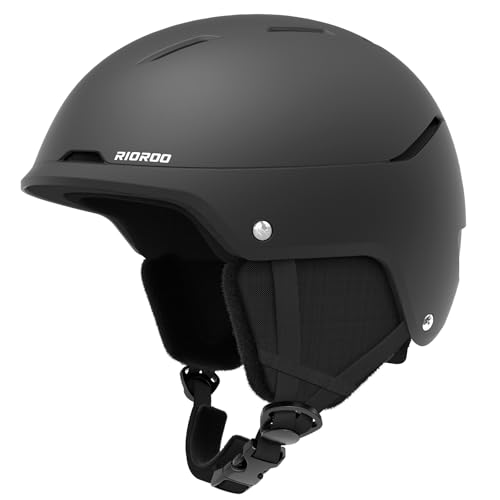


As an Amazon Associate we earn from qualifying purchases at no extra cost to you. Ratings are shown as listed on Amazon.
Quick comparison: leading snowboard helmets
| Helmet | Useful size range | Approx. weight | Construction or safety feature | Best suited to |
|---|---|---|---|---|
| Smith Vantage MIPS | Small 51–55 cm; medium 55–59 cm; large 59–63 cm | About 550 g in medium | Hybrid shell, MIPS, adjustable ventilation | Frequent riders wanting premium comfort and airflow |
| Giro Ratio MIPS | Small 52–55.5 cm; medium 55.5–59 cm; large 59–62.5 cm | About 500 g in medium | In-mold construction, MIPS, adjustable ventilation | All-mountain riding and value-conscious buyers |
| Giro Ledge MIPS | Small 52–55.5 cm; medium 55.5–59 cm; large 59–62.5 cm | About 420 g in medium | Hard-shell construction, MIPS, low-profile adjustment | Beginners, park riders, and occasional use |
| POC Obex MIPS | Small 50–56 cm; medium 54–59 cm; large 59–62 cm | About 500 g in medium | In-mold construction, MIPS, integrated goggle chimney | Riders prioritising a refined fit and eyewear integration |
| Sweet Protection Switcher MIPS | Small 53–56 cm; medium 56–59 cm; large 59–63 cm | About 650 g in medium | Hybrid shell, MIPS, adjustable ventilation | Cold-weather riders who also need vent control on warm days |
Weights and dimensions can vary by size, production year, and regional version. Use the manufacturer’s current chart before ordering. The figures are useful for comparison, not a substitute for trying the helmet on.
What certification tells you—and what it does not
For resort snowboarding, look for a recognised snow-sport standard such as ASTM F2040 in North America or EN 1077 in Europe. Some helmets carry both. These standards indicate that the model has passed specified impact, penetration, retention, and environmental tests. They do not rank one certified helmet as universally safer than another, and they do not promise protection in every crash.
MIPS is a rotational-impact management system found in many helmets, including the Vantage MIPS, Ratio MIPS, Ledge MIPS, and Obex MIPS. It is an additional design feature, not a replacement for certification or correct fit. WaveCel, used in some snow helmets such as the Anon Logan WaveCel, is another technology intended to manage certain impact forces. Compare the complete helmet design rather than treating a technology name as a guarantee.
Replace a helmet after a significant impact, even if the shell looks fine. Also replace it if the shell is cracked, the liner is crushed, the retention system no longer holds firmly, or the helmet has reached the replacement interval recommended by its maker. Do not buy a visibly damaged second-hand helmet because its impact history cannot be verified.
Choose by your actual riding situation
| Your situation | Most sensible direction | Why |
|---|---|---|
| One or two trips per year | Giro Ledge MIPS or a comparable certified entry-level helmet | Spend on correct fit rather than premium liners or complex vent systems |
| Weekly resort riding | Giro Ratio MIPS or POC Obex MIPS | Better adjustment, ventilation, and goggle compatibility repay their cost |
| Long, cold days and chairlift exposure | Smith Vantage MIPS or Sweet Protection Switcher MIPS | Warm ear coverage and controllable vents are more useful than permanently open airflow |
| Frequent warm spring sessions | Smith Vantage MIPS or Giro Ratio MIPS | Adjustable vents help release heat without removing the helmet |
| Large goggles or a particular goggle brand | POC Obex MIPS, Smith Vantage MIPS, or a matched helmet-goggle system | Reduced risk of a forehead gap and less interference with the strap |
Fit is the first safety and warmth decision
Measure around your head with a soft tape, passing above the eyebrows and around the widest part of the skull. If your measurement is 57 cm, for example, a 55–59 cm medium is a logical starting point. It is not a reason to size up automatically: the shape of your head matters as much as the circumference.
- Open the rear dial or adjustment system fully and place the helmet level on your head.
- Check that the front sits roughly two fingers above the eyebrows and does not tilt backward.
- Tighten the rear adjustment until the helmet contacts your head evenly, without a concentrated headache-producing pressure point.
- Fasten the chin strap. It should sit under the chin, with enough room for comfort but not enough to let the helmet move substantially.
- Shake your head and gently try to rotate the helmet forward and backward. Your skin should move with it more than the helmet sliding over your head.
A helmet that is too loose becomes noisy and unstable; one that is too tight may cause pressure and tempt you to wear it incorrectly. Do not compensate for a poor shell shape with a thick beanie. Use the supplied liner and fit system, and try the helmet with the goggles and eyewear you will actually wear.
Warmth, ear pads, and ventilation
Thicker ear pads can make a helmet feel warmer, but they also affect how well you hear lifts, instructors, and other riders. Removable pads are useful when conditions change. For deep winter, look for full-coverage ear pads, a snug neck opening, and a liner that does not compress quickly. For spring, adjustable vents matter more than maximum insulation.
Ventilation should be controllable rather than simply abundant. Front vents can reduce goggle fogging by allowing warm, humid air to escape, while rear vents help draw air through the helmet. If you regularly ride below freezing, a helmet with closable vents is usually more versatile than one that is permanently open. Never block vents with tape or improvised fabric; that can alter the helmet’s intended airflow and fit.
Goggle integration and useful convenience features
Bring your goggles when trying on a helmet. The helmet should hold the goggle strap securely, leave no large gap across the forehead, and avoid pressing the goggles down onto your nose. A small gap can be normal with some combinations, but a deep “goggle gap” exposes skin to cold and may allow snow in during a fall.
Look for a firm rear goggle retainer, a smooth brim that does not push the lens, and enough room for your chosen lens height. Some helmets use an adjustable brim or a dedicated goggle dock. These features improve compatibility, but they cannot overcome a mismatch between a very tall goggle and a low-profile helmet.
Audio compatibility can be useful, but keep the volume low enough to remain aware of your surroundings. Magnetic chin buckles are convenient with gloves; traditional buckles are lighter and easier to inspect. Avoid modifying the shell, drilling holes, or adding non-approved accessories.
Ownership: what wears out first
The removable liner, ear pads, adjustment dial, and chin-strap padding usually show wear before the outer shell. Sweat and sunscreen can make pads smell and lose their shape. Remove washable pads according to the instructions, hand-wash them with mild detergent, and air-dry completely. Do not put the helmet on a radiator, near a fire, or in a hot car, because excessive heat can damage materials.
After each trip, open the vents and let the helmet dry at room temperature. Store it away from sharp ski edges, solvents, and heavy equipment. Inspect the shell, liner, buckles, and dial at the start of each season. Replacement pads may extend comfort, but they do not restore a helmet that has suffered an impact.
Bottom line
The Smith Vantage MIPS is the strongest all-round recommendation when you ride often and want adjustable warmth, ventilation, and a refined fit. Choose the Giro Ratio MIPS when you want most of the important features at a more moderate market price. The Giro Ledge MIPS is a practical option for occasional riders who need certified protection and simple adjustment without paying for premium refinements. Whichever model you choose, a properly fitted certified helmet worn every run is more valuable than an expensive helmet that moves, gaps with your goggles, or stays unused because it is uncomfortable.





Write Your Review
No reviews yet. Be the first to share your experience!