

Key takeaways
- 78A–80A: Best for rough asphalt, cracked sidewalks, and beginners who want a more forgiving ride.
- 81A–83A: A versatile range for reasonably smooth paths and mixed outdoor surfaces.
- 84A–85A: Better for smooth outdoor courts, polished concrete, and skaters who prioritize slide and quick response.
- Above 85A: Usually more appropriate for indoor floors or exceptionally smooth outdoor surfaces.
Best Roller Skates for Outdoor Fun
The best roller skates for outdoor fun are usually quad skates with 57–65 mm outdoor wheels, a grippy 78A–85A hardness rating, a supportive boot, and a plate that matches your weight, skating frequency, and budget.
Outdoor pavement is less forgiving than an indoor rink. Small cracks, rough asphalt, grit, and expansion joints can catch small or hard wheels, while a boot with too little support can make basic skating tiring. The right setup is therefore less about choosing the most expensive skate and more about matching four parts: wheels, boot, plate, and fit.
Our top picks
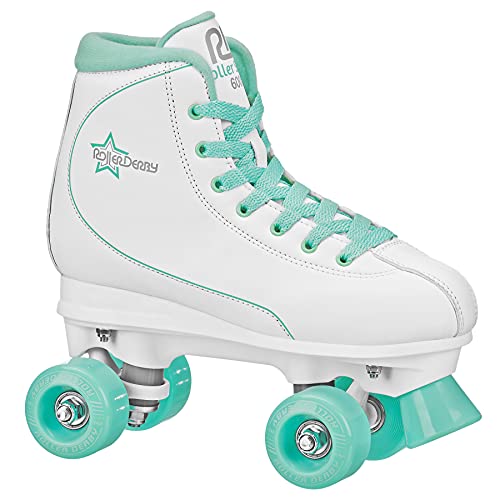

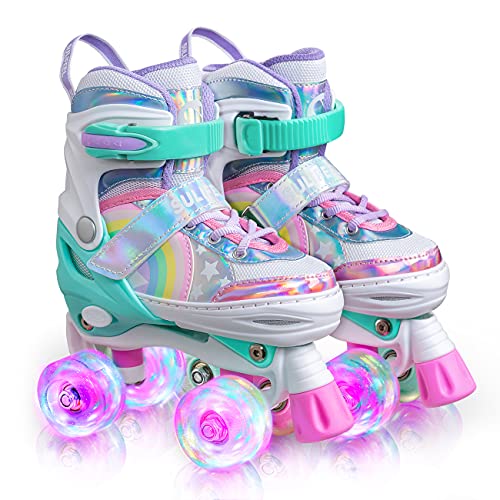
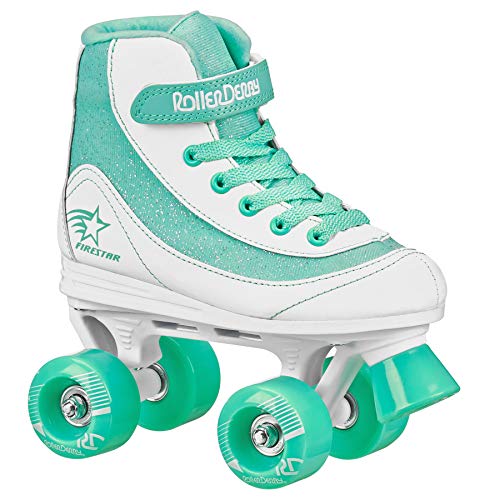
As an Amazon Associate we earn from qualifying purchases at no extra cost to you. Ratings are shown as listed on Amazon.
Quick picks by skating situation
| Situation | Recommended setup | Why it works | Typical 2026 price range |
|---|---|---|---|
| First outdoor skates | 78A–82A wheels, medium-support boot, nylon plate | Comfortable grip and lower weight without a high initial cost | $80–$160 |
| Rough sidewalks and older asphalt | 65 mm wheels, 78A–80A hardness, aluminum or reinforced plate | Larger wheels roll over surface defects more easily | $130–$280 |
| Frequent neighborhood skating | 58–62 mm wheels, 80A–85A hardness, durable boot and replaceable toe stop | Balances speed, maneuverability, and manageable wear | $150–$350 |
| Dance and smooth-pavement skating | 57–60 mm wheels, 82A–85A hardness, responsive plate | Shorter wheels and a responsive setup make turns and footwork easier | $180–$450 |
| Heavier skater or high-mileage use | Reinforced boot, aluminum plate, metal trucks, 80A–85A wheels | Provides better resistance to flex and repeated impact | $220–$500+ |
Wheel hardness matters most on pavement
Outdoor wheel hardness is shown with a number followed by “A.” Lower numbers are softer. A 78A wheel generally absorbs more vibration and grips imperfect pavement better than an 85A wheel, while a harder wheel feels faster and more responsive on smooth concrete.
- 78A–80A: Best for rough asphalt, cracked sidewalks, and beginners who want a more forgiving ride.
- 81A–83A: A versatile range for reasonably smooth paths and mixed outdoor surfaces.
- 84A–85A: Better for smooth outdoor courts, polished concrete, and skaters who prioritize slide and quick response.
- Above 85A: Usually more appropriate for indoor floors or exceptionally smooth outdoor surfaces.
Wheel diameter also changes the feel. A 57–60 mm wheel accelerates quickly and turns easily, but it transmits more of the pavement’s imperfections. A 62–65 mm wheel rolls over cracks more smoothly and retains speed, although it may feel less nimble and can require enough clearance beneath the boot and plate.
For a first outdoor setup, 58–62 mm wheels around 78A–82A are the safest general starting point. Very soft wheels are not automatically better: on smooth concrete they can feel slow, and abrasive pavement will eventually wear them down.
Boot support: comfort without excessive stiffness
A supportive boot keeps your heel planted and reduces unwanted ankle movement when braking or crossing uneven surfaces. Traditional high-top vinyl or leather-style boots provide useful ankle coverage for beginners and recreational skaters. A low-cut boot can feel lighter and more agile, but it demands better ankle control.
Choose the boot by use
- Learning and casual cruising: Choose a padded high-top with firm heel containment and a comfortable tongue.
- Longer outings: Look for breathable lining, a cushioned insole, and padding that does not compress immediately.
- Dance and footwork: A moderately supportive boot with room for ankle movement is usually preferable to an extremely rigid recreational boot.
- Heavier or more powerful skating: Prioritize a reinforced upper, secure lacing, and a plate with sturdy trucks rather than an ultra-light construction.
Excessively soft boots can fold at the ankle and make stopping feel uncertain. Excessively stiff boots may create pressure points and restrict movement. The boot should hold the heel securely while allowing the toes to lie flat and move slightly.
Nylon versus aluminum plates
The plate connects the boot to the trucks, axles, and wheels. Nylon plates are generally lighter and less expensive. They are a sensible choice for new skaters, occasional use, and smaller or lighter skaters. Their flexibility can feel comfortable, but too much flex may reduce precision under heavier loads or aggressive use.
Aluminum plates are usually stiffer, more durable, and more precise when changing direction. They add weight and cost, but the extra rigidity can be valuable for frequent outdoor skating, larger skaters, fast stopping, and repeated use on rough pavement. Some aluminum plates also offer more adjustment options, although the exact design varies.
| Component | Useful outdoor specification | Main advantage | Trade-off |
|---|---|---|---|
| Outdoor wheel | 58–65 mm; 78A–85A | More stable rolling and better pavement comfort | Soft wheels wear faster; large wheels turn less sharply |
| Nylon plate | Lightweight composite construction | Lower cost and easier to lift | Can flex more under high loads |
| Aluminum plate | Cast or extruded aluminum | Stiffer response and greater durability | Heavier and more expensive |
| Toe stop | Replaceable rubber stop, commonly 30–45 mm | Controlled braking and starting | Wears quickly on abrasive pavement |
| Bearings | Sealed or shielded, serviceable when possible | Smoother rolling with less contamination | Grit and water can shorten their life |
Getting the size right
Do not assume your skate size is identical to your casual shoe size. Measure both feet at the end of the day while wearing the socks intended for skating. Record the longer foot from the heel to the longest toe, then compare that measurement with the manufacturer’s chart.
A properly fitted skate should hold the heel firmly, keep the midfoot secure, and allow light toe movement. It should not have enough extra length for the foot to slide forward during braking. A little initial snugness is normal because padded liners compress, but painful pressure across the toes, ankle bones, or top of the foot is not something to “break in.”
As a practical check, lace the skates, stand upright, and bend your knees. Your heel should remain seated when you lift your toes. If the heel rises substantially, try a different size or lacing adjustment rather than compensating with very thick socks.
What each setup feels like on pavement
Softer, larger outdoor wheels
This is the most comfortable option for cracked sidewalks and coarse asphalt. The wheels absorb vibration and maintain momentum over small gaps. Steering feels slower, so leave more room for turns and stopping. This setup suits cruising and beginners better than tight dance movements.
Medium outdoor wheels
Medium wheels around 58–62 mm provide the broadest compromise. They are agile enough for paths and gentle footwork while still coping with ordinary pavement. For many recreational skaters, this is the best all-purpose configuration.
Harder, smaller wheels
Smaller wheels with a hardness near 84A–85A respond quickly and can feel lively on smooth courts. On broken asphalt, they transmit more shock, lose speed over rough sections, and may make balance more demanding. Choose them when your regular surface is smooth rather than because a harder rating sounds faster.
Ownership costs and maintenance
Outdoor pavement wears consumable parts faster than indoor floors. Toe stops often show the first obvious wear, followed by wheel edges and bearings exposed to dust. As a simple ownership calculation, a $180 skate setup used 30 times in its first year costs $6 per outing before replacement parts. If new toe stops cost $15–$30 and last 20–40 outdoor sessions, that adds roughly $0.38–$1.50 per use.
- Wipe wheels and plates after each outing, especially after dusty or damp routes.
- Do not store skates wet inside a closed bag; let the boots and liners dry fully first.
- Check that wheel nuts are secure but not clamped so tightly that wheels cannot spin freely.
- Rotate wheels when one edge becomes noticeably more worn than the other.
- Replace a toe stop when its contact surface becomes thin, uneven, or difficult to use confidently.
- Avoid puddles. Water can damage bearings, soften some boot materials, and encourage corrosion on hardware.
One common mistake is fitting indoor wheels to an outdoor skate and expecting the boot to compensate. Another is loosening trucks too far in search of easier turning. Make small adjustments, test them at low speed, and keep enough stability for controlled stopping.
Final buying recommendation
For most shoppers, the best roller skates for outdoor fun are a comfortable high-top quad skate with 58–62 mm wheels rated around 78A–82A, a replaceable toe stop, and a nylon plate for occasional use or an aluminum plate for frequent mileage. Move toward 65 mm wheels if your routes are rough, and toward 84A–85A wheels only when you mainly skate smooth pavement. Fit and surface compatibility will affect your experience more than branding, decorative details, or the highest advertised speed.
Wear a properly fitted helmet and protective pads while learning, inspect the route for gravel and cracks, and practice stopping before attempting longer outdoor trips.





Write Your Review
No reviews yet. Be the first to share your experience!